Ver en contexto
 Enviar
 Compartir
 Detalles

 Descargar
 Similares
 Radiografía
 Presentación de diapositivas
resurrection


 Ver más
Giclée / Impresión de arte
Impresiones giclée o en lienzo de calidad de museo con producción rápida y opciones de acabado flexibles. ( Comprar pintura hecha a mano Comprar imagen)




P118B $10

P118H $10

P118W $10

P438Z $10

P508JH $12

P508YH $12

P805H $10

P805Z $10

P919BZ $10

P919G $10

P919XJ $10

P959ZH $10

P968JZ $12

W106C $8

W218G $10

W218JH $8

W218Y $10

W307PJ $10

W316G $10

W316PJ $8

W316Y $10

W398PJ $8

W4111J $10

W500HY $15

W500JH $15

W692G $12

W849H $8

W940BG $15

W953PJ $8




Elija entre nuestros tamaños predefinidos que respetan las proporciones originales de la obra.

Puede introducir sus propias dimensiones para adaptarse a un marco o espacio específico. Si el tamaño seleccionado no coincide con las proporciones de la imagen original, recortaremos la obra de arte o extenderemos la imagen con un borde con efecto espejo o de color sólido. Se enviará una maqueta digital para su aprobación antes de que comience la producción.
Tenga en cuenta que la vista previa en pantalla no refleja el recorte o la extensión real. Solo la maqueta mostrará con precisión la composición final.
Aunque existen tamaños personalizados, recomendamos seleccionar una dimensión de la lista predefinida para preservar las proporciones originales.
Envío a todo el mundo () en 2 semanas en lugar de las 4/5 semanas estándar. (29 agosto)

Envío exprés gratuito a todo el mundo

Lienzo de lino de alta calidad

Seguro de envío total

Garantía de reembolso de impuestos aduaneros

Garantía de fidelidad cromática exacta

Política de devolución de 60 días (solo por defectos)

Garantía de devolución del 100% del dinero

Descuento por cantidad
 La opción de vidrio solo está disponible en tamaños inferiores a 110 cm.

resurrection
Giclée / Impresión de arte
Dimensiones de la reproducción
-


Precio total final
$ 80
A Resurrection of Antiquity: The Visionary Spirit of Andrea Mantegna
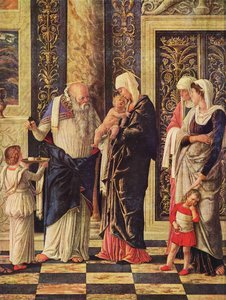
In the quiet, transformative era of the early Renaissance, few works capture the profound intersection of divine triumph and archaeological passion as exquisitely as Andrea Mantegna’s Resurrection. Painted around 1460, this masterpiece serves as much more than a mere biblical illustration; it is a breathtaking testament to the power of rediscovery. Born near Padua, Mantegna was a child of a changing world, one where the dust of fallen Roman empires was being swept away by an intense scholarly hunger for classical truth. Through his eyes, we do not just witness the rising of Christ; we witness the rebirth of an entire aesthetic era, where the grandeur of ancient Rome is resurrected through the meticulous application of oil and pigment.
The painting presents a scene of celestial victory, portraying Jesus Christ as he ascends from the tomb. He stands atop a stone structure, his arms outstretched in a gesture that bridges the gap between the earthly and the divine. In one hand, he holds the cross, and in the other, a book, symbols that anchor his spiritual authority within the physical realm. Surrounding this central, luminous figure is a tapestry of human emotion: soldiers and onlookers are captured in various states of awe, some kneeling in reverence while others stand frozen by the miraculous event. Even the natural world participates in this sacred drama, with birds fluttering through the sky and perched upon rocks, suggesting that all of creation vibrates in harmony with this moment of eternal life.
The Sculptural Precision of a Renaissance Master
What distinguishes Mantegna’s technique from his contemporaries is an almost obsessive dedication to sculptural realism. Influenced heavily by his mentor Francesco Squarcione, Mantegna approached the wooden panel not merely as a surface for color, but as a medium for carving light and shadow. He employed a sophisticated layering process of oil paint to achieve a remarkable depth and luminosity, creating an illusion of three-dimensionality that rivals the monumental marble sculptures of antiquity. Every fold of fabric, every weathered edge of the stone tomb, and every anatomical detail of the figures is rendered with a precision that feels tactile, as if one could reach out and touch the cold, heavy weight of the Roman-inspired architecture.
This stylistic choice was deeply rooted in the historical context of the 15th century. As excavations at Pompeii and Herculaneum began to reveal the lost splendor of the Roman world, Mantegna sought to translate these archaeological findings into visual language. His use of perspective—often lowering the horizon to grant his subjects a sense of monumental scale—invites the viewer into a space that feels both historically grounded and spiritually elevated. For the discerning collector or interior designer, this painting offers more than just decoration; it provides a window into a period of intense intellectual curiosity, making it a profound focal point for any space dedicated to the appreciation of classical beauty and historical depth.
An Emotional Resonance for the Modern Collector
Beyond its technical brilliance, the Resurrection possesses an emotional gravity that remains undiminished by the passage of centuries. There is a palpable sense of tension and release within the composition—the stillness of death being shattered by the kinetic energy of life. The subtle shading and modeling of the figures evoke a sense of reverence, mirroring the awe one might feel when standing before the ruins of a great civilization. It is a work that speaks to themes of endurance, transformation, and the eternal struggle between darkness and light.
For those seeking to adorn a curated collection or a sophisticated living space, a high-quality reproduction of this work offers an unparalleled opportunity to engage with art history. The painting’s rich textures and dramatic composition provide a sense of timelessness, making it an ideal centerpiece for environments that value intellectual rigor and aesthetic elegance. To possess such a piece is to hold a fragment of the Renaissance spirit—a reminder that even from the shadows of the past, something magnificent can always be reborn.
Biografía del artista
vida temprana y carrera
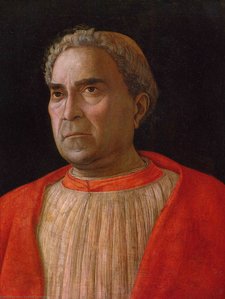
Andrea Mantegna, un innovador pintor e estudioso de la arqueología romana italiano, nació en Italia en 1431. Su vida está marcada por una desviación significativa de las formas suaves de su tiempo, favoreciendo un tratamiento audaz y voluminoso del espacio y la forma.contribución a la perspectiva
La obra de Mantegna fue fundamental para explorar la perspectiva, utilizando técnicas como ajustar la línea del horizonte para impartir una escala más grandiosa y gravedad a sus obras. Este enfoque marcó una desviación significativa de las formas suaves de su tiempo, mostrando su estilo único.obras notables y asociaciones
* Las pinturas de Mantegna son reconocidas por su calidad robusta y escultórica, exhibiendo paisajes y figuras duras y reflectantes que revelan su sensibilidad como escultor a la forma y la textura. * Su asociación con la familia Bellini a través del matrimonio es notable, ya que refleja la interconexión de las familias artísticas durante el Renacimiento.legado en la historia del arte
La influencia de Mantegna en el desarrollo del arte en Italia y más allá es innegable. Su enfoque audaz de la perspectiva y la forma ha inspirado a generaciones de artistas. Como se ve en su colección en OriginalUniqueArt, sus obras continúan cautivando al público con su grandeza e innovación.- Movimientos artísticos clave: Renacimiento, perspectiva temprana.
- Obras notables: incluyen "El lamento sobre el Cristo muerto" y "San Jorge".
- Museos que exhiben su obra: la Galería Nacional de Londres y la Pinacoteca Brera en Milán, entre otros.
lectura adicional y exploración
* Para más información sobre la vida y las obras de Mantegna, consulte la colección Palumbo-Fossati (Venecia, Italia), que presenta una breve reseña de la colección y sus piezas notables. * Explore la historia del arte en Italia con la cultura de Italia en Wikipedia.
Andrea Mantegna
1431 - 1506 , Italia
Datos clave
- Artistas Influenciados:
- Rafael
- Miguel Ángel
- Artistas Que Influyeron:
- Donatello
- Jacopo Bellini
- Fecha De Muerte: 1506
- Fecha De Nacimiento: 1431
- Lugar De Nacimiento: Carturo, Italia
- Movimiento Artístico: Renacimiento Temprano
- Nacionalidad: Italiana
- Nombre Completo: Andrea Mantegna
- Obras Notables:
- El Lamento sobre el Cristo muerto
- San Jorge y el dragón
- Camera degli Sposi
- Los Triunfos de César
Artículos relacionados

The Enduring Legacy of Oil on Canvas: Technique, History & Aesthetic Impact
Explore the rich history & techniques of oil painting – from Renaissance masters to Impressionism. Discover pigments, layering methods, and why this timeless medium endures. Expert insights for artists & art enthusiasts.

El Óleo sobre Lienzo: Historia, Técnica y la Persistencia de un Medio Artístico Atemporal
Descubre la historia y técnica del óleo sobre lienzo. Explora reproducciones fieles hechas a mano, personalización artística y consejos de expertos con OriginalUniqueArt. ¡Colecciona arte con confianza!

The Enduring Power of Painting: A Historical & Contemporary Exploration of Form and Emotion
Explore the rich history & enduring techniques of oil painting with OriginalUniqueArt. Discover masterpieces, learn about art collecting, and find authentic handmade reproductions crafted by skilled artists.
The Timeless Charm of Oil on Board: Reimagining Texture and Light through the Impressionist Lens
Discover the profound intimacy of oil on panel. Explore how Impressionist masters used rigid supports to capture light, texture, and impasto depth through exquisite, handmade oil reproductions for discerning collectors.

El Legado Duradero del Óleo sobre Lienzo: Técnica, Historia y Práctica Contemporánea
Descubre la historia y técnica del óleo sobre lienzo. Explora reproducciones fieles hechas a mano, personalización artística y consejos de expertos con .