Ver en contexto
 Enviar
 Compartir
 Detalles
 Guía
Guía

 Descargar
 Similares
 Radiografía
 Presentación de diapositivas
 Q&A
Q&A Estadísticas
Monaco, Monte-Carlo

 Ver más
Giclée / Impresión de arte
Impresiones giclée o en lienzo de calidad de museo con producción rápida y opciones de acabado flexibles. ( Comprar pintura hecha a mano Cambiar a imagen digital)




P118B €10

P118H €10

P118W €10

P438Z €10

P508JH €12

P508YH €12

P805H €10

P805Z €10

P919BZ €10

P919G €10

P919XJ €10

P959ZH €10

P968JZ €12

W106C €8

W218G €10

W218JH €8

W218Y €10

W307PJ €10

W316G €10

W316PJ €8

W316Y €10

W398PJ €8

W4111J €10

W500HY €15

W500JH €15

W692G €12

W849H €8

W940BG €15

W953PJ €8




Elija entre nuestros tamaños predefinidos que respetan las proporciones originales de la obra.

Introduzca el ancho y el alto que necesite para adaptarse a su marco o pared. Una impresión solo puede recortarse, nunca hacerse más grande que la imagen original, por lo que un tamaño con una forma distinta perderá parte de la obra. Le enviaremos una maqueta digital para su aprobación antes de realizar cualquier impresión. La imagen que se muestra en esta página no refleja el recorte real; solo la maqueta lo hace.
Envío a todo el mundo () en 2 semanas en lugar de las 4/5 semanas estándar. (1 noviembre)

Envío exprés gratuito a todo el mundo

Lienzo de lino de alta calidad

Seguro de envío total

Garantía de reembolso de aranceles aduaneros

Garantía de fidelidad cromática exacta

Política de devolución de 100 días (solo por defectos)

Garantía de devolución del 100% del dinero

Descuento por cantidad
 La opción de vidrio solo está disponible en tamaños inferiores a 110 cm.

Monaco, Monte-Carlo
Giclée / Impresión de arte
Dimensiones de la reproducción
-


Precio total final
€ 71
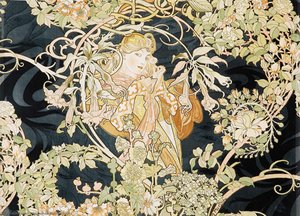
Monaco Monte Carlo: An Ode to Elegance and Ornamentation
The artwork, “Monaco Monte Carlo,” created in 1897 by Alphonse Maria Mucha, stands as a quintessential emblem of Art Nouveau—a movement that sought to liberate art from academic constraints and embrace the beauty of organic forms inspired by nature. More than just a promotional poster for Monaco’s opulent casino district, it's a meticulously crafted visual poem celebrating luxury, leisure, and the idealized feminine spirit. Mucha’s signature style is immediately recognizable: flowing curvilinear lines dominate the composition, intertwining seamlessly with stylized floral arrangements that burst forth from the central figure’s drapery—a deliberate echo of the natural world and its fecundity.- Style & Influences: Mucha's Art Nouveau aesthetic draws heavily from influences like Pierre-Auguste Renoir and Gustave Moreau, artists who similarly explored themes of mythology and symbolism through decorative painting. However, Mucha distinguishes himself with a singular vision—one that prioritizes graceful movement and sensual beauty above all else.
- Composition & Technique: The poster employs a vertical orientation, maximizing visual impact while maintaining compositional balance. Lithography was the printing technique chosen, ensuring exceptional clarity and tonal gradation – crucial for capturing the shimmering gold leaf accents strategically applied to highlight key floral elements and contribute to the overall ethereal luminescence of the scene.
- Symbolism & Narrative: At its core lies an allegorical representation of femininity—a reclining woman adorned in flowing robes embodies elegance, serenity, and aristocratic grace. Surrounding her are stylized flowers—primarily lilies and roses—representing purity, devotion, and prosperity – motifs commonly found throughout Art Nouveau art.
- Historical Context: Monaco’s burgeoning reputation as a glamorous destination for European aristocracy fueled Mucha's artistic ambition. The poster reflects the broader cultural fascination with exotic locales and idealized beauty during the Belle Époque, capturing the spirit of an era defined by optimism and artistic experimentation.
- Floral Arrangement: The lilies and roses dominate the floral arrangement, meticulously rendered in shades of ivory and blush pink. Their petals are depicted with astonishing realism—a testament to Mucha’s meticulous observation of botanical specimens.
- Line Quality: Mucha achieves this mesmerizing effect through careful consideration of line quality—employing subtle variations in thickness and curvature to create depth and texture without resorting to traditional perspective techniques.
- Atmospheric Perspective: Mucha skillfully employs atmospheric perspective—reducing color saturation and tonal gradation in distant floral elements—to create a convincing illusion of depth.
- Sensual Appeal: Mucha's meticulous attention to detail—particularly in the depiction of drapery folds and floral textures—appeals to the senses—creating a visually stimulating experience that lingers long after viewing.
Preguntas y respuestas
¿Los colores de "Monaco, Monte-Carlo" de Alphonse Maria Mucha son intensos o tenues?
"Monaco, Monte-Carlo" de Alphonse Maria Mucha presenta una saturación de Balanced Soft y una intensidad de Balanced.
¿Es "Monaco, Monte-Carlo" una obra famosa del Art Nouveau?
"Monaco, Monte-Carlo" destaca con un nivel de Recognized entre las obras del Art Nouveau en el catálogo.
¿Con qué otros nombres o alias se conoce a Alphonse Maria Mucha?
Otros nombres registrados para Alphonse Maria Mucha, creador de "Monaco, Monte-Carlo", incluyen Alfons Mucha.
Biografía del artista
Primeros Años y Educación
- Nacido: 15 de julio de 1860, en Ivanačice, Moravia (ahora parte de la República Checa)
- Mostró talento artístico desde una edad temprana.
- Estudió en la Academia de Bellas Artes de Praga pero se desilusionó con los enfoques tradicionales.
- Se mudó a París en 1887 para perseguir su propio estilo.
Estilo Artístico y Obras Notables
- Conocido por un estilo Art Nouveau distintivo caracterizado por líneas fluidas, formas orgánicas y una sensación de movimiento.
- Influenciado por artistas como Pierre-Auguste Renoir y Gustave Moreau.
- Obras Notables:
- La Insurrección Eslava - Muestra la combinación de motivos checos tradicionales con elementos Art Nouveau modernos.
- Salon des Cent
- Pinturas inspiradas en obras como Las Hijas de Tespio de Gustave Moreau, y La Ribambelle des Gobelins de Piero Dorazio.
- Ilustraciones basadas en Jóvenes Granjeros Rompiendo Lino de Sir Hubert von Herkomer.
- Frecuentemente presentó mujeres idealizadas con túnicas fluidas rodeadas de flores exuberantes.
Hitos Profesionales y Comisiones Importantes
- Colaboración con Sarah Bernhardt: Creó carteles y diseños para la actriz Sarah Bernhardt, comenzando con el cartel de Gismonda (1894), lo que lanzó su carrera.
- Exposición Universal en París (1900): Su estilo Art Nouveau ganó reconocimiento internacional en esta exposición. Decoró el Pabellón de Bosnia y Herzegovina y colaboró en el Pabellón Austriaco.
- Patronazgo de Charles Richard Crane: Recibió apoyo de Charles Richard Crane, lo que le permitió crear la monumental serie El Épico Eslavo (1912-30).
- Checoslovaquia Independiente: Diseñó sellos postales, billetes y documentos gubernamentales para la recién independiente Checoslovaquia.
Influencias y Legado
- Influenciado por las tradiciones artísticas checas y los movimientos de arte europeos modernos.
- Su estilo único allanó el camino para futuras generaciones de artistas en Art Nouveau y Secesión.
- Inspiró a otros artistas como Eva Prokopcová.
- El legado se extiende más allá de su obra de arte hasta influir en el diseño y la estética.
Vida Posterior y Muerte
- Se casó con Maruska (Marie/Maria) Chytilová en 1906.
- Visitó los Estados Unidos desde 1906 hasta 1910, donde nació su hija Jaroslava.
- Murió el 14 de julio de 1939 en Praga, Checoslovaquia.

Alphonse Maria Mucha
1860 - 1939 , República Checa
Datos clave
- Artistas Influenciados: ['Eva Prokopcová']
- Artistas Que Influyeron:
- Pierre-Auguste Renoir
- Gustave Moreau
- Fecha De Fallecimiento: 1939
- Fecha De Nacimiento: 15 de julio de 1860
- Lugar De Nacimiento: Brno, República Checa
- Movimiento Artístico: Art Nouveau
- Nacionalidad: Checo
- Nombre Completo: Alphonse Maria Mucha
- Obras Notables:
- La sublevación eslava
- Salón de los Cien
- Las hijas de Tespio
- La Ribambelle de Gobelins
Artículos relacionados
OriginalUniqueArt.com F.A.Q.: Premium Art Poster Prints – Vivid Colors & Versatile Sizing
Discover OriginalUniqueArt.com's premium art poster prints. Featuring 12-color archival pigments for vivid color fidelity and versatile sizing for bespoke decor. Expertly crafted museum-quality reproductions designed for discerning collectors and professional decorators.