

 Vista previa
 Compartir
 Compartir
 Ver detalles
 Guía
Guía

 Descargar
 Ver artículos similares
 Radiografía
 Presentación de diapositivas
 Estadísticas
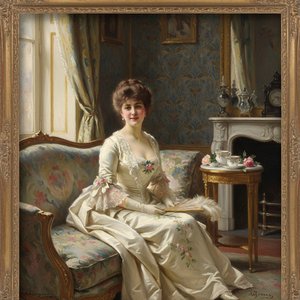
Visit to the Studio


 Leer más
Giclée / Impresión de arte
Impresiones giclée o en lienzo de calidad de museo con producción rápida y opciones de acabado flexibles. ( Encargar reproducción pintada a mano Ver versión en imagen digital)




P118B €10

P118H €10

P118W €10

P438Z €10

P508JH €12

P508YH €12

P805H €10

P805Z €10

P919BZ €10

P919G €10

P919XJ €10

P959ZH €10

P968JZ €12

W106C €8

W218G €10

W218JH €8

W218Y €10

W307PJ €10

W316G €10

W316PJ €8

W316Y €10

W398PJ €8

W4111J €10

W500HY €15

W500JH €15

W692G €12

W849H €8

W940BG €15

W953PJ €8




Elija entre nuestros tamaños predefinidos que respetan las proporciones originales de la obra.

Puede introducir sus propias dimensiones para adaptarse a un marco o espacio específico. Si el tamaño seleccionado no coincide con las proporciones de la imagen original, recortaremos la obra de arte o extenderemos la imagen con un borde con efecto espejo o de color sólido. Se enviará una maqueta digital para su aprobación antes de que comience la producción.
Tenga en cuenta que la vista previa en pantalla no refleja el recorte o la extensión real. Solo la maqueta mostrará con precisión la composición final.
Aunque existen tamaños personalizados, recomendamos seleccionar una dimensión de la lista predefinida para preservar las proporciones originales.
Envío a todo el mundo () en 2 semanas en lugar de las 4/5 semanas estándar. (6 octubre)

Envío exprés gratuito a todo el mundo

Lienzo de lino de alta calidad

Seguro de envío completo

Garantía de reembolso de impuestos aduaneros

Garantía de fidelidad cromática exacta

Política de devolución de 100 días (solo por defectos)

Garantía de devolución del 100% del dinero

Oferta por volumen
 La opción de vidrio solo está disponible en tamaños inferiores a 110 cm.

Visit to the Studio
Giclée / Impresión de arte
Tamaño de la reproducción
-


Precio total
€ 69
An Intimate Encounter: The Elegance of Alfred Stevens
In the quiet, sun-drenched corners of 19th-century Parisian life, few artists captured the essence of modern sophistication quite like Alfred Stevens. His masterpiece, "Visit to the Studio," invites the viewer into a private, whispered moment between two women, suspended in time. This painting is not merely a depiction of a room; it is an exploration of grace, social poise, and the delicate interplay of light and shadow. As we gaze upon the scene, we find ourselves uninvited guests to a serene encounter, where the boundaries between the public persona and private intimacy begin to blur.
The composition is a triumph of Academicism, characterized by a profound sense of balance and harmony. Stevens masterfully positions the two protagonists to create a rhythmic symmetry that guides the eye across the canvas. On the left, a woman stands with an air of poised contemplation, her hand resting on her hip, while on the and, another woman sits in a state of relaxed elegance. This structural equilibrium is deepened by the artist's expert use of chiaroscuro, where light dances across fine fabrics and illuminates the textures of the room, lending a three-dimensional vitality to the entire setting.
A Symphony of Texture and Tradition
Technically, "Visit to the Studio" serves as a testament to Stevens’s command over the oil medium. The artist employs a meticulous approach to detail, a hallmark of the French Academic Art Movement, which allows for a rich, tactile experience. One can almost feel the weight of the elaborate fabrics worn by the women and the smooth surface of the porcelain vase resting nearby. Every brushstroke is purposeful, contributing to a realistic representation that celebrates the beauty of the mundane. The inclusion of everyday objects—a chair, a potted plant, a soft couch in the background—anchors the scene in a tangible reality, making the elegance of the subjects feel both aspirational and accessible.
Beyond the surface level of realism, there is an underlying narrative of social transition. Created during an era when the art world was being shaken by the rise of Impressionism and Art Deco, Stevens’s commitment to the Academic style provides a sense of continuity and timelessness. He captures a specific moment in history where the allure of the upper-middle class was at its zenith. The painting does not seek to shock, but rather to enchant, using the familiar setting of a studio visit to explore themes of companionship and the quiet dignity of the modern woman.
An Inspiration for the Discerning Collector
For the art lover or interior designer, "Visit to the Studio" offers more than just visual beauty; it provides an atmosphere of refined tranquility. The painting’s palette and composition make it a versatile centerpiece, capable of adding a layer of historical depth and sophisticated charm to any high-end space. Whether placed in a contemporary gallery setting or a classic study, the work radiates a sense of calm and cultured taste.
Owning a reproduction of this work allows one to bring the luminous spirit of 19th-century Brussels and Paris into the modern home. It is an invitation to appreciate the enduring power of tradition and the subtle magic found in life's most quiet, elegant moments. To display this piece is to celebrate the mastery of Alfred Stevens and to surround oneself with a legacy of unparalleled craftsmanship and aesthetic grace.
Preguntas y respuestas
¿Puedo pedir una reproducción al óleo de "Visit to the Studio"?
"Visit to the Studio" está disponible como una reproducción al óleo pintada a mano sobre lienzo de lino. El pedido puede realizarse en esta página, con una variedad de tamaños a elegir.
¿De qué está hecho "Visit to the Studio" y en qué estilo se encuentra?
"Visit to the Studio" de Alfred Stevens combina la técnica de Oil On Canvas con el estilo Academicism. La técnica y el movimiento describen la elaboración y el estilo de la obra.
¿Qué atmósfera aportaría una reproducción de "Visit to the Studio" de Alfred Stevens a una habitación?
Con su atmósfera Classic, se sugiere "Visit to the Studio" para Living Room.
¿Qué tipo de obra es "Visit to the Studio"?
"Visit to the Studio" es una pieza de WallArt.
¿Dónde puedo comprar una lámina de "Visit to the Studio" de Alfred Stevens?
"Visit to the Studio" está disponible como una impresión de bellas artes sobre lienzo de algodón o papel de lienzo de archivo. Los pedidos se realizan en esta página, en el tamaño de su elección.
¿Existe una guía para "Visit to the Studio" de Alfred Stevens?
Una página de Guía está disponible para "Visit to the Studio" de Alfred Stevens: una ficha imprimible sobre la obra, diseñada para estudiantes y uso en el aula.
¿Quién creó "Visit to the Studio"?
"Visit to the Studio" fue creada por Alfred Stevens. La información en esta página describe la obra original de Alfred Stevens.
Biografía del artista
Early Life and Training
Alfred Émile Léopold Stevens (1823–1906) was born in Brussels, Belgium, on May 11, 1823. His family possessed a deep connection to the visual arts; his elder brother Joseph (1816–1892) and son Léopold (1866–1935) were painters, while another brother Arthur (1825–99) served as an art dealer and critic. This familial heritage profoundly shaped Stevens’ artistic upbringing and instilled in him a passion for observation and meticulous craftsmanship. He began his artistic journey at the Académie Royale des Beaux-Arts in Brussels, where he studied under the guidance of François Navez, a neo-classical painter who championed idealized forms and harmonious compositions. Navez's teachings solidified Stevens’ foundational understanding of artistic principles and established him on a path toward mastering traditional techniques.Artistic Career
Stevens relocated to Paris in 1843, joining his brother Joseph, and enrolled at the École des Beaux-Arts, furthering his education amidst a vibrant intellectual milieu. Although scholarly debate persists regarding whether he formally studied under Jean Auguste Dominique Ingres—a titan of neoclassical painting—Stevens’ formative years undeniably exposed him to Ingres's monumental style and unwavering commitment to classical ideals. His early works, notably “The Pardon or Absolution” (Hermitage, St. Petersburg), signed and dated 1849, exemplify Stevens’ initial stylistic inclinations: a deliberate embrace of conventional naturalistic representation rooted in the aesthetic traditions of seventeenth-century Dutch genre painting. This stylistic choice reflects Stevens' desire to honor artistic heritage while simultaneously exploring contemporary subjects with nuanced detail.Rise to Prominence
Stevens achieved considerable recognition within Parisian artistic circles upon his debut at the Brussels Salon in 1851, securing a third-class medal and subsequently earning acclaim at the Paris Salon of 1853 and the Universal Exposition of Paris in 1855. The painting “Ce qu’on appelle le vagabondage” (Musée d’Orsay, Paris) garnered particular attention from Napoleon III, prompting a transformative shift in Stevens' artistic focus—a deliberate engagement with social realism and a compassionate portrayal of poverty. This pivotal moment underscored Stevens’ conviction that art could serve as a vehicle for empathy and social commentary.Notable Works and Legacy
Stevens’ oeuvre encompasses a diverse range of subjects, demonstrating his versatility as an artist. “La Dame en Rose” (Musées Royaux des Beaux-Arts de Belgique, Brussels), completed in 1866, stands as a quintessential example of Stevens' artistic style during this period—a masterful fusion of fashionable attire and meticulous anatomical rendering informed by Japanese decorative motifs. His unwavering dedication to realism and refined execution cemented his reputation as one of the foremost painters of his time. He received the Legion of Honor (Chevalier) from the French government in 1863 and ascended to Officer of the Legion of Honor in 1867, acknowledging his contributions to artistic excellence and national prestige. Stevens’ legacy continues to inspire artists today, securing his place as a pivotal figure in Belgian art history and a champion of humanist values expressed through visual artistry.Further Exploration
You can discover more about Alfred Stevens' life and work on OriginalUniqueArt.com: Alfred Stevens | 122 artworks Explore More: The French Academic Art Movement And Also: Rodolfo Amoedo | Brazilian Painter, Designer, and Decorator Don't Miss: Alfred Stevens: Moonlit Seascape (46 x 37 cm, Academicism, Oil)
Alfred Stevens
1823 - 1906 , Bélgica
Datos clave
- Artistic Movement Or Style: Academic Realism
- Artists Or Movements Influenced By This Artist: ['Dutch Genre Painting']
- Artists Who Influenced This Artist:
- Jean Auguste Dominique Ingres
- Dutch Masters
- Date Of Birth: May 11, 1823
- Date Of Death: August 24, 1906
- Full Name: Alfred Émile Léopold Stevens
- Nationality: Belgian
- Notable Artworks:
- La Dame en Rose
- Visit to the Studio
- Dessin préparatoire au 'Panorama du siècle', 'L'Impératrice Joséphine et sa Cour
- Place Of Birth: Brussels, Belgium
Artículos relacionados

25 Masterpieces by Sir Alfred James Munnings: The Essence of British Equine Art
Immerse yourself in the vibrant world of Sir Alfred James Munnings. Explore 25 iconic equine masterpieces capturing the soul of the British countryside through impressionistic light and movement. Find museum-quality art reproductions at OriginalUniqueArt.com. Discover all masterpieces online.

Masterpieces of Motion: The Top 25 Artworks by Sir Alfred James Munnings
Experience the vibrant spirit of British equestrian art through the top 25 masterpieces by Sir Alfred James Munnings. From impressionistic landscapes to iconic horse portraits, explore timeless stories and museum-quality reproductions for your decor. Discover all masterpieces on OriginalUniqueArt.com.
Alfred Stevens: Capturing Parisian Elegance & Fin-de-Siècle Intimacy
Discover the captivating world of Alfred Stevens, master of Parisian elegance & intimate portraiture. Explore his techniques, influences, and legacy – a prized collection for discerning art enthusiasts.

Mastering the Equine Spirit: The Top 25 Artworks by Sir Alfred James Munnings
Immerse yourself in the vibrant equine world of Sir Alfred James Munnings. Explore 25 iconic masterpieces capturing the soul of the British countryside through impressionistic light and movement. Find museum-quality art reproductions for your collection. Discover all masterpieces on OriginalUniqueArt.com

Las 25 mejores obras de Sir Alfred James Munnings: Maestría ecuestre
Viaja a la campiña inglesa con las 25 mejores obras de Sir Alfred James Munnings. Descubre su maestría impresionista y el alma ecuestre en cada pincelada. Encuentra reproducciones de calidad de museo para tu hogar en OriginalUniqueArt.com. ¡Explora la colección completa online!