

 Ver en contexto
 Enviar
 Compartir
 Detalles

 Descargar
 Similares
 Radiografía
 Presentación de diapositivas
Untitled (AQTGD2)


 Ver más
Giclée / Impresión de arte
Impresiones giclée o en lienzo de calidad de museo con producción rápida y opciones de acabado flexibles. ( Comprar pintura hecha a mano Comprar imagen)




P118B $10

P118H $10

P118W $10

P438Z $10

P508JH $12

P508YH $12

P805H $10

P805Z $10

P919BZ $10

P919G $10

P919XJ $10

P959ZH $10

P968JZ $12

W106C $8

W218G $10

W218JH $8

W218Y $10

W307PJ $10

W316G $10

W316PJ $8

W316Y $10

W398PJ $8

W4111J $10

W500HY $15

W500JH $15

W692G $12

W849H $8

W940BG $15

W953PJ $8




Elija entre nuestros tamaños predefinidos que respetan las proporciones originales de la obra.

Puede introducir sus propias dimensiones para adaptarse a un marco o espacio específico. Si el tamaño seleccionado no coincide con las proporciones de la imagen original, recortaremos la obra de arte o extenderemos la imagen con un borde con efecto espejo o de color sólido. Se enviará una maqueta digital para su aprobación antes de que comience la producción.
Tenga en cuenta que la vista previa en pantalla no refleja el recorte o la extensión real. Solo la maqueta mostrará con precisión la composición final.
Aunque existen tamaños personalizados, recomendamos seleccionar una dimensión de la lista predefinida para preservar las proporciones originales.
Envío a todo el mundo () en 2 semanas en lugar de las 4/5 semanas estándar. (27 agosto)

Envío exprés gratuito a todo el mundo

Lienzo de lino de alta calidad

Seguro de envío total

Garantía de reembolso de impuestos aduaneros

Garantía de fidelidad cromática exacta

Política de devolución de 60 días (solo por defectos)

Garantía de devolución del 100% del dinero

Descuento por cantidad
 La opción de vidrio solo está disponible en tamaños inferiores a 110 cm.

Untitled (AQTGD2)
Giclée / Impresión de arte
Dimensiones de la reproducción
-


Precio total final
$ 80
Biografía del artista
A Romantic Vision of History: The Life and Legacy of Alexander Schaepkens
The annals of nineteenth-century European art are graced by many masters of the romantic spirit, yet few captured the intersection of historical grandeur and atmospheric intimacy as poignantly as Alexander Schaepkens. Born in 1815 in Maastricht, a region steeped in the rich cultural tapestry of the Limburg provinces, Schaepkens emerged not merely as a painter, but as a visual historian. His life, spanning from the early nineteenth century to the dawn of the twentieth, was dedicated to the pursuit of capturing pivotal moments through a lens that blended meticulous observation with profound emotional resonance. While his early years in the Netherlands provided the foundation for his technical prowess, his artistic soul was deeply intertwined with the broader movements of German Romanticism, particularly the dramatic and sublime aesthetics that sought to find the divine within the landscape and the epic within the past.
The development of Schaepulence’s style was a journey of light, texture, and narrative depth. Trained with a rigorous eye for detail, he possessed an innate ability to manipulate mediums such as watercolor and gouache to achieve a luminous, almost ethereal quality. By skillfully layering translucent washes, he could evoke the heavy mist of a wintry morning or the sun-drenched stone of an ancient fortress. His influences were profound; the works of Caspar David Friedrich left an indelible mark on his compositional logic, teaching him how to use vast, sweeping landscapes to mirror the internal psychological states of his subjects. This mastery allowed him to move beyond simple illustration, transforming historical scenes into meditations on human endurance and the passage of time.
Mastery of Narrative and Technique
Schaepkens’s oeuvre is characterized by a remarkable versatility in subject matter, ranging from the intimate study of architectural ruins to the sweeping drama of military conquest. He was particularly renowned for his ability to breathe life into historical figures and events, treating them not as static relics of the past, but as living, breathing dramas. His technique often relied on a delicate balance between the precision of a draftsman and the expressive freedom of a romanticist. This is perhaps most evident in his approach to light, which he used to guide the viewer's eye through complex compositions, highlighting the tension in a siege or the quiet solitude of a castle courtyard.
Among his most celebrated achievements was his ability to document both the monumental and the local. While he gained international acclaim for large-scale historical works—most notably his evocative depictions of Alexander the Great’s siege of Tyre—he remained deeply connected to his roots. His collections of lithographs and watercolors documenting the landscapes of Maastricht, the Meuse, and the surrounding Belgian and Dutch provinces serve as a vital visual record of a bygone era. In these works, one finds a different kind of mastery: the ability to find the extraordinary within the ordinary, capturing the architectural dignity and natural beauty of his homeland with an almost scholarly devotion.
Historical Significance and Artistic Heritage
The significance of Alexander Schaepkens lies in his role as a bridge between the classical traditions of historical painting and the emotive power of Romanticism. He did not merely record history; he interpreted it, infusing the cold facts of battle or the rigid lines of architecture with a palpable sense of atmosphere and human emotion. As an artist, lithographer, and illustrator, his influence extended through various media, contributing to the rich visual culture of the nineteenth century. His work remains a testament to a period when art sought to reconcile the grandeur of human achievement with the overwhelming beauty and mystery of the natural world.
Today, the legacy of Schaepkens continues to resonate through his surviving works, which offer contemporary viewers a window into the romanticized consciousness of the 1800s. His ability to weave together the following elements ensures his place in the pantheon of significant nineteenth-century painters:
- Atmospheric Depth: The use of light and wash to create immersive, emotive environments.
- Historical Empathy: A unique capacity to portray the psychological weight of historical narratives.
- Topographical Precision: An enduring contribution to the visual documentation of the Limburg region.
- Technical Versatility: Mastery across watercolor, gouache, and lithography.

alexander schaepkens
1815 - 1899
Datos clave
- Artistic Movement Or Style: Romantic Realism
- Artists Or Movements Influenced By This Artist: ['Romanticism']
- Artists Who Influenced This Artist: ['Caspar David Friedrich']
- Date Of Birth: 1815
- Date Of Death: 1899
- Full Name: Alexander Schaepkens
- Nationality: German
- Notable Artworks:
- Untitled (AQTGD4)
- Untitled (AQTGD2)
- Place Of Birth: Germany
Artículos relacionados

The Enduring Legacy of Oil on Canvas: Technique, History & Aesthetic Impact
Explore the rich history & techniques of oil painting – from Renaissance masters to Impressionism. Discover pigments, layering methods, and why this timeless medium endures. Expert insights for artists & art enthusiasts.

El Óleo sobre Lienzo: Historia, Técnica y la Persistencia de un Medio Artístico Atemporal
Descubre la historia y técnica del óleo sobre lienzo. Explora reproducciones fieles hechas a mano, personalización artística y consejos de expertos con OriginalUniqueArt. ¡Colecciona arte con confianza!

El Legado Duradero del Óleo sobre Lienzo: Técnica, Historia y Práctica Contemporánea
Descubre la historia y técnica del óleo sobre lienzo. Explora reproducciones fieles hechas a mano, personalización artística y consejos de expertos con .

The Soul of Impressionism: Why Oil on Canvas Captures Eternal Light and Timeless Emotion
Discover the enchanting alchemy of Impressionism. Explore how the mastery of oil on canvas, through glazing and impasto, captures eternal light and emotion. Perfect for lovers of Monet and Van Gogh seeking the profound depth of hand-painted fine art.
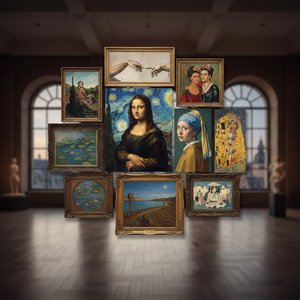
Las 10 Obras Maestras al Óleo que Revolucionaron la Historia del Arte |
Descubre las 10 obras maestras al óleo que transformaron la historia del arte. Explora Van Gogh, Monet, Da Vinci y más. Reproducciones de alta calidad para decorar tu hogar con elegancia. ¡Encuentra tu obra favorita en !

