Cubism · 1911
Mask (Alexander Archipenko, 1911)
Alexander Archipenko (1887–1964) creó Mask. Data de 1911. Pertenece al movimiento Cubism. Está realizado en Photography.
- 1911
- Photography

 Óleo pintado a mano
 Enviar
 Compartir
 Ficha técnica


 Descargar
 Similares
 Presentación de diapositivas
 Preguntas y respuestas

 Estadísticas
Mask en breve
- Título
- Mask
- Artista
- Alexander Archipenko (1887–1964)
- Lugar de nacimiento del artista
- Kiev, Ucrania
- Fecha
- 1911
- Técnica
- Photography
- Movimiento
- Cubism
- Época
- Modern
- Tema
- sculpture, portrait, mask, cubism, monochrome, abstract
¿Qué representa Mask?
Composition and Visual Elements of the Work
In this black and white photograph of Mask by Alexander Archipenko, the viewer is presented with a direct, frontal perspective of a sculpted bust. The composition is straightforward, stripping away any unnecessary background to focus entirely on the human head. This singular focus directs all attention to the anatomical details of the subject. The face is rendered with a quiet solemnity, characterized by closed eyes and a subtle mouth that suggests a state of deep contemplation. The lighting is even and diffused, which allows the viewer to observe the fine textures of the skin without the distraction of harsh contrasts.
The sculpture rests upon a simple wooden block base, providing a grounded, unadorned foundation for the work. A soft shadow is cast beneath the bust, offering a subtle sense of depth and weight to the piece. Through this arrangement, Alexander Archipenko achieves a sense of stillness. The interplay of light and shadow emphasizes the physical presence of the head, making the details of the facial features feel immediate and tangible. The monochrome palette further emphasizes the structural form and the tactile quality of the material used for the sculpture.
Technique and Materials Used in the Sculpture
The sculpture is rendered in stone, likely marble or a material of similar composition. This choice of medium allows for the fine, textured detail seen in the skin and the subtle, closed expression of the facial features. The monochrome nature of the piece emphasizes the interplay of light across these carved surfaces, highlighting the anatomical precision of the bust.
The work is presented upon a simple wooden block base. This base is crafted from wood, providing a stark, organic contrast to the smooth, cool surface of the stone. The composition remains focused and direct, resting quietly on this functional support.
The visual record of this piece is captured through photography. This technique emphasizes the even, diffused lighting that defines the contours of the head and the texture of the wooden pedestal. The resulting image maintains a sense of solemnity through its controlled, monochromatic palette.
Related Works by Alexander Archipenko
To understand the evolution of this artist's approach to the human form, one might look toward his earlier explorations of volume and space. In 1912, he produced Family Life, a work that began his engagement with the fragmentation of the figure. This period also saw the creation of Walking Woman in 1912, a piece noted for its use of voids to suggest movement. These early experiments established a language of intersecting planes that would define much of his output during the decade.
As his style moved into the following years, the energy of his subjects became more concentrated. His 1913 work, Boxing Match, utilized cubic and ovoid forms to convey a sense of physical force. By 1914, he had produced Torso, continuing his investigation into the sculptural essence of the body. Other pieces in the catalog, such as Untitled (154), further illustrate the breadth of his formal inquiries during this formative era of modernism.
Imágenes en alta resolución de Mask
Protegido por derechos de autor: estos archivos son para uso personal y no constituyen una licencia de republicación.
Alexander Archipenko, Mask (1911).
Alexander Archipenko (1887–1964), Mask, 1911, photography. Imagen: OriginalUniqueArt.com.
Preguntas sobre Mask respondidas
¿En qué año se creó "Mask" de Alexander Archipenko?
"Mask" de Alexander Archipenko fue creado en 1911.
¿Qué técnica se utilizó para "Mask" de Alexander Archipenko?
Alexander Archipenko utilizó la técnica de Photography para "Mask". La técnica define la naturaleza material de la obra original.
¿Qué representa "Mask" de Alexander Archipenko?
Los temas de "Mask" son sculpture, portrait, mask, cubism, monochrome, abstract, head, bronze.
¿Es "Mask" de Alexander Archipenko de dominio público?
Información sobre los derechos de autor de "Mask" de Alexander Archipenko: la obra es aún protegido por derechos de autor. Esto determina si las reproducciones de la imagen pueden realizarse libremente.
¿Quién es el artista detrás de "Mask"?
"Mask" se atribuye a Alexander Archipenko.
¿A qué movimiento artístico pertenece "Mask" de Alexander Archipenko?
El movimiento asociado con "Mask" de Alexander Archipenko es Cubism. Esta clasificación sitúa la obra entre artistas y obras relacionadas.
¿A qué etapa de la trayectoria de Alexander Archipenko pertenece "Mask"?
Dentro de la trayectoria de Alexander Archipenko, "Mask" pertenece al Mature Period. Esta etapa permite compararla con otras obras del artista.
¿Qué edad tenía Alexander Archipenko cuando creó "Mask"?
Cuando se creó "Mask" en 1911, Alexander Archipenko —nacido/a en 1887— tenía 24 años.
¿A qué se debe el estado de los derechos de autor de "Mask"?
El estado de los derechos de autor de "Mask" - aún protegido por derechos de autor - se determina a partir del fallecimiento del artista en 1964.
Sobre el artista, Alexander Archipenko
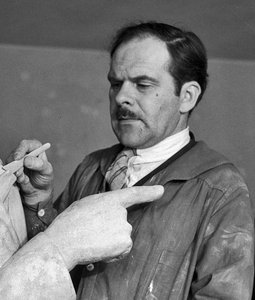
1887–1964, Ucrania
Alexander Archipenko
Alexander Archipenko: Pionero de la Escultura Cubista Nacido: 30 de mayo de 1887, Kiev, Imperio Ruso (ahora Ucrania) Fallecido: 25 de febrero de 1964, Ciudad de Nueva York, EE. UU. Nacionalidad: Estadounidense-ucraniano Movimiento: Cubismo, Vanguardia Primeros Años y Formación Archipenko nació en Kiev por Porfiry Antonowych Archipenko y Poroskowia Vassylivna Machowa Archipenko. Tuvo un hermano, Eugene Archipenko.
Sobre Alexander Archipenko Obras destacadas de Alexander Archipenko
Otras obras de Alexander Archipenko
 Los Boxeadores (La Lutte)1914
 Woman combing her hair1914
 The Past1926
 Nude1938
Ensayos sobre Mask
 Francis Picabia: 25 obras que exploran el Cubismo, las máquinas Dada y el SurrealismoExplora 25 obras de Francis Picabia, desde el Cubismo hasta el Dadaísmo. Descubre su legado y colecciones en OriginalUniqueArt.com.
 Stone Souls: The Enduring Artistry and Technical Precision of Marble Bust SculptureExplore the technical mastery of marble sculpture from Roman verism to Neoclassicism. Discover the enduring beauty of carved stone today.
 25 obras de Aleksandr Rodchenko: Un viaje visual por el ConstructivismoExplora las 25 obras clave de Aleksandr Rodchenko y el Constructivismo. Descubre su legado en OriginalUniqueArt.com.