

 Vista previa
 Compartir
 Compartir
 Ver detalles

 Descargar
 Ver similares
 Radiografía
 Presentación de diapositivas
Study of an Architect
 Brush
Brush- WallArt
- Northern Renaissance
 1506
1506 386.0 x 262.0 cm
 Staatliche Museen zu Berlin
 Leer más
Giclée / Impresión de arte
Impresiones giclée o en lienzo de calidad de museo con producción rápida y opciones de acabado flexibles. ( Encargar reproducción pintada a mano Comprar descarga)




P118B $10

P118H $10

P118W $10

P438Z $10

P508JH $12

P508YH $12

P805H $10

P805Z $10

P919BZ $10

P919G $10

P919XJ $10

P959ZH $10

P968JZ $12

W106C $8

W218G $10

W218JH $8

W218Y $10

W307PJ $10

W316G $10

W316PJ $8

W316Y $10

W398PJ $8

W4111J $10

W500HY $15

W500JH $15

W692G $12

W849H $8

W940BG $15

W953PJ $8




Elija entre nuestros tamaños predefinidos que respetan las proporciones originales de la obra.

Puede introducir sus propias dimensiones para adaptarse a un marco o espacio específico. Si el tamaño seleccionado no coincide con las proporciones de la imagen original, recortaremos la obra de arte o extenderemos la imagen con un borde con efecto espejo o de color sólido. Se enviará una maqueta digital para su aprobación antes de que comience la producción.
Tenga en cuenta que la vista previa en pantalla no refleja el recorte o la extensión real. Solo la maqueta mostrará con precisión la composición final.
Aunque existen tamaños personalizados, recomendamos seleccionar una dimensión de la lista predefinida para preservar las proporciones originales.
Envío a todo el mundo () en 2 semanas en lugar de las 4/5 semanas estándar. (21 agosto)

Envío exprés gratuito a todo el mundo

Lienzo de lino de alta calidad

Seguro de envío completo

Garantía de reembolso de aranceles aduaneros

Garantía de fidelidad cromática exacta

Política de devolución de 60 días (solo por defectos)

Garantía de devolución del 100% del dinero

Oferta por volumen
 La opción de vidrio solo está disponible en tamaños inferiores a 110 cm.

Study of an Architect
Giclée / Impresión de arte
Tamaño de la reproducción
-


Precio total
$ 80
Descripción de la pieza
A Moment of Contemplation: Albrecht Dürer’s “Study of an Architect”
Albrecht Dürer's "Study of an Architect," created in 1506, isn’t merely a depiction of a man and a building; it’s a profound meditation on human intellect, the pursuit of knowledge, and the very nature of observation. This remarkably intimate portrait, measuring a substantial 386 x 262 cm, transcends its simple subject matter to become a cornerstone of Renaissance artistic thought. Dürer, already establishing himself as a pivotal figure in German art, employed his masterful technique to capture not just an external likeness but also the internal state of the architect before him – a man lost in considered thought.
The Man and His Task: Subject and Context
The central figure, identified as Hans Holbein the Younger (though this identification remains debated by scholars), is presented with an arresting stillness. He’s a man of considerable age, his face etched with lines that speak of experience and perhaps even weariness. His beard, meticulously rendered in Dürer's signature black chalk, adds to the impression of wisdom and contemplation. The architect stands before what appears to be a partially constructed building – a skeletal framework hinting at a grand design yet to fully materialize. The setting itself is deliberately ambiguous; it’s not a specific location but rather a representation of architectural possibility. Dürer was deeply interested in mathematics, perspective, and the principles governing harmonious proportion, all of which are subtly interwoven into this study. The year 1506 marks a crucial period for Dürer – he was increasingly focused on theoretical art, producing detailed treatises alongside his celebrated paintings and prints.
Technique and Material: A Study in Detail
Dürer’s choice of medium—black chalk—is profoundly significant. This painstaking technique allowed him to build up the image through countless layers of delicate lines, creating a remarkable sense of texture and depth. The level of detail is astonishing; you can almost feel the roughness of the stone, the precision of the measurements, and the weight of the architect’s gaze. The artist's use of hatching and cross-hatching creates subtle gradations of tone, lending volume to the figure and suggesting the play of light on the building. It’s a testament to Dürer’s unparalleled control over his materials and his ability to translate three-dimensional reality onto a two-dimensional surface. The scale of the work itself—a large format for its time—further emphasizes the importance he placed on capturing every nuance of the subject.
Symbolism and Emotional Resonance: Beyond Representation
“Study of an Architect” is more than a portrait; it’s a visual allegory. The architect, lost in his calculations and visions, embodies the intellectual pursuit of knowledge and the drive to create order from chaos. The cup he holds could represent both sustenance for the mind – the fuel required for creative thought – and a symbol of contemplation itself. The background figures, rendered with less detail, serve as a reminder that the architect exists within a broader context, reliant on others but ultimately driven by his own vision. Dürer’s work invites us to consider our own processes of observation, interpretation, and creation. The painting evokes a quiet sense of introspection—a feeling of being drawn into the architect's world, sharing in his focused attention and thoughtful deliberation. It is this ability to convey such profound emotion through seemingly simple imagery that secures Dürer’s place as one of the greatest artists of all time.
OriginalUniqueArt offers exquisite, hand-painted reproductions of Albrecht Dürer's "Study of an Architect," allowing you to bring this timeless masterpiece into your home or office. Each reproduction is created with meticulous attention to detail, faithfully capturing the artist’s unique style and emotional depth.
Biografía del artista
Albrecht Dürer: Vida y Legado
Primeros Años y Formación
Albrecht Dürer, una figura imponente del Renacimiento alemán, nació el 21 de mayo de 1471 en Núremberg, Alemania. Su padre, Albrecht Dürer el Viejo, era un exitoso joyero, y fue dentro de este ambiente artístico donde la inclinación de joven Albrecht hacia el arte comenzó a florecer. A los trece años, comenzó su aprendizaje con Michael Wolgemut, un destacado artista en Núremberg, adquiriendo habilidades fundamentales en pintura, dibujo y técnicas de grabado. Un autorretrato creado en 1484, que se exhibe en la Albertina de Viena, proporciona evidencia notable de su talento precoz.
Ascenso a la Prominencia y Desarrollo Artístico
Para sus veinte años, Dürer se había establecido como un maestro grabador, logrando reconocimiento en toda Europa. Emprendió viajes a Italia, donde conoció las obras de maestros del Renacimiento como Rafael, Giovanni Bellini y Leonardo da Vinci. Estas interacciones influyeron profundamente en su estilo artístico, llevándolo a integrar motivos y técnicas clásicas en su estética europea del norte.
Obras Clave y Estilo Artístico
El *oeuvre* de Dürer abarca una amplia gama de medios, incluyendo pinturas, grabados, grabados en madera y escritos teóricos. Algunas de sus obras más celebradas incluyen:
- La Serie del Apocalipsis (1498): Una colección de catorce grabados que ilustran el Libro Revelación, mostrando la habilidad de Dürer en este medio a pesar de sus elementos estilísticos góticos.
- Melancolía I (1514): Tal vez su grabado más enigmático, Melancolía I continúa siendo objeto de un intenso análisis y interpretación por parte de los estudiosos.
- San Jerónimo en su Estudio (1514): Un magistral grabado que demuestra el excepcional dominio de Dürer de la perspectiva, el detalle y la representación simbólica.
El estilo de Dürer se caracteriza por el realismo meticuloso, el dibujo preciso y una profunda comprensión de la anatomía y la perspectiva. También fue pionero en el uso del color aguafuerte como medio independiente.
Contribuciones Teóricas
Más allá de su práctica artística, Dürer hizo contribuciones significativas a la teoría del arte. Escribió varios tratados sobre geometría, proporción y anatomía humana, incluyendo Cuatro Libros de Proporción Humana (1528). Estos escritos demuestran su creencia en las bases matemáticas del arte y su compromiso con establecer un enfoque científico para la creación artística.
Legado e Importancia Histórica
El impacto de Albrecht Dürer en el mundo del arte es innegable. Puenteó la brecha entre las tradiciones europeas del norte y los ideales del Renacimiento italiano, introduciendo motivos clásicos en el arte del norte mientras mantenía su carácter distintivo. Sus tratados teóricos ayudaron a elevar el estatus de los artistas y establecieron un nuevo marco intelectual para la práctica artística. Sigue siendo una figura fundamental en la historia del arte, inspirando a generaciones de artistas con sus habilidades técnicas, espíritu innovador y visión profunda.
Influencias
- Michael Wolgemut
- Leonardo da Vinci
- Rafael
- Giovanni Bellini
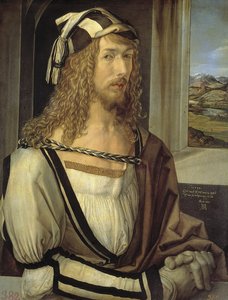
Albrecht Dürer
1471 - 1528 , Italy
Datos clave
- Artistas Que Influyeron:
- Michael Wolgemut
- Rafael
- Giovanni Bellini
- Leonardo da Vinci
- Fecha De Muerte: 1528
- Fecha De Nacimiento: 21 de mayo de 1471
- Lugar De Nacimiento: Núremberg, Italia
- Movimiento Artístico: Renacimiento alemán
- Nacionalidad: Alemán
- Nombre Completo: Albrecht Dürer
- Obras Notables:
- Serie del Apocalipsis
- Melancolía I
- San Jerónimo en su Estudio
Artículos relacionados
Albrecht Dürer: Las 25 Obras Maestras del Renacimiento Alemán | OriginalUniqueArt
Descubre las 25 obras maestras de Albrecht Dürer, el genio del Renacimiento alemán. Explora grabados icónicos como 'Melancolía I' y aprende sobre su técnica innovadora. Encuentra reproducciones de arte de alta calidad para decorar tu hogar en OriginalUniqueArt.com.
Los 25 Tesoros del Museo Británico: Arte, Historia y Decoración Excepcional
Descubre los 25 tesoros del Museo Británico: desde la Piedra Rosetta hasta obras de Rembrandt y Van Gogh. Explora su historia, técnica y significado. Reproducciones de arte exclusivas en OriginalUniqueArt.com para decorar tu hogar con elegancia.

Blanco Sublime: Los 10 Cuadros Más Famosos Dominados por la Luz y el Color
Descubre los 10 cuadros blancos más emblemáticos de la historia del arte. Explora Monet, Van Gogh y Klimt, y su magistral uso de la luz y el color. Encuentra reproducciones de alta calidad e inspírate para tu decoración en .

Albrecht Dürer: A Renaissance Master's Legacy of Innovation and Self-Portraiture
Explore the life & art of Albrecht Dürer, a pivotal German Renaissance master. Discover his groundbreaking printmaking techniques, iconic self-portraits, and lasting influence on Western art history. A deep dive into innovation & symbolism.

Las 10 Pinturas Más Famosas Dominadas por el Negro | Arte y Decoración
Descubre las 10 pinturas más impactantes dominadas por el negro. Explora obras maestras de Rembrandt, Goya y Rothko, su historia y significado. Encuentra reproducciones de arte exclusivas para transformar tu hogar en .



