

 Ver en contexto
 Enviar
 Compartir
 Detalles

 Descargar
 Similares
 Radiografía
 Presentación de diapositivas
Prudentia


 Ver más
Adquiera una imagen digital de alta resolución y optimizada, muy superior a la vista previa en línea.
Cada archivo es preparado meticulosamente por nuestros especialistas internos mediante el uso de herramientas avanzadas y un experto retoque manual. Nos aseguramos de que cada imagen posea una claridad excepcional, una precisión cromática impecable y un detalle minucioso.
El archivo final se entrega por correo electrónico en un plazo de 72 horas, optimizado para su uso inmediato en entornos profesionales, editoriales y de impresión. Esta es la misma calidad en la que confían los estudios de diseño, las editoriales y las galerías de primer nivel.
Imagen Digital
Descarga un archivo de alta resolución para exhibición personal, impresión y proyectos creativos. ( Comprar impresión Comprar pintura hecha a mano)
Incluido en cada pedido de imágenes digitales
Entrega digital experta, garantizada.
Al elegir OriginalUniqueArt.com, no solo está adquiriendo una imagen; está recibiendo una obra de arte digital mejorada profesionalmente, elaborada con precisión y respaldada por una garantía de satisfacción. Esto es todo lo que incluye su pedido, automáticamente:

Entrega rápida por email
Recibirá su archivo de imagen digital en alta resolución por correo electrónico en un plazo de 72 horas tras realizar su pedido, listo para su uso inmediato.

Archivo digital optimizado por IA
Su obra de arte se optimiza profesionalmente mediante herramientas avanzadas de IA y edición manual, garantizando el máximo detalle, claridad y precisión cromática.

Reenvío gratuito de por vida
¿Has borrado o perdido tu archivo por error? No te preocupes: te lo volveremos a enviar en cualquier momento, sin coste adicional.

Sin gastos de importación, siempre
Disfrute de su obra de arte al instante sin aduanas, aranceles ni gastos de envío; las descargas digitales siempre están libres de impuestos.

Garantía de fidelidad de color
Garantizamos que su imagen digital refleje los colores originales con la mayor fidelidad posible, mediante el uso de herramientas profesionales y gestión del color.

Garantía de satisfacción de 60 días
Si no está satisfecho con su imagen digital, la revisaremos o le reembolsaremos el 100% en un plazo de 60 días, sin preguntas.

100% Garantía de devolución de dinero
¿No está satisfecho? Obtenga un reembolso completo dentro de los 60 días posteriores a la recepción de su archivo digital, sin necesidad de explicaciones.

Descuentos por pedidos grandes
Compra 3 imágenes, ahorra 10% - Compra 5, ahorra 15% - Compra 10+, ahorra 20%. Ideal para proyectos creativos, galerías y agencias.
The Essence of Wisdom: A Glimpse into Dürer’s Prudentia
In the quiet, meticulous lines of Albrecht Dürer’s Prudentia, we encounter more than just a portrait; we enter a profound meditation on the human intellect and the virtue of foresight. Created in 1494, during the vibrant dawn of the Northern Renaissance, this work serves as a masterclass in the power of monochrome. The figure, captured in a graceful profile, emerges from the paper with a startlingly lifelike presence. Through the expert use of hatching and cross-hatching, Dürer breathes volume into the heavy, draped fabrics that cling to her form, creating a tactile sensation of weight and texture that invites the viewer to reach out and touch the very essence of the Renaissance spirit.
The composition is a delicate dance between simplicity and complexity. Against a minimalist background that allows the central figure to command the space, Dürer employs subtle organic elements—a hint of foliage at the base—to ground the personification in the natural world. This restraint ensures that every stroke of the artist's hand serves a higher purpose: to direct our gaze toward the symbolic treasures held by the subject. The interplay of light and shadow is not merely a technical feat but an emotional one, casting soft, diffused glows that suggest a quiet, contemplative atmosphere, perfect for a space dedicated to thought and reflection.
Symbolism and the Renaissance Mind
To behold Prudentia is to read a visual poem written in the language of late medieval allegory. As the personification of Prudence, the subject carries the tools of her namesake virtue with intentionality. In one hand, she holds a mirror, a profound symbol of self-reflection and the ability to see the truth without distortion. In the other, an open book or manuscript represents the pursuit of knowledge and the wisdom gained through study. These are not merely objects; they are the pillars of a life lived with intention. For the modern collector, this piece offers a timeless connection to the values of mindfulness and intellectual depth.
Dürer’s mastery lies in his ability to weave these complex theological and philosophical concepts into a singular, cohesive image. The intricate folds of her attire, meticulously shaded to create a sense of three-dimensional reality, may further signify status or the layered nature of virtue itself. This depth of meaning makes the artwork an extraordinary choice for interior designers seeking to infuse a room with character and narrative weight. Whether placed in a private library, a sophisticated study, or a contemporary living space, Prudentia acts as a silent, dignified interlocutor, sparking conversation and inspiring introspection.
A Legacy of Precision for the Discerning Collector
The technical brilliance of this work is rooted in Dürer’s unique upbringing in Nuremberg, a city defined by the precision of goldsmithing. This heritage of craftsmanship is evident in every fine line and meticulously rendered detail. As a pivotal figure who bridged the gap between the Middle Ages and the modern era, Dürer’s ability to translate complex human emotions into precise graphic forms remains unparalleled. Owning a high-quality reproduction of such a masterpiece allows one to bring this historical gravity into the contemporary home.
For those looking to curate an environment of elegance and intellectual rigor, Prudentia offers an incomparable aesthetic advantage. The monochromatic palette ensures that it integrates seamlessly with various decor styles—from the classicism of traditional estates to the stark, clean lines of modern minimalism. It is more than a decoration; it is an invitation to embrace the virtues of clarity, wisdom, and beauty, preserved through the centuries by the hand of a true master.
Biografía del artista
Albrecht Dürer: Vida y Legado
Primeros Años y Formación
Albrecht Dürer, una figura imponente del Renacimiento alemán, nació el 21 de mayo de 1471 en Núremberg, Alemania. Su padre, Albrecht Dürer el Viejo, era un exitoso joyero, y fue dentro de este ambiente artístico donde la inclinación de joven Albrecht hacia el arte comenzó a florecer. A los trece años, comenzó su aprendizaje con Michael Wolgemut, un destacado artista en Núremberg, adquiriendo habilidades fundamentales en pintura, dibujo y técnicas de grabado. Un autorretrato creado en 1484, que se exhibe en la Albertina de Viena, proporciona evidencia notable de su talento precoz.
Ascenso a la Prominencia y Desarrollo Artístico
Para sus veinte años, Dürer se había establecido como un maestro grabador, logrando reconocimiento en toda Europa. Emprendió viajes a Italia, donde conoció las obras de maestros del Renacimiento como Rafael, Giovanni Bellini y Leonardo da Vinci. Estas interacciones influyeron profundamente en su estilo artístico, llevándolo a integrar motivos y técnicas clásicas en su estética europea del norte.
Obras Clave y Estilo Artístico
El *oeuvre* de Dürer abarca una amplia gama de medios, incluyendo pinturas, grabados, grabados en madera y escritos teóricos. Algunas de sus obras más celebradas incluyen:
- La Serie del Apocalipsis (1498): Una colección de catorce grabados que ilustran el Libro Revelación, mostrando la habilidad de Dürer en este medio a pesar de sus elementos estilísticos góticos.
- Melancolía I (1514): Tal vez su grabado más enigmático, Melancolía I continúa siendo objeto de un intenso análisis y interpretación por parte de los estudiosos.
- San Jerónimo en su Estudio (1514): Un magistral grabado que demuestra el excepcional dominio de Dürer de la perspectiva, el detalle y la representación simbólica.
El estilo de Dürer se caracteriza por el realismo meticuloso, el dibujo preciso y una profunda comprensión de la anatomía y la perspectiva. También fue pionero en el uso del color aguafuerte como medio independiente.
Contribuciones Teóricas
Más allá de su práctica artística, Dürer hizo contribuciones significativas a la teoría del arte. Escribió varios tratados sobre geometría, proporción y anatomía humana, incluyendo Cuatro Libros de Proporción Humana (1528). Estos escritos demuestran su creencia en las bases matemáticas del arte y su compromiso con establecer un enfoque científico para la creación artística.
Legado e Importancia Histórica
El impacto de Albrecht Dürer en el mundo del arte es innegable. Puenteó la brecha entre las tradiciones europeas del norte y los ideales del Renacimiento italiano, introduciendo motivos clásicos en el arte del norte mientras mantenía su carácter distintivo. Sus tratados teóricos ayudaron a elevar el estatus de los artistas y establecieron un nuevo marco intelectual para la práctica artística. Sigue siendo una figura fundamental en la historia del arte, inspirando a generaciones de artistas con sus habilidades técnicas, espíritu innovador y visión profunda.
Influencias
- Michael Wolgemut
- Leonardo da Vinci
- Rafael
- Giovanni Bellini
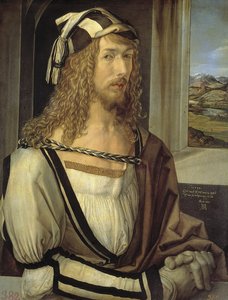
Albrecht Dürer
1471 - 1528 , Italy
Breves datos
- Artistas Que Influyeron:
- Michael Wolgemut
- Rafael
- Giovanni Bellini
- Leonardo da Vinci
- Fecha De Muerte: 1528
- Fecha De Nacimiento: 21 de mayo de 1471
- Lugar De Nacimiento: Núremberg, Italia
- Movimiento Artístico: Renacimiento alemán
- Nacionalidad: Alemán
- Nombre Completo: Albrecht Dürer
- Obras Notables:
- Serie del Apocalipsis
- Melancolía I
- San Jerónimo en su Estudio

