
 Ver en contexto
 Enviar
 Compartir
 Detalles
 Guía
Guía

 Descargar
 Similares
 Radiografía
 Presentación de diapositivas
 Q&A
Q&A Estadísticas
Adam and Eve

- 242.0 x 201.0 cm


 Ver más
Giclée / Impresión de arte
Impresiones giclée o en lienzo de calidad de museo con producción rápida y opciones de acabado flexibles. ( Comprar pintura hecha a mano Cambiar a imagen digital)




P118B €10

P118H €10

P118W €10

P438Z €10

P508JH €12

P508YH €12

P805H €10

P805Z €10

P919BZ €10

P919G €10

P919XJ €10

P959ZH €10

P968JZ €12

W106C €8

W218G €10

W218JH €8

W218Y €10

W307PJ €10

W316G €10

W316PJ €8

W316Y €10

W398PJ €8

W4111J €10

W500HY €15

W500JH €15

W692G €12

W849H €8

W940BG €15

W953PJ €8




Elija entre nuestros tamaños predefinidos que respetan las proporciones originales de la obra.

Introduzca el ancho y el alto que necesite para adaptarse a su marco o pared. Una impresión solo puede recortarse, nunca hacerse más grande que la imagen original, por lo que un tamaño con una forma distinta perderá parte de la obra. Le enviaremos una maqueta digital para su aprobación antes de realizar cualquier impresión. La imagen que se muestra en esta página no refleja el recorte real; solo la maqueta lo hace.
Envío a todo el mundo () en 2 semanas en lugar de las 4/5 semanas estándar. (2 noviembre)

Envío exprés gratuito a todo el mundo

Lienzo de lino de alta calidad

Seguro de envío total

Garantía de reembolso de aranceles aduaneros

Garantía de fidelidad cromática exacta

Política de devolución de 100 días (solo por defectos)

Garantía de devolución del 100% del dinero

Descuento por cantidad
 La opción de vidrio solo está disponible en tamaños inferiores a 110 cm.

Adam and Eve
Giclée / Impresión de arte
Dimensiones de la reproducción
-


Precio total final
€ 71
The Genesis of a Vision: Albrecht Dürer's *Adam and Eve*
Albrecht Dürer’s 1504 engraving, *Adam and Eve*, isn’t merely a depiction of the biblical story; it’s a profound meditation on humanity, knowledge, and the burgeoning spirit of the German Renaissance. Far removed from the idyllic gardens often portrayed in earlier art, this work plunges us into a dark, foreboding forest—a distinctly German landscape imbued with elements of folklore and mystery. Dürer, a master of both meticulous detail and expressive symbolism, transforms a foundational narrative into a complex visual statement that speaks volumes about his time and his artistic vision.
The scene immediately arrests the viewer’s attention. Adam and Eve stand in a carefully constructed contrapposto pose—a deliberate nod to classical ideals of beauty and proportion. Their bodies, rendered with astonishing anatomical accuracy, are strikingly frontal, their gazes averted towards one another. This deliberate shift away from naturalism is key; Dürer isn't aiming for photographic realism but rather a stylized representation that emphasizes the figures’ idealized form and their symbolic significance. The forest itself—a dense tangle of trees and undergrowth—is far from welcoming. It’s a place of shadows, hinting at danger and uncertainty, reflecting the perilous consequences awaiting Adam and Eve.
A Collision of Worlds: Style, Technique, and Historical Context
Dürer's mastery is evident in every line of this engraving. He employs a meticulous point-to-line technique, utilizing the burin—a sharp tool for etching—with unparalleled precision to create an astonishing range of tonal values. The deep blacks of the forest contrast sharply with the luminous highlights on the figures’ skin, generating a dramatic sense of depth and atmosphere. The use of cross-hatching creates subtle textures and shadows, adding layers of complexity to the composition. This level of detail wasn't simply for aesthetic effect; it was a demonstration of Dürer’s technical prowess and his commitment to capturing the essence of his subjects.
Born in Nuremberg, a thriving center of art and commerce during the Renaissance, Dürer was deeply influenced by both Italian humanism and German folklore. He sought to synthesize these diverse traditions into a uniquely personal style. The inclusion of exotic elements—a tropical parrot perched on a branch, for example—suggests his awareness of the wider world and his desire to elevate the biblical narrative beyond its immediate context. His identification as “Albert Dvrer Noricvs” (Albert Dürer of Nuremberg) in the cartelino—the small cartouche at the bottom of the print—underscores this sense of regional pride and artistic ambition.
Decoding the Symbols: Meaning Beyond the Narrative
Beyond the straightforward depiction of Adam and Eve’s transgression, *Adam and Eve* is rich in symbolic meaning. The forest itself represents the wilderness, a space of temptation and danger. The animals—an elk, ox, rabbit, cat, mouse, and goat—each embody a specific human temperament or “humor,” reflecting the medieval theory of humors that influenced Renaissance thought. The parrot, with its evocative call, is linked to the Virgin Mary, suggesting a potential antidote to the consequences of sin. The inclusion of these diverse elements creates a complex tapestry of meaning, inviting viewers to contemplate not only the story of Adam and Eve but also the broader themes of human nature, morality, and the relationship between humanity and the natural world.
Ultimately, Dürer’s *Adam and Eve* is more than just a biblical illustration; it's a profound statement about the Renaissance spirit—a celebration of human potential tempered by an awareness of its limitations. It remains a powerful and enduring work of art, captivating viewers with its technical brilliance, symbolic richness, and emotional depth.
Preguntas y respuestas
¿En qué año se creó "Adam and Eve" de Albrecht Dürer?
"Adam and Eve" de Albrecht Dürer fue creada en 1504.
¿Qué relevancia tiene "Adam and Eve" dentro de German Renaissance?
"Adam and Eve" destaca con un nivel de Icónico entre las obras del German Renaissance en el catálogo.
¿Qué color predomina en la composición de "Adam and Eve" de Albrecht Dürer?
El color dominante de "Adam and Eve" de Albrecht Dürer es Verde ftalocianina (#342a10).
Biografía del artista
Albrecht Dürer: Vida y Legado
Primeros Años y Formación
Albrecht Dürer, una figura imponente del Renacimiento alemán, nació el 21 de mayo de 1471 en Núremberg, Alemania. Su padre, Albrecht Dürer el Viejo, era un exitoso joyero, y fue dentro de este ambiente artístico donde la inclinación de joven Albrecht hacia el arte comenzó a florecer. A los trece años, comenzó su aprendizaje con Michael Wolgemut, un destacado artista en Núremberg, adquiriendo habilidades fundamentales en pintura, dibujo y técnicas de grabado. Un autorretrato creado en 1484, que se exhibe en la Albertina de Viena, proporciona evidencia notable de su talento precoz.
Ascenso a la Prominencia y Desarrollo Artístico
Para sus veinte años, Dürer se había establecido como un maestro grabador, logrando reconocimiento en toda Europa. Emprendió viajes a Italia, donde conoció las obras de maestros del Renacimiento como Rafael, Giovanni Bellini y Leonardo da Vinci. Estas interacciones influyeron profundamente en su estilo artístico, llevándolo a integrar motivos y técnicas clásicas en su estética europea del norte.
Obras Clave y Estilo Artístico
El *oeuvre* de Dürer abarca una amplia gama de medios, incluyendo pinturas, grabados, grabados en madera y escritos teóricos. Algunas de sus obras más celebradas incluyen:
- La Serie del Apocalipsis (1498): Una colección de catorce grabados que ilustran el Libro Revelación, mostrando la habilidad de Dürer en este medio a pesar de sus elementos estilísticos góticos.
- Melancolía I (1514): Tal vez su grabado más enigmático, Melancolía I continúa siendo objeto de un intenso análisis y interpretación por parte de los estudiosos.
- San Jerónimo en su Estudio (1514): Un magistral grabado que demuestra el excepcional dominio de Dürer de la perspectiva, el detalle y la representación simbólica.
El estilo de Dürer se caracteriza por el realismo meticuloso, el dibujo preciso y una profunda comprensión de la anatomía y la perspectiva. También fue pionero en el uso del color aguafuerte como medio independiente.
Contribuciones Teóricas
Más allá de su práctica artística, Dürer hizo contribuciones significativas a la teoría del arte. Escribió varios tratados sobre geometría, proporción y anatomía humana, incluyendo Cuatro Libros de Proporción Humana (1528). Estos escritos demuestran su creencia en las bases matemáticas del arte y su compromiso con establecer un enfoque científico para la creación artística.
Legado e Importancia Histórica
El impacto de Albrecht Dürer en el mundo del arte es innegable. Puenteó la brecha entre las tradiciones europeas del norte y los ideales del Renacimiento italiano, introduciendo motivos clásicos en el arte del norte mientras mantenía su carácter distintivo. Sus tratados teóricos ayudaron a elevar el estatus de los artistas y establecieron un nuevo marco intelectual para la práctica artística. Sigue siendo una figura fundamental en la historia del arte, inspirando a generaciones de artistas con sus habilidades técnicas, espíritu innovador y visión profunda.
Influencias
- Michael Wolgemut
- Leonardo da Vinci
- Rafael
- Giovanni Bellini
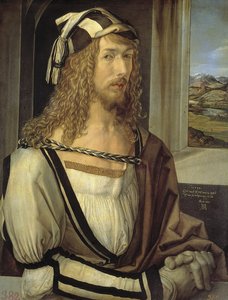
Albrecht Dürer
1471 - 1528 , Italy
Datos clave
- Artistas Que Influyeron:
- Michael Wolgemut
- Rafael
- Giovanni Bellini
- Leonardo da Vinci
- Fecha De Muerte: 1528
- Fecha De Nacimiento: 21 de mayo de 1471
- Lugar De Nacimiento: Núremberg, Italia
- Movimiento Artístico: Renacimiento alemán
- Nacionalidad: Alemán
- Nombre Completo: Albrecht Dürer
- Obras Notables:
- Serie del Apocalipsis
- Melancolía I
- San Jerónimo en su Estudio
Artículos relacionados

Los 10 Grabados Legendarios que Transformaron la Historia del Arte | OriginalUniqueArt
Descubre los 10 grabados legendarios de Dürer, Rembrandt y Goya que revolucionaron el arte. Explora la historia, técnicas y belleza atemporal de estas obras maestras. Reproducciones de alta calidad en OriginalUniqueArt.com para decorar tu hogar con arte clásico.
Las 25 mejores obras de Alberto Durero: El maestro del Renacimiento
Explora las 25 obras maestras de Alberto Durero y el Renacimiento. ¡Descubre toda la colección en OriginalUniqueArt.com!

Albrecht Dürer: A Renaissance Master's Legacy of Innovation and Self-Portraiture
Explore the life & art of Albrecht Dürer, a pivotal German Renaissance master. Discover his groundbreaking printmaking techniques, iconic self-portraits, and lasting influence on Western art history. A deep dive into innovation & symbolism.

Engraving: A Historical Survey of Technique, Artistic Expression & Enduring Legacy
Explore the rich history of engraving with OriginalUniqueArt. Discover techniques, iconic artists like Dürer & Callot, collecting tips, and expert guidance for preserving your art investment. Learn about intaglio printing & more!

25 Obras Maestras del Museo Británico que Debes Ver: Un Viaje por la Historia
Explora 25 tesoros del Museo Británico: de Da Vinci a Miguel Ángel. ¡Descubre estas obras maestras en OriginalUniqueArt.com!


