
 Ver en contexto
 Enviar
 Compartir
 Detalles
 Guía
Guía

 Descargar
 Similares
 Radiografía
 Presentación de diapositivas
 Q&A
Q&A Estadísticas
The Lone Scout


 Ver más
Giclée / Impresión de arte
Impresiones giclée o en lienzo de calidad de museo con producción rápida y opciones de acabado flexibles. ( Comprar pintura hecha a mano Cambiar a imagen digital)




P118B €10

P118H €10

P118W €10

P438Z €10

P508JH €12

P508YH €12

P805H €10

P805Z €10

P919BZ €10

P919G €10

P919XJ €10

P959ZH €10

P968JZ €12

W106C €8

W218G €10

W218JH €8

W218Y €10

W307PJ €10

W316G €10

W316PJ €8

W316Y €10

W398PJ €8

W4111J €10

W500HY €15

W500JH €15

W692G €12

W849H €8

W940BG €15

W953PJ €8




Elija entre nuestros tamaños predefinidos que respetan las proporciones originales de la obra.

Introduzca el ancho y el alto que necesite para adaptarse a su marco o pared. Una impresión solo puede recortarse, nunca hacerse más grande que la imagen original, por lo que un tamaño con una forma distinta perderá parte de la obra. Le enviaremos una maqueta digital para su aprobación antes de realizar cualquier impresión. La imagen que se muestra en esta página no refleja el recorte real; solo la maqueta lo hace.
Envío a todo el mundo () en 2 semanas en lugar de las 4/5 semanas estándar. (1 noviembre)

Envío exprés gratuito a todo el mundo

Lienzo de lino de alta calidad

Seguro de envío total

Garantía de reembolso de aranceles aduaneros

Garantía de fidelidad cromática exacta

Política de devolución de 100 días (solo por defectos)

Garantía de devolución del 100% del dinero

Descuento por cantidad
 La opción de vidrio solo está disponible en tamaños inferiores a 110 cm.

The Lone Scout
Giclée / Impresión de arte
Dimensiones de la reproducción
-


Precio total final
€ 71
The Lone Scout: A Vision of American Symbolism
Albert Pinkham Ryder’s “The Lone Scout,” painted in 1885, is more than just a depiction of a rider on horseback; it's a deeply resonant exploration of solitude, discovery, and the untamed spirit of the American West. Housed within the Fine Arts Museums of San Francisco, this oil-on-canvas masterpiece stands as a pivotal work in Ryder’s oeuvre and a significant example of American Symbolism and Tonalism – movements that sought to capture not just visual reality but also emotional atmosphere and subjective experience.
Ryder, born in New Bedford, Massachusetts, possessed an intensely private and often eccentric personality. His early life was steeped in the maritime traditions of his hometown, a landscape of rugged coastlines and bustling harbors that undoubtedly informed his artistic sensibilities. However, it was his relocation to New York City in the late 1860s, amidst his brother’s burgeoning hotel business, that provided him with access to a vibrant cultural scene – an exposure that would profoundly shape his artistic development. Influenced by the Barbizon School in France and the Hague School in Holland, Ryder developed a distinctive style characterized by bold colors, expressive brushstrokes, and a masterful manipulation of light and shadow. “The Lone Scout” exemplifies this approach, eschewing photographic realism in favor of an evocative portrayal of mood and feeling.
A Landscape of Dreams: Composition and Technique
The painting’s composition immediately draws the viewer into its dreamlike quality. A solitary figure, clad in a dark coat and turban-like head covering, dominates the left side of the frame, perched atop a powerful horse that surges forward across an expansive, undulating landscape. The background is dominated by a vast, turbulent sky – a swirling vortex of blues, grays, and hints of violet – suggesting both immensity and impending change. Ryder’s technique is particularly noteworthy; he employs loose, gestural brushstrokes to create a sense of movement and dynamism, while simultaneously utilizing tonal variations to establish depth and atmosphere. The colors are rich and saturated, yet subtly muted, contributing to the painting's overall mood of quiet contemplation.
Ryder’s use of light is particularly striking. It isn’t a bright, direct illumination but rather a diffused glow that seems to emanate from an unseen source, casting long shadows and highlighting key elements within the composition. This technique creates a sense of mystery and invites the viewer to actively participate in interpreting the scene.
Symbolism and Narrative
“The Lone Scout” is rich with symbolic meaning. The solitary figure on horseback represents exploration, both physical and spiritual – a journey into the unknown. The vast landscape symbolizes the challenges and opportunities of the American frontier, while the turbulent sky hints at the unpredictable nature of life itself. Some art historians interpret the scout as an allegory for the pioneer spirit, embodying the courage and resilience required to forge a new path in a challenging environment. Ryder himself often imbued his paintings with personal symbolism, drawing inspiration from literature, mythology, and his own emotional experiences.
Interestingly, “The Lone Scout” was created during a period of significant social and cultural change in America – the late 19th century, a time marked by westward expansion, industrialization, and increasing urbanization. Ryder’s painting can be seen as a reflection of these broader societal trends, capturing both the allure and the anxieties associated with this era of transformation.
A Legacy of Mystique
Albert Pinkham Ryder remains one of America's most enigmatic and beloved artists. “The Lone Scout” stands as a testament to his unique vision and artistic genius – a painting that continues to captivate viewers with its evocative atmosphere, symbolic depth, and masterful technique. Reproductions of this iconic work offer an accessible way to experience the power and beauty of Ryder’s art, bringing a touch of American Symbolism into any space. For those seeking to delve deeper into Ryder's life and work, resources such as Wikipedia and OriginalUniqueArt.com provide valuable insights into his artistic journey.
Preguntas y respuestas
¿Qué tamaño y orientación se recomiendan para la impresión de "The Lone Scout"?
Para "The Lone Scout", la configuración de impresión recomendada es un tamaño de Medium y una orientación Portrait.
¿Es "The Lone Scout" de Albert Pinkham Ryder una composición en formato vertical, horizontal o cuadrado?
"The Lone Scout" de Albert Pinkham Ryder tiene un formato Portrait. El formato describe las proporciones de la composición.
¿Se puede reproducir legalmente "The Lone Scout" de Albert Pinkham Ryder, que se encuentra en Museos de Bellas Artes de San Francisco?
La obra original "The Lone Scout" se encuentra en Museos de Bellas Artes de San Francisco y es en el dominio público: sus derechos de autor han expirado.
Biografía del artista
Primeros años y formación
Albert Pinkham Ryder, pintor estadounidense, nació el 19 de marzo de 1847 en New Bedford, Massachusetts. Sus primeros años son algo misteriosos, con poca información sobre su infancia. Sin embargo, se documenta que comenzó a pintar paisajes mientras aún vivía en New Bedford. En 1867 o 1868, la familia Ryder se mudó a Nueva York, donde el hermano de Albert administraba el Hotel Albert, un punto de referencia del Greenwich Village.Desarrollo artístico e influencias
La primera formación artística de Ryder fue con el pintor William Edgar Marshall en Nueva York. De 1870 a 1873 y nuevamente de 1874 a 1875, estudió en la National Academy of Design, donde expuso su primera pintura en 1873 y conoció al artista Julian Alden Weir, quien se convirtió en su amigo de toda la vida. En 1877, Ryder realizó el primer de sus cuatro viajes a Europa, estudiando la escuela Barbizon francesa y la escuela La Haya holandesa, lo que impactó significativamente su obra.Estilo artístico y obras notables
El estilo característico de Ryder se caracteriza por formas amplias, a veces indefinidas, o figuras estilizadas situadas en una tierra o paisaje marino onírico. Sus escenas a menudo están iluminadas por luz solar tenue o luz de luna brillante proyectada a través de nubes extrañas. Obras notables incluyen Misty Moonlight (Crystal Bridges Museum of American Art, Bentonville, Estados Unidos), que se deriva de recuerdos de su infancia en la costa de New Bedford, Massachusetts.Vida posterior y legado
Después de 1900, la creatividad de Ryder disminuyó drásticamente. Pasó el resto de su vida re-elaborando pinturas existentes y murió el 28 de marzo de 1917. Se celebró una exposición conmemorativa de su obra en el Metropolitan Museum of Art de Nueva York en 1918. A pesar del paso del tiempo, la reputación artística de Ryder se ha mantenido en gran medida intacta debido a su estilo único y vanguardista.- Ver las obras de Albert Pinkham Ryder en OriginalUniqueArt
- Comprar reproducciones de arte de museos de pinturas famosas
- Explore la Asociación Histórica de Cape Ann (Estados Unidos) y su colección de arte en OriginalUniqueArt

Albert Pinkham Ryder
1847 - 1917 , Estados Unidos de América
Datos clave
- Artistas Que Influyeron:
- Barbizon School
- Hague School
- Fecha De Fallecimiento: 28 de marzo de 1917
- Fecha De Nacimiento: 19 de marzo de 1847
- Influenciado A Artistas: ['Jackson Pollock']
- Lugar De Nacimiento: New Bedford, EE. UU.
- Movimiento Artístico: Tonalismo y Simbolismo
- Nacionalidad: Estadounidense
- Nombre Completo: Albert Pinkham Ryder
- Obras Notables: ['Misty Moonlight']
Artículos relacionados

Realismo Estadounidense: 10 Obras Maestras que Cambiaron el Arte y la Decoración
Descubre 10 obras maestras del Realismo Estadounidense: Winslow Homer, Edward Hopper y más. Explora la historia, técnica y emoción de estos icónicos cuadros. Encuentra reproducciones de arte de museo en OriginalUniqueArt.com.

Albert Bierstadt: Luminosity, Landscape & the American Ideal
Explore the breathtaking landscapes of Albert Bierstadt, master of the American West & a leading figure in the Hudson River School. Discover his luminous style and iconic paintings – a timeless investment for art lovers.

Grant Wood & American Regionalism: Identity, Myth & the Rural Landscape
Explore the world of Grant Wood & American Regionalism with OriginalUniqueArt. Discover the symbolism behind 'American Gothic', recurring themes, and the movement's lasting impact on art history. High-quality reproductions available.
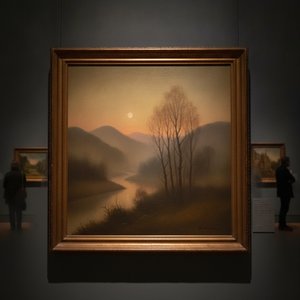
Tonalism Explained: The Art of Mood, Mist, and Masterful Color in Landscape Painting
Discover the evocative world of Tonalism. Explore how masters like Whistler and Tryon used mist, shadow, and subtle color to capture profound mood and atmosphere in landscape art. An expert guide for fine art enthusiasts and collectors.
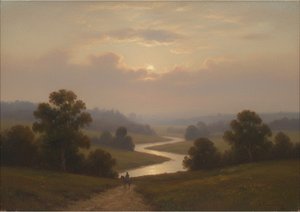
Visiones Atmosféricas: Explorando el Tonalismo en la Pintura Americana
Descubre el tonalismo americano: su historia, artistas clave como Inness y Whistler, características únicas y legado en el arte moderno. Análisis experto y profundo.


