

 Ver en contexto
 Enviar
 Compartir
 Detalles

 Descargar
 Similares
 Radiografía
 Presentación de diapositivas
Portrait of Louis Pasteur


 Ver más
Giclée / Impresión de arte
Impresiones giclée o en lienzo de calidad de museo con producción rápida y opciones de acabado flexibles. ( Comprar pintura hecha a mano Comprar imagen)




P118B $10

P118H $10

P118W $10

P438Z $10

P508JH $12

P508YH $12

P805H $10

P805Z $10

P919BZ $10

P919G $10

P919XJ $10

P959ZH $10

P968JZ $12

W106C $8

W218G $10

W218JH $8

W218Y $10

W307PJ $10

W316G $10

W316PJ $8

W316Y $10

W398PJ $8

W4111J $10

W500HY $15

W500JH $15

W692G $12

W849H $8

W940BG $15

W953PJ $8




Elija entre nuestros tamaños predefinidos que respetan las proporciones originales de la obra.

Puede introducir sus propias dimensiones para adaptarse a un marco o espacio específico. Si el tamaño seleccionado no coincide con las proporciones de la imagen original, recortaremos la obra de arte o extenderemos la imagen con un borde con efecto espejo o de color sólido. Se enviará una maqueta digital para su aprobación antes de que comience la producción.
Tenga en cuenta que la vista previa en pantalla no refleja el recorte o la extensión real. Solo la maqueta mostrará con precisión la composición final.
Aunque existen tamaños personalizados, recomendamos seleccionar una dimensión de la lista predefinida para preservar las proporciones originales.
Envío a todo el mundo () en 2 semanas en lugar de las 4/5 semanas estándar. (27 agosto)

Envío exprés gratuito a todo el mundo

Lienzo de lino de alta calidad

Seguro de envío total

Garantía de reembolso de impuestos aduaneros

Garantía de fidelidad cromática exacta

Política de devolución de 60 días (solo por defectos)

Garantía de devolución del 100% del dinero

Descuento por cantidad
 La opción de vidrio solo está disponible en tamaños inferiores a 110 cm.

Portrait of Louis Pasteur
Giclée / Impresión de arte
Dimensiones de la reproducción
-


Precio total final
$ 80
Descripción de la pieza
A Vision of Scientific Eminence
In the quiet, focused atmosphere of a late nineteenth-century laboratory, Albert Edelfelt captures more than just a man; he captures the very essence of an intellectual revolution. His Portrait of Louis Pasteur is a profound meditation on the dawn of modern microbiology, presenting the legendary French chemist not as a distant icon, but as a figure deeply immersed in the tactile reality of his work. The painting serves as a window into a moment where scientific inquiry meets artistic mastery, inviting the viewer to witness the intense concentration and the heavy weight of discovery that defined Pasteur’s life. Through Edelfelt's lens, we see the pioneer surrounded by the tools of his trade—glassware, vials, and experimental apparatus—each element contributing to a narrative of relentless pursuit and the quiet dignity of scientific labor.
The emotional resonance of the piece lies in its ability to bridge the gap between the observer and the observed. There is an intimate, almost reverent quality to the way Edelfelt renders the laboratory setting, transforming a space of clinical study into a sanctuary of human intellect. For collectors and enthusiasts of historical portraiture, this work offers a rare opportunity to possess a piece that embodies the spirit of the Belle Époque—a period characterized by an unshakeable belief in progress and the power of human reason. The painting does not merely depict a subject; it evokes the atmosphere of an era where every drop of liquid in a test tube held the potential to change the course of medical history.
Mastery of Impressionistic Realism
Technically, Edelfelt achieves a breathtaking balance between Impressionistic vibrancy and Academic precision. Utilizing the rich, luminous qualities of oil on canvas, the artist employs a technique that allows for both meticulous anatomical accuracy and a soft, atmospheric light. One can observe the subtle gradations of color in Pasteur’s skin tones, which catch the ambient light of the lab, creating a lifelike warmth that breathes life into the portrait. The brushstrokes, while grounded in realism, possess a certain fluidity and texture—particularly in the rendering of the laboratory glassware and the fabric of Pasteur's attire—that lends the composition a sense of movement and vitality.
This sophisticated approach to light and shadow, often referred to as chiaroscuro, serves to direct the viewer's eye toward the subject's thoughtful expression. The interplay of light reflecting off the glass bottles on the table creates a rhythmic pattern of highlights that guides us through the depth of the room. For those looking to integrate such a masterpiece into a curated interior, the painting offers a versatile elegance. Its muted, earthy palette and sophisticated textures make it an ideal centerpiece for a study, a library, or a formal gallery space, providing a sense of historical gravity and intellectual sophistication to any environment.
A Legacy Captured in Pigment
Beyond its aesthetic brilliance, the portrait is steeped in profound symbolism. The laboratory environment acts as a metaphor for the human mind's capacity to unravel the mysteries of the natural world. Every bottle and vial serves as a visual testament to Pasteur’s tireless research into germ theory and vaccination. Edelfelt, a Finnish master who found his greatest acclaim in the heart of Paris, understood that to paint Pasteur was to paint the very foundation of modern hygiene and public health. The composition captures a moment of stillness within a life of constant motion, suggesting that true scientific breakthroughs are born from moments of profound, solitary reflection.
Owning a high-quality reproduction of this work is an invitation to celebrate the enduring legacy of human curiosity. It is a piece designed for those who appreciate art that tells a story—a story of courage, dedication, and the transformative power of knowledge. Whether displayed as a tribute to scientific history or as a cornerstone of classical decor, Edelfelt’s Portrait of Louis Pasteur remains an eternal emblem of achievement, reminding us that even in the smallest laboratory, the greatest revolutions begin.
Biografía del artista
Primeros años y educación
Albert Gustaf Aristides Edelfelt, un renombrado pintor finlandés, nació el 21 de julio de 1854 en Porvoo, Finlandia. Sus padres, Carl Albert Edelfelt y Alexandra Edelfelt (de soltera Brandt), eran suecos-finlandeses. La vida temprana de Edelfelt se caracterizó por una pasión innata por el arte, lo que le llevó a cursar estudios formales en la escuela de dibujo de la Sociedad Finlandesa de Arte en 1869.Trayectoria artística
El viaje artístico de Edelfelt lo llevó a varias instituciones destacadas:- Academia de Bellas Artes de Amberes (1873-74), donde perfeccionó sus habilidades en pintura histórica.
- École Nationale des Beaux-Arts en París (1874-78), bajo la tutela de Jean-Léon Gérôme, refinando aún más su oficio.
- Una breve estancia en San Petersburgo (1881-82) lo expuso a diversas influencias artísticas.
Desarrollo y logros notables
El gran avance de Edelfelt llegó con una medalla de oro en la Exposición Universal de París de 1889. Sus obras notables incluyen:- Retrato de Louis Pasteur, que le valió la Legión de Honor en 1886.
- Joven mujer en su boudoir, mostrando su dominio para capturar la esencia de la feminidad.
- Bajo los abedules, una representación conmovedora de paisajes finlandeses.
Influencias y significado histórico
Como uno de los primeros artistas finlandeses en alcanzar fama internacional, Edelfelt contribuyó significativamente al movimiento artístico realista en Finlandia. Su influencia se extendió a pintores finlandeses más jóvenes, como Akseli Gallen-Kallela y Gunnar Berndtson, a quienes ayudó en sus avances en París. Edelfelt adoptó el realismo francés pero lo iluminó con el brillo de la luz nórdica. Se considera el pintor más grande de Finlandia durante la segunda mitad del siglo XIX y la primera mitad del XX, y uno de los contribuyentes más destacados a la Edad de Oro del Arte Finlandés.Legado y reconocimiento
Las obras de Edelfelt se exhiben en varios museos, incluido el Ateneumin Taidemuseo en Helsinki. Su legado fue conmemorado con una moneda conmemorativa de 100 euros dedicada a Albert Edelfelt en 2004, celebrando su 150 aniversario natal.- Explore las obras de Albert Edelfelt en OriginalUniqueArt
- Descubra la colección del Ateneumin Taidemuseo en OriginalUniqueArt

Albert Edelfelt
1854 - 1905 , Finlandia
Datos clave
- Artistas Influenciados:
- Akseli Gallen-Kallela
- Gunnar Berndtson
- Artistas Que Influyeron:
- Jean-Léon Gérôme
- Adolf von Becker
- Fecha De Muerte: 18 de agosto de 1905
- Fecha De Nacimiento: 21 de julio de 1854
- Lugar De Nacimiento: Porvoo, Finlandia
- Movimiento Artístico: Realismo
- Nacionalidad: Finlandés
- Nombre Completo: Albert Gustaf Aristides Edelfelt
- Obras Notables:
- Retrato de Louis Pasteur
- Joven mujer en su boudoir
- Bajo los abedules
Artículos relacionados
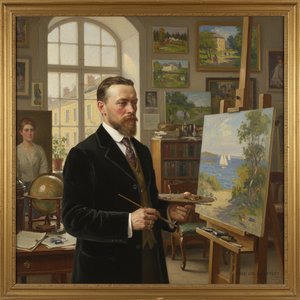
Albert Edelfelt: A Pioneer of Finnish Realism & International Impressionist Circles
Explore the life & work of Albert Edelfelt, a pioneering Finnish Realist painter who bridged Impressionism & national identity. Discover his masterpieces and lasting influence on art history.

La Precisión de la Percepción: La Ilustración Científica como Arte y Epistemología
Descubra la fascinante historia y el arte detrás de la ilustración botánica. Explore técnicas precisas, colaboraciones entre científicos e ilustradores, y su valor cultural. ¡Un viaje visual al mundo vegetal!
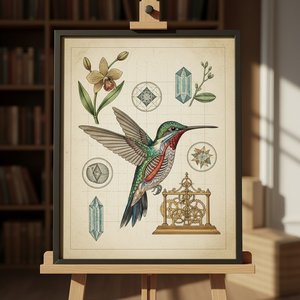
The Art of Precision: Exploring the Beauty and Legacy of Scientific Illustration
Discover the exquisite intersection of science and fine art. Explore the history of scientific illustration, from botanical watercolor masters to nature's intricate geometry, through an expert lens of art history and technical precision.

El Detalle Evocador de la Naturaleza: Una Historia de la Ilustración Naturalista
Descubre la historia de la ilustración naturalista y sus maestros artistas. Explora obras botánicas detalladas, desde herbarios medievales hasta las pinturas de flores de Van Kessel y Eaton. ¡Inspírate en el arte y la ciencia!
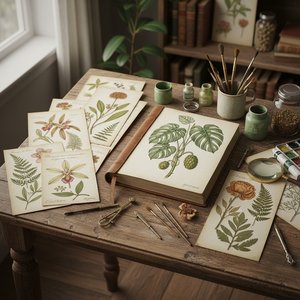
The Flourishing Canvas: A Historical & Artistic Exploration of Botanical Illustration
Explore the rich history of botanical illustration! Discover key artists like Havell & Barraband, learn about scientific accuracy & aesthetic beauty. Shop museum-quality reproductions at OriginalUniqueArt.



