

 Ver en contexto
 Enviar
 Compartir
 Detalles
 Guía
Guía

 Descargar
 Similares
 Radiografía
 Presentación de diapositivas
 Q&A
Q&A Estadísticas
Waterfall

 Ver más
Giclée / Impresión de arte
Impresiones giclée o en lienzo de calidad de museo con producción rápida y opciones de acabado flexibles. ( Comprar pintura hecha a mano Cambiar a imagen digital)




































Elija entre nuestros tamaños predefinidos que respetan las proporciones originales de la obra.

Introduzca el ancho y el alto que necesite para adaptarse a su marco o pared. Una impresión solo puede recortarse, nunca hacerse más grande que la imagen original, por lo que un tamaño con una forma distinta perderá parte de la obra. Le enviaremos una maqueta digital para su aprobación antes de realizar cualquier impresión. La imagen que se muestra en esta página no refleja el recorte real; solo la maqueta lo hace.
Envío a todo el mundo () en 2 semanas en lugar de las 4/5 semanas estándar. (28 octubre)

Envío exprés gratuito a todo el mundo

Lienzo de lino de alta calidad

Seguro de envío total

Garantía de reembolso de aranceles aduaneros

Garantía de fidelidad cromática exacta

Política de devolución de 100 días (solo por defectos)

Garantía de devolución del 100% del dinero

Descuento por cantidad
 La opción de vidrio solo está disponible en tamaños inferiores a 110 cm.

Waterfall
Giclée / Impresión de arte
Dimensiones de la reproducción
-


Precio total final
€ 71
Albert Bierstadt's "Waterfall": A Symphony of Nature
- Overview: Albert Bierstadt’s “Waterfall” is a captivating landscape painting that exemplifies the grandeur and power of nature, firmly rooted within the Romantic era. This piece showcases Bierstadt’s mastery in depicting dramatic natural scenes, inviting viewers to contemplate the sublime beauty of the American wilderness.
Composition and Technique: Capturing Movement and Depth
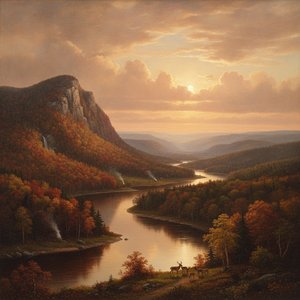
- Visual Structure: The painting is vertically oriented, emphasizing the towering height of the waterfall and the imposing cliffs. A prominent rock formation in the foreground establishes a sense of depth, while densely packed trees atop the cliff create a dark green canopy that contrasts beautifully with the cascading white water.
- Brushwork & Medium: Bierstadt skillfully employs oil paint, utilizing visible brushstrokes to define shapes and textures. The varied application contributes significantly to the painting's overall texture, particularly in the depiction of rough rock formations and layered foliage. Glazing techniques are likely used to achieve subtle color variations and luminosity within the water, enhancing its dynamic appearance.
- Perspective & Depth: Linear perspective is expertly utilized to create a convincing sense of depth; objects diminish in size as they recede into the distance. Atmospheric perspective further enhances this effect, softening and desaturating distant elements. Overlapping shapes – rocks positioned in front of trees – reinforce the illusion of proximity and space.
Style and Historical Context: The Hudson River School & Luminism
- Hudson River School Tradition: “Waterfall” is a quintessential example of the Hudson River School style, a mid-19th century American art movement that celebrated the natural beauty of the Northeastern United States. Bierstadt, as a prominent member of this group, sought to capture the awe-inspiring landscapes of his time.
- Luminism: The painting also exhibits characteristics of Luminism, a sub-style within the Hudson River School known for its emphasis on light and atmosphere. The diffused lighting in "Waterfall," suggesting an overcast day or soft sunlight filtering through the trees, creates a serene yet powerful mood.
- Romantic Era Influence: Rooted in the Romantic era, the artwork reflects a fascination with the sublime – experiences that inspire awe and wonder while simultaneously evoking feelings of human insignificance in the face of nature’s power. The scale of the waterfall serves as a potent symbol of this concept.
Symbolism and Emotional Impact: Awe and Wonder
- Emotional Resonance: "Waterfall" evokes profound feelings of awe, wonder, and reverence for the natural world. The sheer scale of the waterfall and the surrounding landscape inspire a sense of humility and appreciation for nature's grandeur.
- Symbolic Significance: Beyond its aesthetic appeal, the painting can be interpreted as a symbolic representation of the power and resilience of nature. The cascading water may symbolize life’s constant flow and transformative energy.
- American Identity: Bierstadt's landscapes played a significant role in shaping American identity during a period of westward expansion. His depictions of the wilderness helped to cultivate a sense of national pride and appreciation for the country's vast natural resources.
Preguntas y respuestas
¿A qué movimiento artístico pertenece "Waterfall" de Albert Bierstadt?
"Waterfall" de Albert Bierstadt pertenece al movimiento Hudson River School. Este movimiento aporta el contexto estilístico de la obra.
¿Dónde puedo encontrar obras de arte similares a "Waterfall" de Albert Bierstadt?
Encuentre obras similares a "Waterfall" en la página de Obras similares de esta obra.
¿Puedo pedir una reproducción al óleo de "Waterfall"?
Puede solicitar una reproducción pintada a mano de "Waterfall" de Albert Bierstadt directamente en su página de Reproducción al óleo pintada a mano: una reproducción al óleo pintada a mano sobre lienzo de lino, realizada bajo pedido.
Biografía del artista
Primeros años y educación
Albert Bierstadt, un renombrado pintor germano-americano, nació el 7 de enero de 1830 en Solingen, Prusia. Su familia emigró a los Estados Unidos cuando él era tan solo un año de edad, estableciéndose en New Bedford, Massachusetts. La vida temprana de Bierstadt se caracterizó por su creciente gusto por el arte, y comenzó a hacer hábiles bocetos con crayones en su juventud.Carrera artística
La carrera artística de Bierstadt despegó en 1851 cuando comenzó a pintar al óleo. Regresó a Alemania en 1853 para estudiar pintura durante varios años en Düsseldorf, lo que influyó enormemente en su estilo. Al regresar a los Estados Unidos, Bierstadt se unió a la Escuela del Río Hudson, un grupo de pintores afines que se centraban en capturar los majestuosos paisajes del valle del río Hudson. En 1858, Bierstadt expuso una gran pintura de un paisaje suizo en la Academia Nacional de Diseño, obteniendo una recepción crítica positiva y el ingreso honorífico a la academia. Sus viajes posteriores al oeste americano con Frederick W. Lander y Fitz Hugh Ludlow inspiraron sus icónicos paisajes, que mostraban la grandeza del oeste americano.Estilo e Influencias
El estilo de Bierstadt se caracterizaba por su meticuloso detalle, su uso dramático de la luz y la sombra, y su capacidad para evocar una sensación de asombro y reverencia ante la naturaleza. Estuvo fuertemente influenciado por el luminismo, un movimiento artístico que enfatizaba la representación precisa de la luz natural y los efectos atmosféricos. También se inspiró en las obras de artistas europeos como Caspar David Friedrich, conocido por sus paisajes románticos y melancólicos. La Escuela del Río Hudson fue una influencia crucial, compartiendo su compromiso con la representación fiel y grandiosa de los paisajes americanos.Obras destacadas y legado
Entre las obras más notables de Bierstadt se encuentran "Paisaje occidental", que es un testimonio de su habilidad para capturar los vastos paisajes del oeste americano; "Escena costera", que demuestra su capacidad para transmitir la belleza de la costa americana; y sus representaciones épicas de las Montañas Rocosas, Alaska y otros lugares emblemáticos. Sus pinturas se caracterizan por su gran escala y su realismo detallado, lo que le valió el apodo de "el pintor del oeste americano". Bierstadt dejó un legado duradero como uno de los pintores de paisajes más importantes del siglo XIX, contribuyendo significativamente al desarrollo del arte americano y ayudando a moldear la percepción pública del paisaje occidental.Datos clave
- Nacido: 7 de enero de 1830, Solingen, Prusia
- Fallecido: 18 de febrero de 1902
- Nacionalidad: Germano-americano
- Estilo: Pintura de paisajes, Escuela del Río Hudson
- Obras notables: Paisaje occidental, Escena costera

Albert Bierstadt
1830 - 1902 , Alemania
Datos clave
- Artistas Que Influyeron: ['Escuela del Río Hudson']
- Estilo Artístico: Pintura paisajista, Escuela del Río Hudson
- Fecha De Fallecimiento: 18 de febrero de 1902
- Fecha De Nacimiento: 7 de enero de 1830
- Lugar De Nacimiento: Solingen, Alemania
- Nacionalidad: Germano-estadounidense
- Nombre Completo: Albert Bierstadt
- Obras Notables:
- Paisaje occidental
- Escena costera
- Cascadas de Staubbach
- Molino rústico
- Búfalos en las Llanuras
- Alaska
- Montañas Rocosas
- Entre montañas Sierra Nevada
Artículos relacionados

Albert Bierstadt: Luminosity, Landscape & the American Ideal
Explore the breathtaking landscapes of Albert Bierstadt, master of the American West & a leading figure in the Hudson River School. Discover his luminous style and iconic paintings – a timeless investment for art lovers.

Los 10 Maestros del Río Hudson: Obras que Definieron un Movimiento Artístico
Descubre los 10 lienzos más emblemáticos de la Escuela del Río Hudson. Explora las obras maestras de Thomas Cole, Church y Bierstadt que capturan la belleza del paisaje americano. Encuentra reproducciones de arte exclusivas en OriginalUniqueArt.com.

Wild & Untamed: The High-Impact Energy of American Romanticism and the Hudson River School
Experience the raw power of American Romanticism. Explore the high-impact energy of the Hudson River School through premium, hand-painted oil reproductions that capture the sublime beauty and untamed spirit of the American wilderness for discerning collectors.
The Hudson River School: A Definitive Guide to America's Romantic Landscape Tradition
Explore the profound legacy of the Hudson River School. Discover how masters like Thomas Cole captured the American sublime through Romanticism and Luminism. A definitive guide for art historians and collectors seeking to understand America's wild beauty.

El Sublime Paisaje Americano: Explorando el Movimiento de la Escuela del Río Hudson
Descubre la Escuela del Río Hudson: un movimiento artístico clave en la historia de la pintura estadounidense. Explora su estética romántica, sus artistas más destacados y el concepto del sublime paisaje americano.


