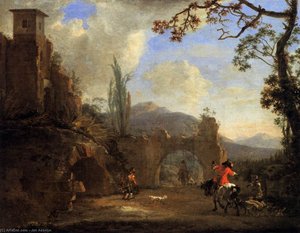
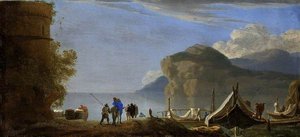
Retrato de Jan Asselijn

Pinturas de Jan Asselijn: Las 76 más famosas, bajo la mirada de una galería

Actualizado octubre 2026 · clasificado según nuestro índice de popularidad (búsquedas, visitas y pedidos de cada obra) · 84 obras de Jan Asselijn en nuestro catálogo

En resumen

Para el ojo de la galería, la pintura más famosa de Jan Asselijn es El cisne amenazado (1652), cuya obra original se encuentra en el Rijksmuseum, Ámsterdam. El rey Gustavo II Adolfo de Suecia en la batalla de Lützen, 1632 (1634) y Paisaje con un puente en la campiña italiana (1652) completan el trío que toda mirada reconoce. De las 84 obras de Jan Asselijn en nuestro catálogo, la galería presenta a continuación las 76 más famosas; cada una original, con su año, su museo y aquello que la hace única.

1610 – 1652, Dieppe Edad de oro holandesa Más obras: Rijksmuseum

Las 10 mejores pinturas de Jan Asselijn en la galería

1
El cisne amenazado (1652) de Jan Asselijn

El cisne amenazado

1652 · Óleo sobre lienzo · Rijksmuseum, Ámsterdam

es una pintura al óleo sobre lienzo del artista Jan Asselijn. Completada alrededor de 1650, la obra captura a un cisne vulgar en un momento de feroz defensa. El ave despliega sus alas y sisea, protegiendo su nido ante el avance de un perro. Esta lucha entre el plumaje blanco y la amenaza que acecha define la tensión central de la imagen.

2
El rey Gustavo II Adolfo de Suecia en la batalla de Lützen, 1632 (1634) de Jan Asselijn

El rey Gustavo II Adolfo de Suecia en la batalla de Lützen, 1632

1634 · Óleo sobre lienzo · Statens Museum for Kunst, Copenhague

Jan Asselijn's “King Gustav Adolf II of Sweden in the Battle of Lutzen, 1632” isn’t merely a painting; it’s a visceral plunge into the heart of a pivotal moment in European history. Completed in 1634, this monumental work captures the chaotic fury and strategic brilliance of the Battle of Lutzen, fought on August 17th of that year, a clash that cemented Gustav Adolf II's reputation as a military genius and…

3
Paisaje con un puente en la campiña italiana (1652) de Jan Asselijn

Paisaje con un puente en la campiña italiana

1652 · Óleo sobre lienzo · Cannon Hall Museo, Barnsley

Un puente de piedra con arcos majestuosos ancla este paisaje sereno, cruzando un cuerpo de agua tranquilo que refleja la suavidad de un cielo nublado. A la izquierda, una figura solitaria descansa sobre un barril, contemplando el movimiento pausado de la escena. A la derecha, la composición se agrupa en torno a un caballo y un carruaje; una persona guía al animal hacia la orilla mientras otro observador permanece cerca.…

4
El rey Gustavo II Adolfo en la batalla de Lützen el 6 de noviembre de 1632 (1632) de Jan Asselijn

El rey Gustavo II Adolfo en la batalla de Lützen el 6 de noviembre de 1632

1632 · Óleo sobre tabla · Museo Estatal de Arte y Historia Cultural Oldenburg, Oldenburg

El aire está impregnado con el aroma de la tierra mojada y el azufre. En el centro del caos, el rey Gustavo II Adolfo de Suecia cabalga a través de la contienda, con su espada como un destello de luz fría contra el cielo que se oscurece. La batalla de Lützen no es un asunto tranquilo; es una colisión de músculo y metal. Soldados a pie y montados a caballo…

5
Cuatro figuras (1615) de Jan Asselijn

Cuatro figuras

1615 · Óleo · Groeningemuseum, Bruges

En Cuatro figuras, Jan Asselijn organiza a un grupo de hombres con vestiduras de época dentro de un entorno atmosférico y tenuemente iluminado. La composición se centra en este conjunto de figuras, dispuestos en una formación triangular informal. Esta elección estructural atrae la mirada del espectador hacia el centro del grupo, donde los sujetos interactúan en un momento de quietud. Un hombre es capturado bebiendo de un recipiente, mientras que…

6
Rey Gustavo II Adolfo de Suecia, batalla cerca de Lützen 1632 (1635) de Jan Asselijn

Rey Gustavo II Adolfo de Suecia, batalla cerca de Lützen 1632

1635 · Óleo sobre tabla · Gemäldegalerie, Berlín

La obra titulada Rey Gustavo II Adolfo de Suecia, batalla cerca de Lützen 1632 es una creación del artista Jan Asselijn. Datada aproximadamente en 1635, esta pintura al óleo sobre tabla pertenece al género de la historia militar. Su temática se centra en la Batalla de Lützen, un conflicto trascendental de la Guerra de los Treinta Años, capturando al monarca en medio del frenesí de un enfrentamiento militar de gran…

7
El río Tíber con el Ponte Molle al atardecer (1650) de Jan Asselijn

El río Tíber con el Ponte Molle al atardecer

1650 · Óleo · National Gallery of Art, Washington

El sol se cierne bajo en el horizonte, proyectando una aguda luz dorada a través de los cuatro enormes arcos de piedra del Ponte Molle. Esta luz atraviesa la atmósfera, pintando el cielo con un degradado que transita desde un ámbar cálido y resplandeciente a la derecha, hacia un aguamarina pálido y tranquilo a medida que la mirada se desplaza hacia la izquierda. El río debajo permanece plácido, reflejando los…

8
Edificio en ruinas con pastor y ovejas (1646) de Jan Asselijn

Edificio en ruinas con pastor y ovejas

1646 · Óleo sobre tabla

Edificio en ruinas con pastor y ovejas es una obra maestra de Jan Asselijn. Esta pieza pertenece a la Edad de Oro neerlandesa y al estilo de paisaje italianizante de la Edad Moderna temprana. La temática se centra en un paisaje pastoral que integra ruinas y ovejas, donde la composición entrelaza armoniosamente la naturaleza, la figura del pastor y estructuras de piedra desgastadas por el tiempo en una escena única…

9
Paisaje italiano (1638) de Jan Asselijn

Paisaje italiano

1638 · Óleo sobre lienzo · Statens Museum for Kunst, Copenhague

La obra titulada Paisaje italiano es una pintura del maestro de la Edad de Oro neerlandesa, Jan Asselijn. Creada en 1638, esta pieza representa un periodo fundamental en la trayectoria del artista. Asselijn nació en Dieppe, Francia, alrededor de 1610, antes de que su familia se trasladara a Ámsterdam. Su evolución como pintor estuvo profundamente moldeada por el vibrante entorno artístico de la Edad de Oro neerlandesa, una época en…

10
Lucha contra los ladrones (1638) de Jan Asselijn

Lucha contra los ladrones

1638 · Óleo sobre tabla · Statens Museum for Kunst, Copenhague

Una violenta escaramuza se desarrolla a través de un paisaje accidentado y rocoso, capturada en una dramática paleta monocromática. La composición se apoya en una marcada disposición diagonal, que arrastra la mirada desde el primer plano hacia un caótico centro-derecha donde las figuras se enfrascan en combate. Jinetes montados e infantes chocan entre la densa vegetación y árboles esqueléticos y delgados. La atmósfera se siente cargada de niebla y humo…

Pinturas de Jan Asselijn, clasificadas de la 11 a la 76

11Cacería de leones (1640) de Jan AsselijnCacería de leones1640 · Musée Fabre 12Italianate landscape with travellers by a stream with cattle (1652) de Jan AsselijnItalianate landscape with travellers by a stream with cattle1652 13Paisaje italiano con vista desde una gruta (1639) de Jan AsselijnPaisaje italiano con vista desde una gruta1639 · Nationalmuseum 14Paisaje con ruinas y partida de caza (1645) de Jan AsselijnPaisaje con ruinas y partida de caza1645 · Academia de Artes Visuales de Viena 15PAISAJE CON UN REBAÑO CRUZANDO UN RÍO de Jan AsselijnPAISAJE CON UN REBAÑO CRUZANDO UN RÍOMuseo del Louvre 16Riberas del río con pastores (1650) de Jan AsselijnRiberas del río con pastores1650 · Academia de Artes Visuales de Viena 17Escena costera con jinetes descansando (detalle) (1652) de Jan AsselijnEscena costera con jinetes descansando (detalle)1652 · Academia de Artes Visuales de Viena 18Paisaje italiano imaginario (1652) de Jan AsselijnPaisaje italiano imaginario1652 · Mauritshuis Galería de Pinturas Reales 19Landscape with a Cowherd (1594) de Jan AsselijnLandscape with a Cowherd1594 20Italianate Landscape (1631) de Jan AsselijnItalianate Landscape1631 · Colecciones de Pintura del Estado Bávaro 21Cavalry Engagement (1635) de Jan AsselijnCavalry Engagement1635 22Peasants by a River Bank (1639) de Jan AsselijnPeasants by a River Bank1639 · Yale University Art Gallery 23Mountain - landscape (1639) de Jan AsselijnMountain - landscape1639 24Riders Gallopping towards the Gates of the Fortress (1645) de Jan AsselijnRiders Gallopping towards the Gates of the Fortress1645 · Museo del Hermitage 25Winter Landscape (1645) de Jan AsselijnWinter Landscape1645 · Museo del Hermitage 26Nocturnal Crayfishing (1638) de Jan AsselijnNocturnal Crayfishing1638 · Statens Museum for Kunst 27Vesuvius Erupting at Nightfall (1638) de Jan AsselijnVesuvius Erupting at Nightfall1638 · Statens Museum for Kunst 28Head of an Ox (1647) de Jan AsselijnHead of an Ox1647 · Musée des Beaux-Arts de Nîmes 29Catching Crayfish (1645) de Jan AsselijnCatching Crayfish1645 · Museo del Palacio de Wilanów 30Ford between High Cliffs (1644) de Jan AsselijnFord between High Cliffs1644 · Galería Nacional de Praga 31Peasants and Cattle beside a Tower (1646) de Jan AsselijnPeasants and Cattle beside a Tower1646 32Winter landscape with huntsmen on a bridge (1647) de Jan AsselijnWinter landscape with huntsmen on a bridge1647 · Fondación Custodia 33A rocky mountain valley with shepherds and cattle (1645) de Jan AsselijnA rocky mountain valley with shepherds and cattle1645 · Staatliche Kunsthalle Karlsruhe 34Italian Landscape (1640) de Jan AsselijnItalian Landscape1640 · Museo Estatal de Bellas Artes Pushkin 35Frozen Moat outside City Walls (1647) de Jan AsselijnFrozen Moat outside City Walls1647 · Museo de Arte de Worcester 36Italianate Landscape with Drovers, Cattle and Sheep beside Ruins (1647) de Jan AsselijnItalianate Landscape with Drovers, Cattle and Sheep beside Ruins1647 · Fogg Museo de Arte 37Italianate Landscape with a River and an Arched Bridge (1648) de Jan AsselijnItalianate Landscape with a River and an Arched Bridge1648 · Staatsgalerie Schleißheim 38Southern Landscape with Cattle near Ruins (1650) de Jan AsselijnSouthern Landscape with Cattle near Ruins1650 · National Museum in Wrocław 39View of the Solario Bridge on the Teverone (1650) de Jan AsselijnView of the Solario Bridge on the Teverone1650 40Head of a lowing Ox (1650) de Jan AsselijnHead of a lowing Ox1650 · Museo Estatal Schwerin 41Italianate landscape with bridge near Tivoli (1649) de Jan AsselijnItalianate landscape with bridge near Tivoli1649 42River Landscape with the Fort Saint-Jean and the Chateau Pierre-Scize in Lyon (1650) de Jan AsselijnRiver Landscape with the Fort Saint-Jean and the Chateau Pierre-Scize in Lyon1650 · Yale University Art Gallery 43The restoration of the Diemerdijk or Muiderdijk near Amsterdam in 1651 (1651) de Jan AsselijnThe restoration of the Diemerdijk or Muiderdijk near Amsterdam in 16511651 · Gemäldegalerie 44Breach of a Dyke by Storm Surge on March 5 1651 (1651) de Jan AsselijnBreach of a Dyke by Storm Surge on March 5 16511651 · Gemäldegalerie 45The Breach of the Sint Anthonisdijk in 1651 (1652) de Jan AsselijnThe Breach of the Sint Anthonisdijk in 16511652 · Museo de Ámsterdam 46The Breach of the Saint Anthony’s Dike near Amsterdam, Jan Asselijn, 1651 (1651) de Jan AsselijnThe Breach of the Saint Anthony’s Dike near Amsterdam, Jan Asselijn, 16511651 47Drovers with Cattle under an Arch of the Colosseum in Rome, Jan Asselijn, 1640 - 1652 (1652) de Jan AsselijnDrovers with Cattle under an Arch of the Colosseum in Rome, Jan Asselijn, 1640 - 16521652 · Rijksmuseum 48A Mediterranean Coastal View with Shipping and Mariners by a Fort (1650) de Jan AsselijnA Mediterranean Coastal View with Shipping and Mariners by a Fort1650 49A Mediterranean Coastal View with Shipping and Mariners by a Fort (1650) de Jan AsselijnA Mediterranean Coastal View with Shipping and Mariners by a Fort1650 50River Landscape with the Church of Santi Giovanni e Paolo (1650) de Jan AsselijnRiver Landscape with the Church of Santi Giovanni e Paolo1650 51Landscape with a Drover (1649) de Jan AsselijnLandscape with a Drover1649 · Museo Holburne 52Landscape with a Bridge in the Italian Countryside (1652) de Jan AsselijnLandscape with a Bridge in the Italian Countryside1652 · Cannon Hall Museo 53Coastal Scene with Resting Riders (1652) de Jan AsselijnCoastal Scene with Resting Riders1652 · Academia de Artes Visuales de Viena 54PAISAJE CON UNA TORRE de Jan AsselijnPAISAJE CON UNA TORREMuseo del Louvre 55RUINA Y CABANA DE PASTORES de Jan AsselijnRUINA Y CABANA DE PASTORESMuseo del Louvre 56LANDSCAPE WITH A DEPARTURE FOR A HUNT de Jan AsselijnLANDSCAPE WITH A DEPARTURE FOR A HUNT 57Arrieros junto a una ruina italiana (1650) de Jan AsselijnArrieros junto a una ruina italiana1650 · Rijksmuseum 58Pasatiempo en Italia (1620) de Jan AsselijnPasatiempo en Italia1620 · Rijksmuseum 59Pastores con sus animales bajo un arco del Coliseo de Roma (1652) de Jan AsselijnPastores con sus animales bajo un arco del Coliseo de Roma1652 · Rijksmuseum 60Hunting Company out of Rome (1652) de Jan AsselijnHunting Company out of Rome1652 · Rijksmuseum 61Los mendigos ante un horno romano de piedra (1638) de Jan AsselijnLos mendigos ante un horno romano de piedra1638 · Academia de Artes Visuales de Viena 62Asselijn - (50Riverbank) de Jan AsselijnAsselijn - (50Riverbank) 63Asselijn ruin de Jan AsselijnAsselijn ruinRijksmuseum 64Italian Coast Scene de Jan AsselijnItalian Coast Scene 65Italian Landscape with Two Horsemen and Figures on a Road de Jan AsselijnItalian Landscape with Two Horsemen and Figures on a Road 66Italian Landscape with the Church of Sts. Giovanni e Paolo in Rome de Jan AsselijnItalian Landscape with the Church of Sts. Giovanni e Paolo in RomeMuseo de Bellas Artes de Budapest 67Mountainous Landscape de Jan AsselijnMountainous Landscape 68A rocky river landscape with travellers in the foreground and ships beyond de Jan AsselijnA rocky river landscape with travellers in the foreground and ships beyond 69A Landscape with Peasants (also known as Landscape with Herdsmen Fording a River) de Jan AsselijnA Landscape with Peasants (also known as Landscape with Herdsmen Fording a River)Ascott House 70A Cavalier on Horseback Before a Landscape de Jan AsselijnA Cavalier on Horseback Before a Landscape 71Landscape with shepherds and their flock crossing the Ponte Acquoria near Tivoli de Jan AsselijnLandscape with shepherds and their flock crossing the Ponte Acquoria near Tivoli 72an italianate river landscape with herders on a path with their flock and donkeys, classical ruins on a hilltop beyond de Jan Asselijnan italianate river landscape with herders on a path with their flock and donkeys, classical ruins on a hilltop beyondMinneapolis Institute of Art 73Escena de la costa italiana de Jan AsselijnEscena de la costa italianaFitzwilliam College 74Paisaje italiano de Jan AsselijnPaisaje italianoFitzwilliam College 75Italian Landscape with the Ruins of a Roman Bridge and Aqueduct de Jan AsselijnItalian Landscape with the Ruins of a Roman Bridge and AqueductRijksmuseum 76Cavalry Attack at Sunset, Jan Asselijn, 1646 (1646) de Jan AsselijnCavalry Attack at Sunset, Jan Asselijn, 16461646 · Rijksmuseum

Pinturas famosas de Jan Asselijn, época por época

Los temas que cautivaron la mirada de Jan Asselijn

Los cuatro temas que se repiten con más frecuencia en estas obras originales, cada uno con su mejor ejemplo.

Los museos que conservan los originales de Jan Asselijn

Los 8 museos que albergan la mayoría de las pinturas de esta página.

Museos Ciudad Obras de Jan Asselijn Pinturas de esta lista
Rijksmuseum, ÁmsterdamRijksmuseum Ámsterdam 9 El cisne amenazado, Drovers with Cattle under an Arch of the Colosseum in Rome, Jan Asselijn, 1640 - 1652, Arrieros junto a una ruina italiana
Statens Museum for Kunst, CopenhagueStatens Museum for Kunst Copenhague 5 El rey Gustavo II Adolfo de Suecia en la batalla de Lützen, 1632, Paisaje italiano, Lucha contra los ladrones
Academia de Artes Visuales de Viena, VienaAcademia de Artes Visuales de Viena Viena 5 Paisaje con ruinas y partida de caza, Riberas del río con pastores, Escena costera con jinetes descansando (detalle)
Gemäldegalerie, BerlínGemäldegalerie Berlín 3 Rey Gustavo II Adolfo de Suecia, batalla cerca de Lützen 1632, The restoration of the Diemerdijk or Muiderdijk near Amsterdam in 1651, Breach of a Dyke by Storm Surge on March 5 1651
Museo del Louvre, ParísMuseo del Louvre París 3 PAISAJE CON UN REBAÑO CRUZANDO UN RÍO, PAISAJE CON UNA TORRE, RUINA Y CABANA DE PASTORES
Cannon Hall Museo, BarnsleyCannon Hall Museo Barnsley 2 Paisaje con un puente en la campiña italiana, Landscape with a Bridge in the Italian Countryside
Yale University Art Gallery, New HavenYale University Art Gallery New Haven 2 Peasants by a River Bank, River Landscape with the Fort Saint-Jean and the Chateau Pierre-Scize in Lyon
Museo del Hermitage, San PetersburgoMuseo del Hermitage San Petersburgo 2 Riders Gallopping towards the Gates of the Fortress, Winter Landscape

Jan Asselijn, una pintura emblemática por década

Obras por década

Elige una década para ver la obra original que la define.

Pinturas de Jan Asselijn: la galería responde

¿Cuál es la pintura más famosa de Jan Asselijn?Descubre la respuesta

El cisne amenazado (1652), Rijksmuseum, Ámsterdam. A El rey Gustavo II Adolfo de Suecia en la batalla de Lützen, 1632 (1634) y Paisaje con un puente en la campiña italiana (1652) le siguen.

¿Qué edad tenía Jan Asselijn al completar El cisne amenazado?Descubre la respuesta

42 años: El cisne amenazado data de 1652, y Jan Asselijn nació en 1610.

¿Cuáles son las 10 pinturas principales de Jan Asselijn?Descubre la respuesta

El cisne amenazado, El rey Gustavo II Adolfo de Suecia en la batalla de Lützen, 1632, Paisaje con un puente en la campiña italiana, El rey Gustavo II Adolfo en la batalla de Lützen el 6 de noviembre de 1632, Cuatro figuras, Rey Gustavo II Adolfo de Suecia, batalla cerca de Lützen 1632, El río Tíber con el Ponte Molle al atardecer, Edificio en ruinas con pastor y ovejas, Paisaje italiano y Lucha contra los ladrones. La clasificación anterior indica el año y el museo de cada una.

¿Cuántas obras creó Jan Asselijn?Descubre la respuesta

Nuestro catálogo cuenta con 84 obras de Jan Asselijn, datadas desde 1620 hasta 1652.

¿Dónde se exhiben los originales más famosos de Jan Asselijn?Descubre la respuesta

Principalmente en Rijksmuseum (Ámsterdam), Statens Museum for Kunst (Copenhague) y Academia de Artes Visuales de Viena (Viena). La tabla de museos arriba los enumera todos.

¿Cuándo creó Jan Asselijn sus pinturas más famosas?Descubre la respuesta

En 1650s: 24 de las 76 obras de esta página se realizaron entonces, El cisne amenazado de ellas.

¿Cuáles son las primeras y últimas obras famosas de Jan Asselijn?Descubre la respuesta

En esta página, la más antigua es Pasatiempo en Italia (1620) y la más reciente El cisne amenazado (1652).

¿A qué temas volvió Jan Asselijn con más frecuencia?Descubre la respuesta

Landscape (14), Paisaje (12) y Figuras (6), en las 76 obras de esta página.

¿En qué técnica trabajó más Jan Asselijn?Descubre la respuesta

Óleo sobre lienzo, para 11 de las 76 obras de esta página.

¿A qué movimiento se asocia Jan Asselijn?Descubre la respuesta

Edad de oro holandesa y Retorno al barroco, a juzgar por los originales de esta página.

¿Qué obras originales de Jan Asselijn posee el Rijksmuseum?Descubre la respuesta

El cisne amenazado, Drovers with Cattle under an Arch of the Colosseum in Rome, Jan Asselijn, 1640 - 1652 y Arrieros junto a una ruina italiana: el Rijksmuseum, Ámsterdam posee 9 de las obras de esta página.

Jan Asselijn: el artista

A Life Forged in Landscape: The World of Jan Asselijn

Born Jean Asselin around 1610 in Dieppe, France, Jan Asselijn’s life unfolded against the backdrop of a turbulent era – the waning years of religious conflict and the burgeoning brilliance of the Dutch Golden Age. His family, Huguenots fleeing persecution, relocated to Amsterdam in 1621, immersing young Jean into a cosmopolitan city brimming with artistic ambition and intellectual ferment. This pivotal move instilled within him an appreciation for landscape painting’s evolving trajectory away from mere representation toward expressions of emotion and atmosphere – a path that would define his artistic vocation. Initially apprenticed under Jan Martszen the Younger, Asselijn honed his skills in battle scenes before discovering his true passion: capturing the grandeur and drama of both natural vistas and animal life with unparalleled sensitivity.

The Italianate Embrace & The Bentvueghels

Like many ambitious Northern European painters of his time, Asselijn recognized the transformative potential of artistic pilgrimage to Italy. Around 1635 he embarked on this journey, immersing himself in the vibrant cultural landscape of Rome and encountering artists who profoundly shaped his aesthetic sensibilities. He joined the *Bentvueghels*, a remarkable society of Dutch and Flemish painters operating in Rome – “Birds of a Feather” united by unconventional behavior, satirical nicknames, and an unwavering commitment to painting directly from observation. Rejecting studio conventions, these artists championed spontaneity and embraced the challenge of conveying immediacy. Within this stimulating environment, Asselijn earned the moniker "Krabbetje" ("little crab") due to a physical disability affecting his hand – a detail that subtly acknowledged the limitations imposed upon him yet fueled his determination to excel creatively. He absorbed the influence of Pieter van Laer (Bamboccio), whose depictions of Roman peasant life and landscapes resonated deeply with Asselijn’s developing style, fostering an appreciation for nuanced observation and expressive brushwork. This formative period cemented his ability to infuse his canvases with palpable atmosphere and narrative depth.

Mastering Light & Symbolism: Key Works

Upon returning to Amsterdam in 1640, Asselijn established himself as a respected artist, characterized by meticulous technique and a distinctive artistic vision. His paintings are distinguished by an exceptional command of light – a hallmark of the Dutch Golden Age that he skillfully employed to heighten emotional impact and convey visual splendor. While he produced historical and battle scenes reflecting his early training, it was his landscapes and animal depictions that cemented his reputation as one of the era’s foremost innovators. The Threatened Swan, completed around 1645, stands as Asselijn's most celebrated masterpiece – a poignant allegory for Dutch resilience during times of crisis. More than just a depiction of avian defense, this painting became a powerful symbol of national resistance against external threats and was interpreted as an emblem of Johan de Witt’s leadership. The swan’s defiant posture, confronting adversity with unwavering determination, captured the anxieties of the period and resonated powerfully with viewers. Further enriching his artistic repertoire were works like Cavalry Attack at Sunset, showcasing his formative training in battle painting with dramatic precision, and evocative portrayals of rural life – notably The Breach of the Saint Anthony’s Dike near Amsterdam – which brilliantly captured a moment of national peril and demonstrated Asselijn's ability to convey urgency and visual dynamism.

Influence & Legacy: A Lasting Impression

Jan Asselijn’s artistic legacy extended beyond his own prolific output, influencing subsequent generations of painters. He was admired by Rembrandt van Rijn, who even created etchings depicting Asselijn at work – a gesture that subtly acknowledged the artist's physical impairment while simultaneously recognizing his exceptional talent. Notably, Rembrandt’s etching captures Asselijn’s hand obscured, reflecting a sensitivity to disability within the artistic milieu of the time. He served as a mentor to Frederik de Moucheron, fostering an appreciation for naturalistic observation and expressive brushwork—a contribution that ensured Asselijn's stylistic innovations endured. His works are now housed in prestigious collections such as the Rijksmuseum in Amsterdam, guaranteeing his enduring significance within Dutch art history. Jan Asselijn died peacefully in 1652, leaving behind a body of work that continues to captivate audiences with its beauty, psychological depth, and subtle layers of symbolism—a testament to his profound impact on the artistic landscape of the seventeenth century.