Portrait of Mildred Williams

Mildred Williams Paintings: The 36 Most Famous, Through a Gallery's Eye

Updated November 2026 · ranked by our popularity score (searches, visits and orders for each work) · 37 works by Mildred Williams in our catalogue

In short

To the gallery's eye, Mildred Williams's most famous painting is Care of Wounded Soldiers at Cardiff Royal Infirmary during the Great War (1916). Portrait of an Unknown Lord Mayor (1927) and Lady Snowdon (1944) complete the trio every eye recognises. Of the 37 works by Mildred Williams in our catalog, the gallery presents the 36 most famous below, each original with its year, its museum and what makes it unique.

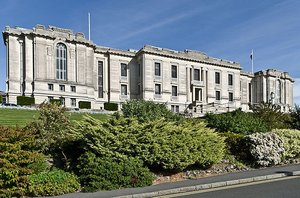
1892 – 1960, Detroit Contemporary realism Most works: Llyfrgell Genedlaethol Cymru / The National Library of Wales

The gallery's top 10 Mildred Williams paintings

1
Care of Wounded Soldiers at Cardiff Royal Infirmary during the Great War (1916) by Mildred Williams

Care of Wounded Soldiers at Cardiff Royal Infirmary during the Great War

1916 · Oil On Canvas

The oil on canvas painting, titled Care of Wounded Soldiers at Cardiff Royal Infirmary during the Great War, depicts a poignant scene within a hospital ward. In the center of the composition, a man lies in a bed with his head wrapped in bandages, while several other individuals stand around him, attending to his needs. The room is filled with various objects, including chairs, beds, bottles, cups, bowls, and vases.…

2
Portrait of an Unknown Lord Mayor (1927) by Mildred Williams

Portrait of an Unknown Lord Mayor

1927 · Oil On Canvas

The Portrait of an Unknown Lord Mayor is a realistic oil painting on canvas, dating to 1927. The composition centers on a man depicted in a seated pose, occupying most of the frame within an ornate chair. He is presented in a formal manner, wearing a striking red coat complemented by a luxurious fur collar. His attire is further accented by a hat and gloves, elements that contribute to the…

3
Lady Snowdon (1944) by Mildred Williams

Lady Snowdon

1944 · Oil On Canvas · Leeds Art Gallery, Leeds

Margaret Lindsay Williams (1888-1960) stands as a pivotal figure in 20th-century British portraiture, celebrated for her masterful depictions of royalty, nobility, and influential statesmen. Though largely absent from public view during her lifetime, her work has experienced a remarkable resurgence of interest amongst collectors and art historians alike, recognizing its enduring beauty and technical brilliance.

4
Doctor E. P. Hughes (1851–1925), MBE, MA, Hon. LLD (1935) by Mildred Williams

Doctor E. P. Hughes (1851–1925), MBE, MA, Hon. LLD

The subject sits before us, a woman of significant stature and quiet authority, her presence filling the space with a sense of lived experience. She is rendered in oil, the paint applied with a deliberate, layered thickness that gives her form a tangible weight. Her face, framed by the soft shadows of a dim background, carries the dignity of a life defined by intellect and achievement. Light falls from above,…

5
Sir Howard Button, Chairman of Middlesex County Council (1933–1936) (1937) by Mildred Williams

Sir Howard Button, Chairman of Middlesex County Council (1933–1936)

1937 · Oil On Canvas · La Cour suprême, Londres

The sitter sits anchored in a high-backed chair, a figure of quiet weight against a dark, draped backdrop. Light falls from the upper left, carving the contours of an aging face and the sharp lines of a formal suit. There is a stillness here, the kind found in rooms where important decisions are made in hushed tones. The man’s gaze is steady, fixed by a sense of duty that matches…

6
Louise McIlroy (1874–1968) (1947) by Mildred Williams

Louise McIlroy (1874–1968)

1947 · Oil On Canvas · Royal Free Hospital, London

In this 1947 portrait, we find ourselves in the presence of Louise McIlroy, captured in a moment of profound stillness. The subject sits with a composed, direct gaze that meets the viewer with an unmistakable sense of authority and calm. She is positioned slightly off-center, her body turned toward us, while the dark, indistinct background pushes her figure forward, isolating her in a space of quiet contemplation. There is a…

7
Frederick Marmaduke Osborn, Esq. (1874–1950), Chairman of the Sheffield Royal Hospital (1905–1948), Member of the Board (1912–1948) (1949) by Mildred Williams

Frederick Marmaduke Osborn, Esq. (1874–1950), Chairman of the Sheffield Royal Hospital (1905–1948), Member of the Board (1912–1948)

1949 · Oil On Canvas · Royal Hallamshire Hospital, Sheffield

The oil painting depicts Frederick Marmaduke Osborn, Esq., seated in a large armchair. He is positioned slightly off-center to the right, facing the viewer with a serious expression. His hands are clasped in his lap, and he wears a dark suit, a white shirt, and a tie with a blue and white pocket square. The lighting is soft and diffused, illuminating his face and upper body while the background remains…

Mildred Williams paintings, ranked 11 to 36

11Self Portrait (1909) by Mildred WilliamsSelf Portrait1909 · Llyfrgell Genedlaethol Cymru / The National Library of Wales 12Mary Jenkin Lloyd (1920) by Mildred WilliamsMary Jenkin Lloyd1920 · Llyfrgell Genedlaethol Cymru / The National Library of Wales 13Ernest Howard Griffiths (1851–1932), ScD, FRS, Fellow (1897–1903), Honorary Fellow (1904–1932) (1908) by Mildred WilliamsErnest Howard Griffiths (1851–1932), ScD, FRS, Fellow (1897–1903), Honorary Fellow (1904–1932)1908 · Sidney Sussex College 14Sir Robert Hughes (1915) by Mildred WilliamsSir Robert Hughes1915 15Clara Novello Davies (1861–1943) (1915) by Mildred WilliamsClara Novello Davies (1861–1943)1915 16James Havard Thomas (1853–1921), November 1917 (1917) by Mildred WilliamsJames Havard Thomas (1853–1921), November 19171917 17Wilson Jagger (1873–1937), ARCA (London), Principal of Cardiff School of Art (1914) by Mildred WilliamsWilson Jagger (1873–1937), ARCA (London), Principal of Cardiff School of Art1914 · Llyfrgell Genedlaethol Cymru / The National Library of Wales 18Unveiling of the Welsh Historical Sculptures by the Right Honourable David Lloyd George (1918) by Mildred WilliamsUnveiling of the Welsh Historical Sculptures by the Right Honourable David Lloyd George1918 19David Davies (1871–1931), MSc, FGS (1922) by Mildred WilliamsDavid Davies (1871–1931), MSc, FGS1922 20Mrs Walker (1918) by Mildred WilliamsMrs Walker1918 21James E. Turner (b.1861), Standing in front of Cardiff City Hall (1927) by Mildred WilliamsJames E. Turner (b.1861), Standing in front of Cardiff City Hall1927 22Mrs Turner (1927) by Mildred WilliamsMrs Turner1927 · Llyfrgell Genedlaethol Cymru / The National Library of Wales 23George Riddell (1865–1934), 1st Lord Riddell (1930) by Mildred WilliamsGeorge Riddell (1865–1934), 1st Lord Riddell1930 24Sir Goronwy Owen (1881–1963) (1935) by Mildred WilliamsSir Goronwy Owen (1881–1963)1935 25Sir Daniel Lleufer Thomas (1863–1940) (1938) by Mildred WilliamsSir Daniel Lleufer Thomas (1863–1940)1938 26Sir D. Owen Evans (1876–1945), MP (1940) by Mildred WilliamsSir D. Owen Evans (1876–1945), MP1940 · Aberystwyth University School of Art Museum And Galleries 27Lady Owen Evans (1940) by Mildred WilliamsLady Owen Evans1940 · Aberystwyth University School of Art Museum And Galleries 28W. T. Mellows (1842–1950) (1945) by Mildred WilliamsW. T. Mellows (1842–1950)1945 · Peterborough Museum - Art Gallery 29Lady Gwilym Lloyd George (d.1971), Lady Tenby (1945) by Mildred WilliamsLady Gwilym Lloyd George (d.1971), Lady Tenby1945 30John William Bodger (1856–1939), FLS, Secretary of the Museum by Mildred WilliamsJohn William Bodger (1856–1939), FLS, Secretary of the MuseumPeterborough Museum - Art Gallery 31Alderman Dr James Robinson, Lord Mayor of Cardiff (1913–1914) by Mildred WilliamsAlderman Dr James Robinson, Lord Mayor of Cardiff (1913–1914) 32Lord Gwilym Lloyd George (1894–1967), Lord Tenby by Mildred WilliamsLord Gwilym Lloyd George (1894–1967), Lord Tenby 33Judge Gwilym Williams of Miskin (1839–1906) by Mildred WilliamsJudge Gwilym Williams of Miskin (1839–1906) 34Portrait Study of a Lady by Mildred WilliamsPortrait Study of a Lady 35Sir John Wesley Courtis, Lord Mayor (1911–1912), High Sheriff (1916) by Mildred WilliamsSir John Wesley Courtis, Lord Mayor (1911–1912), High Sheriff (1916) 36Hopkin Morgan, Mayor of Neath (1894, 1911, 1917 1921) by Mildred WilliamsHopkin Morgan, Mayor of Neath (1894, 1911, 1917 1921)

The subjects that held Mildred Williams's eye

The four subjects that come back most often in these originals, each with its finest example.

The museums that keep Mildred Williams's originals

The 8 museums that hold the most of the paintings on this page.

Museum City Works by Mildred Williams Paintings from this list
Llyfrgell Genedlaethol Cymru / The National Library of Wales, AberystwythLlyfrgell Genedlaethol Cymru / The National Library of Wales Aberystwyth 5 Doctor E. P. Hughes (1851–1925), MBE, MA, Hon. LLD, Self Portrait, Mary Jenkin Lloyd
Aberystwyth University School of Art Museum And Galleries, AberystwythAberystwyth University School of Art Museum And Galleries Aberystwyth 2 Sir D. Owen Evans (1876–1945), MP, Lady Owen Evans
Peterborough Museum - Art Gallery, PeterboroughPeterborough Museum - Art Gallery Peterborough 2 W. T. Mellows (1842–1950), John William Bodger (1856–1939), FLS, Secretary of the Museum
Leeds Art Gallery, LeedsLeeds Art Gallery Leeds 1 Lady Snowdon
La Cour suprême, LondresLa Cour suprême Londres 1 Sir Howard Button, Chairman of Middlesex County Council (1933–1936)
Royal Free Hospital, LondonRoyal Free Hospital London 1 Louise McIlroy (1874–1968)
Royal Hallamshire Hospital, SheffieldRoyal Hallamshire Hospital Sheffield 1 Frederick Marmaduke Osborn, Esq. (1874–1950), Chairman of the Sheffield Royal Hospital (1905–1948), Member of the Board (1912–1948)
Sidney Sussex College, CambridgeSidney Sussex College Cambridge 1 Ernest Howard Griffiths (1851–1932), ScD, FRS, Fellow (1897–1903), Honorary Fellow (1904–1932)

Mildred Williams, one signature painting per decade

Works per decade

Pick a decade to see the original that defines it.

Mildred Williams's paintings: the gallery answers

Which Mildred Williams painting is the most famous of all?Reveal the answer

Care of Wounded Soldiers at Cardiff Royal Infirmary during the Great War (1916). Portrait of an Unknown Lord Mayor (1927) and Lady Snowdon (1944) come next.

How old was Mildred Williams on completing Care of Wounded Soldiers at Cardiff Royal Infirmary during the Great War?Reveal the answer

24 years old: Care of Wounded Soldiers at Cardiff Royal Infirmary during the Great War dates from 1916, and Mildred Williams was born in 1892.

Which are Mildred Williams's top 10 paintings?Reveal the answer

Care of Wounded Soldiers at Cardiff Royal Infirmary during the Great War, Portrait of an Unknown Lord Mayor, Lady Snowdon, Doctor E. P. Hughes (1851–1925), MBE, MA, Hon. LLD, Sir Howard Button, Chairman of Middlesex County Council (1933–1936), Louise McIlroy (1874–1968), Frederick Marmaduke Osborn, Esq. (1874–1950), Chairman of the Sheffield Royal Hospital (1905–1948), Member of the Board (1912–1948), Alderman W. H. Pethybridge, Martha, the Artist's Mother and Portrait of Seated Figure (possibly a Judge). The ranking above gives each one's year and museum.

How many works did Mildred Williams create?Reveal the answer

Our catalog holds 37 works by Mildred Williams, dated from 1908 to 1949.

Where do Mildred Williams's most famous originals hang?Reveal the answer

Mostly in Llyfrgell Genedlaethol Cymru / The National Library of Wales (Aberystwyth), Aberystwyth University School of Art Museum And Galleries (Aberystwyth) and Peterborough Museum - Art Gallery (Peterborough). The museum table above lists them all.

When did Mildred Williams create the most famous paintings?Reveal the answer

In 1910s: 7 of the 36 works on this page were made then, Care of Wounded Soldiers at Cardiff Royal Infirmary during the Great War among them.

Which are Mildred Williams's earliest and latest famous works?Reveal the answer

On this page, the earliest is Ernest Howard Griffiths (1851–1932), ScD, FRS, Fellow (1897–1903), Honorary Fellow (1904–1932) (1908) and the latest Frederick Marmaduke Osborn, Esq. (1874–1950), Chairman of the Sheffield Royal Hospital (1905–1948), Member of the Board (1912–1948) (1949).

Which subjects did Mildred Williams return to most?Reveal the answer

British society (3), Portraiture (3) and Portrait (2), across the 36 works on this page.

Which medium did Mildred Williams work in most?Reveal the answer

Oil On Canvas, for 8 of the 36 works on this page.

Which movement is Mildred Williams associated with?Reveal the answer

Contemporary realism, judging by the originals on this page.

Which Mildred Williams originals does the Llyfrgell Genedlaethol Cymru / The National Library of Wales hold?Reveal the answer

Doctor E. P. Hughes (1851–1925), MBE, MA, Hon. LLD, Self Portrait and Mary Jenkin Lloyd: the Llyfrgell Genedlaethol Cymru / The National Library of Wales, Aberystwyth holds 5 of the works on this page.

Mildred Williams: the artist

Margaret Lindsay Williams: A Life in Portraiture

Margaret Lindsay Williams (1888-1960) was a celebrated Welsh artist renowned for her striking portraits of British royalty, European nobility, and American presidents. Though highly successful during her lifetime, her work experienced a period of relative obscurity before being rediscovered as an important figure in 20th-century portraiture.

Early Life and Education

Born in Cardiff, Wales, Margaret Lindsay Williams was the eldest daughter of Samuel A. Williams, a shipbroker, and Martha Margaret Lindsay, of Scottish descent. From the age of nine, she resided at 9 Windsor Road, Barry. Her artistic talent became evident early on, winning a gold medal for art at Cardiff School of Art in 1904. She continued her studies at the Pelham Street School of Painting in Kensington (1905), preparing for entry into the prestigious Royal Academy.

Royal Academy and Early Career

Williams enrolled at the Royal Academy School in 1906, quickly distinguishing herself. In 1911, she achieved a remarkable feat – winning a gold medal for her painting The City of Refuge , becoming both the youngest artist and the first from Wales to receive this honor. Supported by her father, she established her own studio at Eaton Terrace in St John's Wood that same year. A travel scholarship followed in 1912, allowing her to study in Italy and Holland under the guidance of John Singer Sargent .

Artistic Development and Style

Williams’ style evolved from early academic training towards a distinctive approach to portraiture. She skillfully captured not only physical likeness but also the personality and status of her sitters. Her work demonstrates a mastery of technique, with meticulous attention to detail and a refined use of color. While primarily known for portraits, she also explored religious themes and imaginative compositions during and after World War I.

Wartime Experiences and Commissions

At the outbreak of World War I, Williams actively sought an appointment as an official war artist with the Welsh Division in France. Despite support from David Lloyd George , her request was denied due to prevailing societal norms regarding women’s roles during wartime. She contributed illustrations for a prose anthology supporting Welsh troops and later undertook large-scale commissions, including depictions of scenes at Cardiff Royal Infirmary and Cardiff City Hall.

Major Achievements and Notable Works

  • Welsh National Service at Westminster Abbey (1918): Her most ambitious work – a 20x16 foot canvas featuring approximately 150 portraits, including Queen Alexandra and Princess Victoria.
  • Portraits of Royalty: She painted numerous portraits of Queen Alexandra, Queen Mary, Princess Margaret, and at least five portraits of Queen Elizabeth II .
  • Presidential Portrait: Commissioned to paint a near life-size portrait of President Warren Harding in 1922.
  • St Paul's Cathedral Thanksgiving Service (1933): A large group portrait including King George V and Queen Mary, commemorating the cathedral’s re-opening.

Later Life and Legacy

Williams continued to receive commissions from prominent families in Wales and London throughout the mid-20th century. She painted portraits of figures like Henry Ford and Field Marshal Slim. Although celebrated during her lifetime, her work faded from prominence after her death in 1960. Today, there is a growing recognition of her talent and contribution to British portraiture, with renewed interest in her life and artistic achievements.

Influences

Margaret Lindsay Williams was significantly influenced by John Singer Sargent’s approach to portraiture. Her work also reflects the academic traditions of the Royal Academy and a broader engagement with contemporary artistic trends.