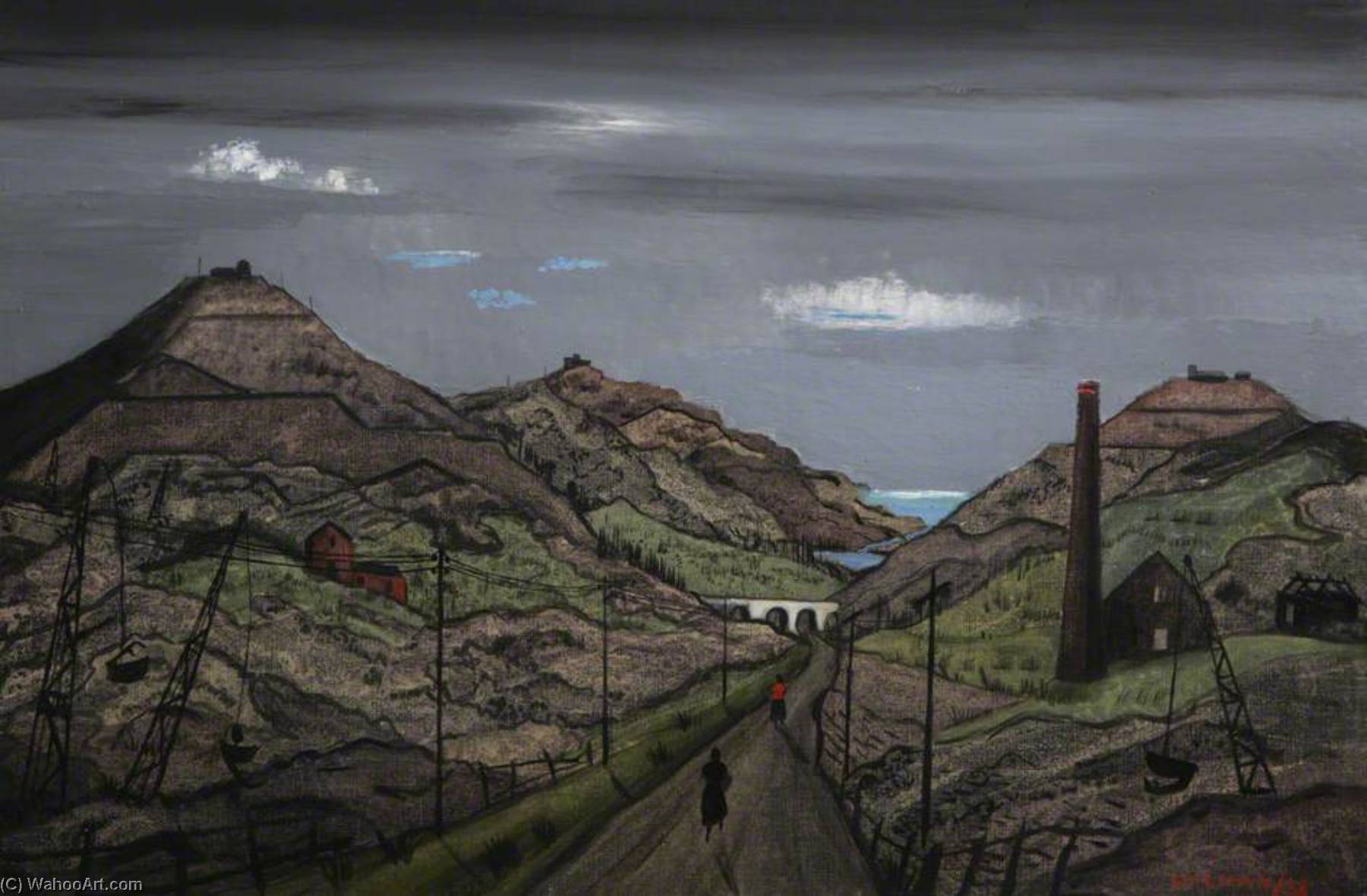
Portrait of Fred Uhlman

Fred Uhlman Paintings: The 14 Most Famous, Through a Gallery's Eye

Updated November 2026 · ranked by our popularity score (searches, visits and orders for each work) · 15 works by Fred Uhlman in our catalogue

In short

To the gallery's eye, Fred Uhlman's most famous painting is Near Lyme Regis (1950). Tightrope Dancer (1943) and Welsh Farm complete the trio every eye recognises. Of the 15 works by Fred Uhlman in our catalog, the gallery presents the 14 most famous below, each original with its year, its museum and what makes it unique.

1901 – 1985, Stuttgart Most works: Ben Uri Gallery - Museum

The gallery's top 10 Fred Uhlman paintings

1
Near Lyme Regis (1950) by Fred Uhlman

Near Lyme Regis

1950 · Painting

The canvas known as Near Lyme Regis captures a quiet moment in time, painted by Fred Uhlman in 1950. This work emerges from the hand of an artist whose life was shaped by movement and memory. Born in Stuttgart, Germany, in 1901, Uhlman lived through profound shifts in the landscape of Europe. He was a man of many disciplines, navigating the world as a painter, writer, and lawyer. His Jewish…

2
Tightrope Dancer (1943) by Fred Uhlman

Tightrope Dancer

1943 · Oil On Canvas · Ben Uri Gallery - Museum, London

In Tightrope Dancer by Fred Uhlman, a whimsical and slightly surreal landscape unfolds through an asymmetrical, loosely structured composition. A solitary figure balances precariously on a tightrope, positioned off-center against a dramatic sky. This upper half of the canvas is dominated by heavy, swirling clouds that suggest constant movement. Below this celestial activity, a small village is nestled among the curves of rolling hills, grounding the scene in a sense…

6
Café, Sunset (1955) by Fred Uhlman

Café, Sunset

The painting Café, Sunset by Fred Uhlman is a stunning representation of a serene beach scene. Created in 1955, this oil on canvas piece measures 12 x 18 cm and is currently housed at the Llyfrgell Genedlaethol Cymru / The National Library of Wales (Aberystwyth, United Kingdom). This beautiful artwork can be viewed on AllPaintingsStore.com. Composition and Style The painting depicts two women sitting at a table under yellow umbrellas,…

7
Les avions (1939) by Fred Uhlman

Les avions

1939 · Oil On Canvas · Royal Academy of Music, London

The artwork "Les Avions" by Fred Uhlman is a captivating piece that showcases the artist's unique style and perspective. Created in 1939, this oil on canvas painting measures 38 x 45 cm and is housed at the Royal Academy of Music in London, United Kingdom. The Artistic Context Fred Uhlman's "Les Avions" is a thought-provoking piece that invites the viewer to explore the urban landscape at night. The painting features…

Fred Uhlman paintings, ranked 11 to 14

The museums that keep Fred Uhlman's originals

The 6 museums that hold the most of the paintings on this page.

Museum City Works by Fred Uhlman Paintings from this list
Ben Uri Gallery - Museum, LondonBen Uri Gallery - Museum London 1 Tightrope Dancer
Paintings, LondonPaintings London 1 The Studio
Llyfrgell Genedlaethol Cymru / The National Library of Wales, AberystwythLlyfrgell Genedlaethol Cymru / The National Library of Wales Aberystwyth 1 Café, Sunset
Royal Academy of Music, LondonRoyal Academy of Music London 1 Les avions
Herbert Art Gallery - Museum, CoventryHerbert Art Gallery - Museum Coventry 1 The Slate Mines
National Trust, LondonNational Trust London 1 Monuments

Fred Uhlman, one signature painting per decade

Works per decade

Pick a decade to see the original that defines it.

Fred Uhlman's paintings: the gallery answers

Which Fred Uhlman painting is the most famous of all?Reveal the answer

Near Lyme Regis (1950). Tightrope Dancer (1943) and Welsh Farm come next.

How old was Fred Uhlman on completing Near Lyme Regis?Reveal the answer

49 years old: Near Lyme Regis dates from 1950, and Fred Uhlman was born in 1901.

Which are Fred Uhlman's top 10 paintings?Reveal the answer

Near Lyme Regis, Tightrope Dancer, Welsh Farm, The Studio, Street Corner in St Servan, Café, Sunset, Les avions, Windmill at Llannerchymedd, Slate Mines and Welsh Hills. The ranking above gives each one's year and museum.

How many works did Fred Uhlman create?Reveal the answer

Our catalog holds 15 works by Fred Uhlman, dated from 1939 to 1955.

Where do Fred Uhlman's most famous originals hang?Reveal the answer

Mostly in Ben Uri Gallery - Museum (London), Paintings (London) and Llyfrgell Genedlaethol Cymru / The National Library of Wales (Aberystwyth). The museum table above lists them all.

When did Fred Uhlman create the most famous paintings?Reveal the answer

In 1940s: 3 of the 14 works on this page were made then, Tightrope Dancer among them.

Which are Fred Uhlman's earliest and latest famous works?Reveal the answer

On this page, the earliest is Les avions (1939) and the latest Café, Sunset (1955).

Which medium did Fred Uhlman work in most?Reveal the answer

Oil On Canvas, for 2 of the 14 works on this page.

Fred Uhlman: the artist

Fred Uhlman: A Painter Shaped by Exile and Memory

Fred Uhlman (1901-1985) was a German-English painter, writer & lawyer of Jewish origin whose distinctive style—characterized by naive realism and imbued with profound emotion—captured the essence of displacement and the enduring power of personal experience. Born Manfred Uhlman in Stuttgart, Germany, he descended from a prosperous middle-class family steeped in intellectual tradition. His early education encompassed Freiburg, Munich and Tübingen universities where he earned degrees in law followed by a doctorate in canon and civil law, establishing him as a respected legal scholar. However, his artistic journey began independently of academic pursuits.
  • Early Artistic Exploration: Uhlman’s fascination with painting emerged during his formative years, fueled by an innate sensitivity to visual beauty and a desire for self-expression. Initially experimenting with watercolors and gouache, he honed his skills through meticulous observation of the natural world—particularly landscapes—drawing inspiration from German Romanticism.
  • Parisian Exile & Artistic Resilience: The rise of Nazism in Germany irrevocably altered Uhlman’s trajectory. Forced to relocate to Paris in 1933 amidst escalating antisemitic pressures, he faced considerable obstacles as a foreigner without legal employment authorization. Despite these hardships, Uhlman persevered, sustaining himself through painting and selling his artwork privately—even supplementing his income by trading tropical fish! This period of exile profoundly impacted his artistic vision, imbuing it with themes of loneliness, resilience, and the yearning for connection.
  • The Influence of Diana Croft & The Theft: A serendipitous encounter in Paris with Diana Croft—a fellow expatriate and London friend—proved pivotal. Their shared predicament underscored the vulnerability of individuals displaced by political upheaval. Tragically, Uhlman’s wallet containing his passport and substantial funds was stolen during a café visit, plunging him into despair and effectively stripping him of his legal status. Nevertheless, Croft's unwavering support bolstered his spirits, encouraging him to continue his artistic endeavors.
  • Return to England & Recognition: Following Croft’s encouragement, Uhlman emigrated to England in 1936 with minimal resources—a testament to his determination and artistic conviction. The subsequent outbreak of the Spanish Civil War necessitated a brief return to Marseille before finally reaching London. It was here that Uhlman's reputation as an artist began to gain traction, culminating in exhibitions at prestigious institutions like County Hall and Fitzwilliam Museum.

Style & Technique: Naive Art Rooted in Observation

Uhlman’s artistic style—often categorized as naive art—stood apart from prevailing modernist trends. Rejecting academic conventions, he embraced a directness of execution and an uncompromising commitment to portraying the world as he perceived it. His canvases are characterized by bold color palettes, simplified forms, and meticulous attention to detail—particularly in capturing atmospheric conditions like sunsets and misty landscapes. He employed a technique reminiscent of folk art traditions, prioritizing emotional resonance over technical precision. This approach allowed him to convey profound feelings about human experience and the natural environment with remarkable sincerity.

Notable Works & Literary Achievement

Among Uhlman’s most celebrated paintings are “Les avions” (The Planes), a striking depiction of aircraft soaring across a dramatic sky; “Café, Sunset,” which captures the tranquil beauty of an evening café scene; and “Tightrope Dancer,” a whimsical landscape featuring a solitary figure balancing on a rope amidst swirling clouds. These works exemplify Uhlman’s ability to distill complex emotions into visually arresting compositions. Furthermore, he achieved literary acclaim with his novel ‘Reunion,’ exploring themes of memory, loss, and the enduring bonds between individuals separated by circumstance—a poignant reflection of his own personal journey.

Legacy & Historical Significance

Fred Uhlman’s artistic legacy resides in his unwavering dedication to portraying human experience with honesty and compassion. His work serves as a powerful reminder that beauty can emerge from adversity, and that art possesses the capacity to transcend political divisions. Represented in institutions like V&A and Fitzwilliam Museum, Uhlman's oeuvre continues to inspire artists and scholars alike—a testament to his enduring contribution to European art history.