Three Pointers in a Landscape (Thomas Blinks)
Thomas Blinks (1860–1912) made Three Pointers in a Landscape.

 Preview

 Hand Made Oil Painting
 Send
 Share
 Fact sheet


 Download
 Similars
 X-Ray
 Diaporama
 Q&A

 Stats
Three Pointers in a Landscape, in brief
- Title
- Three Pointers in a Landscape
- Artist
- Thomas Blinks (1860–1912)
- Artist born in
- Maidstone, United Kingdom
- Subject
- landscape
High-resolution images of Three Pointers in a Landscape

Thomas Blinks, Three Pointers in a Landscape.
Thomas Blinks (1860–1912), Three Pointers in a Landscape. Public domain. Image: OriginalUniqueArt.com.
Questions on Three Pointers in a Landscape, answered
What subjects appear in "Three Pointers in a Landscape" by Thomas Blinks?
"Three Pointers in a Landscape" by Thomas Blinks depicts: landscape.
Can the image of "Three Pointers in a Landscape" by Thomas Blinks be freely reproduced?
Regarding copyright, "Three Pointers in a Landscape" is in the public domain - its copyright has expired.
Which artist is "Three Pointers in a Landscape" attributed to?
The artist behind "Three Pointers in a Landscape" is Thomas Blinks. The work is catalogued under Thomas Blinks's name.
What explains the copyright situation of "Three Pointers in a Landscape" by Thomas Blinks?
The copyright status of "Three Pointers in a Landscape" - in the public domain - its copyright has expired - follows from the artist's death in 1912.
About the artist, Thomas Blinks
1860–1912, United Kingdom
Thomas Blinks
Thomas Blinks: A Victorian Master of Sporting Life The world of late 19th and early 20th-century British art was a complex one, often resistant to embracing the realities of rural life and leisure. Yet, within this landscape emerged Thomas Blinks (1853-1912), an artist who not only captured these scenes with remarkable skill but also imbued them with a profound sense of atmosphere and emotion. Born in Maidstone, Kent, Blinks’ early life was far removed from the world he would later immortalize on canvas – initially apprenticed as a tailor, his true passion lay in drawing, a pursuit fiercely encouraged against his father's wishes. This initial divergence set the stage for a career that would ultimately define him as one of Britain’s most celebrated sporting artists.
Also by Thomas Blinks
 The Pick of the Pack1883
 Stag At Bay On A Rocky Shore
 Over the brook
 Two pointers in a landscape
Essays around Three Pointers in a Landscape
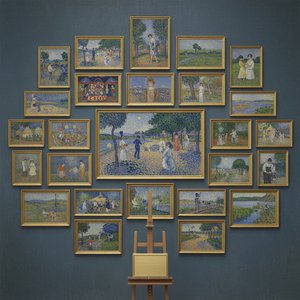 Georges Seurat's Masterpieces: 25 Paintings That Defined Pointillism | OriginalUniqueArtIn 1886, A Sunday Afternoon on the Island of La Grande Jatte revolutionized art through Pointillism, using tiny dots of pure pigment to bui…
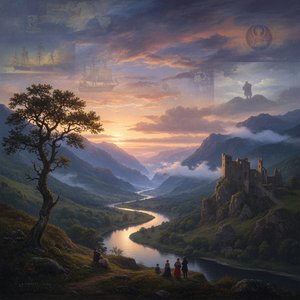 Romantic Landscapes: 10 Masterpieces for Your Home | OriginalUniqueArtCaspar David Friedrich and John Constable used landscape to react against the Enlightenment. Why did these artists prioritize feeling over …
 Atmospheric Vistas: A Study of Notable Landscape CompositionsExplore a masterclass on atmospheric landscapes from Patinir to Monet. Discover the evolution of light and texture in art history.