Πορτρέτο του Χιροσίτζε

Πάτσαδες του Χιροσίτζε: Τα 100 πιο διάσημα, μέσα από το βλέμμα μιας γκαλερί

Ενημερωμένο Νοέμβριος 2026 · κατάταξη βάσει του σκορ δημοφιλίας μας (αναζητήσεις, επισκέψεις και παραγγελίες για κάθε έργο) · 353 έργα του Χιροσίτζε στον κατάλογό μας

Με σύντομη περιγραφή

Στο μάτι της γκαλερί, το πιο διάσημο έργο του Χιροσίτζε είναι το Early Department from a Daimyo, το πρωτότυπο του οποίου εκτίθεται στο Nakagawa-machi Bato Hiroshige Museum of Art, Ναγκασάκι. Ο The maple leaves of Mama, Tekona shrine and Tsugi bridge (1857) και ο Hakone (1834) ολοκληρώνουν το τρίο που κάθε μάτι αναγνωρίζει. Από τα 353 έργα του Χιροσίτζε στον κατάλογό μας, η γκαλερί παρουσιάζει παρακάτω τα 100 πιο διάσημα, όπου κάθε ένα είναι πρωτότυπο, με την χρονολογία του, το μουσείο του και το τι το κάνει μοναδικό.

1797 – 1858, Έντο Japanese landscape painting Περισσότερα έργα: Nakagawa-machi Bato Hiroshige Museum of Art

Τα 10 κορυφαία έργα του Χιροσίτζε στη γκαλερέι

1
Early Department from a Daimyo του Χιροσίτζε

Early Department from a Daimyo

Woodblock Print · Nakagawa-machi Bato Hiroshige Museum of Art, Ναγκασάκι

In the delicate dance of lines and muted pigments, Utagawa Hiroshige’s Early Department from a Daimyo invites us to step through a portal into the heart of Edo-period Japan. This exquisite woodblock print captures a moment of vibrant communal life along a bustling riverside, where the rigid structures of social hierarchy melt into the shared leisure of a sunny afternoon. As we gaze upon the scene, we are not merely…

2
The maple leaves of Mama, Tekona shrine and Tsugi bridge (1857) του Χιροσίτζε

The maple leaves of Mama, Tekona shrine and Tsugi bridge

1857 · Woodblock Print · Μουσείο Βαν Γκογκ, Άμστερνταμ

Utagawa Hiroshige (1797-1858), arguably the last titan of *ukiyo-e*, didn't merely depict landscapes; he crafted them into meditations on beauty and impermanence. “The Maple Leaves of Mama, Tekona Shrine and Tsugi Bridge,” created in 1857 during a period of significant societal transformation—the waning influence of feudal Japan as Western ideas crept in—stands as a testament to his enduring artistic legacy. More than just a visual record, it’s an embodiment of…

3
Hakone (1834) του Χιροσίτζε

Hakone

1834 · Woodblock Print · Indianapolis Museum of Art, Ιντιανάπολις

Utagawa Hiroshige’s “Hakone,” created in 1834, is more than just a landscape; it's a poetic meditation on the beauty and transience of nature within Edo-period Japan. This woodblock print, part of his renowned series "The Fifty-three Stations of the Tōkaidō," captures a specific moment along the vital trade route connecting Tokyo (then Edo) with Kyoto. However, Hiroshige elevates this seemingly simple depiction of a mountain pass into something profoundly evocative,…

4
Station 36, Goyu; Kyoka Tokaido Series (1855) του Χιροσίτζε

Station 36, Goyu; Kyoka Tokaido Series

1855 · Woodblock Print · Indianapolis Museum of Art, Ιντιανάπολις

In the delicate interplay of ink and paper, Utagawa Hiroshige’s "Station 36, Goyu; Kyoka Tokaido Series" offers much more than a mere topographical record of a journey. Completed in 1855, this exquisite woodblock print serves as a profound distillation of Edo-period sensibilities, capturing a yearning for tranquility amidst the burgeoning dynamism of a Japan in transition. As the nation stood at a pivotal crossroads between ancient feudal traditions and the…

5
Φουσιμί Στάση Νο. 51 (1842) του Χιροσίτζε

Φουσιμί Στάση Νο. 51

1842 · Ξυλότυπος εκτύπωση · Indianapolis Museum of Art, Ιντιανάπολις

Η Εικόνα του Κυρίου Χιροσίγε και η Πνευματική Αποτύπωση της Εποχής Του Η εκτύπωση ξύλου του καλλιτέχνη Οτάγκαβα Χιροσίγε με τίτλο «Σταθμός Νο. 51» αποτελεί ένα από τα σημαντικότερα έργα της εποχής του Τόκαϊδο και μια εντυπωσιακή ματιά στην καθημερινή ζωή της Εδου του τέλους του δεκατετάρου αιώνα. Η σκηνή απεικονίζει μια ομάδα ανθρώπων που στέκονται μπροστά σε ένα μεγάλο δέντρο με έναν μικρό κεντρικό λίμνη, δημιουργώντας μια ατμόσφαιρα ζωντανής…

6
Ichikoku Bridge in the Eastern Capital (Tōto: Ichikoku bashi) (1858) του Χιροσίτζε

Ichikoku Bridge in the Eastern Capital (Tōto: Ichikoku bashi)

1858 · Woodblock Print · Indianapolis Museum of Art, Ιντιανάπολις

The Ichikoku Bridge spans a quiet stretch of water in the Eastern Capital. Beneath its wooden arch, two boats drift through the current. People move across the structure, some carrying backpacks and others clutching small handbags. A mountain rises in the distance, watching over the scene. Trees frame the edges of the view, their leaves casting shadows near the water's edge.

7
Shinagawa Sunrise from the series Fifty-three Stations on the Tokaido Road (1834) του Χιροσίτζε

Shinagawa Sunrise from the series Fifty-three Stations on the Tokaido Road

1834 · Woodblock Print · Hill-Stead Museum, Φάρμινγκτον

In the soft, burgeoning light of a nineteenth-century morning, Utagawa Hiroshige invites us to witness a moment of profound stillness along the Tōkaidō road. Shinagawa Sunrise is not merely a depiction of a coastal village; it is a masterclass in the art of atmosphere. As the sun begins its ascent, the boundary between the heavens and the earth dissolves into a luminous haze. The water of the bay reflects a…

8
The Rokugo River Ferry, Kawasaki, from the series the Fifty-three Stations of the Tokaido (Hoeido edition ) του Χιροσίτζε

The Rokugo River Ferry, Kawasaki, from the series the Fifty-three Stations of the Tokaido (Hoeido edition )

Woodblock Print · Nakagawa-machi Bato Hiroshige Museum of Art, Ναγκασάκι

In the delicate dance of woodblock printing, few masters captured the ephemeral beauty of Japanese life as profoundly as Utagawa Hiroshige. His masterpiece, The Rokugo River Ferry, Kawasaki, serves as a breathtaking window into the Edo period, inviting the viewer to step onto the bustling banks of one of the most vital crossings on the Tokaido road. This evocative scene from his legendary series, The Fifty-three Stations of the Tokaido,…

9
Itsukushima in Aki Province (1858) του Χιροσίτζε

Itsukushima in Aki Province

1858 · Woodblock Print · Brooklyn Museum, Μπρούκλιν

In the delicate interplay of mist and water, Itsukushima in Aki Province offers more than a mere glimpse of a Japanese landmark; it provides a profound meditation on the ephemeral nature of existence. Created by the legendary ukiyo-e master Ando Hiroshige in 1858, this woodcut print captures the spiritual essence of the Itsukushima shrine area with a poetic sensitivity that remains unparalleled. As one gazes upon the composition, the eye…

10
Tenryu River Ferry Crossing, Mitsuke, from the series The Fifty-three Stations of the Tokaido (Gyosho Edition) του Χιροσίτζε

Tenryu River Ferry Crossing, Mitsuke, from the series The Fifty-three Stations of the Tokaido (Gyosho Edition)

Woodblock Print · Nakagawa-machi Bato Hiroshige Museum of Art, Ναγκασάκι

The woodblock print depicts a section of the Tenryu River near the station of Mitsuke. In the center of the composition, a large sandbank divides the water into two distinct currents. Several small wooden boats occupy the river, with figures positioned within them to manage the crossing. Some vessels are moored directly against the central sandbank, while others navigate the moving water. The far shore is visible in the distance,…

Πάينτα του Χιροσίτζε, κατάταξη από 11 έως 100

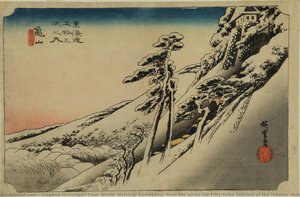
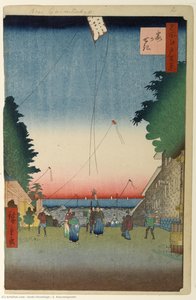
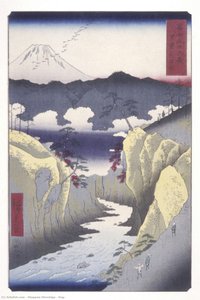
11Πεταλούδα και Κρυσάνθεμα (1800) του ΧιροσίτζεΠεταλούδα και Κρυσάνθεμα1800 · Indianapolis Museum of Art 12The Pine Woods of Miho in Suruga Province (Suruga Miho no matsubara) (1858) του ΧιροσίτζεThe Pine Woods of Miho in Suruga Province (Suruga Miho no matsubara)1858 · Indianapolis Museum of Art 1362 (55) Komakata Hall and Azuma Bridge (1857) του Χιροσίτζε62 (55) Komakata Hall and Azuma Bridge1857 · Brooklyn Museum 14Evening Snow at Kanbara (1834) του ΧιροσίτζεEvening Snow at Kanbara1834 · Los Angeles County Museum of Art 15Dawn in the licensed quarters (1857) του ΧιροσίτζεDawn in the licensed quarters1857 · Art Gallery of New South Wales 16Night View of Saruwakacho του ΧιροσίτζεNight View of Saruwakacho 17Station 28, Fukuroi (1855) του ΧιροσίτζεStation 28, Fukuroi1855 · Indianapolis Museum of Art 18Evening Snow at Asakusa or Woman with Umbrella from the series Eight Views of the Environs of Edo (1800) του ΧιροσίτζεEvening Snow at Asakusa or Woman with Umbrella from the series Eight Views of the Environs of Edo1800 · Hill-Stead Museum 19Keishi (Kyoto), Capital (1834) του ΧιροσίτζεKeishi (Kyoto), Capital1834 · Indianapolis Museum of Art 20Hara: View of Ashitakayama and Fuji (1855) του ΧιροσίτζεHara: View of Ashitakayama and Fuji1855 · Indianapolis Museum of Art 21Yokkaichi (Station #44) (1834) του ΧιροσίτζεYokkaichi (Station #44)1834 · Indianapolis Museum of Art 22Desolate Wintry Scene, Hamamatsu, from the series the Fifty-three Stations of the Tokaido (Hoeido edition) του ΧιροσίτζεDesolate Wintry Scene, Hamamatsu, from the series the Fifty-three Stations of the Tokaido (Hoeido edition)Nakagawa-machi Bato Hiroshige Museum of Art 23Noge and Yokohama in Musashi Province (Musashi, Noge, Yokohama) (1858) του ΧιροσίτζεNoge and Yokohama in Musashi Province (Musashi, Noge, Yokohama)1858 · Indianapolis Museum of Art 24Wild sea breaking on the rocks (1856) του ΧιροσίτζεWild sea breaking on the rocks1856 25Σημασούγκα Σιόμιζακα Ζου (1833) του ΧιροσίτζεΣημασούγκα Σιόμιζακα Ζου1833 · Indianapolis Museum of Art 26Mt.Fuji on the Left, Yoshiwara, from the series the Fifty-three Stations of the Tokaido (Hoeido edition) του ΧιροσίτζεMt.Fuji on the Left, Yoshiwara, from the series the Fifty-three Stations of the Tokaido (Hoeido edition)Nakagawa-machi Bato Hiroshige Museum of Art 27Tsukuda Offing in the Eastern Capital (Tōto: Tsukuda oki) (1858) του ΧιροσίτζεTsukuda Offing in the Eastern Capital (Tōto: Tsukuda oki)1858 · Indianapolis Museum of Art 28Kawachi (1853) του ΧιροσίτζεKawachi1853 · Indianapolis Museum of Art 29The Dye Craft Shops of Arimatsu, Narumi, from the series The Fifty-three Stations of the Tokaido (Gyosho edition) του ΧιροσίτζεThe Dye Craft Shops of Arimatsu, Narumi, from the series The Fifty-three Stations of the Tokaido (Gyosho edition)Nakagawa-machi Bato Hiroshige Museum of Art 30View of Shiomi Slope, Shirasuka, from the series The Fifty-three Stations of the Tokaido (Gyosho edition) του ΧιροσίτζεView of Shiomi Slope, Shirasuka, from the series The Fifty-three Stations of the Tokaido (Gyosho edition)Nakagawa-machi Bato Hiroshige Museum of Art 31Entrance to Enoshima in Sagami Province (Sagami Enoshima iriguchi) (1858) του ΧιροσίτζεEntrance to Enoshima in Sagami Province (Sagami Enoshima iriguchi)1858 · Indianapolis Museum of Art 32Morning Mist, Mishima, from the series the Fifty-three Stations of the Tokaido (Hoeido edition ) του ΧιροσίτζεMorning Mist, Mishima, from the series the Fifty-three Stations of the Tokaido (Hoeido edition )Nakagawa-machi Bato Hiroshige Museum of Art 33The Imagire Sea Ferry, Maisaka, from the series The Fifty-three Stations of the Tokaido (Gyosho edition) του ΧιροσίτζεThe Imagire Sea Ferry, Maisaka, from the series The Fifty-three Stations of the Tokaido (Gyosho edition)Nakagawa-machi Bato Hiroshige Museum of Art 34Sukiya Riverbank in the Eastern Capital (Tōto sukiya kaigan) (1858) του ΧιροσίτζεSukiya Riverbank in the Eastern Capital (Tōto sukiya kaigan)1858 · Indianapolis Museum of Art 35Satta Pass, Yui, from the series the Fifty-three Stations of the Tokaido (Hoeido edition) του ΧιροσίτζεSatta Pass, Yui, from the series the Fifty-three Stations of the Tokaido (Hoeido edition)Nakagawa-machi Bato Hiroshige Museum of Art 36True View of Imagire, Maisaka, from the series the Fifty-three Stations of the Tokaido (Hoeido edition) του ΧιροσίτζεTrue View of Imagire, Maisaka, from the series the Fifty-three Stations of the Tokaido (Hoeido edition)Nakagawa-machi Bato Hiroshige Museum of Art 37Clear Winter Morning, Kameyama, from the series the Fifty-three Stations of the Tokaido (Hoeido edition) του ΧιροσίτζεClear Winter Morning, Kameyama, from the series the Fifty-three Stations of the Tokaido (Hoeido edition)Nakagawa-machi Bato Hiroshige Museum of Art 38The Tenryu River, Mitsuke, from the series the Fifty-three Stations of the Tokaido (Hoeido edition) του ΧιροσίτζεThe Tenryu River, Mitsuke, from the series the Fifty-three Stations of the Tokaido (Hoeido edition)Nakagawa-machi Bato Hiroshige Museum of Art 39The Seven-ri Ferry Crossing, Kuwana, from the series the Fifty-three Stations of the Tokaido (Hoeido edition) του ΧιροσίτζεThe Seven-ri Ferry Crossing, Kuwana, from the series the Fifty-three Stations of the Tokaido (Hoeido edition)Nakagawa-machi Bato Hiroshige Museum of Art 40Aronia and Bullfinch του ΧιροσίτζεAronia and Bullfinch 41Πτηνά Επιστροφής στην Κατάτα (1834) του ΧιροσίτζεΠτηνά Επιστροφής στην Κατάτα1834 · Indianapolis Museum of Art 42Yugyoji Temple, Fujisawa, from the series the Fifty-three Stations of the Tokaido (Hoeido edition) του ΧιροσίτζεYugyoji Temple, Fujisawa, from the series the Fifty-three Stations of the Tokaido (Hoeido edition)Nakagawa-machi Bato Hiroshige Museum of Art 43Travellers and Soliciting Women, Goyu, from the series the Fifty-three Stations of the Tokaido (Hoeido edition) του ΧιροσίτζεTravellers and Soliciting Women, Goyu, from the series the Fifty-three Stations of the Tokaido (Hoeido edition)Nakagawa-machi Bato Hiroshige Museum of Art 44The Totoumi Bank of the Oi River, Kanaya, from the series the Fifty-three Stations of the Tokaido (Hoeido edition) του ΧιροσίτζεThe Totoumi Bank of the Oi River, Kanaya, from the series the Fifty-three Stations of the Tokaido (Hoeido edition)Nakagawa-machi Bato Hiroshige Museum of Art 45The Suruga Bank of the Oi River, Shimada, from the series the Fifty-three Stations of the Tokaido (Hoeido edition) του ΧιροσίτζεThe Suruga Bank of the Oi River, Shimada, from the series the Fifty-three Stations of the Tokaido (Hoeido edition)Nakagawa-machi Bato Hiroshige Museum of Art 46Kyoka Tokaido Series, Kanagawa (Yokohama) του ΧιροσίτζεKyoka Tokaido Series, Kanagawa (Yokohama)Indianapolis Museum of Art 47Distant View of Miho, Ejiri, from the series the Fifty-three Stations of the Tokaido (Hoeido edition) του ΧιροσίτζεDistant View of Miho, Ejiri, from the series the Fifty-three Stations of the Tokaido (Hoeido edition)Nakagawa-machi Bato Hiroshige Museum of Art 48Mt. Fuji in the Morning, Hara, from the series the Fifty-three Stations of the Tokaido (Hoeido edition) του ΧιροσίτζεMt. Fuji in the Morning, Hara, from the series the Fifty-three Stations of the Tokaido (Hoeido edition)Nakagawa-machi Bato Hiroshige Museum of Art 49A Horse Fair, Chiriu, from the series the Fifty-three Stations of the Tokaido (Hoeido edition) του ΧιροσίτζεA Horse Fair, Chiriu, from the series the Fifty-three Stations of the Tokaido (Hoeido edition)Nakagawa-machi Bato Hiroshige Museum of Art 50Wakasa (1853) του ΧιροσίτζεWakasa1853 · Indianapolis Museum of Art 51Distant View of Mt.Akiba, Kakegawa, from the series the Fifty-three Stations of the Tokaido (Hoeido edition) του ΧιροσίτζεDistant View of Mt.Akiba, Kakegawa, from the series the Fifty-three Stations of the Tokaido (Hoeido edition)Nakagawa-machi Bato Hiroshige Museum of Art 52The Ichiri-Han Sea Ferry, Arai, from the series The Fifty-three Stations of the Tokaido (Gyosho edition) του ΧιροσίτζεThe Ichiri-Han Sea Ferry, Arai, from the series The Fifty-three Stations of the Tokaido (Gyosho edition)Nakagawa-machi Bato Hiroshige Museum of Art 53Gateway Entrance to the Atsuta Shrine on the Beach, Miya, from the series The Fifty-three Stations of the Tokaido (Gyosho edition) του ΧιροσίτζεGateway Entrance to the Atsuta Shrine on the Beach, Miya, from the series The Fifty-three Stations of the Tokaido (Gyosho edition)Nakagawa-machi Bato Hiroshige Museum of Art 54Akasaka, from the series The Fifty-three Stations of the Tokaido (Gyosho edition) του ΧιροσίτζεAkasaka, from the series The Fifty-three Stations of the Tokaido (Gyosho edition)Nakagawa-machi Bato Hiroshige Museum of Art 55The Sakawa River, Odawara, from the series the Fifty-three Stations of the Tokaido (Hoeido edition) του ΧιροσίτζεThe Sakawa River, Odawara, from the series the Fifty-three Stations of the Tokaido (Hoeido edition)Nakagawa-machi Bato Hiroshige Museum of Art 56A Footpath between Ricefield, Hiratsuka, from the series the Fifty-three Stations of the Tokaido (Hoeido edition) του ΧιροσίτζεA Footpath between Ricefield, Hiratsuka, from the series the Fifty-three Stations of the Tokaido (Hoeido edition)Nakagawa-machi Bato Hiroshige Museum of Art 57Awa Province: Whirlpool at Naruto (1853) του ΧιροσίτζεAwa Province: Whirlpool at Naruto1853 5873 The City Flourishing, the Tanabata Festival (1857) του Χιροσίτζε73 The City Flourishing, the Tanabata Festival1857 59Sarugababa Plain, Futagawa, from the series the Fifty-three Stations of the Tokaido (Hoeido edition) του ΧιροσίτζεSarugababa Plain, Futagawa, from the series the Fifty-three Stations of the Tokaido (Hoeido edition)Nakagawa-machi Bato Hiroshige Museum of Art 60Local Specialty Teahouse, Mariko, from the series the Fifty-three Stations of the Tokaido (Hoeido edition) του ΧιροσίτζεLocal Specialty Teahouse, Mariko, from the series the Fifty-three Stations of the Tokaido (Hoeido edition)Nakagawa-machi Bato Hiroshige Museum of Art 61Sakanoshita του ΧιροσίτζεSakanoshitaIndianapolis Museum of Art 62Στάση 23, Φουτζιέδα του ΧιροσίτζεΣτάση 23, ΦουτζιέδαIndianapolis Museum of Art 63Marsh Grasses and Mandarin Ducks του ΧιροσίτζεMarsh Grasses and Mandarin Ducks 6450th station, Minakuchi του Χιροσίτζε50th station, Minakuchi 65Sakanoshita: the Throwing Away the Brush Peak (1834) του ΧιροσίτζεSakanoshita: the Throwing Away the Brush Peak1834 · Brooklyn Museum 66Shibaura Bay of Musashi Province (801) του ΧιροσίτζεShibaura Bay of Musashi Province801 · Μετροπολιτικό Μουσείο Τέχνης 67Koyurugi Beach of Sagami Province (801) του ΧιροσίτζεKoyurugi Beach of Sagami Province801 · Μετροπολιτικό Μουσείο Τέχνης 68Honmoku Bay of Musashi Province (801) του ΧιροσίτζεHonmoku Bay of Musashi Province801 · Μετροπολιτικό Μουσείο Τέχνης 69Untitled (Two Rabbits, Pampas Grass, and Full Moon) (1851) του ΧιροσίτζεUntitled (Two Rabbits, Pampas Grass, and Full Moon)1851 7011. Kiyomizu Hall and Shinobazu Pond at Ueno (1857) του Χιροσίτζε11. Kiyomizu Hall and Shinobazu Pond at Ueno1857 7185. Kinokuni Hill and Distant View of Akasaka and the Tameike Pond (1857) του Χιροσίτζε85. Kinokuni Hill and Distant View of Akasaka and the Tameike Pond1857 7276 Bamboo Quay by Kyōbashi Bridge (1857) του Χιροσίτζε76 Bamboo Quay by Kyōbashi Bridge1857 7358 (52) Sudden Shower over Shin-Ōhashi bridge and Atake (1857) του Χιροσίτζε58 (52) Sudden Shower over Shin-Ōhashi bridge and Atake1857 · Tokyo Fuji Art Museum 74103. Senju Great Bridge (1857) του Χιροσίτζε103. Senju Great Bridge1857 7518. The Ōji Inari Shrine (1857) του Χιροσίτζε18. The Ōji Inari Shrine1857 76113. Aoi Slope Outside Toranomon Gate (1857) του Χιροσίτζε113. Aoi Slope Outside Toranomon Gate1857 77114. Bikuni Bridge in Snow (1857) του Χιροσίτζε114. Bikuni Bridge in Snow1857 7870 (60) The Mouth of the Nakagawa River (1857) του Χιροσίτζε70 (60) The Mouth of the Nakagawa River1857 792. Kasumigaseki (1857) του Χιροσίτζε2. Kasumigaseki1857 8015. Suwa Bluff in Nippori (1857) του Χιροσίτζε15. Suwa Bluff in Nippori1857 8163 (69) The Ayase River and Kanegafuchi (1857) του Χιροσίτζε63 (69) The Ayase River and Kanegafuchi1857 82115. The Takata Riding Grounds (1857) του Χιροσίτζε115. The Takata Riding Grounds1857 8386. Naitō Shinjuku in Yotsuya (1857) του Χιροσίτζε86. Naitō Shinjuku in Yotsuya1857 8416. Flower Park and Dangozaka Slope in Sendagi (1857) του Χιροσίτζε16. Flower Park and Dangozaka Slope in Sendagi1857 8568 (59) Open Garden at the Hachiman Shrine in Fukagawa (1857) του Χιροσίτζε68 (59) Open Garden at the Hachiman Shrine in Fukagawa1857 8610. Sunrise at Kanda Myōjin Shrine (1857) του Χιροσίτζε10. Sunrise at Kanda Myōjin Shrine1857 87Peach and Long-tailed Bird του ΧιροσίτζεPeach and Long-tailed Bird 88Golden Pheasant in Bracken του ΧιροσίτζεGolden Pheasant in Bracken 89The Imado Bridge at the Foot of Mount Matsuchi (801) του ΧιροσίτζεThe Imado Bridge at the Foot of Mount Matsuchi801 · Μετροπολιτικό Μουσείο Τέχνης 90Dog (1858) του ΧιροσίτζεDog1858 · Indianapolis Museum of Art 91118. Kitsunebi on New Year's Night Under the Enoki Tree near Ōji (1857) του Χιροσίτζε118. Kitsunebi on New Year's Night Under the Enoki Tree near Ōji1857 92109. Minami Shinagawa and Samezu Coast (1857) του Χιροσίτζε109. Minami Shinagawa and Samezu Coast1857 93Night View of Matsuchiyama and the San (1857) του ΧιροσίτζεNight View of Matsuchiyama and the San1857 · Los Angeles County Museum of Art 94Ακασάκη Νο. 37 του ΧιροσίτζεΑκασάκη Νο. 37Indianapolis Museum of Art 95Shiojiri Pass in Shinano Province (Shinano Shiojiritōge) (1858) του ΧιροσίτζεShiojiri Pass in Shinano Province (Shinano Shiojiritōge)1858 · Indianapolis Museum of Art 96Yoshiwara του ΧιροσίτζεYoshiwaraIndianapolis Museum of Art 97Fuchu, No. 20 του ΧιροσίτζεFuchu, No. 20Indianapolis Museum of Art 98Woman Walking in the Snow (1850) του ΧιροσίτζεWoman Walking in the Snow1850 · Μετροπολιτικό Μουσείο Τέχνης 9982. Moon Viewing (1857) του Χιροσίτζε82. Moon Viewing1857 100Station 27, Kakegawa (1855) του ΧιροσίτζεStation 27, Kakegawa1855 · Indianapolis Museum of Art

Τα διάσημα έργα του Χιροσίτζε, ανά περίοδο

Τα θέματα που κίνησαν το ενδιαφέρον του Χιροσίτζε

Τα τέσσερα θέματα που εμφανίζονται πιο συχνά σε αυτά τα πρωτότυπα έργα, το καθένα με το εξαιρετικό του παράδειγμα.

Τα μουσεία που διατηρούν τα πρωτότυπα έργα του Χιροσίτζε

Τα 8 μουσεία που φιλοξενούν το μεγαλύτερο μέρος των έργων σε αυτήν τη σελίδα.

Μουσείο Πόλη Έργα του Χιροσίτζε Πάτρια από αυτή τη λίστα
Nakagawa-machi Bato Hiroshige Museum of Art, ΝαγκασάκιNakagawa-machi Bato Hiroshige Museum of Art Ναγκασάκι 30 Early Department from a Daimyo, The Rokugo River Ferry, Kawasaki, from the series the Fifty-three Stations of the Tokaido (Hoeido edition ), Tenryu River Ferry Crossing, Mitsuke, from the series The Fifty-three Stations of the Tokaido (Gyosho Edition)
Indianapolis Museum of Art, ΙντιανάπολιςIndianapolis Museum of Art Ιντιανάπολις 35 Hakone, Station 36, Goyu; Kyoka Tokaido Series, Φουσιμί Στάση Νο. 51
Μετροπολιτικό Μουσείο Τέχνης, Νέα ΥόρκηΜετροπολιτικό Μουσείο Τέχνης Νέα Υόρκη 8 Shibaura Bay of Musashi Province, Koyurugi Beach of Sagami Province, Honmoku Bay of Musashi Province
Brooklyn Museum, ΜπρούκλινBrooklyn Museum Μπρούκλιν 4 Itsukushima in Aki Province, 62 (55) Komakata Hall and Azuma Bridge, Sakanoshita: the Throwing Away the Brush Peak
Hill-Stead Museum, ΦάρμινγκτονHill-Stead Museum Φάρμινγκτον 3 Shinagawa Sunrise from the series Fifty-three Stations on the Tokaido Road, Evening Snow at Asakusa or Woman with Umbrella from the series Eight Views of the Environs of Edo
Los Angeles County Museum of Art, Λος ΆντζελεςLos Angeles County Museum of Art Λος Άντζελες 2 Evening Snow at Kanbara, Night View of Matsuchiyama and the San
Μουσείο Βαν Γκογκ, ΆμστερνταμΜουσείο Βαν Γκογκ Άμστερνταμ 1 The maple leaves of Mama, Tekona shrine and Tsugi bridge
Art Gallery of New South Wales, ΣίδνεϊArt Gallery of New South Wales Σίδνεϊ 1 Dawn in the licensed quarters

Χιροσίτζε, ένα χαρακτηριστικό έργο ανά δεκαετία

Έργα ανά δεκαετία

Επιλέξτε μια δεκαετία για να δείτε το πρωτότυπο έργο που την χαρακτηρίζει.

Οι πίνακες του Χιροσίτζε: οι απαντήσεις της γκαλερί

Ποιο έργο του Χιροσίτζε είναι το πιο διάσημο από όλα;Αποκαλύψτε την απάντηση

Early Department from a Daimyo, Nakagawa-machi Bato Hiroshige Museum of Art, Ναγκασάκι. Στη συνέχεια ακολουθούν το The maple leaves of Mama, Tekona shrine and Tsugi bridge (1857) και το Hakone (1834).

Ποιες είναι τα 10 κορυφαία έργα του Χιροσίτζε;Αποκαλύψτε την απάντηση

Early Department from a Daimyo, The maple leaves of Mama, Tekona shrine and Tsugi bridge, Hakone, Station 36, Goyu; Kyoka Tokaido Series, Φουσιμί Στάση Νο. 51, Ichikoku Bridge in the Eastern Capital (Tōto: Ichikoku bashi), Shinagawa Sunrise from the series Fifty-three Stations on the Tokaido Road, The Rokugo River Ferry, Kawasaki, from the series the Fifty-three Stations of the Tokaido (Hoeido edition ), Itsukushima in Aki Province και Tenryu River Ferry Crossing, Mitsuke, from the series The Fifty-three Stations of the Tokaido (Gyosho Edition). Η κατάταξη παραπάνω αναγράφει το έτος και το μουσείο για το κάθε έργο.

Πόσα έργα δημιούργησε ο/η Χιροσίτζε;Αποκαλύψτε την απάντηση

Ο κατάλογός μας περιλαμβάνει 353 έργα του Χιροσίτζε, με ημερομηνίες από 1833 έως 1858.

Πού εκτίθενται τα πιο διάσημα πρωτότυπα του Χιροσίτζε;Αποκαλύψτε την απάντηση

Κυρίως σε Nakagawa-machi Bato Hiroshige Museum of Art (Ναγκασάκι), Indianapolis Museum of Art (Ιντιανάπολις) και Μετροπολιτικό Μουσείο Τέχνης (Νέα Υόρκη). Ο πίνακας μουσείου παραπάνω τους περιλαμβάνει όλους.

Πότε δημιούργησε ο/η Χιροσίτζε τα πιο διάσημα έργα του/της;Αποκαλύψτε την απάντηση

Κατά την περίοδο 1850s: 44 από τα 100 έργα σε αυτήν τη σελίδα δημιουργήθηκαν τότε, με The maple leaves of Mama, Tekona shrine and Tsugi bridge από αυτά να είναι μοναδικά.

Ποια είναι τα πρώτα και τα τελευταία διάσημα έργα του Χιροσίτζε;Αποκαλύψτε την απάντηση

Σε αυτήν τη σελίδα, το παλαιότερο είναι Σημασούγκα Σιόμιζακα Ζου (1833) και το νεότερο Ichikoku Bridge in the Eastern Capital (Tōto: Ichikoku bashi) (1858).

Ποια θέματα επέλεξε πιο συχνά ο Χιροσίτζε;Αποκαλύψτε την απάντηση

Edo period (31), Ukiyo-e (23) και Japan (20), σε συνολικά 100 έργα σε αυτήν τη σελίδα.

Με ποια τεχνική εργάστηκε περισσότερο ο Χιροσίτζε;Αποκαλύψτε την απάντηση

Woodblock Print, για 88 από τα 100 έργα σε αυτήν τη σελίδα.

Με ποιο καλλιτεχνικό κίνημα σχετίζεται ο/η Χιροσίτζε;Αποκαλύψτε την απάντηση

Japanese landscape painting, όπως προκύπτει από τα πρωτότυπα σε αυτήν τη σελίδα.

Ποια πρωτότυπα έργα του Χιροσίτζε διαθέτει το Nakagawa-machi Bato Hiroshige Museum of Art;Αποκαλύψτε την απάντηση

Early Department from a Daimyo, The Rokugo River Ferry, Kawasaki, from the series the Fifty-three Stations of the Tokaido (Hoeido edition ) και Tenryu River Ferry Crossing, Mitsuke, from the series The Fifty-three Stations of the Tokaido (Gyosho Edition): το Nakagawa-machi Bato Hiroshige Museum of Art, Ναγκασάκι διαθέτει 29 από τα έργα σε αυτήν τη σελίδα.

Χιροσίτζε: ο καλλιτέχνης

A Poetic Vision of Edo Japan: The Life and Art of Utagawa Hiroshige

Utagawa Hiroshige, γεννημένος Andō Tokutarō το 1797 στην πολυσύχνα πόλη του Εντο (σύγχρονο Τόκιο), αποτελεί μια καθοριστική φιγούρα στον κόσμο του *ukiyo-e*, ή “εικόνων του πλανήτη που επιπλέει”. Παρά τις βαθιές ρίζες του στις παραδόσεις της ιαπωνικής εκτύπωσης ξύλων, ο Χιροσίγε υπερέβη την απλή αναπαραγωγή, ενσωματώνοντας τη δική του ποιητική αίσθηση στην απεικόνιση των τοπίων του, η οποία αντηχούσε βαθιά τόσο στην Ιαπωνία όσο και αργότερα σε ολόκληρο τον δυτικό κόσμο της τέχνης. Η ζωή του διαδραματίστηκε κατά τη διάρκεια μιας περιόδου σχετικής ειρήνης και ευημερίας υπό την κυριαρχία του σογκούματος Tokugawa, ωστόσο ήταν επίσης μια εποχή που χαρακτηριζόταν από αυξανόμενες κοινωνικές αλλαγές και τελική δυτικοποίηση – δυνάμεις που συνέβαλαν τελικά στην παρακμή του *ukiyo-e*, παρά το γεγονός ότι ενίσχυσαν την διαρκή κληρονομιά του. Αρχικά προοριζόμενος σε ένα πιο συμβατικό μονοπάτι μέσα σε μια σαμουράι οικογένεια – ο πατέρας του υπηρέτησε ως πυροσβέστης, ο Χιροσίγε οδηγήθηκε από τις καλλιτεχνικές του τάσεις στην εκπαίδευση υπό τον Utagawa Toyohiro, έναν μάγο του σχολείου Utagawa. Αυτό αποδείχθηκε μια κρίσιμη στροφή, οδηγώντας τον μακριά από τις δημοφιλείς απεικονίσεις ημιτελών γυναικών και ηθοποιών που προτιμούσαν πολλοί καλλιτέχνες *ukiyo-e*, προς ένα εστίαση στα τοπία, ένα είδος στο οποίο τελικά αναδιαμόρφωσε.

Από Σκηνές Γενεών σε Εντυπωσιακά Τοπία

Τα πρώτα έργα του Χιροσίγε συμμορφώνονταν με τις συμβάσεις του σχολείου του, παρουσιάζοντας πορτρέτα και σκηνές από την καθημερινή ζωή. Ωστόσο, η υιοθέτησή του των τοπίων ήταν αυτό που τον ξεχώρισε πραγματικά. Επηρεαζόμενος από προηγούμενους μάστες όπως ο Hokusai – οι δέκα εξακόσιες “Θέασεις του Όρους Fuji” είχαν ήδη εντυπωσιάσει το κοινό, ο Χιροσίγε ανέπτυξε ένα μοναδικό στυλ που χαρακτηριζόταν από ατμοσφαιρική προοπτική, διακριτά παλέτες χρωμάτων και μια βαθιά ευαισθησία στις μεταβαλλόμενες εποχές. Δεν απεικόνισε απλώς μέρη, αλλά έφερε την ψυχολογία τους, καταγράφοντας την ουσία μιας συγκεκριμένης στιγμής στο χρόνο. Η σειρά *Οι πενήντα τρεις στάσεις του Tōkaidō* (1833–1834), ίσως το πιο διάσημο επίτευγμά του, τεκμηρίωσε το ταξίδι κατά μήκος του δρόμου Tōkaidō, της κύριας διαδρομής που συνέδεε το Εντο με την Κυότο, όχι ως μια απλή ταξιδιωτική ιστορία, αλλά ως μια σειρά από εντυπωσιακές σκηνές – μια ξαφνική βροχή στο Shono, μια μακρινή θέα του Όρους Fuji από το Kanaya, η πολυσύχναση στο Odawara. Κάθε εκτύπωση είναι γεμάτη με μια αίσθηση μεταβλητότητας και ήρερης ομορφιάς, προσκαλώντας τους θεατές να βιώσουν το ταξίδι μαζί με τους ταξιδιώτες. Έφερε με επιτυχία σε εφαρμογή την τεχνική *bokashi*, μια τεχνική που περιλαμβάνει πολλαπλές εκτυπώσεις για τη δημιουργία διακριτών βαθμίδων χρωμάτων, προσθέτοντας βάθος και ατμόσφαιρα στις συνθέσεις του.

Μέγιστος Έκφρασης Ατμόσφαιρας και Τεχνικής

Η τεχνική δεξιά του Χιροσίγε ήταν εξίσου αξιοσημείωτη με το καλλιτεχνικό του όραμα. Δεν ενδιαφερόταν απλώς για την ακριβή αναπαράσταση, αλλά έψαχε να αποτυπώσει την *αίσθηση* ενός τόπου. Η χρήση του χρώματος, αν και συχνά περιορισμένη σε σύγκριση με ορισμένους από τους συμπολίτες του, ήταν κρίσιμη για την επίτευξη αυτού του αποτελέσματος. Συχνά χρησιμοποιούσε πολλαπλά μπλοκ για ένα μόνο χρώμα, επιτρέποντάς του να δημιουργήσει λεπτομερείς αποχρώσεις και ατμοσφαιρικές εφέ που ήταν δύσκολο να αναπαραχθούν. Οι απαλές αποχρώσεις του γακριού στις απεικονίσεις της βροχής ή του τυφώνα, οι ζεστές αποχρώσεις των φθινοπωρινών φυλλώδων – αυτά δεν ήταν τυχαία, αλλά προσεκτικά μελετημένα στοιχεία που σχεδιάστηκαν για να προκαλέσουν συγκεκριμένα συναισθήματα και αισθήσεις. Πέρα από το *bokashi*, ο Χιροσίγε ήταν ικανός στη χρήση του κενό – *ma*, μια έννοια κεντρική στην ιαπωνική αισθητική, επιτρέποντας σε περιοχές της εκτύπωσης να “αναπνέουν” και ενισχύοντας την συνολική αίσθηση ηρεμίας. Η σειρά *Εκατό Γνωστές Θέασεις του Εντο* (1856–1858) επέδειξε περαιτέρω τη μαεστεία του, προσφέροντας ειλικρινείς εικόνες της καθημερινής ζωής στην αγαπημένη του πόλη.

Η Διαρκής Κληρονομιά: Japonisme και πέρα από αυτό

Παρά το γεγονός ότι η παράδοση *ukiyo-e* άρχισε να φθίνει μετά τον θάνατο του Χιροσίγε το 1858 – μια παρακμή επιταγμένη από την Μεيجي Επαναστασία και την επόμενη εισροή δυτικών πολιτισμών, η επιρροή του απέδειξε ότι ήταν εξαιρετικά διαρκής στον κόσμο της τέχνης. Τη δεκαετία του 1880, οι ιαπωνικές εκτυπώσεις πλημμύρισαν την Ευρώπη, πυροδοτώντας ένα φαινόμενο που ονομάστηκε *Japonisme*. Καλλιτέχνες όπως ο Édouard Manet, ο Claude Monet και ο Edgar Degas εντυπωσιάστηκαν από τις τολμηρές συνθέσεις, τις επίπεδες προοπτικές και τις μη συμβατικές παλέτες χρωμάτων των *ukiyo-e*, ενσωματώνοντας αυτά τα στοιχεία στη δική τους τέχνη. Ο Vincent van Gogh ήταν ιδιαίτερα γοητευμένος από τις εκτυπώσεις του Χιροσίγε, δημιουργώντας αντιγράφους πολλών από αυτές, συμπεριλαμβανομένου του "Plum Park in Kameido", αποδεικνύοντας τον βαθύ θαυμασμό του για την ιαπωνική μαεστεία. Η επιρροή του Χιροσίγε επεκτάθηκε πέρα από τη ζωγραφική και φαίνεται στην αρχιτεκτονική, το σχέδιο και ακόμη και τη λογοτεχνία. Σήμερα, ο Utagawa Hiroshige θυμίζεται όχι μόνο ως ένας λαμπρός καλλιτέχνης αλλά και ως ένας πολιτιστικός πρεσβευτής που βοήθησε να γεφυρωθεί το χάσμα μεταξύ Ανατολής και Δύσης, αφήνοντας ανεξίτηλο σημάδι στην ιστορία της τέχνης. Τα ονειρικά του τοπία συνεχίζουν να εμπνέουν θαυμασμό