Πορτρέτο του Ζακ-Λουί Νταβίντ

Τα 100 πιο διάσημα έργα του Ζακ-Λουί Νταβίντ, κάθε ένα μοναδικό

Ενημερωμένο Νοέμβριος 2026 · κατάταξη βάσει του σκορ δημοφιλίας μας (αναζητήσεις, επισκέψεις και παραγγελίες για κάθε έργο) · 277 έργα του Ζακ-Λουί Νταβίντ στον κατάλογό μας

Με σύντομη περιγραφή

Το έργο Ο Θάνατος του Μαράτ (1793) είναι το ποίτευμα του Ζακ-Λουί Νταβίντ που τραβάει τα περισσότερα βλέμματα· το πρωτότυπο ανήκει στο Musées Royaux des Beaux-Arts, Βρυξέλλες. Μετά από αυτό, το βλέμμα στρέφεται στο Ο Θάνατος του Σωκράτη, Metropolitan NY (1787) και στο Θεία Χρίσμα του Αυτοκράτορα Ναπολέοντα Α' και Στέψη της Αυτοκράτειδας Ιοκαίνης (1805). Ανάμεσα στα 277 έργα του Ζακ-Λουί Νταβίντ στον κατάλογό μας, αυτά τα 100 είναι τα πιο διάσημα, το καθένα ένα μοναδικό πρωτότυπο που παρουσιάζεται με την χρονολογία του, το μουσείο του και τον λόγο για τον οποίο παραμένει αιώνιο.

1748 – 1825, Παρίσι Νεοκλασικισμός Περισσότερα έργα: Μουσείο του Λούβρου

Τα 10 κορυφαία έργα του Ζακ-Λουί Νταβίντ, μέσα από το βλέμμα της γκαλερί

1
Ο Θάνατος του Μαράτ (1793) του Ζακ-Λουί Νταβίντ

Ο Θάνατος του Μαράτ

1793 · Άνθρακα και λάδι σε καμβά · Musées Royaux des Beaux-Arts, Βρυξέλλες

A Monument to Grief: Examining Jacques Louis David’s “The Death of Marat” David's "The Death of Marat," completed in 1793, stands as one of the most iconic images of the French Revolution. More than just a depiction of death—though undeniably visceral—it’s a carefully constructed tableau designed to galvanize public opinion and solidify Jean-Paul Marat’s legacy as a martyr for liberty. The painting captures Marat's final moments, slumped on his bed…

2
Ο Θάνατος του Σωκράτη, Metropolitan NY (1787) του Ζακ-Λουί Νταβίντ

Ο Θάνατος του Σωκράτη, Metropolitan NY

1787 · Άνθρακα και λάδι σε καμβά · Μετροπολιτικό Μουσείο Τέχνης, Νέα Υόρκη

Το έργο «Ο Θάνατος του Σωκράτη» του Jacques Louis David, το οποίο δεσπόζει στις συλλογές του Metropolitan Museum of Art, αποτελεί έναν ακρογωνιακό λίθο της Νεοκλασικής τέχνης—ένα κάλπιο που ξεπερνά την απλή οπτική αναπαράστασή και ενσαρκώνει βαθιά φιλοσοφικά και ηθικά ζητήματα. Ολοκληρωμένο το 1787, λίγο πριν από την έκρηξη της Γαλλικής Επανάστασης, το έργο δεν περιορίζεται στην απλή απεικόνιση ενός ιστορικού γεγονότος· λειτουργεί ως κανάλι 통해 το οποίο το πνεύμα…

3
Θεία Χρίσμα του Αυτοκράτορα Ναπολέοντα Α' και Στέψη της Αυτοκράτειδας Ιοκαίνης (1805) του Ζακ-Λουί Νταβίντ

Θεία Χρίσμα του Αυτοκράτορα Ναπολέοντα Α' και Στέψη της Αυτοκράτειδας Ιοκαίνης

1805 · Άνθρακα και λάδι σε καμβά · Μουσείο του Λούβρου, Παρίσι

A Grand Spectacle of Imperial Glory The sheer scale of Jacques-Louis David’s Consecration of the Emperor Napoleon I and Coronation of the Empress Josephine is enough to overwhelm the senses, yet it is the profound narrative within that truly commands attention. Measuring a monumental 629 x 979 cm, this colossal canvas serves as much more than a mere historical record; it is a carefully orchestrated vision of legitimacy and divine…

4
Ναπολέων στον Πάσσα του Μεγάλου Σερβαντάλ (1801) του Ζακ-Λουί Νταβίντ

Ναπολέων στον Πάσσα του Μεγάλου Σερβαντάλ

1801 · Άνθρακα και λάδι σε καμβά · Αυστριακή Πινακοθήκη Belvedere, Βιέννη

Το έργο "Ναπολέων στον Δία με τον Άλπιο Ίππο" του Jacques-Louis David, ένα από τα πιο εμβληματικά στιγμιότυπα της γαλλικής τέχνης και της ιστορίας, δεν είναι απλώς μια απεικόνιση ενός στρατηγού. Είναι μια έξυπνα διαμορφωμένη μυθολογία, μια έντονη δήλωση δύναμης, ηγεμονίας και αστείρευτου φιλοδοξίας. Δημιουργημένο το 1801, αυτό το έργο αποτυπώνει την τολμηρή διασχισή του Ναπολέοντα από το Μεγάλο Βάλτο της Σαντενβέρνης – μια κρίσιμη στιγμή που σφράγισε την άνοδό…

5
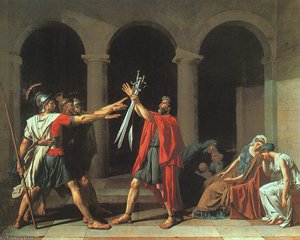
Ο Ορκισμός των Ορατίων (1784) του Ζακ-Λουί Νταβίντ

Ο Ορκισμός των Ορατίων

1784 · Άνθρακα και λάδι σε καμβά · Μουσείο του Λούβρου, Παρίσι

In the grand tapestry of art history, few canvases command the room with such unyielding authority as Jacques-Louis David’s The Oath of the Horatii. Completed in 1784, this masterpiece stands as a definitive cornerstone of the Neoclassical movement, marking a decisive departure from the playful, swirling frivolity of the Rococo era. At its heart, the painting captures a moment of profound tension and moral gravity, drawing from the legendary conflict…

6
Η κατάληψη των Σαβινών γυναικών (1799) του Ζακ-Λουί Νταβίντ

Η κατάληψη των Σαβινών γυναικών

1799 · Άνθρακα και λάδι σε καμβά

A Monumental Vision of Peace & Conflict Jacques-Louis David’s 1799 masterpiece is a powerful and emotionally resonant depiction of “The Intervention of the Sabine Women,” a pivotal moment from Roman legend. This large-scale canvas transcends mere historical illustration, becoming a profound meditation on conflict, reconciliation, and the enduring power of compassion. A stunning example of Neoclassical artistry, it’s a piece destined to captivate art enthusiasts, collectors, and those seeking a…

7
Ο Ναπολέων στο γραφείο του (1812) του Ζακ-Λουί Νταβίντ

Ο Ναπολέων στο γραφείο του

1812 · Άνθρακα και λάδι σε καμβά · Εθνική Πινακοθήκη Τέχνης, Ουάσινγκτον

Jacques-Louis David’s “Napoleon in His Study at the Tuileries” transcends mere depiction; it embodies the spirit of a pivotal moment in European history—the consolidation of Napoleon Bonaparte's reign following the tumultuous upheaval of the French Revolution. Completed in 1812, this monumental canvas captures Napoleon not as a warrior conquering territories but as a contemplative ruler wrestling with the weighty responsibilities of leadership within the confines of his private sanctuary.

8
Η Επιστροφή του διάσημου Οδυσσέα (1789) του Ζακ-Λουί Νταβίντ

Η Επιστροφή του διάσημου Οδυσσέα

1789 · Άνθρακα και λάδι σε καμβά · Μουσείο του Λούβρου, Παρίσι

Θέμα και Ναρραтивική Σημασία Αυτό το ισχυρό αριστούργημα αποτυπώνει μια συγκλονιστική στιγμή της ρωμαϊκής ιστορίας, όταν ο Λούκιος Ιούνιος Μπρούτος, ο θρυλικός ιδρυτής της Ρωμαϊκής Δημοκρατίας, θρηνεί την απώλεια των γιوں του. Αντιμετωπίζοντας την τραγική ανάγκη της εκτέλεσης της ίδιας της οικογένειάς του, λόγω της συνωμοσίας για την αποκατάσταση της μοναρχίας, ο Μπρούτος ενσαρκώνει την αταλάντευτη πολιτική αρετή και την ηθική αποφασιστικότητα. Η σκηνή αποτελεί ένα δραματικό tableau θυσίας, καθήκοντος…

9
Madame Récamier (1800) του Ζακ-Λουί Νταβίντ

Madame Récamier

1800 · Άνθρακα και λάδι σε καμβά · Μουσείο του Λούβρου, Παρίσι

Jacques-Louis David captured the likeness of Juliette Récamier in this oil on canvas. Completed in 1800, the work presents the Parisian socialite in a moment of repose. She sits upon a bed, her figure emerging from the shadows of the room. The portrait remains a cornerstone of the Neoclassical movement.

10
Λεωνίδας στους Θερμοπύλες (1814) του Ζακ-Λουί Νταβίντ

Λεωνίδας στους Θερμοπύλες

1814 · Άνθρακα και λάδι σε καμβά · Μουσείο του Λούβρου, Παρίσι

The air thickens with the weight of impending conflict in Jacques-Louis David’s Leonidas at Thermopylae. Completed in 1814, this colossal oil on canvas captures a moment of profound stillness before the storm of war. We find ourselves at the edge of history, witnessing the Spartan king Leonidas as he prepares to face the Persian tide. The scene freezes the very instant the king addresses his soldiers, his presence a steady…

Τα διάσημα έργα του Ζακ-Λουί Νταβίντ, από το 11 έως το 100

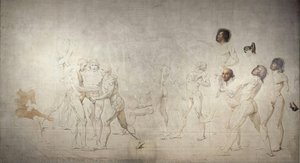
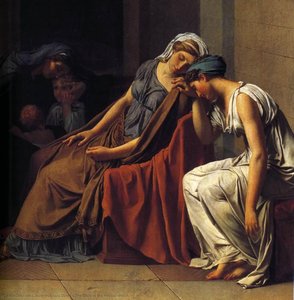
11Ορκισμός στο Jeu de Paume (1792) του Ζακ-Λουί ΝταβίντΟρκισμός στο Jeu de Paume1792 · Château de Versailles 12Άρση του Άρη από την Εώς και τις Τέσσερις Ευδαιμονίες (1824) του Ζακ-Λουί ΝταβίντΆρση του Άρη από την Εώς και τις Τέσσερις Ευδαιμονίες1824 · Musées Royaux des Beaux-Arts 13Ο Βησισαρίος Λαμβάνει Χρήματα του Ζακ-Λουί ΝταβίντΟ Βησισαρίος Λαμβάνει ΧρήματαPalais des Beaux-Arts de Lille 14Ο Θυμός του Αχιλλέα (1819) του Ζακ-Λουί ΝταβίντΟ Θυμός του Αχιλλέα1819 · Kimbell Art Museum 15Ο Θάνατος του Σενέκα (1773) του Ζακ-Λουί ΝταβίντΟ Θάνατος του Σενέκα1773 · Petit Palais 16Ανδρομάχη θρηνώντας τον Έκτορα (1783) του Ζακ-Λουί ΝταβίντΑνδρομάχη θρηνώντας τον Έκτορα1783 · Μουσείο του Λούβρου 17Η Θάνατος του Μαράτ του Ζακ-Λουί ΝταβίντΗ Θάνατος του Μαράτ 18Ο Ορκος των Ορατίων (λεπτομέρεια) (1784) του Ζακ-Λουί ΝταβίντΟ Ορκος των Ορατίων (λεπτομέρεια)1784 · Μουσείο του Λούβρου 19Η Στέφανωση του Αυτοκράτορα και της Αυτοκράτειδας (1822) του Ζακ-Λουί ΝταβίντΗ Στέφανωση του Αυτοκράτορα και της Αυτοκράτειδας1822 · Château de Versailles 20Αρσενικός Γυμνός γνωστός ως Πάτροκλος του Ζακ-Λουί ΝταβίντΑρσενικός Γυμνός γνωστός ως Πάτροκλος 21Οι Περιπλάνησεις του Πάριδα και της Ελένης (1788) του Ζακ-Λουί ΝταβίντΟι Περιπλάνησεις του Πάριδα και της Ελένης1788 · Μουσείο του Λούβρου 22Η Θυμός του Αχιλλέα (1819) του Ζακ-Λουί ΝταβίντΗ Θυμός του Αχιλλέα1819 23Το Όρκο του Χοράτιων (1786) του Ζακ-Λουί ΝταβίντΤο Όρκο του Χοράτιων1786 · Toledo Museum of Art 24Ο Άγιος Ρόκος να παρακαλεί την Παναγία Μαρία να ιαθήσει τα θύματα της πανούκλας του Ζακ-Λουί ΝταβίντΟ Άγιος Ρόκος να παρακαλεί την Παναγία Μαρία να ιαθήσει τα θύματα της πανούκλας 25The Oath in the Tennis Court (1791) του Ζακ-Λουί ΝταβίντThe Oath in the Tennis Court1791 · Château de Versailles 26Antoine Laurent Lavoisier (1743–1794) και Marie Anne Lavoisier (Marie Anne Pierrette Paulze, 1758–1836) (1788) του Ζακ-Λουί ΝταβίντAntoine Laurent Lavoisier (1743–1794) και Marie Anne Lavoisier (Marie Anne Pierrette Paulze, 1758–1836)1788 · Μετροπολιτικό Μουσείο Τέχνης 27Άμωρπος και Ψυχή (1817) του Ζακ-Λουί ΝταβίντΆμωρπος και Ψυχή1817 · Μουσείο Τέχνης Κλίβελαντ 28Λεωνίδας στα Θερμοπύλες (λεπτομέρεια) (1814) του Ζακ-Λουί ΝταβίντΛεωνίδας στα Θερμοπύλες (λεπτομέρεια)1814 · Μουσείο του Λούβρου 29The Death of Socrates (1786) του Ζακ-Λουί ΝταβίντThe Death of Socrates1786 · Μετροπολιτικό Μουσείο Τέχνης 30Ναπολέων να κρατά το στέμμα της Ιοκατίνης (1805) του Ζακ-Λουί ΝταβίντΝαπολέων να κρατά το στέμμα της Ιοκατίνης1805 · Μουσείο του Λούβρου 31Η Επέμβαση των Σαβινικών Γυναικών (τομή) (1799) του Ζακ-Λουί ΝταβίντΗ Επέμβαση των Σαβινικών Γυναικών (τομή)1799 · Μουσείο του Λούβρου 32Napoleon Bonaparte in his Study at the Tuileries (1812) του Ζακ-Λουί ΝταβίντNapoleon Bonaparte in his Study at the Tuileries1812 33Mars Disarmed by Venus and the Three Graces (detail) (1824) του Ζακ-Λουί ΝταβίντMars Disarmed by Venus and the Three Graces (detail)1824 · Musées Royaux des Beaux-Arts 34Napoleon in His Study (1812) του Ζακ-Λουί ΝταβίντNapoleon in His Study1812 35Nude study of Pope Pius VII (1805) του Ζακ-Λουί ΝταβίντNude study of Pope Pius VII1805 · Μουσείο του Λούβρου 36Portrait of Gaspar Mayer (1795) του Ζακ-Λουί ΝταβίντPortrait of Gaspar Mayer1795 · Μουσείο του Λούβρου 37Hector (1778) του Ζακ-Λουί ΝταβίντHector1778 · Musée Fabre 38Portrait of Antoine-Laurent and Marie-Anne Lavoisier (detail) (1788) του Ζακ-Λουί ΝταβίντPortrait of Antoine-Laurent and Marie-Anne Lavoisier (detail)1788 · Μετροπολιτικό Μουσείο Τέχνης 39Αντίοχος και Στρατονίκη (1774) του Ζακ-Λουί ΝταβίντΑντίοχος και Στρατονίκη1774 · École Nationale Supérieure des Beaux-Arts 40Σαπφώ και Φάων του Ζακ-Λουί ΝταβίντΣαπφώ και Φάων 41The Intervention of the Sabine Women (detail) (1799) του Ζακ-Λουί ΝταβίντThe Intervention of the Sabine Women (detail)1799 · Μουσείο του Λούβρου 42Consecration of the Emperor Napoleon I (detail) (1805) του Ζακ-Λουί ΝταβίντConsecration of the Emperor Napoleon I (detail)1805 · Μουσείο του Λούβρου 43Θεία Χρίσμα του Αυτοκράτορα Ναπολέοντα Α' (λεπτομέρεια) (1805) του Ζακ-Λουί ΝταβίντΘεία Χρίσμα του Αυτοκράτορα Ναπολέοντα Α' (λεπτομέρεια)1805 · Μουσείο του Λούβρου 44Ανδρομάχη θρηνώντας τον Έκτορα του Ζακ-Λουί ΝταβίντΑνδρομάχη θρηνώντας τον ΈκτοραGrand Palais 45The Death of Seneca (1773) του Ζακ-Λουί ΝταβίντThe Death of Seneca1773 · Musée du Petit Palais 46The Oath of the Horatii (detail) (1784) του Ζακ-Λουί ΝταβίντThe Oath of the Horatii (detail)1784 · Μουσείο του Λούβρου 47Bonaparte Crossing the Grand Saint-Bernard Pass (1802) του Ζακ-Λουί ΝταβίντBonaparte Crossing the Grand Saint-Bernard Pass1802 48The Empress Josephine Kneeling with Mme de la Rochefoucauld and Mme de la Valette (1806) του Ζακ-Λουί ΝταβίντThe Empress Josephine Kneeling with Mme de la Rochefoucauld and Mme de la Valette1806 · Μουσείο του Λούβρου 49Πορτρέτο του Ιγκρ (1800) του Ζακ-Λουί ΝταβίντΠορτρέτο του Ιγκρ1800 · Μουσείο Πούσκιν 50Madame Recamier, Louvre (1800) του Ζακ-Λουί ΝταβίντMadame Recamier, Louvre1800 51Ο Στρατός ορκίζεται στον Αυτοκράτορα μετά την επινομή των Αετών (1810) του Ζακ-Λουί ΝταβίντΟ Στρατός ορκίζεται στον Αυτοκράτορα μετά την επινομή των Αετών1810 · Château de Versailles 52Juliette Recamier (1800) του Ζακ-Λουί ΝταβίντJuliette Recamier1800 · Μουσείο του Λούβρου 53Πορτρέτο της Μαρκίζας ντ'Ορβιγιέ (1790) του Ζακ-Λουί ΝταβίντΠορτρέτο της Μαρκίζας ντ'Ορβιγιέ1790 · Μουσείο του Λούβρου 54Self-Portrait (1790) του Ζακ-Λουί ΝταβίντSelf-Portrait1790 · Μουσείο Πούσκιν 55Death of Marat, Musees Royaux des Beaux-Ar (1793) του Ζακ-Λουί ΝταβίντDeath of Marat, Musees Royaux des Beaux-Ar1793 56Portrait of Antoine-Laurent and Marie-Anne Lavoisier (1788) του Ζακ-Λουί ΝταβίντPortrait of Antoine-Laurent and Marie-Anne Lavoisier1788 · Μετροπολιτικό Μουσείο Τέχνης 57the death of marat του Ζακ-Λουί Νταβίντthe death of marat 58madame recamier του Ζακ-Λουί Νταβίντmadame recamier 59Bonaparte (1798) του Ζακ-Λουί ΝταβίντBonaparte1798 60Christ on the Cross (1782) του Ζακ-Λουί ΝταβίντChrist on the Cross1782 · Εκκλησία του Αγίου Βινσέντ 61Jacobus Blauw (1795) του Ζακ-Λουί ΝταβίντJacobus Blauw1795 · Εθνική Πινακοθήκη Λονδίνου 62Μελέτη για την Διανομή των Αετοφόρων Σημαδιών (1808) του Ζακ-Λουί ΝταβίντΜελέτη για την Διανομή των Αετοφόρων Σημαδιών1808 · Μουσείο του Λούβρου 63The Intervention of the Sabine Women (1799) του Ζακ-Λουί ΝταβίντThe Intervention of the Sabine Women1799 64Portrait of Madame Emilie Seriziat and her Son του Ζακ-Λουί ΝταβίντPortrait of Madame Emilie Seriziat and her Son 65Portrait of Madame Charles-Louis Trudaine (1792) του Ζακ-Λουί ΝταβίντPortrait of Madame Charles-Louis Trudaine1792 66The Death of Marat (detail) (1793) του Ζακ-Λουί ΝταβίντThe Death of Marat (detail)1793 · Musées Royaux des Beaux-Arts 67The Arrival at the Hôtel de Ville (1805) του Ζακ-Λουί ΝταβίντThe Arrival at the Hôtel de Ville1805 · Μουσείο του Λούβρου 68Portrait of Jeanbon Saint André (1795) του Ζακ-Λουί ΝταβίντPortrait of Jeanbon Saint André1795 · Art Institute of Chicago 69The Oath of the Tennis Court (1791) του Ζακ-Λουί ΝταβίντThe Oath of the Tennis Court1791 · Château de Versailles 70Jacques Louis David In his workshop του Ζακ-Λουί ΝταβίντJacques Louis David In his workshop 71The Combat of Mars and Minerva (1771) του Ζακ-Λουί ΝταβίντThe Combat of Mars and Minerva1771 · Μουσείο του Λούβρου 72The Tennis Court Oath, 20th June 1789 (1791) του Ζακ-Λουί ΝταβίντThe Tennis Court Oath, 20th June 17891791 73Portrait of Alphonse Leroy (1783) του Ζακ-Λουί ΝταβίντPortrait of Alphonse Leroy1783 74Pope Pius VII with the Cardinal Caprara (1805) του Ζακ-Λουί ΝταβίντPope Pius VII with the Cardinal Caprara1805 · Philadelphia Museum of Art 75The Death of Bara (1794) του Ζακ-Λουί ΝταβίντThe Death of Bara1794 · Musée Calvet 76Louis XVI Showing the Constitution to his Son, the Dauphin (1792) του Ζακ-Λουί ΝταβίντLouis XVI Showing the Constitution to his Son, the Dauphin1792 · Μουσείο του Λούβρου 77untitled (3326) του Ζακ-Λουί Νταβίντuntitled (3326) 78Deputies swearing oaths (1791) του Ζακ-Λουί ΝταβίντDeputies swearing oaths1791 · Château de Versailles 79sappho and phaon του Ζακ-Λουί Νταβίντsappho and phaon 80untitled (1714) του Ζακ-Λουί Νταβίντuntitled (1714) 81Αντίο Σωκράτη της γυναίκας του Ξανθίπης του Ζακ-Λουί ΝταβίντΑντίο Σωκράτη της γυναίκας του ΞανθίπηςFondazione Cariplo 82The Grief of Andromache (1782) του Ζακ-Λουί ΝταβίντThe Grief of Andromache1782 · Musée du Petit Palais 83View of the Luxembourg Gardens in Paris (1794) του Ζακ-Λουί ΝταβίντView of the Luxembourg Gardens in Paris1794 84Portrait of Monsieur Lavoisier and His Wife του Ζακ-Λουί ΝταβίντPortrait of Monsieur Lavoisier and His Wife 85Marie Antoinette on the Way to the Guillotine του Ζακ-Λουί ΝταβίντMarie Antoinette on the Way to the Guillotine 86Portrait of Marguerite-Charlotte David (1813) του Ζακ-Λουί ΝταβίντPortrait of Marguerite-Charlotte David1813 · Εθνική Πινακοθήκη Τέχνης 87Η Υπεπαναχώρηση των Χορατίων του Ζακ-Λουί ΝταβίντΗ Υπεπαναχώρηση των Χορατίων 88View of the Tiber and Castel St Angelo (1776) του Ζακ-Λουί ΝταβίντView of the Tiber and Castel St Angelo1776 · Μουσείο του Λούβρου 89Minerva (1776) του Ζακ-Λουί ΝταβίντMinerva1776 · Μουσείο του Λούβρου 90The Funeral of Patroclus (1778) του Ζακ-Λουί ΝταβίντThe Funeral of Patroclus1778 · Εθνική Γκαλερί της Ιρλανδίας 91Head of the Dead Marat του Ζακ-Λουί ΝταβίντHead of the Dead Marat 92Consecration of the Emperor Napoleon I (detail) (10) (1805) του Ζακ-Λουί ΝταβίντConsecration of the Emperor Napoleon I (detail) (10)1805 · Μουσείο του Λούβρου 93Consecration of the Emperor Napoleon I (detail) (1805) του Ζακ-Λουί ΝταβίντConsecration of the Emperor Napoleon I (detail)1805 · Μουσείο του Λούβρου 94Portrait of a Young Woman in White (1798) του Ζακ-Λουί ΝταβίντPortrait of a Young Woman in White1798 95The Death Of Marat (Study) του Ζακ-Λουί ΝταβίντThe Death Of Marat (Study) 96Alexander Ordering The Books Of Homer To Be Preserved του Ζακ-Λουί ΝταβίντAlexander Ordering The Books Of Homer To Be Preserved 97The Oath of the Horatii - Jacques-Louis David (2026) του Ζακ-Λουί ΝταβίντThe Oath of the Horatii - Jacques-Louis David2026 98Portrait of the Sisters Zénaïde and Charlotte Bonaparte (1821) του Ζακ-Λουί ΝταβίντPortrait of the Sisters Zénaïde and Charlotte Bonaparte1821 99Caricature of the English Government (1793) του Ζακ-Λουί ΝταβίντCaricature of the English Government1793 100A Young Woman of Frascati (1775) του Ζακ-Λουί ΝταβίντA Young Woman of Frascati1775 · Μετροπολιτικό Μουσείο Τέχνης

Τα διάσημα έργα του Ζακ-Λουί Νταβίντ, ανά περίοδο

Τα θέματα που κίνησαν το ενδιαφέρον του Ζακ-Λουί Νταβίντ

Τα τέσσερα θέματα που εμφανίζονται πιο συχνά σε αυτά τα πρωτότυπα έργα, το καθένα με το εξαιρετικό του παράδειγμα.

Τα μουσεία που διατηρούν τα πρωτότυπα έργα του Ζακ-Λουί Νταβίντ

Τα 8 μουσεία που φιλοξενούν το μεγαλύτερο μέρος των έργων σε αυτήν τη σελίδα.

Μουσείο Πόλη Έργα του Ζακ-Λουί Νταβίντ Πάτρια από αυτή τη λίστα
Μουσείο του Λούβρου, ΠαρίσιΜουσείο του Λούβρου Παρίσι 35 Θεία Χρίσμα του Αυτοκράτορα Ναπολέοντα Α' και Στέψη της Αυτοκράτειδας Ιοκαίνης, Ο Ορκισμός των Ορατίων, Η Επιστροφή του διάσημου Οδυσσέα
Μετροπολιτικό Μουσείο Τέχνης, Νέα ΥόρκηΜετροπολιτικό Μουσείο Τέχνης Νέα Υόρκη 8 Ο Θάνατος του Σωκράτη, Metropolitan NY, Antoine Laurent Lavoisier (1743–1794) και Marie Anne Lavoisier (Marie Anne Pierrette Paulze, 1758–1836), The Death of Socrates
Château de Versailles, ΒερσαλλίεςChâteau de Versailles Βερσαλλίες 7 Ορκισμός στο Jeu de Paume, Η Στέφανωση του Αυτοκράτορα και της Αυτοκράτειδας, The Oath in the Tennis Court
Musées Royaux des Beaux-Arts, ΒρυξέλλεςMusées Royaux des Beaux-Arts Βρυξέλλες 4 Ο Θάνατος του Μαράτ, Άρση του Άρη από την Εώς και τις Τέσσερις Ευδαιμονίες, Mars Disarmed by Venus and the Three Graces (detail)
Εθνική Πινακοθήκη Τέχνης, ΟυάσινγκτονΕθνική Πινακοθήκη Τέχνης Ουάσινγκτον 3 Ο Ναπολέων στο γραφείο του, Portrait of Marguerite-Charlotte David
Musée du Petit Palais, ΠαρίσιMusée du Petit Palais Παρίσι 2 The Death of Seneca, The Grief of Andromache
Μουσείο Πούσκιν, ΜόσχαΜουσείο Πούσκιν Μόσχα 2 Πορτρέτο του Ιγκρ, Self-Portrait
Musée Fabre, ΜονπελιέMusée Fabre Μονπελιέ 5 Hector

Ο Ζακ-Λουί Νταβίντ μέσα από τις δεκαετίες: ένα μοναδικό πρωτότυπο για κάθε εποχή

Έργα ανά δεκαετία

Επιλέξτε μια δεκαετία για να δείτε το πρωτότυπο έργο που την χαρακτηρίζει.

Οι πίνακες του Ζακ-Λουί Νταβίντ: ερωτήσεις για την γκαλερί

Ποιο είναι το πιο διάσημο έργο του Ζακ-Λουί Νταβίντ;Αποκαλύψτε την απάντηση

Ο Θάνατος του Μαράτ (1793), Musées Royaux des Beaux-Arts, Βρυξέλλες. Στη συνέχεια ακολουθούν το Ο Θάνατος του Σωκράτη, Metropolitan NY (1787) και το Θεία Χρίσμα του Αυτοκράτορα Ναπολέοντα Α' και Στέψη της Αυτοκράτειδας Ιοκαίνης (1805).

Σε τι ηλικία δημιούργησε ο/η Ζακ-Λουί Νταβίντ το έργο Ο Θάνατος του Μαράτ;Αποκαλύψτε την απάντηση

45 ετών: το έργο Ο Θάνατος του Μαράτ είναι του 1793, και ο/η Ζακ-Λουί Νταβίντ γεννήθηκε το 1748.

Ποια είναι τα δέκα πιο διάσημα έργα του Ζακ-Λουί Νταβίντ;Αποκαλύψτε την απάντηση

Ο Θάνατος του Μαράτ, Ο Θάνατος του Σωκράτη, Metropolitan NY, Θεία Χρίσμα του Αυτοκράτορα Ναπολέοντα Α' και Στέψη της Αυτοκράτειδας Ιοκαίνης, Ναπολέων στον Πάσσα του Μεγάλου Σερβαντάλ, Ο Ορκισμός των Ορατίων, Η κατάληψη των Σαβινών γυναικών, Ο Ναπολέων στο γραφείο του, Η Επιστροφή του διάσημου Οδυσσέα, Madame Récamier και Λεωνίδας στους Θερμοπύλες. Η κατάταξη παραπάνω αναγράφει το έτος και το μουσείο για το κάθε έργο.

Πόσα έργα του Ζακ-Λουί Νταβίντ είναι γνωστά;Αποκαλύψτε την απάντηση

Ο κατάλογός μας περιλαμβάνει 277 έργα του Ζακ-Λουί Νταβίντ, με ημερομηνίες από 1771 έως 1824.

Πού μπορούν να θαυμαστούν τα πιο διάσημα πρωτότυπα έργα του Ζακ-Λουί Νταβίντ;Αποκαλύψτε την απάντηση

Κυρίως σε Μουσείο του Λούβρου (Παρίσι), Μετροπολιτικό Μουσείο Τέχνης (Νέα Υόρκη) και Château de Versailles (Βερσαλλίες). Ο πίνακας μουσείου παραπάνω τους περιλαμβάνει όλους.

Κατά ποια περίοδο δημιούργησε ο/η Ζακ-Λουί Νταβίντ τα πιο γνωστά του/της έργα;Αποκαλύψτε την απάντηση

Κατά την περίοδο 1790s: 24 από τα 100 έργα σε αυτήν τη σελίδα δημιουργήθηκαν τότε, με Ο Θάνατος του Μαράτ από αυτά να είναι μοναδικά.

Ποιο διάσημο έργο του Ζακ-Λουί Νταβίντ είναι το παλαιότερο και ποιο το νεότερο;Αποκαλύψτε την απάντηση

Σε αυτήν τη σελίδα, το παλαιότερο είναι The Combat of Mars and Minerva (1771) και το νεότερο Άρση του Άρη από την Εώς και τις Τέσσερις Ευδαιμονίες (1824).

Ποια θέματα προτίμησε ο/η Ζακ-Λουί Νταβίντ;Αποκαλύψτε την απάντηση

Classical art (21), Κλασική τέχνη (12) και Portraiture (11), σε συνολικά 100 έργα σε αυτήν τη σελίδα.

Με ποια υλικά χρησιμοποίησε περισσότερο ο Ζακ-Λουί Νταβίντ;Αποκαλύψτε την απάντηση

Oil On Canvas, για 37 από τα 100 έργα σε αυτήν τη σελίδα.

Ποιο καλλιτεχνικό κίνημα ανήκει το έργο του Ζακ-Λουί Νταβίντ;Αποκαλύψτε την απάντηση

Νεοκλασικισμός, όπως προκύπτει από τα πρωτότυπα σε αυτήν τη σελίδα.

Ποια πρωτότυπα έργα του Ζακ-Λουί Νταβίντ μπορώ να δω στο Μουσείο του Λούβρου;Αποκαλύψτε την απάντηση

Θεία Χρίσμα του Αυτοκράτορα Ναπολέοντα Α' και Στέψη της Αυτοκράτειδας Ιοκαίνης, Ο Ορκισμός των Ορατίων και Η Επιστροφή του διάσημου Οδυσσέα: το Μουσείο του Λούβρου, Παρίσι διαθέτει 28 από τα έργα σε αυτήν τη σελίδα.

Ζακ-Λουί Νταβίντ: ένα πορτρέτο του καλλιτέχνη

The Life and Art of Jacques-Louis David

Born in Paris, France, on August 30, 1748, Jacques-Louis David emerged during a period of profound political and aesthetic transformation. He became the principal exponent of the late 18th-century Neoclassical style, a movement that sought to replace the decorative whimsy of the Rococo with a sense of order and moral clarity. His career was defined by an ability to navigate the most turbulent shifts in French history, moving from the structured hierarchies of the Ancien Régime to the radicalism of the Revolution and the imperial grandeur of the Napoleonic era.

As the preeminent painter of his era, David did more than capture the likenesses of his subjects; he provided a visual language for the changing ideals of his nation. His work often focused on historical and classical themes, utilizing rigorous contours and a disciplined approach to composition. This commitment to clarity helped establish Neoclassicism as the dominant artistic force in France. His canvases were frequently large in scale, designed to command attention and convey the gravity of the scenes they depicted.

His output was vast and varied, ranging from intense historical dramas to formal portraiture. Some of his notable subjects include:

Early Life, Family and Training

Born into the merchant-and-artisan middle class of Paris, Jacques-Louis David’s early years were marked by a sudden, sharp disruption. When he was nine, his father was killed in a duel, leaving the young boy to be raised by well-off architect uncles. During his formal schooling, he proved to be an indifferent student, his mind frequently wandering from his lessons toward the act of drawing. This early preference for the pencil and charcoal suggested a temperament better suited to the studio than the classroom.

His path toward professional mastery began under the guidance of François Boucher, a painter of the Rococo style. While Boucher provided his initial apprenticeship, David eventually sought a different direction, moving toward the instruction of Joseph-Marie Vien. As a professor at the Royal Academy of Painting and Sculpture, Vien offered a more classical approach that would eventually define David's aesthetic. This period of study was not a swift ascent; it was a process of trial and error. He faced the frustration of three failed attempts to secure the prestigious Prix de Rome, a setback that tested his resolve. He finally achieved the prize in 1774, a victory that would fundamentally alter the course of his career.

The Rise of Neoclassicism and Italian Study

The trajectory of David’s development shifted decisively in 1775 when he traveled to Italy alongside his teacher, Joseph Vien. This period of study provided the necessary distance from the decorative tendencies of the French court, allowing him to confront the weight of antiquity directly. In the shadow of Rome, he turned his attention toward the 17th-century masters, absorbing the structured compositions of Poussin and the dramatic lighting of Caravaggio. He also studied the works of the Carracci, finding in their approach a balance of form and naturalism that would inform his own developing hand.

During these years, David was introduced to Raphael Mengs, a figure who advocated for a rigorous, disciplined study of classical sources. This intellectual encounter helped steer the young painter away from the lingering whimsy of the Rococo. His focus moved toward a more austere and morally driven neoclassicism, a style that favored clarity and order over ornamentation. The experience in Italy did not merely refine his technique; it provided the philosophical foundation for a career dedicated to the pursuit of civic virtue and historical gravity.

Artistic Role During the French Revolution

The political upheaval of 1789 found David deeply embedded in the shifting currents of French society. He was an active supporter of the revolution, moving beyond the quietude of the studio to engage directly with the radical forces reshaping the nation. As a member of the Jacobin group, his commitment to the cause was both ideological and personal. He maintained a close friendship with Maximilien Robespierre, a connection that placed him at the very center of the era's most intense political machinations.

His influence extended into the administrative heart of the new republic, where he served as the artistic director. In this capacity, he helped shape the visual language of a movement that sought to replace old hierarchies with new, civic-minded ideals. His work during these years often functioned as a mirror to the fervor of the streets, capturing the gravity of martyrdom and the weight of republican duty. He did not merely paint the revolution; he helped direct its public image.

Patronage and Service to Napoleon

The political tides that had once fueled David’s revolutionary fervor eventually settled into the structured grandeur of the Empire. As Napoleon Bonaparte rose to power, the artist transitioned from a partisan of the Republic to the official court painter of the new regime. This shift was formalized in 1804, when he was appointed First Painter to the Emperor. His role was to provide a visual language for Napoleon’s authority, translating military triumphs and imperial dignity into a grand, public scale.

This period of service brought about a subtle evolution in his aesthetic. The austere, sometimes severe clarity of his earlier Neoclassical works softened, giving way to an Empire style. His palette grew more complex, incorporating warm Venetian colors that lent a sense of richness to his compositions. He moved away from the starkness of his revolutionary years, instead embracing a more opulent visual vocabulary that suited the ceremonial needs of the imperial court.

  • Napoleon Crossing the Alps (1801-1805)
  • The Coronation of Napoleon (1807)

Technique and Neoclassical Style

David’s brushwork rejected the swirling, decorative excesses of the Rococo in favor of a disciplined, structural clarity. His compositions relied upon rigorous contours and sculpted forms that gave his figures a sense of permanence, as if they were carved from marble rather than rendered in oil. This precision was matched by a preference for polished surfaces, where the hand of the artist often vanished behind a seamless, finished appearance. He sought to capture the essence of antiquity through a visual language of order and restraint.

Light and shadow functioned as primary tools of drama in his studio. He employed a stark, dramatic use of tenebrism, a technique that utilized heavy contrasts to pull subjects out of the darkness. This approach, combined with a Caravaggesque realism, allowed him to ground his historical and mythological scenes in a palpable, physical reality. Rather than relying on a riot of color, he often utilized a restrained palette dominated by earthy tones, which focused the viewer's attention on the moral weight of the scene rather than mere ornamentation.

Key Works and Masterpieces

The trajectory of David's career is marked by a capacity to translate the political and moral currents of France into rigid, sculptural forms. In 1784, he completed The Oath of the Horatii, a work that signaled a departure from the decorative whimsy of the previous era. By replacing soft curves with sharp, linear precision, he provided a visual language for civic duty. This sense of moral gravity continued in 1787 with The Death of Socrates, where he rendered the philosopher's final moments with a calm, disciplined clarity that emphasized intellectual conviction over chaotic emotion.

As the Revolution turned violent, David’s brush became a tool for documenting the immediate and the tragic. His 1793 depiction of The Death of Marat transformed a political assassination into a scene of profound, quiet stillness. The pale, slumped body of the journalist, resting against a makeshift desk, stripped away the noise of the Terror to focus on a singular, haunting reality. This ability to capture the weight of a moment defined his role as the era's visual chronicler.

The shift from revolutionary fervor to imperial grandeur saw David turning his attention to the man who would reshape Europe. Between 1801 and 1805, he painted Napoleon Crossing the Alps, presenting the leader as a figure of mythic strength. This was followed by the immense 1807 canvas, The Coronation of Napoleon, which documented the opulence of the imperial ceremony. Even in his more intimate portraiture, such as the 1800 depiction of Madame Récamier, his commitment to structured composition and formal dignity remained constant.

Circle, Pupils and Artistic Influence

The studio of Jacques-Louis David functioned as a vital center for the transmission of Neoclassical principles, attracting a diverse group of students who would go on to shape the nineteenth century. Among his most prominent pupils was Jean-Auguste-Dominique Ingres, who would eventually emerge as a formidable force in his own right. The lineage of David’s instruction also included Antoine-Jean Gros and François Gérard, both of whom navigated the shifting tastes of the era while carrying the weight of his rigorous training. Even Jérôme-Martin Langlois found his way into this disciplined environment, absorbing the technical precision required by the prevailing aesthetic.

This pedagogical reach extended far beyond the immediate classroom. The formal structures and expressive distortions David employed in his compositions left a mark that resonated through subsequent generations. His influence reached into the radical shifts of the modern era, finding unexpected echoes in the work of Henri Matisse and Pablo Picasso. While his direct pupils often sought to refine or even rebel against his strict adherence to classical order, the fundamental emphasis on draftsmanship and structural clarity remained a constant thread in the evolution of French art.

Exile and Death in Brussels

The political tides that once carried him to the heights of imperial favor eventually turned against him. Following the fall of Napoleon, the shifting landscape of France left little room for the former court painter. In 1816, David was sent into exile in Brussels, a move that signaled the end of his direct influence over the French state. He did not retreat into silence, however. In this Belgian city, he maintained his professional rigor, continuing to paint and instruct students until his final days.

His presence in Brussels remained a constant through the final decade of his life. He lived through the transition of European power, a witness to the very history he had once helped to document on canvas. On December 29, 1825, his life reached its conclusion. He died in Brussels, far from the Parisian salons and the imperial courts that had defined his most active years.

A monument marks the site of his rest. In the Brussels Cemetery, an obelisk stands as a memorial to the man who had once been the visual architect of an era. This stone marker serves as a quiet conclusion to a career that spanned the most turbulent transformations of the French state.

Where to See the Works Today

The physical presence of David’s oeuvre is scattered across the major repositories of European and international art. The Louvre Museum in Paris remains the primary guardian of his output, housing a significant portion of his most influential canvases. In New York, the Metropolitan Museum of Art maintains several of his pieces, allowing for a study of his precision far from the streets of France. His reach extends into the East as well, with the Pushkin State Museum in Moscow holding a portrait of Ingres, a work that reflects the complex connections between David and his most famous pupil.

In the south of France, the Musée Fabre in Montpellier offers a different perspective on his development. Within its walls, one can find Hector, a work from 1778 that captures a more formative, dramatic naturalism. This piece provides a window into the artist's earlier stylistic tendencies before his full embrace of the austere clarity that would define his later years. To see his work in these various settings is to trace the geographic spread of a style that once dictated the visual language of an entire era.