Πορτρέτο του Τζορτζ Κάτλιν

Τα 100 πιο διάσημα έργα του Τζορτζ Κάτλιν, κάθε ένα μοναδικό

Ενημερωμένο Οκτώβριος 2026 · κατάταξη βάσει του σκορ δημοφιλίας μας (αναζητήσεις, επισκέψεις και παραγγελίες για κάθε έργο) · 908 έργα του Τζορτζ Κάτλιν στον κατάλογό μας

Με σύντομη περιγραφή

Το έργο Say-say-gon, Hail Storm, War Chief (1845) είναι το ποίτευμα του Τζορτζ Κάτλιν που τραβάει τα περισσότερα βλέμματα· το πρωτότυπο ανήκει στο Smithsonian American Art Museum, Ουάσινγκτον, D.C.. Μετά από αυτό, το βλέμμα στρέφεται στο Sky se ró ka, Second Chief of the Tribe (1834) και στο Ee mat lá , King Phillip, Second Chief (1838). Ανάμεσα στα 908 έργα του Τζορτζ Κάτλιν στον κατάλογό μας, αυτά τα 100 είναι τα πιο διάσημα, το καθένα ένα μοναδικό πρωτότυπο που παρουσιάζεται με την χρονολογία του, το μουσείο του και τον λόγο για τον οποίο παραμένει αιώνιο.

1796 – 1872, Γουίλκς Μπέαρ American romanticism Περισσότερα έργα: Smithsonian American Art Museum

Τα 10 κορυφαία έργα του Τζορτζ Κάτλιν, μέσα από το βλέμμα της γκαλερί

1
Say-say-gon, Hail Storm, War Chief (1845) του Τζορτζ Κάτλιν

Say-say-gon, Hail Storm, War Chief

1845 · Oil On Canvas · Smithsonian American Art Museum, Ουάσινγκτον, D.C.

George Catlin’s arresting oil on canvas, "Say-say-gon, Hail Storm, War Chief," is far more than a mere portrait; it is a profound historical document rendered with the immediacy of a living memory. Created in 1845, this work plunges the viewer directly into the dramatic confluence of cultures at the American frontier. The subject—a Native American man adorned with feathers and bearing an air of solemn authority—commands attention through his unwavering,…

2
Sky se ró ka, Second Chief of the Tribe (1834) του Τζορτζ Κάτλιν

Sky se ró ka, Second Chief of the Tribe

1834 · Oil On Canvas · Smithsonian American Art Museum, Ουάσινγκτον, D.C.

To stand before this portrait of Sky se ró ka, Second Chief of the Tribe, is to encounter not merely paint on canvas, but a profound echo from a bygone era. George Catlin’s masterful rendering captures more than just a likeness; it arrests a moment in time—a moment steeped in dignity, contemplation, and the quiet weight of history. The subject dominates the composition with an undeniable presence. His gaze, seemingly…

3
Ee mat lá , King Phillip, Second Chief (1838) του Τζορτζ Κάτλιν

Ee mat lá , King Phillip, Second Chief

1838 · Oil On Canvas · Smithsonian American Art Museum, Ουάσινγκτον, D.C.

Before us rests a profoundly moving portrait, George Catlin’s evocative depiction of Ee mat lá , King Phillip, Second Chief. This 1838 work transcends mere representation; it is a solemn meditation on culture, resilience, and the passing of time. The subject commands attention with an undeniable dignity that seems to emanate from within the very texture of the paint. Catlin has gifted us not just a likeness, but a window…

4
Eeh nís kim, Crystal Stone, Wife of the Chief (1832) του Τζορτζ Κάτλιν

Eeh nís kim, Crystal Stone, Wife of the Chief

1832 · Oil On Canvas · Smithsonian American Art Museum, Ουάσινγκτον, D.C.

To stand before George Catlin’s portrait, Eeh nís kim, Crystal Stone, Wife of the Chief, is to step across the threshold of time itself. This 1832 oil painting is far more than a mere likeness; it is a profound historical document rendered with the delicate touch of an artist obsessed with preservation. Catlin, whose life spanned the collision of two worlds—the burgeoning American frontier and the ancient cultures of Native…

5
Steeh tcha kó me co, Great King (called Ben Perryman), a Chief (1834) του Τζορτζ Κάτλιν

Steeh tcha kó me co, Great King (called Ben Perryman), a Chief

1834 · Oil On Canvas · Smithsonian American Art Museum, Ουάσινγκτον, D.C.

To stand before George Catlin’s Steeh tcha kó me co, Great King (called Ben Perryman), a Chief is to step across the threshold of time itself. This arresting portrait, executed in 1834, is far more than a mere likeness; it is a profound historical document rendered with the passionate brushstrokes of Romanticism. Catlin, forever drawn to the edges of civilization, captured here the dignity and complex spirit of an Indigenous…

6
Cáh be múb bee, He Who Sits Everywhere, a Brave (1835) του Τζορτζ Κάτλιν

Cáh be múb bee, He Who Sits Everywhere, a Brave

1835 · Oil On Canvas · Smithsonian American Art Museum, Ουάσινγκτον, D.C.

To stand before George Catlin’s depiction of Cáh be múb bee, He Who Sits Everywhere, a Brave is to step across the threshold of time and into a world both vividly real and deeply mythic. Painted in 1835, this work transcends mere portraiture; it is an eloquent testament to a vanishing culture, rendered with the passionate intensity characteristic of Romanticism blended seamlessly with meticulous Realism. The central figure commands attention,…

7
Os ce o lá, The Black Drink, a Warrior of Great Distinction (1838) του Τζορτζ Κάτλιν

Os ce o lá, The Black Drink, a Warrior of Great Distinction

1838 · Oil On Canvas · Smithsonian American Art Museum, Ουάσινγκτον, D.C.

To stand before George Catlin’s Os ce o lá, The Black Drink, a Warrior of Great Distinction is not merely to observe a painting; it is to step across the threshold of time. This arresting portrait, executed in 1838, captures more than just the likeness of an Indigenous man, believed to be from the Shawnee tribe—it arrests the viewer with the profound weight of cultural memory. Catlin, forever positioned as…

8
Stán au pat, Bloody Hand, Chief of the Tribe (1832) του Τζορτζ Κάτλιν

Stán au pat, Bloody Hand, Chief of the Tribe

1832 · Oil On Canvas · Smithsonian American Art Museum, Ουάσινγκτον, D.C.

To stand before George Catlin’s portrait, Stán au pat, Bloody Hand, Chief of the Tribe, is to step across the threshold of time itself. Painted in 1832, this work transcends mere depiction; it is a profound act of witnessing. Catlin, whose life spanned the tumultuous collision between burgeoning American civilization and the ancient ways of the Native American peoples, captured more than just a likeness on canvas. He immortalized a…

9
Wa kon chásh kaw, He Who Comes on the Thunder (1828) του Τζορτζ Κάτλιν

Wa kon chásh kaw, He Who Comes on the Thunder

1828 · Oil On Canvas · Smithsonian American Art Museum, Ουάσινγκτον, D.C.

George Catlin’s depiction, *Wa kon chásh kaw, He Who Comes on the Thunder*, is far more than a mere portrait; it is a vibrant, arresting tableau vivant plucked from the heart of a vanishing world. The scene immediately immerses the viewer in the raw energy and profound cultural richness of the American frontier in 1828. At the center stands the principal figure, radiating an almost mythic power. His outstretched arms…

10
Wah chee háhs ka, Man Who Puts All Out of Doors (1835) του Τζορτζ Κάτλιν

Wah chee háhs ka, Man Who Puts All Out of Doors

1835 · Painting · Smithsonian American Art Museum, Ουάσινγκτον, D.C.

To stand before George Catlin’s depiction of Wah chee háhs ka, Man Who Puts All Out of Doors is to step across the threshold of time itself. This painting, executed in 1835, is far more than a mere portrait; it is a profound ethnographic document imbued with the raw energy of a culture on the precipice of change. Catlin, forever drawn to the mystery and resilience of Native American life,…

Τα διάσημα έργα του Τζορτζ Κάτλιν, από το 11 έως το 100

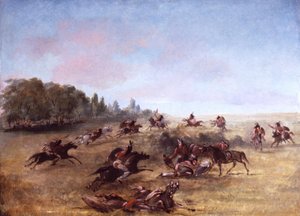
11Né-hee-ó-ee-wóo-tis, Wolf on the Hill, Chief of the Tribe (1832) του Τζορτζ ΚάτλινNé-hee-ó-ee-wóo-tis, Wolf on the Hill, Chief of the Tribe1832 · Smithsonian American Art Museum 12Mún ne o ye, a Woman (1832) του Τζορτζ ΚάτλινMún ne o ye, a Woman1832 · Smithsonian American Art Museum 13Mah táhp ta a, Rushes through the Middle, a Brave (1832) του Τζορτζ ΚάτλινMah táhp ta a, Rushes through the Middle, a Brave1832 · Smithsonian American Art Museum 14A'h tee wát o mee, a Woman (1830) του Τζορτζ ΚάτλινA'h tee wát o mee, a Woman1830 · Smithsonian American Art Museum 15Chin cha pee, Fire Bug That Creeps, Wife of Pigeon's Egg Head (1832) του Τζορτζ ΚάτλινChin cha pee, Fire Bug That Creeps, Wife of Pigeon's Egg Head1832 · Smithsonian American Art Museum 16A'h sha la cóots ah, Mole in the Forehead, Chief of the Republican Pawnee (1832) του Τζορτζ ΚάτλινA'h sha la cóots ah, Mole in the Forehead, Chief of the Republican Pawnee1832 · Smithsonian American Art Museum 17Stu mick o súcks, Buffalo Bull's Back Fat, Head Chief, Blood Tribe (1832) του Τζορτζ ΚάτλινStu mick o súcks, Buffalo Bull's Back Fat, Head Chief, Blood Tribe1832 18Du cór re a, Chief of the Tribe, and His Family (1830) του Τζορτζ ΚάτλινDu cór re a, Chief of the Tribe, and His Family1830 · Smithsonian American Art Museum 19Ish a ró yeh, He Who Carries a Wolf, a Distinguished Brave (1834) του Τζορτζ ΚάτλινIsh a ró yeh, He Who Carries a Wolf, a Distinguished Brave1834 · Smithsonian American Art Museum 20Mun ne pús kee, He Who Is Not Afraid Ko ha túnk a, Big Crow and Nah cóm ee shee, Man of the Bed, Three Young Warriors (1834) του Τζορτζ ΚάτλινMun ne pús kee, He Who Is Not Afraid Ko ha túnk a, Big Crow and Nah cóm ee shee, Man of the Bed, Three Young Warriors1834 · Smithsonian American Art Museum 21Hidatsa Village, Earth covered Lodges, on the Knife River, 1810 Miles above St. Louis (1832) του Τζορτζ ΚάτλινHidatsa Village, Earth covered Lodges, on the Knife River, 1810 Miles above St. Louis1832 · Smithsonian American Art Museum 22Two Comanche Girls (1834) του Τζορτζ ΚάτλινTwo Comanche Girls1834 · Smithsonian American Art Museum 23Náh se ús kuk, Whirling Thunder, Eldest Son of Black Hawk (1832) του Τζορτζ ΚάτλινNáh se ús kuk, Whirling Thunder, Eldest Son of Black Hawk1832 · Smithsonian American Art Museum 24Le sháw loo láh le hoo, Big Elk, Chief of the Skidi (Wolf) Pawnee (1832) του Τζορτζ ΚάτλινLe sháw loo láh le hoo, Big Elk, Chief of the Skidi (Wolf) Pawnee1832 · Smithsonian American Art Museum 25Wash ka mon ya, Fast Dancer, a Warrior (1844) του Τζορτζ ΚάτλινWash ka mon ya, Fast Dancer, a Warrior1844 · Smithsonian American Art Museum 26No ho mun ya, One Who Gives No Attention (1844) του Τζορτζ ΚάτλινNo ho mun ya, One Who Gives No Attention1844 · Smithsonian American Art Museum 27Shón ka ki he ga, Horse Chief, Grand Pawnee Head Chief (1832) του Τζορτζ ΚάτλινShón ka ki he ga, Horse Chief, Grand Pawnee Head Chief1832 · Smithsonian American Art Museum 28Kid á day, a Distinguished Brave (1834) του Τζορτζ ΚάτλινKid á day, a Distinguished Brave1834 · Smithsonian American Art Museum 29Tchán dee, Tobacco, an Oglala Chief (1832) του Τζορτζ ΚάτλινTchán dee, Tobacco, an Oglala Chief1832 · Smithsonian American Art Museum 30Tóh to wah kón da pee, Blue Medicine, a Medicine Man of the Ting ta to ah Band (1835) του Τζορτζ ΚάτλινTóh to wah kón da pee, Blue Medicine, a Medicine Man of the Ting ta to ah Band1835 · Smithsonian American Art Museum 31Hee láh dee, Pure Fountain, Wife of The Smoke (1832) του Τζορτζ ΚάτλινHee láh dee, Pure Fountain, Wife of The Smoke1832 · Smithsonian American Art Museum 32Lay láw she kaw, Goes Up the River, an Aged Chief (1830) του Τζορτζ ΚάτλινLay láw she kaw, Goes Up the River, an Aged Chief1830 · Smithsonian American Art Museum 33Wá nah de túnk ah, Big Eagle (or Black Dog), Chief of the O hah kas ka toh y an te Band (1835) του Τζορτζ ΚάτλινWá nah de túnk ah, Big Eagle (or Black Dog), Chief of the O hah kas ka toh y an te Band1835 · Smithsonian American Art Museum 34Shon ta yi ga, Little Wolf, a Famous Warrior (1844) του Τζορτζ ΚάτλινShon ta yi ga, Little Wolf, a Famous Warrior1844 · Smithsonian American Art Museum 35Big Bend on the Upper Missouri, 1900 Miles above St. Louis (1832) του Τζορτζ ΚάτλινBig Bend on the Upper Missouri, 1900 Miles above St. Louis1832 · Smithsonian American Art Museum 36Battle Between Sioux and Sac and Fox (1848) του Τζορτζ ΚάτλινBattle Between Sioux and Sac and Fox1848 · Smithsonian American Art Museum 37H'co a h'co a h'cotes min, No Horns on His Head, a Brave (1832) του Τζορτζ ΚάτλινH'co a h'co a h'cotes min, No Horns on His Head, a Brave1832 · Smithsonian American Art Museum 38Eé shah kó nee, Bow and Quiver, First Chief of the Tribe (1834) του Τζορτζ ΚάτλινEé shah kó nee, Bow and Quiver, First Chief of the Tribe1834 · Smithsonian American Art Museum 39Fort Pierre, Mouth of the Teton River, 1200 Miles above Saint Louis (1832) του Τζορτζ ΚάτλινFort Pierre, Mouth of the Teton River, 1200 Miles above Saint Louis1832 · Smithsonian American Art Museum 40Lay lóo ah pee ái shee kaw, Grass, Bush, and Blossom, Semicivilized (1830) του Τζορτζ ΚάτλινLay lóo ah pee ái shee kaw, Grass, Bush, and Blossom, Semicivilized1830 · Smithsonian American Art Museum 41Mah kée mee teuv, Grizzly Bear, Chief of the Tribe (1831) του Τζορτζ ΚάτλινMah kée mee teuv, Grizzly Bear, Chief of the Tribe1831 · Smithsonian American Art Museum 42Ha na tá nu maúk, Wolf Chief, Head Chief of the Tribe (1832) του Τζορτζ ΚάτλινHa na tá nu maúk, Wolf Chief, Head Chief of the Tribe1832 · Smithsonian American Art Museum 43Prairie Bluffs Burning (1832) του Τζορτζ ΚάτλινPrairie Bluffs Burning1832 · Smithsonian American Art Museum 44Hard Hickory, an Amiable Man (1831) του Τζορτζ ΚάτλινHard Hickory, an Amiable Man1831 · Smithsonian American Art Museum 45Bread, Chief of the Tribe (1831) του Τζορτζ ΚάτλινBread, Chief of the Tribe1831 · Smithsonian American Art Museum 46On sáw kie, The Sauk, in the Act of Praying (1830) του Τζορτζ ΚάτλινOn sáw kie, The Sauk, in the Act of Praying1830 · Smithsonian American Art Museum 47Ye hów lo gee, The Cloud, a Chief (1838) του Τζορτζ ΚάτλινYe hów lo gee, The Cloud, a Chief1838 · Smithsonian American Art Museum 48Wá hón ga shee, No Fool, a Great Fop (1832) του Τζορτζ ΚάτλινWá hón ga shee, No Fool, a Great Fop1832 · Smithsonian American Art Museum 49Máh to tóh pa, Four Bears, Second Chief in Mourning (1832) του Τζορτζ ΚάτλινMáh to tóh pa, Four Bears, Second Chief in Mourning1832 · Smithsonian American Art Museum 50W'y ee yogh, Man of Sense, a Brave (1832) του Τζορτζ ΚάτλινW'y ee yogh, Man of Sense, a Brave1832 · Smithsonian American Art Museum 51Is sa wáh tám ah, Wolf Tied with Hair, a Chief (1834) του Τζορτζ ΚάτλινIs sa wáh tám ah, Wolf Tied with Hair, a Chief1834 · Smithsonian American Art Museum 52Ru ton ye wee ma, Strutting Pigeon, Wife of White Cloud (1844) του Τζορτζ ΚάτλινRu ton ye wee ma, Strutting Pigeon, Wife of White Cloud1844 · Smithsonian American Art Museum 53Meach o shín gaw, Little White Bear, a Distinguished Brave (1832) του Τζορτζ ΚάτλινMeach o shín gaw, Little White Bear, a Distinguished Brave1832 · Smithsonian American Art Museum 54Mandan Dance (also known as The Last Race, Mandan O-kee-pa Ceremony) (1832) του Τζορτζ ΚάτλινMandan Dance (also known as The Last Race, Mandan O-kee-pa Ceremony)1832 55Tul lock chísh ko, Drinks the Juice of the Stone, in Ball player's Dress (1834) του Τζορτζ ΚάτλινTul lock chísh ko, Drinks the Juice of the Stone, in Ball player's Dress1834 · Smithsonian American Art Museum 56Há-tchoo-túc-knee, Snapping Turtle, a Half-breed (1834) του Τζορτζ ΚάτλινHá-tchoo-túc-knee, Snapping Turtle, a Half-breed1834 · Smithsonian American Art Museum 57White Sand Bluffs, on Santa Rosa Island, Near Pensacola (1835) του Τζορτζ ΚάτλινWhite Sand Bluffs, on Santa Rosa Island, Near Pensacola1835 58Little Wolf (Shon-ta-ye-ga) (1846) του Τζορτζ ΚάτλινLittle Wolf (Shon-ta-ye-ga)1846 59La-dóo-ke-a, Buffalo Bull, a Grand Pawnee Warrior (1832) του Τζορτζ ΚάτλινLa-dóo-ke-a, Buffalo Bull, a Grand Pawnee Warrior1832 · Smithsonian American Art Museum 60Hón-je-a-pút-o, Wife of Bear-catcher (1832) του Τζορτζ ΚάτλινHón-je-a-pút-o, Wife of Bear-catcher1832 · Smithsonian American Art Museum 61Tuch-ee, A Celebrated War Chief of the Cherokees (1834) του Τζορτζ ΚάτλινTuch-ee, A Celebrated War Chief of the Cherokees1834 · Virginia Museum of Fine Arts 62Múk-a-tah-mish-o-káh-kaik, Black Hawk, Prominent Sac Chief (1832) του Τζορτζ ΚάτλινMúk-a-tah-mish-o-káh-kaik, Black Hawk, Prominent Sac Chief1832 · Smithsonian American Art Museum 63The White Cloud, Head Chief of the Iowas (1844) του Τζορτζ ΚάτλινThe White Cloud, Head Chief of the Iowas1844 · Εθνική Πινακοθήκη Τέχνης 64Bird (1839) του Τζορτζ ΚάτλινBird1839 · Smithsonian American Art Museum 65Háw che ke súg ga, He Who Kills the Osages, Chief of the Tribe (1832) του Τζορτζ ΚάτλινHáw che ke súg ga, He Who Kills the Osages, Chief of the Tribe1832 · Smithsonian American Art Museum 66Mó-sho-la-túb-bee, He Who Puts Out and Kills, Chief of the Tribe (1834) του Τζορτζ ΚάτλινMó-sho-la-túb-bee, He Who Puts Out and Kills, Chief of the Tribe1834 · Smithsonian American Art Museum 67Portrait of a Gentleman (1827) του Τζορτζ ΚάτλινPortrait of a Gentleman1827 · Μετροπολιτικό Μουσείο Τέχνης 68Boy Chief - Ojibbeway (1843) του Τζορτζ ΚάτλινBoy Chief - Ojibbeway1843 · Εθνική Πινακοθήκη Τέχνης 69Mounted War Party Scouring a Thicket (1848) του Τζορτζ ΚάτλινMounted War Party Scouring a Thicket1848 · Smithsonian American Art Museum 70See-non-ty-a, an Iowa Medicine Man (1844) του Τζορτζ ΚάτλινSee-non-ty-a, an Iowa Medicine Man1844 · Εθνική Πινακοθήκη Τέχνης 71The Cheyenne Brothers Starting on Their Fall Hunt (1861) του Τζορτζ ΚάτλινThe Cheyenne Brothers Starting on Their Fall Hunt1861 · Εθνική Πινακοθήκη Τέχνης 72Tul lock chísh ko, Drinks the Juice of the Stone (1834) του Τζορτζ ΚάτλινTul lock chísh ko, Drinks the Juice of the Stone1834 · Smithsonian American Art Museum 73Wah pón jee a, The Swan, a Warrior (1830) του Τζορτζ ΚάτλινWah pón jee a, The Swan, a Warrior1830 · Smithsonian American Art Museum 74Nóm ba mon nee, Double Walker, a Brave (1832) του Τζορτζ ΚάτλινNóm ba mon nee, Double Walker, a Brave1832 · Smithsonian American Art Museum 75Naugh háigh hee kaw, He Who Moistens the Wood (1828) του Τζορτζ ΚάτλινNaugh háigh hee kaw, He Who Moistens the Wood1828 · Smithsonian American Art Museum 76Turtle Hunt (1869) του Τζορτζ ΚάτλινTurtle Hunt1869 77Ru-ton-wee-me, Pigeon on the Wing (1844) του Τζορτζ ΚάτλινRu-ton-wee-me, Pigeon on the Wing1844 · Smithsonian American Art Museum 78William Clark (1832) του Τζορτζ ΚάτλινWilliam Clark1832 · National Portrait Gallery 79Peh-tó-pe-kiss, Eagle's Ribs, a Piegan Chief (1832) του Τζορτζ ΚάτλινPeh-tó-pe-kiss, Eagle's Ribs, a Piegan Chief1832 · Smithsonian American Art Museum 80Canoe Race Near Sault Ste. Marie (1837) του Τζορτζ ΚάτλινCanoe Race Near Sault Ste. Marie1837 · Smithsonian American Art Museum 81Elk and Buffalo Grazing among Prairie Flowers, Texas (1848) του Τζορτζ ΚάτλινElk and Buffalo Grazing among Prairie Flowers, Texas1848 · Smithsonian American Art Museum 82Túnk aht óh ye, Thunderer, a Boy, and Wun pán to mee, White Weasel, a Girl (1834) του Τζορτζ ΚάτλινTúnk aht óh ye, Thunderer, a Boy, and Wun pán to mee, White Weasel, a Girl1834 · Smithsonian American Art Museum 83An Old Nayas Indian, His Granddaughter, and a Boy (1875) του Τζορτζ ΚάτλινAn Old Nayas Indian, His Granddaughter, and a Boy1875 · Εθνική Πινακοθήκη Τέχνης 84Mrs. George Catlin (Clara Bartlet Gregory) (1830) του Τζορτζ ΚάτλινMrs. George Catlin (Clara Bartlet Gregory)1830 · Μετροπολιτικό Μουσείο Τέχνης 85Theodore Burr Catlin, in Indian Costume (1840) του Τζορτζ ΚάτλινTheodore Burr Catlin, in Indian Costume1840 · Smithsonian American Art Museum 86Háh nee, The Beaver, a Warrior (1834) του Τζορτζ ΚάτλινHáh nee, The Beaver, a Warrior1834 · Smithsonian American Art Museum 87Pash ee pa hó, Little Stabbing Chief, the Younger, One of Black Hawk's Braves (1832) του Τζορτζ ΚάτλινPash ee pa hó, Little Stabbing Chief, the Younger, One of Black Hawk's Braves1832 · Smithsonian American Art Museum 88Kotz a tó ah, Smoked Shield, a Distinguished Warrior (1834) του Τζορτζ ΚάτλινKotz a tó ah, Smoked Shield, a Distinguished Warrior1834 · Smithsonian American Art Museum 89Eé hee a duck cée a, He Who Ties His Hair Before (1832) του Τζορτζ ΚάτλινEé hee a duck cée a, He Who Ties His Hair Before1832 · Smithsonian American Art Museum 90Three Blackfoot Men (1862) του Τζορτζ ΚάτλινThree Blackfoot Men1862 · Εθνική Πινακοθήκη Τέχνης 91Pash ee pa hó, Little Stabbing Chief, a Venerable Sauk Chief (1835) του Τζορτζ ΚάτλινPash ee pa hó, Little Stabbing Chief, a Venerable Sauk Chief1835 · Smithsonian American Art Museum 92View on the Missouri, Alluvial Banks Falling in, 600 Miles above St. Louis (1832) του Τζορτζ ΚάτλινView on the Missouri, Alluvial Banks Falling in, 600 Miles above St. Louis1832 · Smithsonian American Art Museum 93Two Apachee Warriors and a Woman (1862) του Τζορτζ ΚάτλινTwo Apachee Warriors and a Woman1862 · Εθνική Πινακοθήκη Τέχνης 94Camanchees Lancing a Buffalo Bull (1865) του Τζορτζ ΚάτλινCamanchees Lancing a Buffalo Bull1865 · Εθνική Πινακοθήκη Τέχνης 95Lengua Indians Ascending the Rapids of the Rio Uruguay (1861) του Τζορτζ ΚάτλινLengua Indians Ascending the Rapids of the Rio Uruguay1861 · Εθνική Πινακοθήκη Τέχνης 96Mauhees Encampment (1869) του Τζορτζ ΚάτλινMauhees Encampment1869 · Εθνική Πινακοθήκη Τέχνης 97A Lagoon of the Upper Amazon (1871) του Τζορτζ ΚάτλινA Lagoon of the Upper Amazon1871 · Εθνική Πινακοθήκη Τέχνης 98The Last Race, Mandan O-Kee-Pa Ceremony (1832) του Τζορτζ ΚάτλινThe Last Race, Mandan O-Kee-Pa Ceremony1832 · Smithsonian American Art Museum 99Assinneboine Chief before and after Civilization (1869) του Τζορτζ ΚάτλινAssinneboine Chief before and after Civilization1869 · Εθνική Πινακοθήκη Τέχνης 100Nayas Village at Sunset (1875) του Τζορτζ ΚάτλινNayas Village at Sunset1875 · Εθνική Πινακοθήκη Τέχνης

Τα διάσημα έργα του Τζορτζ Κάτλιν, ανά περίοδο

Τα θέματα που κίνησαν το ενδιαφέρον του Τζορτζ Κάτλιν

Τα τέσσερα θέματα που εμφανίζονται πιο συχνά σε αυτά τα πρωτότυπα έργα, το καθένα με το εξαιρετικό του παράδειγμα.

Τα μουσεία που διατηρούν τα πρωτότυπα έργα του Τζορτζ Κάτλιν

Τα 5 μουσεία που φιλοξενούν το μεγαλύτερο μέρος των έργων σε αυτήν τη σελίδα.

Μουσείο Πόλη Έργα του Τζορτζ Κάτλιν Πάτρια από αυτή τη λίστα
Smithsonian American Art Museum, Ουάσινγκτον, D.C.Smithsonian American Art Museum Ουάσινγκτον, D.C. 471 Say-say-gon, Hail Storm, War Chief, Sky se ró ka, Second Chief of the Tribe, Ee mat lá , King Phillip, Second Chief
Εθνική Πινακοθήκη Τέχνης, ΟυάσινγκτονΕθνική Πινακοθήκη Τέχνης Ουάσινγκτον 345 The White Cloud, Head Chief of the Iowas, Boy Chief - Ojibbeway, See-non-ty-a, an Iowa Medicine Man
Μετροπολιτικό Μουσείο Τέχνης, Νέα ΥόρκηΜετροπολιτικό Μουσείο Τέχνης Νέα Υόρκη 4 Portrait of a Gentleman, Mrs. George Catlin (Clara Bartlet Gregory)
Virginia Museum of Fine Arts, ΡίτσμοντVirginia Museum of Fine Arts Ρίτσμοντ 1 Tuch-ee, A Celebrated War Chief of the Cherokees
National Portrait Gallery, Ουάσιγκτον, D.C.National Portrait Gallery Ουάσιγκτον, D.C. 1 William Clark

Ο Τζορτζ Κάτλιν μέσα από τις δεκαετίες: ένα μοναδικό πρωτότυπο για κάθε εποχή

Έργα ανά δεκαετία

Επιλέξτε μια δεκαετία για να δείτε το πρωτότυπο έργο που την χαρακτηρίζει.

Οι πίνακες του Τζορτζ Κάτλιν: ερωτήσεις για την γκαλερί

Ποιο είναι το πιο διάσημο έργο του Τζορτζ Κάτλιν;Αποκαλύψτε την απάντηση

Say-say-gon, Hail Storm, War Chief (1845), Smithsonian American Art Museum, Ουάσινγκτον, D.C.. Στη συνέχεια ακολουθούν το Sky se ró ka, Second Chief of the Tribe (1834) και το Ee mat lá , King Phillip, Second Chief (1838).

Σε τι ηλικία δημιούργησε ο/η Τζορτζ Κάτλιν το έργο Say-say-gon, Hail Storm, War Chief;Αποκαλύψτε την απάντηση

49 ετών: το έργο Say-say-gon, Hail Storm, War Chief είναι του 1845, και ο/η Τζορτζ Κάτλιν γεννήθηκε το 1796.

Ποια είναι τα δέκα πιο διάσημα έργα του Τζορτζ Κάτλιν;Αποκαλύψτε την απάντηση

Say-say-gon, Hail Storm, War Chief, Sky se ró ka, Second Chief of the Tribe, Ee mat lá , King Phillip, Second Chief, Eeh nís kim, Crystal Stone, Wife of the Chief, Steeh tcha kó me co, Great King (called Ben Perryman), a Chief, Cáh be múb bee, He Who Sits Everywhere, a Brave, Os ce o lá, The Black Drink, a Warrior of Great Distinction, Stán au pat, Bloody Hand, Chief of the Tribe, Wa kon chásh kaw, He Who Comes on the Thunder και Wah chee háhs ka, Man Who Puts All Out of Doors. Η κατάταξη παραπάνω αναγράφει το έτος και το μουσείο για το κάθε έργο.

Πόσα έργα του Τζορτζ Κάτλιν είναι γνωστά;Αποκαλύψτε την απάντηση

Ο κατάλογός μας περιλαμβάνει 908 έργα του Τζορτζ Κάτλιν, με ημερομηνίες από 1827 έως 1871.

Πού μπορούν να θαυμαστούν τα πιο διάσημα πρωτότυπα έργα του Τζορτζ Κάτλιν;Αποκαλύψτε την απάντηση

Κυρίως σε Smithsonian American Art Museum (Ουάσινγκτον, D.C.), Εθνική Πινακοθήκη Τέχνης (Ουάσινγκτον) και Μετροπολιτικό Μουσείο Τέχνης (Νέα Υόρκη). Ο πίνακας μουσείου παραπάνω τους περιλαμβάνει όλους.

Κατά ποια περίοδο δημιούργησε ο/η Τζορτζ Κάτλιν τα πιο γνωστά του/της έργα;Αποκαλύψτε την απάντηση

Κατά την περίοδο 1830s: 72 από τα 100 έργα σε αυτήν τη σελίδα δημιουργήθηκαν τότε, με Sky se ró ka, Second Chief of the Tribe από αυτά να είναι μοναδικά.

Ποιο διάσημο έργο του Τζορτζ Κάτλιν είναι το παλαιότερο και ποιο το νεότερο;Αποκαλύψτε την απάντηση

Σε αυτήν τη σελίδα, το παλαιότερο είναι Portrait of a Gentleman (1827) και το νεότερο A Lagoon of the Upper Amazon (1871).

Ποια θέματα προτίμησε ο/η Τζορτζ Κάτλιν;Αποκαλύψτε την απάντηση

Indigenous culture (27), Portraiture (27) και Portrait (26), σε συνολικά 100 έργα σε αυτήν τη σελίδα.

Με ποια υλικά χρησιμοποίησε περισσότερο ο Τζορτζ Κάτλιν;Αποκαλύψτε την απάντηση

Oil On Canvas, για 69 από τα 100 έργα σε αυτήν τη σελίδα.

Ποιο καλλιτεχνικό κίνημα ανήκει το έργο του Τζορτζ Κάτλιν;Αποκαλύψτε την απάντηση

American romanticism, όπως προκύπτει από τα πρωτότυπα σε αυτήν τη σελίδα.

Ποια πρωτότυπα έργα του Τζορτζ Κάτλιν μπορώ να δω στο Smithsonian American Art Museum;Αποκαλύψτε την απάντηση

Say-say-gon, Hail Storm, War Chief, Sky se ró ka, Second Chief of the Tribe και Ee mat lá , King Phillip, Second Chief: το Smithsonian American Art Museum, Ουάσινγκτον, D.C. διαθέτει 78 από τα έργα σε αυτήν τη σελίδα.

Τζορτζ Κάτλιν: ένα πορτρέτο του καλλιτέχνη

Early Life and Legal Training

George Catlin was born in 1796 in Wilkes-Barre, Pennsylvania, as the fifth of fourteen children. His early environment was shaped by the harsh realities of the American frontier, specifically through the stories of his mother, Polly Sutton. She had survived being captured during an Indian raid, a fact that provided a constant, visceral connection to the indigenous cultures he would later document. This personal history anchored his interest in the West long before he ever picked up a brush for professional purposes.

His path was not initially aimed at the canvas. At age 17, he entered Litchfield Law School to prepare for a legal career, a direction pushed upon him by his parents. He eventually achieved professional standing when he was admitted to the Bar in 1819. However, the legal profession failed to hold his attention. He practiced law for only two years, finding the courtroom a poor substitute for his actual interests. By the time he abandoned his legal books, the impulse to study art and travel had already become his primary driver.

Expeditions and the Indian Gallery

Catlin’s work derives its weight from the sheer scale of his movement across the American West. During the 1830s, he undertook five extensive expeditions, navigating the Missouri River to reach the territories of the Mandan, Sioux, Blackfeet, and Choctaw. These were not mere sightseeing trips. He moved through these lands to document specific tribal lives, collecting both paintings and physical artifacts. This massive accumulation of visual and material evidence eventually formed his Indian Gallery, a collection exceeding 500 paintings.

The scale of this collection is what makes his output historically significant. He did not simply paint from memory; he gathered the results of his travels into a singular, massive assembly. This effort to compile a comprehensive record of the frontier was later expanded by his travels through South and Central America between 1852 and 1857. His focus remained on the ethnographic reality of the people he encountered, prioritizing the documentation of their customs and appearances over mere landscape painting.

Artistic Style and Documentation

Catlin’s approach was driven by a specific, urgent necessity: the documentation of a way of life he believed was vanishing. He did not settle for mere caricature or the superficial stereotypes common in the 19th century. Instead, he focused on the individual, attempting to capture the specific dignity of tribal leaders and the kinetic energy found in traditional ceremonies. His brushwork prioritized meticulous detail, ensuring that the textures of ceremonial regalia and the specificities of daily life were recorded with ethnographic precision. This was a deliberate attempt to preserve the essence of these cultures before westward expansion irrevocably altered them.

The visual impact of his work relies on a heavy use of color and detailed environmental context. He rarely painted subjects in isolation; instead, he placed them within elaborate backgrounds that provided essential situational information. These settings often included specific landscapes, tipis, or ceremonial objects that grounded his subjects in their actual surroundings. By including these elements, he moved beyond simple portraiture to create a comprehensive visual record of the American frontier. His ability to render the atmosphere of a scene—from the dust of a prairie to the structure of a camp—transformed his paintings into historical evidence rather than mere aesthetic exercises.

Key Works and Notable Paintings

Catlin’s output functions as a visual record of specific, lived moments rather than mere portraiture. His 1834 depiction of Mó-sho-la-túb-bee, He Who Puts Out and Kills, Chief of the Tribe captures a leader with an unwavering gaze, projecting authority through a direct, unadorned presence. Similarly, Ball-play of the Choctaw moves away from static posing to document the kinetic energy of a traditional game. These works provide the granular detail necessary to understand tribal social structures and communal activities.

The artist also focused on the intersection of people and their environment. Prairie Meadows Burning records a controlled burn alongside accompanying riders, capturing a specific ecological and social practice. His depiction of Pipestone Quarry, Coteau Des Prairies identifies a site of profound spiritual significance for many tribes. Even his more intimate or unusual subjects carry weight; Oó-je-en-á-he-a, Woman Who Lives in a Bear, painted about 1832, offers a glimpse into a specific cultural narrative, while Little Wolf (Shon-ta-ye-ga), executed in 1846, remains a significant piece of his later documentation.

Publications and Touring

Catlin’s efforts to secure a permanent home for his Indian Gallery required more than just visual evidence; they demanded a public presence. He took his collection on tour through major European centers, exhibiting in London, Paris, and Berlin during the 1840s and 50s. These exhibitions were not passive displays. He accompanied his paintings with public lectures, using his personal recollections of life among the American Indians to provide a spoken context to the images. This combination of sight and speech was a calculated attempt to make the realities of the frontier tangible to audiences far removed from the Missouri River.

His written work provided the intellectual framework for his visual documentation. In 1841, he published Manners, Customs, and Condition of the North American Indians, a text that attempted to codify the observations he had gathered during his expeditions. Later, in 1868, he released Last Rambles amongst the Indians of the Rocky Mountains and the Andes. These publications were not merely travelogues; they were attempts to fix a specific, vanishing social order into a permanent historical record. He used the written word to bolster the legitimacy of his paintings, ensuring his observations survived even when his financial stability did not.

Later Years and Death

Financial instability defined Catlin’s final decades. Despite his efforts to secure a national legacy for his collection, the artist spent much of his later life struggling to recoup his investments. In a pragmatic attempt to recover funds, he recreated over 400 paintings into a smaller "cartoon collection." This was a calculated move to monetize his life's work, yet it failed to provide the substantial returns he required for stability.

The struggle for solvency continued until his death. George Catlin died on December 23, 1872, in Jersey City, New Jersey. He was buried in Green-Wood Cemetery, Brooklyn. His passing marked the end of a life spent documenting a frontier that was rapidly being replaced by the very expansion he had predicted.

Legacy and Historical Significance

Catlin’s importance lies in his role as a primary visual source. He was the first white man to depict Plains Indians within their native territory, providing a direct record of life before the full impact of westward expansion. His paintings offer a glimpse into cultures that were frequently misrepresented or ignored by the mainstream narratives of the nineteenth century. Rather than relying on secondhand accounts, his work captures the specificities of tribal customs and social structures through direct observation.

The historical value of his output is concrete. His documentation provides insights into religious beliefs and ceremonial traditions that might otherwise have been lost to history. This archival quality has earned him significant recognition in later years. He was inducted into the National Rivers Hall of Fame in 2001 and the Luzerne County Arts & Entertainment Hall of Fame in 2023. These honors acknowledge the weight of his contribution to American historical and cultural records.

Where to See the Works Today

Catlin’s visual record is scattered across several major institutions, making a comprehensive study of his output a matter of visiting specific collections. The most significant concentration of his work resides in Washington, D.C. The Smithsonian American Art Museum holds 25 of his paintings, providing the most substantial look at his ethnographic documentation. Nearby, the National Gallery of Art in Washington also maintains one of his works in its collection.

Beyond the capital, his presence is felt in other regional museums that hold individual pieces. The Denver Art Museum contains one work, while the Virginia Museum of Fine Arts in Richmond holds another. These dispersed holdings reflect the fragmented nature of his original Indian Gallery and the difficulty he faced in securing a single permanent home for his collection during his lifetime.