Πορτρέτο του Άνσελμ Φόιερμπαχ

Πάτσαδες του Άνσελμ Φόιερμπαχ: Τα 100 πιο διάσημα, μέσα από το βλέμμα μιας γκαλερί

Ενημερωμένο Νοέμβριος 2026 · κατάταξη βάσει του σκορ δημοφιλίας μας (αναζητήσεις, επισκέψεις και παραγγελίες για κάθε έργο) · 128 έργα του Άνσελμ Φόιερμπαχ στον κατάλογό μας

Με σύντομη περιγραφή

Στο μάτι της γκαλερί, το πιο διάσημο έργο του Άνσελμ Φόιερμπαχ είναι το Orpheus and Eurydike (1869). Ο Portrait of an Older Gentleman (1852) και ο Kinderständchen (1860) ολοκληρώνουν το τρίο που κάθε μάτι αναγνωρίζει. Από τα 128 έργα του Άνσελμ Φόιερμπαχ στον κατάλογό μας, η γκαλερί παρουσιάζει παρακάτω τα 100 πιο διάσημα, όπου κάθε ένα είναι πρωτότυπο, με την χρονολογία του, το μουσείο του και το τι το κάνει μοναδικό.

1829 – 1880, Σπάιερ Romanticism Περισσότερα έργα: Bavarian State Painting Collections

Τα 10 κορυφαία έργα του Άνσελμ Φόιερμπαχ στη γκαλερέι

1
Orpheus and Eurydike (1869) του Άνσελμ Φόιερμπαχ

Orpheus and Eurydike

1869 · Oil On Canvas

In this 1869 mythological painting, Orpheus and Eurydike appear caught in a moment of profound tension. The artist, Anselm Feuerbach, captures the figures as they navigate the heavy atmosphere of a tragic legend. Orpheus, the legendary musician, stands with his lyre, his presence defined by the weight of the myth that surrounds him. Beside him, Eurydike moves through the scene, her presence tied to the sorrow of her fate. The…

2
Portrait of an Older Gentleman (1852) του Άνσελμ Φόιερμπαχ

Portrait of an Older Gentleman

1852 · Oil On Canvas · Staatliche Kunsthalle Karlsruhe, Καρλσρούε

In Portrait of an Older Gentleman by Anselm Feuerbach, the subject is captured in a close-up, bust-length view. He sits centered against a dark, indistinct background that offers no distraction from his presence. The composition relies on a muted and earthy color palette, where deep blacks, browns, and ochres settle into the shadows. This somber arrangement focuses entirely on the weight of the man's character. The style is realistic, prioritizing…

4
Iphigenie II (1871) του Άνσελμ Φόιερμπαχ

Iphigenie II

1871 · Oil · Staatsgalerie Stuttgart, Στουτγκάρδη

The salt spray hangs in the air as a woman sits alone upon the earth, her presence a quiet anchor against the rhythmic movement of the sea. She wears a white dress that spills around her, its folds catching the light in a way that suggests the stillness of carved stone. Her hands are clasped tightly against her chest, a gesture of inward focus that pulls the viewer into her…

6
Self-portrait as a boy (1845) του Άνσελμ Φόιερμπαχ

Self-portrait as a boy

1845 · Oil On Canvas · Alte Nationalgalerie, Βερολίνο

In this intimate oil on canvas, we encounter Self-portrait as a boy, a work painted by Anselm Feuerbach. It is a quiet, early reflection, capturing the artist, Anselm Feuerbach, in his youth. The painting offers a rare glimpse into the subject's own likeness, rendered with a sense of gravity that belies the age of the sitter.

7
The Artist's Step-mother, Henriette Feuerbach (1878) του Άνσελμ Φόιερμπαχ

The Artist's Step-mother, Henriette Feuerbach

1878 · Oil · Alte Nationalgalerie, Βερολίνο

Henriette Feuerbach sits in a three-quarter profile, her presence defined by a somber, steady gaze. The portrait, executed in 1878, captures the subject in her later years, presenting a face of pale, luminous skin against a dark, atmospheric background. Her attire, a heavy black mourning garment, is rendered with meticulous attention to the tactile quality of lace and fabric. The lighting, descending from the upper left, carves deep shadows into…

8
English The Judgement of Paris Deutsch Das Urteil des Paris Русский Суд Париса (1870) του Άνσελμ Φόιερμπαχ

English The Judgement of Paris Deutsch Das Urteil des Paris Русский Суд Париса

1870 · Oil On Canvas · Hamburger Kunsthalle, Αμβούργη

In the grand tapestry of nineteenth-century art, few works capture the ethereal tension between classical grace and Romantic passion as profoundly as Anselm Feuerbach’s The Judgement of Paris. Created in 1870, this breathtaking oil painting serves as a window into a world where gods and mortals intersect amidst a lush, idyllic landscape. The scene depicts the pivotal moment of mythological destiny: the selection of the most beautiful goddess. As Venus,…

10
Samson and Delila (Copy after Rubens) (1848) του Άνσελμ Φόιερμπαχ

Samson and Delila (Copy after Rubens)

1848 · Oil

This black and white reproduction of a dramatic, high-contrast painting depicts the biblical scene of Samson and Delilah. The composition is dynamic and crowded, characterized by intense movement and emotional turmoil. The subject matter captures the moment of Samson's betrayal or capture, with a central muscular male figure (Samson) being restrained or attacked by several men, while a woman (Delilah) watches from a seated position on the left. The perspective…

Πάينτα του Άνσελμ Φόιερμπαχ, κατάταξη από 11 έως 100

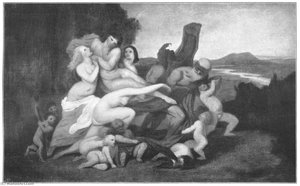
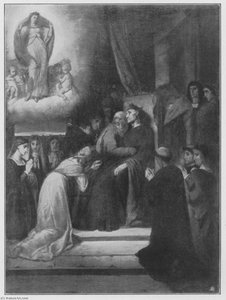
11Allegorie (1847) του Άνσελμ ΦόιερμπαχAllegorie1847 12Bacchuszug (1847) του Άνσελμ ΦόιερμπαχBacchuszug1847 13Diana, Emerging from her Bath, Surrounded by Nymphs (1854) του Άνσελμ ΦόιερμπαχDiana, Emerging from her Bath, Surrounded by Nymphs1854 · Bavarian State Painting Collections 14Gypsy with Tambourine* (1854) του Άνσελμ ΦόιερμπαχGypsy with Tambourine*1854 · Staatliche Kunsthalle Karlsruhe 15Youthful Self-Portrait (1852) του Άνσελμ ΦόιερμπαχYouthful Self-Portrait1852 · Staatliche Kunsthalle Karlsruhe 16Portrait (of the author?) (1854) του Άνσελμ ΦόιερμπαχPortrait (of the author?)1854 17Flower girl (1854) του Άνσελμ ΦόιερμπαχFlower girl1854 · Staatliche Kunsthalle Karlsruhe 18Drei weibliche Gestalten an einem kleinen See (1855) του Άνσελμ ΦόιερμπαχDrei weibliche Gestalten an einem kleinen See1855 19Zigeuner (1854) του Άνσελμ ΦόιερμπαχZigeuner1854 20Rokokodamen am Wasser (1854) του Άνσελμ ΦόιερμπαχRokokodamen am Wasser1854 21Landschaft mit Wasserfall (1855) του Άνσελμ ΦόιερμπαχLandschaft mit Wasserfall1855 22Landschaft mit badenden Frauen (1854) του Άνσελμ ΦόιερμπαχLandschaft mit badenden Frauen1854 23Blumenmädchen (1854) του Άνσελμ ΦόιερμπαχBlumenmädchen1854 24Damenbildnis (1854) του Άνσελμ ΦόιερμπαχDamenbildnis1854 25Tänzerin (dekoratives Panneau) (1854) του Άνσελμ ΦόιερμπαχTänzerin (dekoratives Panneau)1854 26Bildnis des Geheimrats Prof. Umbreit (1853) του Άνσελμ ΦόιερμπαχBildnis des Geheimrats Prof. Umbreit1853 27Der Tod des Pietro Aretino (1854) του Άνσελμ ΦόιερμπαχDer Tod des Pietro Aretino1854 28Bildnis des Prof. C. Cannstatt (1850) του Άνσελμ ΦόιερμπαχBildnis des Prof. C. Cannstatt1850 29Mädchen, um einen toten Vogel trauernd (1854) του Άνσελμ ΦόιερμπαχMädchen, um einen toten Vogel trauernd1854 30Untitled (AQR3R6) (1854) του Άνσελμ ΦόιερμπαχUntitled (AQR3R6)1854 31Versuchung des heiligen Antonius (1854) του Άνσελμ ΦόιερμπαχVersuchung des heiligen Antonius1854 32Hafis in der Schenke (1852) του Άνσελμ ΦόιερμπαχHafis in der Schenke1852 33Pietà (1854) του Άνσελμ ΦόιερμπαχPietà1854 34The Golden Age (1857) του Άνσελμ ΦόιερμπαχThe Golden Age1857 · Bavarian State Painting Collections 35Portrait of the Photographer Reitmayer (1860) του Άνσελμ ΦόιερμπαχPortrait of the Photographer Reitmayer1860 36Musical Poetry (1856) του Άνσελμ ΦόιερμπαχMusical Poetry1856 · Staatliche Kunsthalle Karlsruhe 37Nanna (1861) του Άνσελμ ΦόιερμπαχNanna1861 · Alte Nationalgalerie 38Iphigenie (1862) του Άνσελμ ΦόιερμπαχIphigenie1862 · Hessisches Landesmuseum 39Pietà (1863) του Άνσελμ ΦόιερμπαχPietà1863 · Bavarian State Painting Collections 40Madonna (1863) του Άνσελμ ΦόιερμπαχMadonna1863 · Bavarian State Painting Collections 41Portrait of a Roman Woman  (Nanna) (1862) του Άνσελμ ΦόιερμπαχPortrait of a Roman Woman (Nanna)1862 · Schackgalerie 42Nanna (1862) του Άνσελμ ΦόιερμπαχNanna1862 43Portrait of Nanna Risi (1861) του Άνσελμ ΦόιερμπαχPortrait of Nanna Risi1861 · Staatliche Kunsthalle Karlsruhe 44Kinder am Wasser (1859) του Άνσελμ ΦόιερμπαχKinder am Wasser1859 45Bildnis Allgeyers (1857) του Άνσελμ ΦόιερμπαχBildnis Allgeyers1857 · Bavarian State Painting Collections 46Kinder am Springbrunnen (1859) του Άνσελμ ΦόιερμπαχKinder am Springbrunnen1859 47Dantes Tod (1858) του Άνσελμ ΦόιερμπαχDantes Tod1858 48Maria mit dem Kind (1860) του Άνσελμ ΦόιερμπαχMaria mit dem Kind1860 49Der Herbst (Balgende Buben mit Früchten) (1860) του Άνσελμ ΦόιερμπαχDer Herbst (Balgende Buben mit Früchten)1860 50Die Schauspielszene aus Hamlet (1858) του Άνσελμ ΦόιερμπαχDie Schauspielszene aus Hamlet1858 51Dante mit Virgil in der Unterwelt (1857) του Άνσελμ ΦόιερμπαχDante mit Virgil in der Unterwelt1857 · Bavarian State Painting Collections 52Laura in the Church (1865) του Άνσελμ ΦόιερμπαχLaura in the Church1865 · Bavarian State Painting Collections 53Henriette Feuerbach, the Stepmother of the Artist (1871) του Άνσελμ ΦόιερμπαχHenriette Feuerbach, the Stepmother of the Artist1871 54Lucrezia Borgia; Portrait of a Roman woman in white tunic and red robe (1864) του Άνσελμ ΦόιερμπαχLucrezia Borgia; Portrait of a Roman woman in white tunic and red robe1864 · Städel Museum 55Two ladies in a landscape (1867) του Άνσελμ ΦόιερμπαχTwo ladies in a landscape1867 · Alte Nationalgalerie 56Musizierende Kinder, von einer Nymphe belauscht (1864) του Άνσελμ ΦόιερμπαχMusizierende Kinder, von einer Nymphe belauscht1864 · Bavarian State Painting Collections 57Self-portrait with cigarette (1871) του Άνσελμ ΦόιερμπαχSelf-portrait with cigarette1871 58The Symposium (1871) του Άνσελμ ΦόιερμπαχThe Symposium1871 · Alte Nationalgalerie 59Sleeping Nymph (1870) του Άνσελμ ΦόιερμπαχSleeping Nymph1870 · Germanisches Nationalmuseum 60Spring Scene (1868) του Άνσελμ ΦόιερμπαχSpring Scene1868 · Alte Nationalgalerie 61Mutter mit Kind (1867) του Άνσελμ ΦόιερμπαχMutter mit Kind1867 62Lesbia mit dem Vogel (1868) του Άνσελμ ΦόιερμπαχLesbia mit dem Vogel1868 63Ricordo di Tivoli (1867) του Άνσελμ ΦόιερμπαχRicordo di Tivoli1867 64Das Urteil des Paris (1870) του Άνσελμ ΦόιερμπαχDas Urteil des Paris1870 65Untitled (AQR3NQ) (1864) του Άνσελμ ΦόιερμπαχUntitled (AQR3NQ)1864 · Bavarian State Painting Collections 66Orpheus (1869) του Άνσελμ ΦόιερμπαχOrpheus1869 67Bildnis der Stiefmutter des Künstlers (1867) του Άνσελμ ΦόιερμπαχBildnis der Stiefmutter des Künstlers1867 68Im Frühling. (Sechs Damen im Freien.) (1868) του Άνσελμ ΦόιερμπαχIm Frühling. (Sechs Damen im Freien.)1868 69Self-Portrait with Cigarette (1875) του Άνσελμ ΦόιερμπαχSelf-Portrait with Cigarette1875 70Self-Portrait (1878) του Άνσελμ ΦόιερμπαχSelf-Portrait1878 · Staatliche Kunsthalle Karlsruhe 71Sturz der Titanen (1874) του Άνσελμ ΦόιερμπαχSturz der Titanen1874 72Landschaft mit Ziegen (1873) του Άνσελμ ΦόιερμπαχLandschaft mit Ziegen1873 73Deutsch Zigeunertanz (1853) του Άνσελμ ΦόιερμπαχDeutsch Zigeunertanz1853 · Hamburger Kunsthalle 74Untitled (AQR3NN) (1852) του Άνσελμ ΦόιερμπαχUntitled (AQR3NN)1852 · Kunsthalle Mannheim 75German Titanensturz του Άνσελμ ΦόιερμπαχGerman Titanensturz 76The Judgment of Paris (1870) του Άνσελμ ΦόιερμπαχThe Judgment of Paris1870 · Hamburger Kunsthalle 77Mythologische Szene (Siegfrieds Tod ) (1846) του Άνσελμ ΦόιερμπαχMythologische Szene (Siegfrieds Tod )1846 78Rock cleft with cows (1855) του Άνσελμ ΦόιερμπαχRock cleft with cows1855 · Alte Nationalgalerie 79girls bathing in the evening (1854) του Άνσελμ Φόιερμπαχgirls bathing in the evening1854 80Untitled (AQR3QJ) (1854) του Άνσελμ ΦόιερμπαχUntitled (AQR3QJ)1854 81Untitled (AQR3P4) (1851) του Άνσελμ ΦόιερμπαχUntitled (AQR3P4)1851 82Männlicher Halbakt (1851) του Άνσελμ ΦόιερμπαχMännlicher Halbakt1851 83Young witch who is led to the stake (1851) του Άνσελμ ΦόιερμπαχYoung witch who is led to the stake1851 · Germanisches Nationalmuseum 84Hafis vor der Schenke (1852) του Άνσελμ ΦόιερμπαχHafis vor der Schenke1852 · Kunsthalle Mannheim 85Untitled (AQR3SW) (1856) του Άνσελμ ΦόιερμπαχUntitled (AQR3SW)1856 86Deutsch Garten des Ariost (1863) του Άνσελμ ΦόιερμπαχDeutsch Garten des Ariost1863 · Schackgalerie 87Landscape with Waterfall (1865) του Άνσελμ ΦόιερμπαχLandscape with Waterfall1865 · Bavarian State Painting Collections 88Coast near Porto d'Anzio (1866) του Άνσελμ ΦόιερμπαχCoast near Porto d'Anzio1866 · Staatliche Kunsthalle Karlsruhe 89Landschaft (1871) του Άνσελμ ΦόιερμπαχLandschaft1871 90Untitled (AQR3R4) (1864) του Άνσελμ ΦόιερμπαχUntitled (AQR3R4)1864 · Schackgalerie 91Medea (1870) του Άνσελμ ΦόιερμπαχMedea1870 92Untitled (AQR3S8) (1866) του Άνσελμ ΦόιερμπαχUntitled (AQR3S8)1866 · Schackgalerie 93Kinder am Strande (1867) του Άνσελμ ΦόιερμπαχKinder am Strande1867 · Museum Georg Schäfer 94Italiano Paolo e Francesca (1864) του Άνσελμ ΦόιερμπαχItaliano Paolo e Francesca1864 · Schackgalerie 95Francesca da Rimini (1864) του Άνσελμ ΦόιερμπαχFrancesca da Rimini1864 · Bavarian State Painting Collections 96Musizierende Kinder (1864) του Άνσελμ ΦόιερμπαχMusizierende Kinder1864 · Kunstmuseum Moritzburg 97Gastmahl des Plato (1869) του Άνσελμ ΦόιερμπαχGastmahl des Plato1869 · Staatliche Kunsthalle Karlsruhe 98German Pfingstrosen (Päonien) Peonies (1871) του Άνσελμ ΦόιερμπαχGerman Pfingstrosen (Päonien) Peonies1871 · Neue Pinakothek 99Untitled (AQR3Q6) (1875) του Άνσελμ ΦόιερμπαχUntitled (AQR3Q6)1875 100Untitled (AQR3PA) (1880) του Άνσελμ ΦόιερμπαχUntitled (AQR3PA)1880

Τα διάσημα έργα του Άνσελμ Φόιερμπαχ, ανά περίοδο

Τα θέματα που κίνησαν το ενδιαφέρον του Άνσελμ Φόιερμπαχ

Τα τέσσερα θέματα που εμφανίζονται πιο συχνά σε αυτά τα πρωτότυπα έργα, το καθένα με το εξαιρετικό του παράδειγμα.

Τα μουσεία που διατηρούν τα πρωτότυπα έργα του Άνσελμ Φόιερμπαχ

Τα 8 μουσεία που φιλοξενούν το μεγαλύτερο μέρος των έργων σε αυτήν τη σελίδα.

Μουσείο Πόλη Έργα του Άνσελμ Φόιερμπαχ Πάτρια από αυτή τη λίστα
Bavarian State Painting Collections, ΜόναχοBavarian State Painting Collections Μόναχο 12 Diana, Emerging from her Bath, Surrounded by Nymphs, The Golden Age, Pietà
Staatliche Kunsthalle Karlsruhe, ΚαρλσρούεStaatliche Kunsthalle Karlsruhe Καρλσρούε 10 Portrait of an Older Gentleman, Gypsy with Tambourine*, Youthful Self-Portrait
Alte Nationalgalerie, ΒερολίνοAlte Nationalgalerie Βερολίνο 8 Self-portrait, Self-portrait as a boy, The Artist's Step-mother, Henriette Feuerbach
Schackgalerie, ΜόναχοSchackgalerie Μόναχο 15 Portrait of a Roman Woman (Nanna), Deutsch Garten des Ariost, Untitled (AQR3R4)
Hamburger Kunsthalle, ΑμβούργηHamburger Kunsthalle Αμβούργη 3 English The Judgement of Paris Deutsch Das Urteil des Paris Русский Суд Париса, Deutsch Zigeunertanz, The Judgment of Paris
Germanisches Nationalmuseum, ΝυρεμβέργηGermanisches Nationalmuseum Νυρεμβέργη 2 Sleeping Nymph, Young witch who is led to the stake
Niedersächsisches Landesmuseum Hannover, HannoverNiedersächsisches Landesmuseum Hannover Hannover 3 Kinderständchen
Staatsgalerie Stuttgart, ΣτουτγκάρδηStaatsgalerie Stuttgart Στουτγκάρδη 1 Iphigenie II

Άνσελμ Φόιερμπαχ, ένα χαρακτηριστικό έργο ανά δεκαετία

Έργα ανά δεκαετία

Επιλέξτε μια δεκαετία για να δείτε το πρωτότυπο έργο που την χαρακτηρίζει.

Οι πίνακες του Άνσελμ Φόιερμπαχ: οι απαντήσεις της γκαλερί

Ποιο έργο του Άνσελμ Φόιερμπαχ είναι το πιο διάσημο από όλα;Αποκαλύψτε την απάντηση

Το Orpheus and Eurydike (1869). Στη συνέχεια ακολουθούν το Portrait of an Older Gentleman (1852) και το Kinderständchen (1860).

Πόσο είχε ηλικία ο Άνσελμ Φόιερμπαχ όταν ολοκλήρωσε το Orpheus and Eurydike;Αποκαλύψτε την απάντηση

40 ετών: το έργο Orpheus and Eurydike είναι του 1869, και ο/η Άνσελμ Φόιερμπαχ γεννήθηκε το 1829.

Ποιες είναι τα 10 κορυφαία έργα του Άνσελμ Φόιερμπαχ;Αποκαλύψτε την απάντηση

Orpheus and Eurydike, Portrait of an Older Gentleman, Kinderständchen, Iphigenie II, Self-portrait, Self-portrait as a boy, The Artist's Step-mother, Henriette Feuerbach, English The Judgement of Paris Deutsch Das Urteil des Paris Русский Суд Париса, Selfportrait και Samson and Delila (Copy after Rubens). Η κατάταξη παραπάνω αναγράφει το έτος και το μουσείο για το κάθε έργο.

Πόσα έργα δημιούργησε ο/η Άνσελμ Φόιερμπαχ;Αποκαλύψτε την απάντηση

Ο κατάλογός μας περιλαμβάνει 128 έργα του Άνσελμ Φόιερμπαχ, με ημερομηνίες από 1845 έως 1880.

Πού εκτίθενται τα πιο διάσημα πρωτότυπα του Άνσελμ Φόιερμπαχ;Αποκαλύψτε την απάντηση

Κυρίως σε Bavarian State Painting Collections (Μόναχο), Staatliche Kunsthalle Karlsruhe (Καρλσρούε) και Alte Nationalgalerie (Βερολίνο). Ο πίνακας μουσείου παραπάνω τους περιλαμβάνει όλους.

Πότε δημιούργησε ο/η Άνσελμ Φόιερμπαχ τα πιο διάσημα έργα του/της;Αποκαλύψτε την απάντηση

Κατά την περίοδο 1850s: 40 από τα 100 έργα σε αυτήν τη σελίδα δημιουργήθηκαν τότε, με Portrait of an Older Gentleman από αυτά να είναι μοναδικά.

Ποια είναι τα πρώτα και τα τελευταία διάσημα έργα του Άνσελμ Φόιερμπαχ;Αποκαλύψτε την απάντηση

Σε αυτήν τη σελίδα, το παλαιότερο είναι Self-portrait as a boy (1845) και το νεότερο Untitled (AQR3PA) (1880).

Ποια θέματα επέλεξε πιο συχνά ο Άνσελμ Φόιερμπαχ;Αποκαλύψτε την απάντηση

Woman (42), Man (23) και Landscape (17), σε συνολικά 100 έργα σε αυτήν τη σελίδα.

Με ποια τεχνική εργάστηκε περισσότερο ο Άνσελμ Φόιερμπαχ;Αποκαλύψτε την απάντηση

Oil On Canvas, για 64 από τα 100 έργα σε αυτήν τη σελίδα.

Με ποιο καλλιτεχνικό κίνημα σχετίζεται ο/η Άνσελμ Φόιερμπαχ;Αποκαλύψτε την απάντηση

Romanticism και Neoclassicism, όπως προκύπτει από τα πρωτότυπα σε αυτήν τη σελίδα.

Ποια πρωτότυπα έργα του Άνσελμ Φόιερμπαχ διαθέτει το Bavarian State Painting Collections;Αποκαλύψτε την απάντηση

Diana, Emerging from her Bath, Surrounded by Nymphs, The Golden Age και Pietà: το Bavarian State Painting Collections, Μόναχο διαθέτει 11 από τα έργα σε αυτήν τη σελίδα.

Άνσελμ Φόιερμπαχ: ο καλλιτέχνης

The Poet of Classical Form: The Life and Vision of Anselm Feuerbach

Anselm Feuerbach (1829-1880) stands as a monumental figure in the tapestry of German Romanticism and Neoclassicism, embodying a rare and harmonious fusion of these two powerful artistic currents. Born in Speyer to an intellectually profound lineage—his father, Joseph Anselm Ritter von Feuer डूबing, was a renowned archaeologist—Feuerbach was destined for a life steeped in the study of antiquity. This ancestral connection to the classical world profoundly shaped his artistic sensibilities from his earliest years. His formal education began at the Düsseldorf Academy between 1845 and 1848, where the rigorous tutelage of masters such as Johann Wilhelm Schirmer and Wilhelm von Schadow instilled in him a foundational understanding of classical aesthetics and the meticulous precision of sculptural craftsmanship.

The trajectory of his development was marked by a restless search for a visual language that could bridge the gap between the emotional depth of Romanticism and the structural purity of Neoclassicism. After honing his skills at the Munich Academy, Feuerbach sought inspiration beyond German borders, establishing himself in Antwerp to master the vibrant Venetian colorism under Gustave Wappers. His journey through Paris in 1851 provided a pivotal moment of artistic breakthrough; it was here that he produced Hafiz at the Fountain (1852). This breathtaking work, which infused Arabic poetry with classical idealism, served as a testament to his unique ability to synthesize disparate cultural influences into a singular, transcendent vision.

A Pilgrimage Through Light and Antiquity

Driven by an insatiable fascination with the Italian Renaissance, Feuerbach embarked on a spiritual and artistic pilgrimage to Italy. His immersion in Venice allowed him to absorb the expressive dynamism and rich palette of the Venetian masters, while his time in Florence and Rome cemented his dedication to humanist ideals. During his long residency in Rome, which lasted until 1873, he became a central figure among the Deutschrömer—a group of German artists living in Italy that included luminaries like Arnold Böcklin and Hans von Marées. This period was characterized by an intense focus on the dignity of the human form and the evocative power of mythological themes.

His technique was a sophisticated blend of several key elements:

  • Classical Idealism: A commitment to the purity of line and the balanced composition found in Greek antiquity.
  • Venetian Colorism: The use of luminous, emotive color to breathe life into static forms.
  • Poetic Narrative: An ability to translate literary themes, from Greek myths to Persian poetry, into visual masterpieces.

Legacy and Historical Significance

The work of Anselm Feuerbach remains a profound meditation on the enduring beauty of the classical past. He did not merely imitate the ancients; rather, he reinterpreted their spirit for a modern era, creating compositions that feel both timeless and deeply personal. His paintings, often characterized by elegant figure compositions and a sense of melancholic stillness, continue to captivate audiences with their quiet intensity. By weaving together the structural rigor of Neoclassicism with the soulful lyricism of Romanticism, Feuerbach secured his place as one of the most significant painters of the 19th century, leaving behind a legacy that celebrates the eternal dialogue between humanity and myth.