Πορτρέτο του Thomas Danby

Τα 18 πιο διάσημα έργα του Thomas Danby, μια επιλογή γκαλερί

Ενημερωμένο Νοέμβριος 2026 · κατάταξη βάσει του σκορ δημοφιλίας μας (αναζητήσεις, επισκέψεις και παραγγελίες για κάθε έργο) · 25 έργα του Thomas Danby στον κατάλογό μας

Με σύντομη περιγραφή

Από όλα τα πρωτότυπα που άφησε ο Thomas Danby, το πιο διάσημο είναι το Llyn Cynwch, Dolgellau (1853). Ακολουθούν στενά η River Scene with Weir and Mill (1823) και η The Lake of Lucerne (1856). Ο κατάλογός μας περιλαμβάνει 25 έργα του Thomas Danby· η γκαλερί έχει διατηρήσει τα 18 κομμάτια που θαυμάζει ο κόσμος, το καθένα με την ημερομηνία, το μουσείο και την ιστορία του.

1818 – 1886, Bristol Romanticism Περισσότερα έργα: Bristol Museum - Art Gallery

Τα 10 κορυφαία έργα του Thomas Danby: η επιλογή της γκαλερί

1
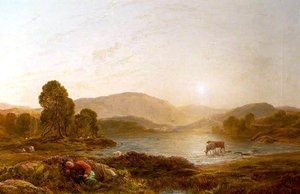
Llyn Cynwch, Dolgellau (1853) του Thomas Danby

Llyn Cynwch, Dolgellau

1853 · Oil On Canvas

The landscape of Dolgellau unfolds through a wide, horizontal composition, centering on the still waters of Llyn Cynwch. In the foreground, a shepherd boy lies asleep amidst the bracken, a quiet detail that suggests the slow passage of time in the Welsh mountains. Near the water's edge, cattle drink from the river, their presence grounding the vastness of the scene in a moment of everyday utility. The mountains rise in…

2
River Scene with Weir and Mill (1823) του Thomas Danby

River Scene with Weir and Mill

1823 · Oil · Bristol Museum - Art Gallery, Μπρίστολ

The river moves with a steady, rhythmic weight. A weir breaks the surface, turning the current into a white, frothing lace that spills over the stones. Beside it, a mill sits anchored to the bank, its presence a silent witness to the constant motion of the stream. Trees lean over the water, their branches casting soft shadows across the banks. Small figures are scattered along the edges, mere punctuation marks…

3
The Lake of Lucerne (1856) του Thomas Danby

The Lake of Lucerne

1856 · Oil

The composition centers on a tranquil expanse of water, framed by the rising silhouettes of mountains. Several boats drift across the lake, their presence providing a sense of scale against the vastness of the natural landscape. Near the left edge, a solitary figure stands, observing the scene. The sky above is punctuated by a few birds in flight, adding a subtle sense of movement to the stillness of the water.…

4
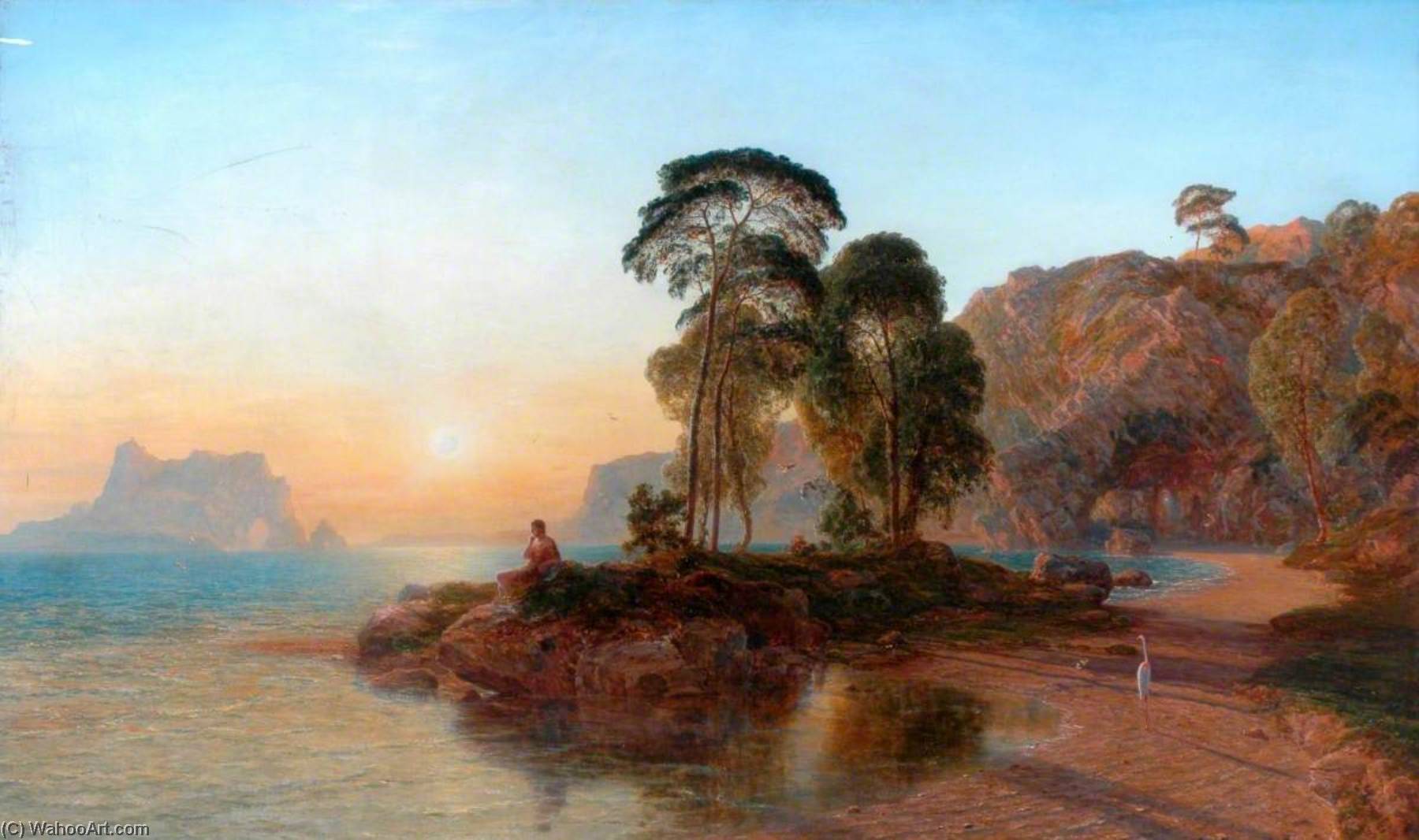
Water Scene (1858) του Thomas Danby

Water Scene

1858 · Oil

A lone figure sits upon a weathered rock, their back turned to the viewer as they gaze toward the distant horizon. The stillness of the scene is profound, broken only by the gentle presence of a boat drifting upon the water's surface. Nearby, two trees frame the composition, their branches reaching out toward the center of the view. In the background, mountains rise with a quiet strength, their peaks softened…

5
The Lake of Lucerne (1856) του Thomas Danby

The Lake of Lucerne

1856 · Oil · Walker Art Gallery, Λίβερπουλ

The water lies flat, a mirror for the sky. High above, the mountains rise in silent, heavy shapes, their peaks catching the pale light of a distant sun. A single boat rests upon the surface, a small speck of human presence amidst the vastness of the lake. Nine birds drift through the air, their wings caught in a moment of suspended flight. They are dark silhouettes against the light, moving…

6
The Escape of Mary, Queen of Scots from Loch Leven Castle, 2 May 1568 (1864) του Thomas Danby

The Escape of Mary, Queen of Scots from Loch Leven Castle, 2 May 1568

1864 · Oil On Canvas

In The Escape of Mary, Queen of Scots from Loch Leven Castle, 2 May 1568, Thomas Danby captures a moment of profound tension. The scene depicts the historical flight of Mary, Queen of Scots, as she attempts to flee her confinement in 1568. She is positioned within a boat, accompanied by her child, navigating the waters away from the castle. The composition focuses on this precarious movement, emphasizing the vulnerability…

7
Moel Siabod, Welsh Landscape του Thomas Danby

Moel Siabod, Welsh Landscape

Oil On Canvas · Stirling Smith Art Gallery And Museum, Stirling

This panoramic oil painting depicts a serene landscape scene at dusk or dawn. The composition is broadly horizontal, emphasizing a wide expanse of water that reflects the soft colors of the sky and distant mountains. In the foreground, a small group of cattle is present, adding a touch of human activity to the otherwise untouched wilderness. The scene is characterized by a soft, diffused lighting that creates a tranquil and…

Η επιλογή του Thomas Danby συνεχίζεται, από τον 11 έως τον 18

Τα θέματα που κίνησαν το ενδιαφέρον του Thomas Danby

Τα τέσσερα θέματα που εμφανίζονται πιο συχνά σε αυτά τα πρωτότυπα έργα, το καθένα με το εξαιρετικό του παράδειγμα.

Τα μουσεία που διατηρούν τα πρωτότυπα έργα του Thomas Danby

Τα 8 μουσεία που φιλοξενούν το μεγαλύτερο μέρος των έργων σε αυτήν τη σελίδα.

Μουσείο Πόλη Έργα του Thomas Danby Πάτρια από αυτή τη λίστα
Bristol Museum - Art Gallery, ΜπρίστολBristol Museum - Art Gallery Μπρίστολ 1 River Scene with Weir and Mill
Walker Art Gallery, ΛίβερπουλWalker Art Gallery Λίβερπουλ 1 The Lake of Lucerne
Stirling Smith Art Gallery And Museum, StirlingStirling Smith Art Gallery And Museum Stirling 1 Moel Siabod, Welsh Landscape
National Maritime Museum, ΛονδίνοNational Maritime Museum Λονδίνο 1 A New Bride for the Sea
Reading Museum - Town Hall, ReadingReading Museum - Town Hall Reading 1 A Deserted Home
Williamson Art Gallery - Museum, BirkenheadWilliamson Art Gallery - Museum Birkenhead 1 Evening
Birmingham Museums And Art Gallery, ΜπέρμινγκχαμBirmingham Museums And Art Gallery Μπέρμινγκχαμ 1 Landscape
Bristol Museum And Art Gallery, ΜπρίστολBristol Museum And Art Gallery Μπρίστολ 1 Dolwyddelan

Ο Thomas Danby δεκαετία προς δεκαετία: το πρωτότυπο που ορίζει κάθε μία

Έργα ανά δεκαετία

Επιλέξτε μια δεκαετία για να δείτε το πρωτότυπο έργο που την χαρακτηρίζει.

Ερωτήσεις συλλεκτών για τα έργα του Thomas Danby

Για ποιο έργο είναι πιο γνωστός ο Thomas Danby;Αποκαλύψτε την απάντηση

Το Llyn Cynwch, Dolgellau (1853). Στη συνέχεια ακολουθούν το River Scene with Weir and Mill (1823) και το The Lake of Lucerne (1856).

Πόσο ηλικία είχε ο/η Thomas Danby όταν δημιουργήθηκε το Llyn Cynwch, Dolgellau;Αποκαλύψτε την απάντηση

35 ετών: το έργο Llyn Cynwch, Dolgellau είναι του 1853, και ο/η Thomas Danby γεννήθηκε το 1818.

Ποια είναι τα δέκα πιο διάσημα έργα του Thomas Danby;Αποκαλύψτε την απάντηση

Llyn Cynwch, Dolgellau, River Scene with Weir and Mill, The Lake of Lucerne, Water Scene, The Lake of Lucerne, The Escape of Mary, Queen of Scots from Loch Leven Castle, 2 May 1568, Moel Siabod, Welsh Landscape, A New Bride for the Sea, A Deserted Home και Evening. Η κατάταξη παραπάνω αναγράφει το έτος και το μουσείο για το κάθε έργο.

Πόσα έργα δημιούργησε ο/η Thomas Danby;Αποκαλύψτε την απάντηση

Ο κατάλογός μας περιλαμβάνει 25 έργα του Thomas Danby, με ημερομηνίες από 1853 έως 1881.

Σε ποια μουσεία εκτίθενται τα αριστούργημα του Thomas Danby;Αποκαλύψτε την απάντηση

Κυρίως σε Bristol Museum - Art Gallery (Μπρίστολ), Walker Art Gallery (Λίβερπουλ) και Stirling Smith Art Gallery And Museum (Stirling). Ο πίνακας μουσείου παραπάνω τους περιλαμβάνει όλους.

Σε ποιες χρονιές δημιούργησε ο/η Thomas Danby τα πιο διάσημα έργα του/της;Αποκαλύψτε την απάντηση

Κατά την περίοδο 1850s: 4 από τα 18 έργα σε αυτήν τη σελίδα δημιουργήθηκαν τότε, με Llyn Cynwch, Dolgellau από αυτά να είναι μοναδικά.

Ποια είναι τα πρώτα και τα τελευταία διάσημα πρωτότυπα του Thomas Danby;Αποκαλύψτε την απάντηση

Σε αυτήν τη σελίδα, το παλαιότερο είναι Llyn Cynwch, Dolgellau (1853) και το νεότερο A Deserted Home (1881).

Ποια θέματα επέλεξε πιο συχνά ο Thomas Danby;Αποκαλύψτε την απάντηση

Water (8), Trees (5) και Landscape (5), σε συνολικά 18 έργα σε αυτήν τη σελίδα.

Ποια τεχνική χρησιμοποίησε περισσότερο ο Thomas Danby;Αποκαλύψτε την απάντηση

Oil On Canvas, για 9 από τα 18 έργα σε αυτήν τη σελίδα.

Σε ποιο καλλιτεχνικό κίνημα ανήκει ο/η Thomas Danby;Αποκαλύψτε την απάντηση

Romanticism, όπως προκύπτει από τα πρωτότυπα σε αυτήν τη σελίδα.

Thomas Danby: ζωή και έργο

A Romantic Vision of the Welsh Landscape

Thomas Danby (1818–1886) stands as a luminous figure in the pantheon of Victorian landscape painting, a master who sought to bridge the gap between the physical reality of nature and the profound depths of human emotion. Born in Bristol into an artistic lineage that commanded respect, Danby was the son of the celebrated painter Francis Danby. This early immersion in a world of dramatic, emotionally charged canvases provided him with a foundational understanding of the power of atmosphere. However, where his father often leaned toward the theatrical and the imaginative, Thomas carved a distinct path, focusing his gaze upon the rugged, serene beauty of the natural world, particularly the evocative terrains of Wales.

His artistic journey was significantly shaped by his formative years in Paris during the 1820s and 30s. It was within the hallowed halls of the Louvre that Danby honed his technical prowess, earning a living by meticulously copying the masters. This period of intense study brought him into a deep, lifelong dialogue with the work of Claude Lorrain. From the French master, Danby adopted a devotion to atmospheric perspective and the use of light to create a sense of sublime grandeur. He did not merely seek to replicate the scenery he encountered; rather, he sought to capture what his contemporaries described as the "inner heart's feeling" of a view, prioritizing the spiritual resonance of a landscape over the mere recording of local facts.

The Spirit of Romanticism and Technical Mastery

As Danby’s career progressed, his work became a testament to the enduring spirit of Romanticism. His compositions often featured the sweeping vistas of the Welsh mountains, such as the majestic Moel Siabod or the tranquil reaches of Llyn Cynwch. In these works, one finds a masterful command of light and tone, whether rendered in the rich, textured layers of oil on canvas or the delicate, translucent washes of his later watercolor mastery. His ability to manipulate light—creating the soft glow of dusk or the diffused, misty atmosphere of a mountain morning—allowed him to imbue even the most pastoral scenes with a sense of quiet contemplation and awe.

The evolution of his technique is particularly evident in his transition toward watercolor painting in his later years. Having achieved significant recognition through exhibitions at the Royal Academy and the British Institution, Danby became an esteemed member of the Society of Painters in Watercolours. This shift allowed him to explore even more subtle gradations of color and light, further refining his ability to evoke the ephemeral qualities of nature. His friendship with Paul Falconer Poole also played a vital role in this development, as the two shared a deep-seated passion for the natural world that informed their respective approaches to landscape.

Legacy and Artistic Significance

The significance of Thomas Danby lies in his ability to transform the landscape into a vessel for emotional truth. He moved away from the purely idealized compositions of the past, instead finding the sublime within the actual, tangible beauty of the British Isles. His legacy is defined by several key contributions to 19th-century art:

  • The Synthesis of Influence: Successfully blending the classical atmospheric techniques of Claude Lorrain with a uniquely British Romantic sensibility.
  • Emotional Depth: Moving beyond mere topographical representation to capture the psychological and spiritual essence of the landscape.
  • Mastery of Medium: Demonstrating exceptional versatility and skill in both the grand scale of oil painting and the intimate precision of watercolor.
  • Cultural Connection: Elevating the Welsh landscape to a subject of profound artistic importance within the Victorian era.

Though he never attained the specific Academy honors he sought, Danby’s impact on the British landscape tradition remains undeniable. His works continue to resonate with viewers, offering a window into a period when art was deeply concerned with the intersection of the natural world and the human soul. Through his eyes, the mountains of Wales are not just geological formations, but enduring monuments to the beauty and mystery of existence.