


1


Ενημερωμένο Οκτώβριος 2026 · κατάταξη βάσει του σκορ δημοφιλίας μας (αναζητήσεις, επισκέψεις και παραγγελίες για κάθε έργο) · 52 έργα του Robert Herdman στον κατάλογό μας
Με σύντομη περιγραφή
Στο μάτι της γκαλερί, το πιο διάσημο έργο του Robert Herdman είναι το John Campbell Shairp (1819–1885), LLD (1886). Ο The young seamstress (1860) και ο The Arrochar Gleaner (1862) ολοκληρώνουν το τρίο που κάθε μάτι αναγνωρίζει. Από τα 52 έργα του Robert Herdman στον κατάλογό μας, η γκαλερί παρουσιάζει παρακάτω τα 52 πιο διάσημα, όπου κάθε ένα είναι πρωτότυπο, με την χρονολογία του, το μουσείο του και το τι το κάνει μοναδικό.


The painting "Morning" by Robert Inerarity Herdman is a beautiful and captivating piece of art that showcases the artist's skill and attention to detail. Created in 1861, this oil on panel painting measures 31 x 23 cm and is currently displayed at the Glasgow Museums Resource Centre in the United Kingdom. Painting Description The painting features a young child wearing a blue hat with a bow on it, holding a…


 Evening1862
12
 'Who still in dreams can hear the heavenly harps'1862
13
 Fern Gatherer1866
14
 After the Battle1870 · Εθνική Πινάκοθήκη της Σκωτίας
15
 Sir Joseph Noel Paton (1821–1901)1870
16
 Aeneas Ranald McDonell (1820–1897)1868
17
 David Octavius Hill (1802–1870), RSA1870 · Royal Scottish Academy of Art - Architecture
18
 A Fountain Group, South Italy1868
19
 Mary, Queen of Scots The Farewell to France1867
20
 Emily Merelina Meymott (1830–1911), Baroness Shand1867 · Εθνική Πινάκοθήκη της Σκωτίας
21
 Execution of Mary, Queen of Scots1867
22
 Evening Thoughts1864 · Εθνική Πινάκοθήκη της Σκωτίας
23
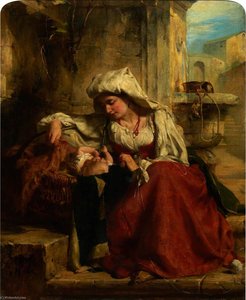 La culla – Study in Italy1864 · Royal Scottish Academy of Art - Architecture
24
 Charles Shaw Lefevre (1794–1888), 1st Viscount Eversley, in the Uniform of the Hampshire Carabiniers1875
25
 Sir James Falshaw (1810–1889), Bt, Lord Provost of Edinburgh (1874–1877)1877
26
 C. G. Shaw1878 · County Buildings
27
 Sir George Harvey (1806–1876), Artist1874 · Εθνική Πινάκοθήκη της Σκωτίας
28
 Sir James David Marwick (1826–1908), Town Clerk of Glasgow (1873–1903)1873
29
 Sir George Harvey (1806–1876), PRSA1874 · Royal Scottish Academy of Art - Architecture
30
 Thomas Carlyle1876 · The National Trust For Scotland
31
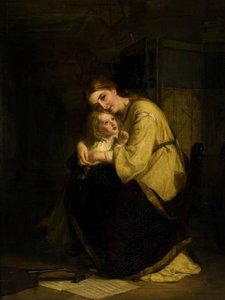 Pleasures of Hope1877
32
 Lochiel's Warning1878
33
 David Laing (1793–1878), Antiquary1874 · Εθνική Πινάκοθήκη της Σκωτίας
34
 A Conventicle Preacher before the Justices1876 · Royal Scottish Academy of Art - Architecture
35
 Sir Theodore Martin1876 · Εθνική Πορτραίτητος Γκαλερί
36
 Thomas Carlyle (1795–1881)1875 · Dumfries Museum And Camera Obscura
37
 The Conference between Mary, Queen of Scots and John Knox at Holyrood Palace, 15611875
38
 George Rough (1801–1888), Provost of Dundee (1853–1856)1882
39
 Wae's Me1879
40
 Alexander Laing, LLD, Newburgh1885
41
 Self Portrait1883
42
 Peter Clouston, Lord Provost of Glasgow (1860–1863)1883
43
 Reverend George S. Burns, Minister of Glasgow Cathedral1881
44
 Sir William Collins (1817–1895), Lord Provost of Glasgow (1877–1880)1881
45
 Sir James Watson (1801–1889), Lord Provost of Glasgow (1871–1874)1882
46
 Bouverie Francis Primrose (1813–1898), Secretary to the Board of Trustees for Manufactures and Fisheries1883 · Εθνική Πινάκοθήκη της Σκωτίας
47
 A Sprig of Arran Heather
48
 A Pilot
49
 Saint Columba Rescuing a Captive1883
50
 Corrie, a Crofter's Harvest
51
 SleepLeeds Art Gallery
52
 Sir Joseph Noel Paton (1821–1901), RSARoyal Scottish Academy of Art - Architecture
Τα τέσσερα θέματα που εμφανίζονται πιο συχνά σε αυτά τα πρωτότυπα έργα, το καθένα με το εξαιρετικό του παράδειγμα.
Τα 8 μουσεία που φιλοξενούν το μεγαλύτερο μέρος των έργων σε αυτήν τη σελίδα.
| Μουσεία | Πόλη | Έργα του Robert Herdman | Πάτρια από αυτή τη λίστα |
|---|---|---|---|
 Εθνική Πινάκοθήκη της Σκωτίας |
Έδιμβουργο | 5 | Thomas Carlyle (1795–1881), Historian and Essayist, Reverend John Tulloch (1823–1886), Theologian and Principal of St Andrews University, Sir George Harvey (1806–1876), Artist |
 Royal Scottish Academy of Art - Architecture |
Edinburgh | 5 | David Octavius Hill (1802–1870), RSA, La culla – Study in Italy, Sir George Harvey (1806–1876), PRSA |
 Εθνική Πινάκοθήκη της Σκωτίας |
Έδιμβουργο | 3 | After the Battle, Emily Merelina Meymott (1830–1911), Baroness Shand, Evening Thoughts |
 County Buildings |
Ayr | 1 | C. G. Shaw |
 The National Trust For Scotland |
Ecclesburn | 1 | Thomas Carlyle |
 Εθνική Πορτραίτητος Γκαλερί |
Λονδίνο | 1 | Sir Theodore Martin |
 Dumfries Museum And Camera Obscura |
Dumfries | 1 | Thomas Carlyle (1795–1881) |
 Leeds Art Gallery |
Λιντς | 1 | Sleep |
Επιλέξτε μια δεκαετία για να δείτε το πρωτότυπο έργο που την χαρακτηρίζει.
Το John Campbell Shairp (1819–1885), LLD (1886). Στη συνέχεια ακολουθούν το The young seamstress (1860) και το The Arrochar Gleaner (1862).
57 ετών: το έργο John Campbell Shairp (1819–1885), LLD είναι του 1886, και ο/η Robert Herdman γεννήθηκε το 1829.
John Campbell Shairp (1819–1885), LLD, The young seamstress, The Arrochar Gleaner, Thomas Carlyle (1795–1881), Historian and Essayist, John Tulloch (1823–1886), Reverend John Tulloch (1823–1886), Theologian and Principal of St Andrews University, Morning, The Time of Primroses, Bonny Bell και The Gleaner. Η κατάταξη παραπάνω αναγράφει το έτος και το μουσείο για το κάθε έργο.
Ο κατάλογός μας περιλαμβάνει 52 έργα του Robert Herdman, με ημερομηνίες από 1854 έως 1886.
Κυρίως σε Εθνική Πινάκοθήκη της Σκωτίας (Έδιμβουργο), Royal Scottish Academy of Art - Architecture (Edinburgh) και Εθνική Πινάκοθήκη της Σκωτίας (Έδιμβουργο). Ο πίνακας μουσείου παραπάνω τους περιλαμβάνει όλους.
Κατά την περίοδο 1870s: 19 από τα 52 έργα σε αυτήν τη σελίδα δημιουργήθηκαν τότε, με Thomas Carlyle (1795–1881), Historian and Essayist από αυτά να είναι μοναδικά.
Σε αυτήν τη σελίδα, το παλαιότερο είναι The Time of Primroses (1854) και το νεότερο John Campbell Shairp (1819–1885), LLD (1886).
Victorian era (3), Portraiture (2) και Elderly man (2), σε συνολικά 52 έργα σε αυτήν τη σελίδα.
Romanticism, όπως προκύπτει από τα πρωτότυπα σε αυτήν τη σελίδα.
Thomas Carlyle (1795–1881), Historian and Essayist, Reverend John Tulloch (1823–1886), Theologian and Principal of St Andrews University και Sir George Harvey (1806–1876), Artist: το Εθνική Πινάκοθήκη της Σκωτίας, Έδιμβουργο διαθέτει 5 από τα έργα σε αυτήν τη σελίδα.

