Πορτρέτο του Μαξ Πέχσταϊν

Τα 50 πιο διάσημα έργα του Μαξ Πέχσταϊν, μια επιλογή γκαλερί

Ενημερωμένο Οκτώβριος 2026 · κατάταξη βάσει του σκορ δημοφιλίας μας (αναζητήσεις, επισκέψεις και παραγγελίες για κάθε έργο) · 62 έργα του Μαξ Πέχσταϊν στον κατάλογό μας

Με σύντομη περιγραφή

Από όλα τα πρωτότυπα που άφησε ο Μαξ Πέχσταϊν, το πιο διάσημο είναι το Lupow Estuary. Ακολουθούν στενά η Wiesental in the Mountains with Road and Castle (1911) και η Nude in Tent (1911). Ο κατάλογός μας περιλαμβάνει 62 έργα του Μαξ Πέχσταϊν· η γκαλερί έχει διατηρήσει τα 50 κομμάτια που θαυμάζει ο κόσμος, το καθένα με την ημερομηνία, το μουσείο και την ιστορία του.

1881 – 1955, Τσβίκαου Expressionism Περισσότερα έργα: Bavarian State Painting Collections

Τα 10 κορυφαία έργα του Μαξ Πέχσταϊν: η επιλογή της γκαλερί

1
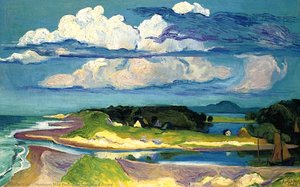
Lupow Estuary του Μαξ Πέχσταϊν

Lupow Estuary

Oil On Canvas

The water of the Lupow Estuary rests in a state of profound stillness, its surface a mirror for the shifting moods of the sky. A small boat floats near the center, a solitary presence that anchors the vastness of the landscape. Around this quiet center, the land reaches out in lush, verdant strokes, where trees dot the shoreline like silent witnesses to the passing of time. The air feels heavy…

Η επιλογή του Μαξ Πέχσταϊν συνεχίζεται, από τον 11 έως τον 50

Τα θέματα που κίνησαν το ενδιαφέρον του Μαξ Πέχσταϊν

Τα τέσσερα θέματα που εμφανίζονται πιο συχνά σε αυτά τα πρωτότυπα έργα, το καθένα με το εξαιρετικό του παράδειγμα.

Τα μουσεία που διατηρούν τα πρωτότυπα έργα του Μαξ Πέχσταϊν

Τα 8 μουσεία που φιλοξενούν το μεγαλύτερο μέρος των έργων σε αυτήν τη σελίδα.

Μουσεία Πόλη Έργα του Μαξ Πέχσταϊν Πάτρια από αυτή τη λίστα
Bavarian State Painting Collections, ΜόναχοBavarian State Painting Collections Μόναχο 5 Wiesental in the Mountains with Road and Castle, Nude in Tent, White House
Μουσείο Franz Marc, Κόχελ αμ ΖεεΜουσείο Franz Marc Κόχελ αμ Ζεε 3 Sitting Nude, Sitting Female Nude, Two lying Nudes
Μουσείο του Ισραήλ, ΙερουσαλήμΜουσείο του Ισραήλ Ιερουσαλήμ 2 The Red House, Fishermen in a Boat
Museum Folkwang, ΈσενMuseum Folkwang Έσεν 2 Girl at a Table, Τάντες
Brücke Museum, ΒερολίνοBrücke Museum Βερολίνο 1 Young Girl
Germanisches Nationalmuseum, ΝυρεμβέργηGermanisches Nationalmuseum Νυρεμβέργη 1 Two Girls
Μουσείο Wallraf-Richartz, ΚολωνίαΜουσείο Wallraf-Richartz Κολωνία 1 Vase with Flowers and Small Sculpture
Westfälisches Landesmuseum, ΜünsterWestfälisches Landesmuseum Μünster 1 Portrait of Frau Dr. Plietzsch

Ο Μαξ Πέχσταϊν δεκαετία προς δεκαετία: το πρωτότυπο που ορίζει κάθε μία

Έργα ανά δεκαετία

Επιλέξτε μια δεκαετία για να δείτε το πρωτότυπο έργο που την χαρακτηρίζει.

Ερωτήσεις συλλεκτών για τα έργα του Μαξ Πέχσταϊν

Για ποιο έργο είναι πιο γνωστός ο Μαξ Πέχσταϊν;Αποκαλύψτε την απάντηση

Το Lupow Estuary. Στη συνέχεια ακολουθούν το Wiesental in the Mountains with Road and Castle (1911) και το Nude in Tent (1911).

Ποια είναι τα δέκα πιο διάσημα έργα του Μαξ Πέχσταϊν;Αποκαλύψτε την απάντηση

Lupow Estuary, Wiesental in the Mountains with Road and Castle, Nude in Tent, The Artist's Wife, Nude on the Beach, East German Village Landscape (Fishing Village), The Red Stockings, Women with Boat, Young Girl και The Red House. Η κατάταξη παραπάνω αναγράφει το έτος και το μουσείο για το κάθε έργο.

Πόσα έργα δημιούργησε ο/η Μαξ Πέχσταϊν;Αποκαλύψτε την απάντηση

Ο κατάλογός μας περιλαμβάνει 62 έργα του Μαξ Πέχσταϊν, με ημερομηνίες από 1908 έως 1926.

Σε ποια μουσεία εκτίθενται τα αριστούργημα του Μαξ Πέχσταϊν;Αποκαλύψτε την απάντηση

Κυρίως σε Bavarian State Painting Collections (Μόναχο), Μουσείο Franz Marc (Κόχελ αμ Ζεε) και Μουσείο του Ισραήλ (Ιερουσαλήμ). Ο πίνακας μουσείου παραπάνω τους περιλαμβάνει όλους.

Σε ποιες χρονιές δημιούργησε ο/η Μαξ Πέχσταϊν τα πιο διάσημα έργα του/της;Αποκαλύψτε την απάντηση

Κατά την περίοδο 1910s: 26 από τα 50 έργα σε αυτήν τη σελίδα δημιουργήθηκαν τότε, με Wiesental in the Mountains with Road and Castle από αυτά να είναι μοναδικά.

Ποια είναι τα πρώτα και τα τελευταία διάσημα πρωτότυπα του Μαξ Πέχσταϊν;Αποκαλύψτε την απάντηση

Σε αυτήν τη σελίδα, το παλαιότερο είναι Young Girl (1908) και το νεότερο Self portrait (1926).

Ποια θέματα επέλεξε πιο συχνά ο Μαξ Πέχσταϊν;Αποκαλύψτε την απάντηση

Landscape (2), Woman (2) και Chair (2), σε συνολικά 50 έργα σε αυτήν τη σελίδα.

Ποια τεχνική χρησιμοποίησε περισσότερο ο Μαξ Πέχσταϊν;Αποκαλύψτε την απάντηση

Oil On Canvas, για 2 από τα 50 έργα σε αυτήν τη σελίδα.

Σε ποιο καλλιτεχνικό κίνημα ανήκει ο/η Μαξ Πέχσταϊν;Αποκαλύψτε την απάντηση

Expressionism, όπως προκύπτει από τα πρωτότυπα σε αυτήν τη σελίδα.

Ποια έργα του Μαξ Πέχσταϊν εκτίθενται στο Bavarian State Painting Collections;Αποκαλύψτε την απάντηση

Wiesental in the Mountains with Road and Castle, Nude in Tent και White House: το Bavarian State Painting Collections, Μόναχο διαθέτει 5 από τα έργα σε αυτήν τη σελίδα.

Μαξ Πέχσταϊν: ζωή και έργο

The Vibrant Pulse of German Expressionism

Born in the industrial heart of Zwickau in 1881, Hermann Max Pechstein emerged from a working-class background to become one of the most commanding figures of the early twentieth-century avant-garde. His journey into the soul of modern art began not with grand academic pretension, but through a grounded connection to craftsmanship and the raw textures of life. As the son of a textile worker, Pechstein’s early sensibilities were shaped by the rhythmic, tactile world of industry, a foundation that would later manifest in his bold, uninhibited use of line and color. His formal education at the Royal Academy of Applied Arts and the Royal Academy of Fine Arts in Dresden provided him with a technical rigor that set him apart from many of his contemporaries; he was, uniquely, the only member of the legendary Die Brücke group to have undergone such comprehensive academic training.

The trajectory of Pechstein’s career was irrevocably altered in 1906 when a chance encounter at a Dresden exhibition introduced him to Erich Heckel and the burgeoning collective known as Die Brücke. This fellowship of artists sought to bridge the gap between the past and a new, visceral modernity, stripping away the polite veneers of academicism to reveal the emotional truth beneath. Pechstein’s work during this period began to vibrate with a newfound energy, shedding the lingering decorative influences of Art Nouveau in favor of something far more primal. His travels through Italy and France acted as a powerful catalyst, where the sun-drenched palettes of the Fauves and the structural clarity of the Renaissance masters merged within his mind, resulting in a style characterized by simplified forms and an intense, unmixed application of pigment.

A Legacy Forged in Color and Conflict

As his reputation grew, Pechstein’s canvases became windows into the shifting spirit of post-WWI Germany. His art was never merely decorative; it was a profound exploration of human existence, captured through scenes of lively dancers, tranquil landscapes, and intimate portraits. In works such as Girl at a Table, one can witness his mastery of expressive lines and a sophisticated use of color that breathes life into the subject, often utilizing models like Lotte Kaprolat to ground his visionary abstractions in human warmth. His ability to capture the vitality of everyday life—from the rhythmic movement in his Dancers series to the vibrant, sun-soaked atmospheres of his island scenes—cemented his status as a master of the Expressionist idiom.

However, the brilliance of Pechstein’s vision was met with profound darkness during the rise of the Nazi regime. His commitment to emotional honesty and formal experimentation led the state to label his work as Degenerate Art. This period of persecution saw more than 300 of his paintings stripped from German museums, a devastating blow to both the artist and the cultural fabric of his nation. Despite this systematic attempt to erase his contribution, Pechstein’s spirit remained unbroken. He continued to paint through the turbulence of war and political upheaval, leaving behind a legacy that serves as a testament to the resilience of the creative impulse. Today, we recognize Max Pechstein not just as a painter, but as a pioneer who dared to use color as a language of liberation, ensuring that the vibrant pulse of German Expressionism continues to resonate through the halls of art history.