Early Life and Formation of Die Brücke
- Born: Döbeln, Germany (1883)
- Erich Heckel was the son of a railway engineer, leading to frequent family moves during his childhood.
- He studied architecture in Dresden but left after three terms.
- A pivotal moment was meeting Ernst Ludwig Kirchner, Karl Schmidt-Rottluff, and Fritz Bleyl, which led to the formation of Die Brücke ("The Bridge") in 1905.
- Heckel served as the group's secretary and treasurer, handling much of the administrative work.
- Early influences included Friedrich Nietzsche and Henrik Ibsen, reflecting a burgeoning intellectual curiosity.
Artistic Development and Style
- Die Brücke’s Aims: The group aimed to bridge traditional neo-romantic German painting with modern Expressionist approaches.
- Influences: Heckel and the other members of Die Brücke were heavily influenced by Edvard Munch's expressive style and African sculpture, which they saw as embodying a raw, primitive power.
- Printmaking Focus: The group made extensive use of printmaking (woodcuts, etchings, lithographs) to create affordable art and disseminate their ideas widely. Heckel was particularly prolific in this medium.
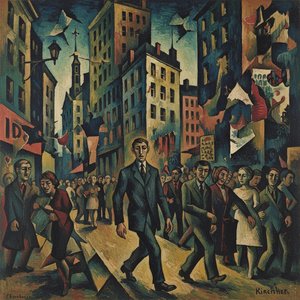
- Subject Matter: His work often depicted nudes, landscapes, and scenes from modern life, characterized by bold colors, distorted forms, and a sense of emotional intensity.
- Evolution of Style: Initially influenced by Post-Impressionists like Van Gogh and Gauguin, Heckel's style evolved towards more melancholic themes and subdued color palettes after moving to Berlin in 1911.
World War I and Later Years
- War Service: During World War I, Heckel volunteered as a medical orderly in a hospital train stationed in Belgium. This experience profoundly impacted his perspective.
- Dissolution of Die Brücke: The group officially dissolved in 1913 due to internal disagreements.
- Heckelraum Mural: Between 1922 and 1924, Heckel painted the "Heckelraum" at the Angermuseum in Dresden, a series of mural paintings depicting “Stages in Life,” considered among the most important surviving works of German Expressionism.
- Nazi Persecution: In 1937, the Nazi regime declared his work "degenerate," confiscating over 700 artworks from German museums and banning public exhibitions.
Legacy and Historical Significance
- Expressionist Pioneer: Erich Heckel is recognized as a key figure in the Expressionist movement, particularly for his contributions to Die Brücke.
- Printmaking Master: His prolific printmaking output significantly impacted the development of modern graphic art.
- Influence on Subsequent Artists: His bold style and emotional intensity influenced generations of artists who followed.
- Rediscovery and Recognition: After World War II, Heckel's work was rediscovered and gained widespread recognition for its artistic merit and historical importance.
- Death: He died in Radolfzell in 1970, leaving behind a substantial body of work that continues to be studied and admired today.
Ερωτήσεις και Απαντήσεις
Πού μπορώ να δω τα έργα του/της Erich Heckel ταξινομημένα ανά ατμόσφαιρα;
Στη σελίδα Κόρνερ Αίσθησης του καλλιτέχνη, μπορείτε να δείτε τα έργα του Erich Heckel ταξινομημένα ανάλογα με την ατμόσφαιρά τους.
Μπορώ να περιηγηθώ στα έργα του/της Erich Heckel ανά παλέτα χρώματος;
Μπορείτε να περιηγηθείτε στα έργα του/της Erich Heckel ανά χρωματική παλέτα στη σελίδα των χρωμάτων του/της Erich Heckel, στην ενότητα Κατά Παλέτα Χρωμάτων.
Πώς χωρίζεται η καριέρα του/της Erich Heckel σε περιόδους;
Μια χρονολογική καταγραφή του έργου του/της Erich Heckel είναι διαθέσιμη στη σελίδα Χρονικό έργο, όπου τα έργα παρουσιάζονται με σειρά δημιουργίας, χωρισμένα σε περιόδους της καριέρας του/της.