Πορτρέτο του Χουάν Γκρίς

Τα 100 πιο διάσημα έργα του Χουάν Γκρίς, κάθε ένα μοναδικό

Ενημερωμένο Νοέμβριος 2026 · κατάταξη βάσει του σκορ δημοφιλίας μας (αναζητήσεις, επισκέψεις και παραγγελίες για κάθε έργο) · 411 έργα του Χουάν Γκρίς στον κατάλογό μας

Με σύντομη περιγραφή

Το έργο Πορτρέτο της Μαδαμάς Ζωζέτ Γκρισ (1916) είναι το ποίτευμα του Χουάν Γκρίς που τραβάει περισσότερα βλέμματα. Μετά από αυτό, το βλέμμα στρέφεται στο Πears and grapes on a table (1913) και στο Σπίτι Πριν Το Παράθυρο Ακαθιστό (1915). Ανάμεσα στα 411 έργα του Χουάν Γκρίς στον κατάλογό μας, αυτά τα 100 είναι τα πιο διάσημα, το καθένα ένα μοναδικό πρωτότυπο που παρουσιάζεται με την χρονολογία του, το μουσείο του και τον λόγο για τον οποίο παραμένει αιώνιο.

1887 – 1927, Μαδρίτη Synthetic cubism Περισσότερα έργα: Museo Nacional Centro de Arte Reina Sofía

Τα 10 κορυφαία έργα του Χουάν Γκρίς, μέσα από το βλέμμα της γκαλερί

1
Πορτρέτο της Μαδαμάς Ζωζέτ Γκρισ (1916) του Χουάν Γκρίς

Πορτρέτο της Μαδαμάς Ζωζέτ Γκρισ

1916 · Άνθρακα και λάδι σε καμβά

Το "Πορτρέτο της Μαδρενίτης Ζωζέτ" (1916) του Ιούαν Γκρίς αποτελεί ένα συναρπαστικό έργο που μας καλεί σε έναν κόσμο όπου η μορφή και η προοπτική αποδομούνται, προσφέροντας μια φρέσκια και δυναμική ερμηνεία του πορτρέτου. Δημιουργήθηκε στην καρδιά της κυβιστικής πρωτοπορίας, αυτό το έργο δεν είναι απλώς μια αναπαράσταση ενός ανθρώπου, αλλά μια εξερεύνηση των ίδιων των θεμελιωδών αρχών της τέχνης.

2
Πears and grapes on a table (1913) του Χουάν Γκρίς

Πears and grapes on a table

1913 · Άνθρακα και λάδι σε καμβά

Το έργο “Pears and Grapes on a Table” του Juan Gris, που δημιουργήθηκε το 1913, δεν είναι απλώς μια απεικόνιση φρούτων – αποτελεί μια τολμηρή δήλωση μιας νέας οπτικής γλώσσας. Εκπορεύεται από τη ζωντανή σκηνή της αρχαίας Παρισίων, αυτό το ζωγραφικό έργο ενσωματώνει τις βασικές αρχές του Σύνθετου Κυβισμού, διατηρώντας παράλληλα μια μοναδική πλούσια χρωματική φόρτιση που το ξεχωρίζει. Ο Gris δεν επιδιώκει να αναπαραστήσει την πραγματικότητα όπως την αντιλαμβανόμαστε,…

3
Σπίτι Πριν Το Παράθυρο Ακαθιστό (1915) του Χουάν Γκρίς

Σπίτι Πριν Το Παράθυρο Ακαθιστό

1915 · Άνθρακα και λάδι σε καμβά · Philadelphia Museum of Art, Φιλαδέλφεια

Ένα Αριστούργημα Κουβιστικής Καινοτομίας Το έργο του Χουάν Γκρίς «Στατικό Ζωτικό μπροστά από ένα Ανοιχτό Παράθυρο, γνωστό και ως Place Ravignan» αποτελεί ένα μαγευτικό δείγμα της Συνθετικής Κουβισμού, αναδεικνύοντας την μοναδική ικανότητα του καλλιτέχνη να συνδυάσει την γεωμετρική αφαίρεση με καθημερινά αντικείμενα. Δημιουργημένο το 1915, αυτό το έργο ενσαρκώνει το ώριμο στυλ του Γκρίς, το οποίο χαρακτηρίζεται από τις περίπλοκες συνθέσεις και τις αρμονικές παλέτες χρωμάτων. Θέμα και Σύνθεση Η…

4
Πρωινό (1915) του Χουάν Γκρίς

Πρωινό

1915 · Άνθρακα και λάδι σε καμβά

Εξερευνώντας το Θέμα και τη Διάταξη Η εντυπωσιακή αυτή δουλειά παρουσιάζει μια δυναμική σιλουέτα ενός πρωινού, ανασκαλισμένη μέσα από τον φακό του Κυβισμού. Χαρακτηρίζεται από καθημερινά αντικείμενα όπως ένα ειδύλλιο με την ένδειξη "JOURNAL", ένα μπουκάλι και άλλα οικιακά είδη, όπου η σύνθεση διασπάται σε γεωμετρικά μέρη που καλούν τους θεατές να δουν οικεία σκηνή από πολλαπλά πρίσματα ταυτόχρονα. Η αλληλεπίδραση αυτών των αντικειμένων, ανασυναρμολογημένα σε ένα στρωτό μωσαϊκό, αμφισβητεί…

5
Guitar on a table - - (1915) του Χουάν Γκρίς

Guitar on a table - -

1915 · Oil On Canvas

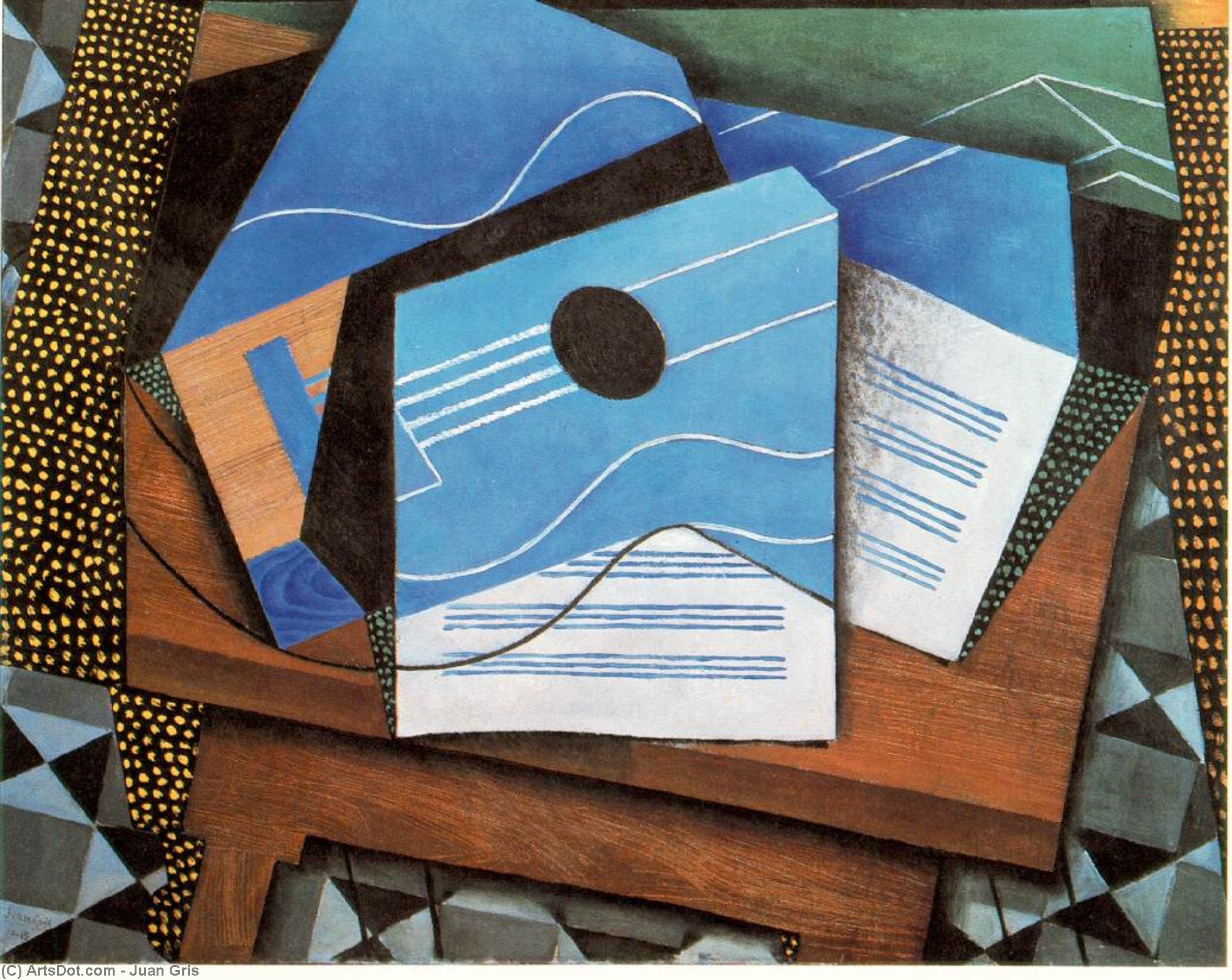
To stand before Juan Gris’s Guitar on a Table is to step directly into the intellectual fervor of the early twentieth century, a moment when art dared to dismantle and reassemble reality. This seminal work from 1915 is not merely a depiction of musical instruments and scattered books; it is a meticulously constructed meditation on form, perspective, and the very nature of representation itself. Gris, ever the analytical mind, approaches…

6
Still Life with Newspaper (1916) του Χουάν Γκρίς

Still Life with Newspaper

1916 · Oil On Canvas

To stand before Juan Gris’s Still Life with Newspaper is to step directly into the vibrant, intellectual crucible of early twentieth-century art. This painting from 1916 is far more than a mere arrangement of objects; it is a meticulously constructed visual argument about perception itself. Gris, a master craftsman who navigated the revolutionary currents of Cubism, presents us with a seemingly simple still life—a bowl, scattered cups, and perhaps a…

7
The Smoker (1913) του Χουάν Γκρίς

The Smoker

1913 · Acrylic On Paper · Μουσείο Θυσσεν-Βορνημισάζα, Μαδρίτη

Juan Gris’s “The Smoker,” painted in 1913, isn't merely a depiction of a man enjoying a cigarette; it’s a meticulously constructed meditation on perception, fragmentation, and the burgeoning anxieties of early 20th-century modernity. Created during his pivotal period as a pioneer of Synthetic Cubism alongside Pablo Picasso, this work embodies the movement’s radical departure from traditional representation, offering instead a fractured, multi-faceted view of its subject – a Spanish painter…

8
The painters window - - (1925) του Χουάν Γκρίς

The painters window - -

1925 · Oil On Canvas

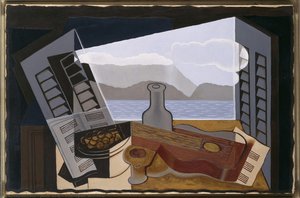
Juan Gris’s The Painter's Window is not merely a depiction of an interior scene; it is a meticulously constructed intellectual puzzle rendered in oil on canvas. Created in 1925, this work stands as a quintessential testament to the principles of Synthetic Cubism. To gaze upon it is to look through a multifaceted lens, where reality itself has been disassembled and reassembled according to the artist's rigorous geometric vision. The composition…
9
Landscape at Beaulieu (1918) του Χουάν Γκρίς

Landscape at Beaulieu

1918 · Acrylic On Canvas · Μουσείο Kröller-Müller, Otterlo

José Victoriano González-Pérez, known universally as Juan Gris (1887–1927), stands as a cornerstone figure in the genesis of Cubist art. Born in Madrid and nurtured by an analytical mind honed at the School of Arts and Sciences—a formative experience that foreshadowed his distinctive artistic approach—Gris embarked on a journey that would propel him to prominence within the vanguard of early 20th-century visual culture.

10
The Miller (1918) του Χουάν Γκρίς

The Miller

1918 · Oil On Canvas

To stand before Juan Gris’s The Miller is not merely to observe a painting; it is to step into a meticulously constructed intellectual space where reality itself has been disassembled and reassembled. Created in 1918, this seminal work stands as a profound testament to the power of Cubism—an art movement that dared to shatter the polished veneer of traditional representation. Gris, deeply influenced by the revolutionary breakthroughs of Picasso and…

Τα διάσημα έργα του Χουάν Γκρίς, από το 11 έως το 100

11Lamp (1916) του Χουάν ΓκρίςLamp1916 · Philadelphia Museum of Art 12Open Window with Hills (1923) του Χουάν ΓκρίςOpen Window with Hills1923 13Abstraction (Guitar and Glass) (1913) του Χουάν ΓκρίςAbstraction (Guitar and Glass)1913 · Art Institute of Chicago 14Fruit Bowl and Fruit (1916) του Χουάν ΓκρίςFruit Bowl and Fruit1916 15Open Window (1917) του Χουάν ΓκρίςOpen Window1917 · Philadelphia Museum of Art 16Harlequin (1917) του Χουάν ΓκρίςHarlequin1917 · Philadelphia Museum of Art 17Guitar on a Table (1915) του Χουάν ΓκρίςGuitar on a Table1915 · Μουσείο Kröller-Müller 18Bottles and Knife (1912) του Χουάν ΓκρίςBottles and Knife1912 19Portrait of Josette Gris (1916) του Χουάν ΓκρίςPortrait of Josette Gris1916 · Museo Nacional Centro de Arte Reina Sofía 20Still Life with Newspaper (1916) του Χουάν ΓκρίςStill Life with Newspaper1916 21Still Life with White Tablecloth (1916) του Χουάν ΓκρίςStill Life with White Tablecloth1916 · Μουσείο Καλών Τεχνών του Χιούστον 22The Dice (1922) του Χουάν ΓκρίςThe Dice1922 · Κέντρο Πομπιντού 23Three lamps - - (1911) του Χουάν ΓκρίςThree lamps - -1911 24Guitar on a chair - - (1913) του Χουάν ΓκρίςGuitar on a chair - -1913 25The guitar - - (1918) του Χουάν ΓκρίςThe guitar - -1918 · Museo Nacional Centro de Arte Reina Sofía 26Bottle and glass on a table - - (1914) του Χουάν ΓκρίςBottle and glass on a table - -1914 27Still life with oil lamp - - (1912) του Χουάν ΓκρίςStill life with oil lamp - -1912 28The Glass (1914) του Χουάν ΓκρίςThe Glass1914 29The Guitar with Inlay (1925) του Χουάν ΓκρίςThe Guitar with Inlay1925 30Glass and Ace of Clubs (1917) του Χουάν ΓκρίςGlass and Ace of Clubs1917 · Tel Aviv Museum of Art 31Fantomas (Pipe and Newspaper) - - (1915) του Χουάν ΓκρίςFantomas (Pipe and Newspaper) - -1915 32Guitar on the Table (1913) του Χουάν ΓκρίςGuitar on the Table1913 · Museo Nacional Centro de Arte Reina Sofía 33Portrait of the Artist s Mother (1912) του Χουάν ΓκρίςPortrait of the Artist s Mother1912 34The Open Window (1921) του Χουάν ΓκρίςThe Open Window1921 · Museo Nacional Centro de Arte Reina Sofía 35Guitar in Front of the Sea (1925) του Χουάν ΓκρίςGuitar in Front of the Sea1925 · Museo Nacional Centro de Arte Reina Sofía 36Still Life with Flowers (1912) του Χουάν ΓκρίςStill Life with Flowers1912 · MoMA - Museum of Modern Art 37Carafe, Glass, and Packet of Tobacco (1914) του Χουάν ΓκρίςCarafe, Glass, and Packet of Tobacco1914 · Virginia Museum of Fine Arts 38The Sunblind (1914) του Χουάν ΓκρίςThe Sunblind1914 39Violin (1913) του Χουάν ΓκρίςViolin1913 · Philadelphia Museum of Art 40Harlequin with Guitar (1919) του Χουάν ΓκρίςHarlequin with Guitar1919 41Pipe and Fruit Dish with Grapes (1918) του Χουάν ΓκρίςPipe and Fruit Dish with Grapes1918 · Μουσείο Kröller-Müller 42Still Life on a Chair (1917) του Χουάν ΓκρίςStill Life on a Chair1917 · Κέντρο Πομπιντού 43Cup, Glasses, and Bottle (Le Journal) (1914) του Χουάν ΓκρίςCup, Glasses, and Bottle (Le Journal)1914 44Violin and guitar - - (1913) του Χουάν ΓκρίςViolin and guitar - -1913 45A Pot of Geraniums (1915) του Χουάν ΓκρίςA Pot of Geraniums1915 46Violin and Guitar (1913) του Χουάν ΓκρίςViolin and Guitar1913 · Museo Nacional Centro de Arte Reina Sofía 47The Table in Front of the Window (1921) του Χουάν ΓκρίςThe Table in Front of the Window1921 48Coffee Grinder, Cup and Glass on a Table (1916) του Χουάν ΓκρίςCoffee Grinder, Cup and Glass on a Table1916 · Museo Nacional Centro de Arte Reina Sofía 49Glass and Water Bottle (1917) του Χουάν ΓκρίςGlass and Water Bottle1917 · Ohara Museum of Art 50Still life with checked tablecloth - - (1915) του Χουάν ΓκρίςStill life with checked tablecloth - -1915 51Pierrot (1922) του Χουάν ΓκρίςPierrot1922 · Εθνική Γκαλερί της Ιρλανδίας 52The Glass (also known as The Fruit Bowl) (1914) του Χουάν ΓκρίςThe Glass (also known as The Fruit Bowl)1914 53Grapes (1916) του Χουάν ΓκρίςGrapes1916 · Museo Nacional Centro de Arte Reina Sofía 54Landscape with Houses at Ceret (1913) του Χουάν ΓκρίςLandscape with Houses at Ceret1913 55View across the Bay (1921) του Χουάν ΓκρίςView across the Bay1921 · Κέντρο Πομπιντού 56L του Χουάν ΓκρίςLBiennale Internazionale dell'Antiquariato di Firenze 57Seated Harlequin (1920) του Χουάν ΓκρίςSeated Harlequin1920 · Minneapolis Institute of Art 58The Guitar Player (1926) του Χουάν ΓκρίςThe Guitar Player1926 · Statens Museum For Kunst 59Landscape with house at Ceret (1913) του Χουάν ΓκρίςLandscape with house at Ceret1913 60The violin (1916) του Χουάν ΓκρίςThe violin1916 61Bottle and Glass (1917) του Χουάν ΓκρίςBottle and Glass1917 62Grapes (1913) του Χουάν ΓκρίςGrapes1913 · MoMA - Museum of Modern Art 63Newspaper and Fruit Dish (1916) του Χουάν ΓκρίςNewspaper and Fruit Dish1916 · Yale University Art Gallery 64Still Life with Newspaper 02 (1916) του Χουάν ΓκρίςStill Life with Newspaper 021916 65The Coffee Grinder (1916) του Χουάν ΓκρίςThe Coffee Grinder1916 66Guitar and Music Paper (1927) του Χουάν ΓκρίςGuitar and Music Paper1927 67The fruit bowl (1914) του Χουάν ΓκρίςThe fruit bowl1914 · Μουσείο Kröller-Müller 68Abstraction (1915) του Χουάν ΓκρίςAbstraction1915 · The Phillips Collection 69Still Life (1917) του Χουάν ΓκρίςStill Life1917 · Minneapolis Institute of Art 70Tobacco, Newspaper and Bottle of Wine (1914) του Χουάν ΓκρίςTobacco, Newspaper and Bottle of Wine1914 71The Smoker (1913) του Χουάν ΓκρίςThe Smoker1913 · Μετροπολιτικό Μουσείο Τέχνης 72Portrait of Picasso - - (1912) του Χουάν ΓκρίςPortrait of Picasso - -1912 73Water-Bottle and Lemon (1916) του Χουάν ΓκρίςWater-Bottle and Lemon1916 · Μουσείο Kröller-Müller 74The Glass of Beer (1914) του Χουάν ΓκρίςThe Glass of Beer1914 · Art Institute of Chicago 75Portrait Daniel Henry Kahnweiler (1921) του Χουάν ΓκρίςPortrait Daniel Henry Kahnweiler1921 76Harlequin (1918) του Χουάν ΓκρίςHarlequin1918 77Harlequin in Front of a Table (1924) του Χουάν ΓκρίςHarlequin in Front of a Table1924 78Pierrot with Book (1924) του Χουάν ΓκρίςPierrot with Book1924 79Pierrot at the Curtain (1924) του Χουάν ΓκρίςPierrot at the Curtain1924 · Μουσεία Τέχνης του Χάρβαρντ 80Harlequin at a Table (1919) του Χουάν ΓκρίςHarlequin at a Table1919 81The Bottle of Anis del Mono (1914) του Χουάν ΓκρίςThe Bottle of Anis del Mono1914 82Coffeepot (1916) του Χουάν ΓκρίςCoffeepot1916 · Philadelphia Museum of Art 83A Dish of Grapes and a Pipe on a Table (1918) του Χουάν ΓκρίςA Dish of Grapes and a Pipe on a Table1918 · Philadelphia Museum of Art 84Glass and Playing Cards (1915) του Χουάν ΓκρίςGlass and Playing Cards1915 · Art Institute of Chicago 85Newspaper and Fruit Dish (1916) του Χουάν ΓκρίςNewspaper and Fruit Dish1916 · Yale University Art Gallery 86Glass, Cup and Bottle (1914) του Χουάν ΓκρίςGlass, Cup and Bottle1914 87Siphon and Fruitdish (1920) του Χουάν ΓκρίςSiphon and Fruitdish1920 · Μουσείο Kröller-Müller 88Bowl and Book (1927) του Χουάν ΓκρίςBowl and Book1927 89The Singer (1926) του Χουάν ΓκρίςThe Singer1926 · Museo Nacional Centro de Arte Reina Sofía 90Checkerboard and Playing Cards (1915) του Χουάν ΓκρίςCheckerboard and Playing Cards1915 · Εθνική Πινακοθήκη Αυστραλίας 91Pipe, Bowl and Spoon (1920) του Χουάν ΓκρίςPipe, Bowl and Spoon1920 · Μουσείο Kröller-Müller 92Still Life with a Glass (1917) του Χουάν ΓκρίςStill Life with a Glass1917 · Philadelphia Museum of Art 93Harlequin with guitar - - (1919) του Χουάν ΓκρίςHarlequin with guitar - -1919 94Photograph of Violin and Checkerboard (1913) του Χουάν ΓκρίςPhotograph of Violin and Checkerboard1913 95Water-bottle, Bottle, and Fruit-dish - - (1915) του Χουάν ΓκρίςWater-bottle, Bottle, and Fruit-dish - -1915 96Pitcher and Glass on a Table (1916) του Χουάν ΓκρίςPitcher and Glass on a Table1916 · Bavarian State Painting Collections 97Man with Opera Hat (1912) του Χουάν ΓκρίςMan with Opera Hat1912 98The Garden (1916) του Χουάν ΓκρίςThe Garden1916 99Seated Harlequin (1920) του Χουάν ΓκρίςSeated Harlequin1920 · Los Angeles County Museum of Art 100A Bottle and Fruit (1923) του Χουάν ΓκρίςA Bottle and Fruit1923 · Philadelphia Museum of Art

Τα διάσημα έργα του Χουάν Γκρίς, ανά περίοδο

Τα θέματα που κίνησαν το ενδιαφέρον του Χουάν Γκρίς

Τα τέσσερα θέματα που εμφανίζονται πιο συχνά σε αυτά τα πρωτότυπα έργα, το καθένα με το εξαιρετικό του παράδειγμα.

Τα μουσεία που διατηρούν τα πρωτότυπα έργα του Χουάν Γκρίς

Τα 8 μουσεία που φιλοξενούν το μεγαλύτερο μέρος των έργων σε αυτήν τη σελίδα.

Μουσείο Πόλη Έργα του Χουάν Γκρίς Πάτρια από αυτή τη λίστα
Museo Nacional Centro de Arte Reina Sofía, ΜαδρίτηMuseo Nacional Centro de Arte Reina Sofía Μαδρίτη 23 Portrait of Josette Gris, The guitar - -, Guitar on the Table
Philadelphia Museum of Art, ΦιλαδέλφειαPhiladelphia Museum of Art Φιλαδέλφεια 13 Σπίτι Πριν Το Παράθυρο Ακαθιστό, Lamp, Open Window
Μουσείο Kröller-Müller, OtterloΜουσείο Kröller-Müller Otterlo 16 Landscape at Beaulieu, Guitar on a Table, Pipe and Fruit Dish with Grapes
Κέντρο Πομπιντού, ΠαρίσιΚέντρο Πομπιντού Παρίσι 13 The Dice, Still Life on a Chair, View across the Bay
Art Institute of Chicago, ΣικάγκοArt Institute of Chicago Σικάγκο 7 Abstraction (Guitar and Glass), The Glass of Beer, Glass and Playing Cards
MoMA - Museum of Modern Art, Νέα ΥόρκηMoMA - Museum of Modern Art Νέα Υόρκη 4 Still Life with Flowers, Grapes
Minneapolis Institute of Art, MinneapolisMinneapolis Institute of Art Minneapolis 2 Seated Harlequin, Still Life
Μετροπολιτικό Μουσείο Τέχνης, Νέα ΥόρκηΜετροπολιτικό Μουσείο Τέχνης Νέα Υόρκη 6 The Smoker

Ο Χουάν Γκρίς μέσα από τα χρόνια: τα μοναδικά πρωτότυπα κάθε έργου

Μια μακροχρόνια καριέρα 17 ετών, από το 1911 έως το 1927: τα πιο διάσημα πρωτότυπα του Χουάν Γκρίς, παρουσιασμένα ανά έτος.

Έργα ανά έτος

Επιλέξτε μια χρονιά για να δείτε τα πρωτότυπα έργα της.

Οι πίνακες του Χουάν Γκρίς: ερωτήσεις για την γκαλερί

Ποιο είναι το πιο διάσημο έργο του Χουάν Γκρίς;Αποκαλύψτε την απάντηση

Το Πορτρέτο της Μαδαμάς Ζωζέτ Γκρισ (1916). Στη συνέχεια ακολουθούν το Πears and grapes on a table (1913) και το Σπίτι Πριν Το Παράθυρο Ακαθιστό (1915).

Σε τι ηλικία δημιούργησε ο/η Χουάν Γκρίς το έργο Πορτρέτο της Μαδαμάς Ζωζέτ Γκρισ;Αποκαλύψτε την απάντηση

29 ετών: το έργο Πορτρέτο της Μαδαμάς Ζωζέτ Γκρισ είναι του 1916, και ο/η Χουάν Γκρίς γεννήθηκε το 1887.

Ποια είναι τα δέκα πιο διάσημα έργα του Χουάν Γκρίς;Αποκαλύψτε την απάντηση

Πορτρέτο της Μαδαμάς Ζωζέτ Γκρισ, Πears and grapes on a table, Σπίτι Πριν Το Παράθυρο Ακαθιστό, Πρωινό, Guitar on a table - -, Still Life with Newspaper, The Smoker, The painters window - -, Landscape at Beaulieu και The Miller. Η κατάταξη παραπάνω αναγράφει το έτος και το μουσείο για το κάθε έργο.

Πόσα έργα του Χουάν Γκρίς είναι γνωστά;Αποκαλύψτε την απάντηση

Ο κατάλογός μας περιλαμβάνει 411 έργα του Χουάν Γκρίς, με ημερομηνίες από 1911 έως 1927.

Πού μπορούν να θαυμαστούν τα πιο διάσημα πρωτότυπα έργα του Χουάν Γκρίς;Αποκαλύψτε την απάντηση

Κυρίως σε Museo Nacional Centro de Arte Reina Sofía (Μαδρίτη), Philadelphia Museum of Art (Φιλαδέλφεια) και Μουσείο Kröller-Müller (Otterlo). Ο πίνακας μουσείου παραπάνω τους περιλαμβάνει όλους.

Κατά ποια περίοδο δημιούργησε ο/η Χουάν Γκρίς τα πιο γνωστά του/της έργα;Αποκαλύψτε την απάντηση

Κατά την περίοδο 1916: 18 από τα 100 έργα σε αυτήν τη σελίδα δημιουργήθηκαν τότε, με Πορτρέτο της Μαδαμάς Ζωζέτ Γκρισ από αυτά να είναι μοναδικά.

Ποιο διάσημο έργο του Χουάν Γκρίς είναι το παλαιότερο και ποιο το νεότερο;Αποκαλύψτε την απάντηση

Σε αυτήν τη σελίδα, το παλαιότερο είναι Three lamps - - (1911) και το νεότερο Guitar and Music Paper (1927).

Ποια θέματα προτίμησε ο/η Χουάν Γκρίς;Αποκαλύψτε την απάντηση

Geometric shapes (29), Still life (26) και Guitar (19), σε συνολικά 100 έργα σε αυτήν τη σελίδα.

Με ποια υλικά χρησιμοποίησε περισσότερο ο Χουάν Γκρίς;Αποκαλύψτε την απάντηση

Oil On Canvas, για 68 από τα 100 έργα σε αυτήν τη σελίδα.

Ποιο καλλιτεχνικό κίνημα ανήκει το έργο του Χουάν Γκρίς;Αποκαλύψτε την απάντηση

Synthetic cubism, όπως προκύπτει από τα πρωτότυπα σε αυτήν τη σελίδα.

Ποια πρωτότυπα έργα του Χουάν Γκρίς μπορώ να δω στο Museo Nacional Centro de Arte Reina Sofía;Αποκαλύψτε την απάντηση

Portrait of Josette Gris, The guitar - - και Guitar on the Table: το Museo Nacional Centro de Arte Reina Sofía, Μαδρίτη διαθέτει 9 από τα έργα σε αυτήν τη σελίδα.

Χουάν Γκρίς: ένα πορτρέτο του καλλιτέχνη

Early Life, Family and Training

Born José Victoriano González-Pérez on March 23, 1887, in Madrid, Spain, the man who would become known as Juan Gris grew up in a large, busy household. He was the thirteenth of fourteen children. His father, Gregorio Gonzalez, was a prosperous businessman, and the family environment provided a stable foundation during his formative years in the Spanish capital.

His early education took a technical turn at the Madrid School of Arts and Sciences, where he studied engineering. This period of study instilled a sense of structural logic that would later surface in his visual work. While his focus was on the mechanics of design, a creative impulse was already present. Between 1904 and 1905, he began to formalize his artistic training by studying painting under the academic artist José Moreno Carbonero. This brief but significant period of instruction helped bridge the gap between his technical studies and his developing visual language.

By 1905, a shift in identity occurred when he adopted the name Juan Gris. This change marked a departure from his origins as José Victoriano González-Pérez and signaled a new direction for his life. He moved away from the rigid requirements of engineering toward the more fluid, though no less structured, world of visual representation.

The Parisian Awakening and Cubism

The move to Paris in 1906 changed the direction of his life. By 1909, he was living in the Bateau-Lavoir at 13 Rue Ravignan. This was a place of constant movement and shared spaces. He spent those years working as a satirical cartoonist, but the shift toward painting began in earnest around 1911. He left the world of illustration behind to focus on the canvas, seeking a more structured way to see the objects around him.

His presence in the Parisian art scene became official in 1912. He showed his work for the first time at the Salon des Indépendants that year. This was a period of rapid development, as he moved away from the expressive qualities of Fauvism toward the fragmented logic of Cubism. His work reached beyond France, appearing at the Exposició d'art cubista at the Galeries Dalmau in Barcelona. By 1912, he had also signed a contract with Daniel-Henry Kahnweiler, a move that solidified his place within the circle of artists redefining pictorial space.

Technique and Artistic Style

There is a certain mathematical logic to how he builds a canvas. His background in engineering shows in the way he handles geometric shapes and fragmented forms, treating the composition with a quiet, calculated precision. He does not simply break an object apart; he reconstructs it through a series of intersecting planes. In many of his works, he moves away from the chaotic, shattering abstraction seen in earlier Cubism, opting instead for a more organized and legible structure. This clarity often comes through a disciplined palette of grays, blacks, and whites, which forces the eye to focus on the weight and placement of each shape.

His hands were particularly skilled at working with the textures of everyday life. He was a virtuoso with materials that most would overlook, incorporating newspaper, wallpaper, and other commercially printed or found objects directly into his compositions. He had a specific way of handling these pieces, using black media at the intersections of various papers to disguise the seams. This technique allowed him to create the illusion of seamlessness, making the different layers appear as a single, unified surface rather than a collection of scraps. He would even carefully line up patterns in printed paper to ensure the edges disappeared into the work.

Key Works and Masterpieces

In 1914, the work Flowers emerged, alongside The Sunblind, showing a focus on how light and objects occupy a space. By June 1915, the composition Still Life before an Open Window, Place Ravignan was finished. This piece uses intersecting planes to build a sense of depth, pulling the viewer into a structured, quiet scene. The way the shapes overlap creates a specific kind of order, where the window and the objects within it are reconstructed through a series of sharp, geometric angles.

The years that followed saw a shift toward more personal subjects and complex textures. In October 1916, the Portrait of Josette Gris was painted, capturing a subject through a disciplined, almost monochromatic lens. This approach strips away unnecessary detail to focus on the rhythm of the lines. Later, in 1919, Harlequin at a Table brought a different energy to the canvas, using the fragmented language of the movement to organize the scene. Toward the end of his life, around 1927, Guitar and Music Paper was created, a work that relies on the interplay of simple forms and the tactile suggestion of paper.

Circle, Rivals and Influences

Gris moved through the tight-knit circles of the Parisian avant-garde, a world of shared ideas and shifting perspectives. His work grew from the foundations laid by Paul Cézanne, specifically the way the older painter explored the underlying structure of form and space. This intellectual approach allowed Gris to find his own footing alongside the movement's primary innovators. He was one of the three leading figures of Cubism, working in the same orbit as Pablo Picasso and Georges Braque. While he looked to them for direction, his path was not a simple imitation. He brought a mathematical precision to the canvas that felt distinct from the more intuitive experiments of his peers.

The relationships within this circle were often complicated. Although he was deeply influenced by Picasso, there was a palpable tension between them. One observer noted that Gris was the only person Picasso wished away, a detail that speaks to the competitive and intense nature of the era. Despite this, Gris remained a central part of the development of the genre, helping to push Cubism from its early analytical stages into the more structured, synthetic compositions that defined the later years. He did not merely follow the lead of others; he helped steer the movement toward a more organized, readable logic.

Legacy and Lasting Influence

Juan Gris did more than follow the paths cleared by others. While he built upon the foundations of early Cubism, he steered the movement in new directions, moving away from the shattering abstraction of his peers. His paintings possess a bold, graphic look that makes them immediately distinguishable from the works of Picasso and Braque. There is a specific, calculated clarity in how he handles a composition, a quality that stems from his earlier studies in engineering. He did not merely break objects apart; he reassembled them with a sense of order and structural logic.

His influence is felt in the way he transitioned the movement from the analytical phase toward a more synthetic approach. By incorporating textures and patterns, he helped define a way of seeing that emphasized the flatness of the canvas rather than the illusion of deep space. This method turned the act of painting into a precise arrangement of geometric planes and color. His work remains a study in how to balance fragmentation with a sense of cohesive design.

Where to See the Works Today

Tracing the physical presence of his work requires a trip through several major collections. In Madrid, the Museo Nacional Centro de Arte Reina Sofía holds thirteen of his pieces, providing a significant look at his development. The Thyssen-Bornemisza Museum in the same city maintains two works. These Spanish collections offer a way to see how his roots in Madrid eventually transitioned into the radical structures of his later years.

Much of his output remains in France, reflecting the years he spent in Paris. The Centre Pompidou holds four works, while the Kröller-Müller Museum in Otterlo contains nine. These pieces often show the way he layered paper and paint to create depth. You can find his experiments with texture and color in these halls, where the sharp edges of his geometric forms are preserved.

Across the Atlantic, the Philadelphia Museum of Art keeps three works. Seeing his paintings in these different settings reveals how his approach to space and light changed depending on the materials he chose to use. Some of these works are quite large, while others focus on the quiet arrangement of everyday objects.