Cubism
L (Χουάν Γκρίς)
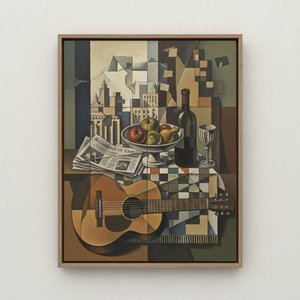
Ο/Η Χουάν Γκρίς (1887–1927) δημιούργησε το L. Ανήκει στο κίνημα Cubism. Είναι φτιαγμένο σε Oil On Canvas. Αποθηκεύεται στο Biennale Internazionale dell'Antiquariato di Firenze στο Φλωρεντία, Ιταλία.

 Προεπισκόπηση σε πραγματική κλίμακα

 Ελαιογραφικό Χειροποίητο Έργο
 Αποστολή
 Κοινοποίηση
 Πληροφοριακό φύλλο


 Λήψη
 Παρόμοια αντικείμενα συλλογής
 Ακτινογραφία
 Παρουσίαση
 Ερωτήσεις & Απαντήσεις

 Στατιστικά
L, εν συντομία
- Τίτλος
- L
- Καλλιτέχνης
- Χουάν Γκρίς (1887–1927)
- Γεννημένος/η το
- Μαδρίτη, Ισπανία
- Μέσο
- Oil On Canvas
- Πού εκτίθεται
- Biennale Internazionale dell'Antiquariato di Firenze, Φλωρεντία, Ιταλία
- Κίνηση
- Cubism
- Εποχή
- Modern
- Θέμα
- guitar, music paper, man, geometric abstraction, monochrome, picasso influence
Τι απεικονίζει το L;
The Architect of Cubism: The Visionary World of Juan Gris
In the vibrant, avant-garde heart of early 20th-century Paris, a new visual language was being forged—one that dismantled the familiar to reveal a deeper, more structured truth. At the center of this revolution stood Juan Gris, a Spanish master whose analytical mind and poetic soul converged to create some of the most enduring icons of Synthetic Cubism. While contemporaries like Picasso and Braque often focused on the fragmentation of form, Gris brought a unique sense of mathematical precision and crystalline clarity to the movement. His work does not merely break objects apart; it reconstructs them into a harmonious symphony of geometric planes, where every line and shadow serves a deliberate, architectural purpose.
To encounter a piece like "Guitar & Music Paper" is to step into a world where reality is distilled into its most essential elements. The composition is a masterful dance of interlocking rectangles and cubes, creating a rhythmic interplay that guides the eye across the canvas. Gris utilized a sophisticated technique of layering textures and subtle gradations, allowing light to play across the surface as if through a prism. His palette, often characterized by earthy, muted tones, avoids the distraction of bright colors to focus instead on the profound relationship between shape and space. This deliberate restraint creates an atmosphere of contemplative stillness, inviting the viewer to linger within the complexity of the design.
A Symphony of Form and Symbolism
Beyond the technical brilliance lies a deep, symbolic resonance that continues to captivate collectors and decorators alike. The recurring motifs in Gris’s oeuvre—the guitar, the musical score, the newspaper—are not merely objects of study but symbols of the modern era's sensory richness. In "Guitar & Music Paper," the fusion of the instrument with the sheet music suggests a blurring of boundaries between the physical and the ephemeral, between sound and sight. The way the geometric shapes overlap creates an illusion of depth that feels both modern and timeless, making such works incredibly versatile for contemporary interior design.
For the discerning art lover or interior designer, a high-quality reproduction of a Juan Gris masterpiece offers more than just decoration; it provides a focal point of intellectual and aesthetic sophistication. The structured nature of his Cubist compositions lends itself beautifully to modern, minimalist, or mid-century modern environments, where the artwork can act as an anchor of stability and elegance. The emotional impact of his work is one of profound balance—a sense that even in a fragmented world, there is an underlying order and beauty waiting to be discovered. Owning a piece inspired by Gris is an invitation to celebrate the intersection of logic and lyricism, bringing a touch of Parisian avant-garde history into the sanctuary of the home.
Σε ποιο μουσείο βρίσκεται το L;
Biennale Internazionale dell'Antiquariato di Firenze
Φλωρεντία, Ιταλία
Μια Αναπλάθουσα Φλωρεντειακή Αναγέννηση: Βυθισμός στο BIAF Η Φλωρεντία αναπνέει τέχνη· δεν είναι απλώς μια πόλη *με* τέχνη, αλλά μια πόλη *της* τέχνης, υφασμένη στους ίδιους τους λίθους της και αντηχίζοντας μέσα στα παλάτσια της. Μέσα σε αυτή την ατμόσφαιρα αιώνιας ομορφιάς κατοικεί η Biennale Internazionale dell'Antiquariato di Firenze (BIAF), ένα γεγονός που ξεπερνά την τυπική έκθεση αρχαι𝘰πλασμάτων για να γίνει ένα επιμελητέο προσκύνημα στην καρδιά της ιταλικής καλλιτεχνίας. Διοργανωμένη μέσα στο μεγαλοπρεπές Palazzo Corsini, το οποίο αποτελεί από μόνο του ένα μπαρόκ αριστούργημα, η BIAF δεν προσφέρει μόνο μια εμπειρία θέασης, αλλά μια πλήρη κατάδυση – μια ευκαιρία να συνδεθεί κανείς με αιώνες χειροτεχνίας και την πλούσια πολιτιστική κληρονομιά της Ιταλίας.


Εικόνες υψηλής ανάλυσης του L

Δημόσιος τομέας: ο καλλιτέχνης απεβίωσε το 1927.
Άλλες διαστάσεις, καρέττες και αναφορά →Χουάν Γκρίς, L, Biennale Internazionale dell'Antiquariato di Firenze. Δημόσιο περιουσιακό δικαίωμα
Ερωτήσεις για το L, απαντημένες
Σε ποιο μουσείο βρίσκεται το πρωτότυπο έργο "L";
Το έργο "L" του Χουάν Γκρίς εκτίθεται στο Biennale Internazionale dell'Antiquariato di Firenze, Φλωρεντία, Ιταλία. Η αναφορά στο μουσείο αφορά το πρωτότυπο έργο και όχι αναπαραγωγές.
Με τι τεχνική έχει δημιουργηθεί το "L";
Η τεχνική του έργου "L" του Χουάν Γκρίς είναι το Oil On Canvas. Οι αναπαραγωγές στοχεύουν στην πιστή απόδοση της εμφάνισης αυτής της τεχνικής.
Τι απεικονίζει το "L" του Χουάν Γκρίς;
Το έργο "L" του Χουάν Γκρίς απεικονίζει: guitar, music paper, man, geometric abstraction, monochrome, picasso influence, cubist style.
Το έργο "L" του Χουάν Γκρίς ανήκει στο δημόσιο περιουσιακό αγαθό;
Όσον αφορά τα πνευματικά δικαιώματα, το "L" ανήκει στο δημόσιο κτήμα - τα δικαιώματα αυτορության έχουν λήξει.
Ποιος δημιούργησε το "L";
Ο καλλιτέχνης πίσω από το "L" είναι ο/η Χουάν Γκρίς. Το έργο καταχωρείται υπό το όνομα του/της Χουάν Γκρίς.
Σε ποιο καλλιτεχνικό ρεύμα ανήκει το "L" του Χουάν Γκρίς;
Το έργο "L" του Χουάν Γκρίς ανήκει στο καλλιτεχνικό κίνημα Cubism. Αυτό το κίνημα παρέχει το στυλιστικό πλαίσιο του έργου.
Σε ποια περίοδο της καριέρας του/της Χουάν Γκρίς ανήκει το "L";
Το έργο "L" ανήκει στην περίοδο Synthetic Cubism της καριέρας του Χουάν Γκρίς. Αυτή η ταξινόμηση συνδέει το έργο με την εξέλιξη του καλλιτέχνη.
Γιατί η κατάσταση των πνευματικών δικαιωμάτων του "L" είναι αυτή που είναι;
Το έργο "L" του Χουάν Γκρίς ανήκει στο δημόσιο κτήμα - τα δικαιώματα αυτορության έχουν λήξει. Οι όροι πνευματικών δικαιωμάτων υπολογίζονται από το έτος θανάτου του καλλιτέχνη, και ο/η Χουάν Γκρίς απεβίωσε το 1927.
Το έργο "L" παρέμεινε στη χώρα καταγωγής του καλλιτέχνη του;
Όχι - το έργο βρίσκεται στο εξωτερικό. Ο/Η Χουάν Γκρίς γεννήθηκε στην/στο Ισπανία, ενώ το πρωτότυπο έργο "L" βρίσκεται σε μουσείο στην/στο Ιταλία.
Σχετικά με τον καλλιτέχνη, Χουάν Γκρίς

1887–1927, Ισπανία
Χουάν Γκρίς
Early Life, Family and Training Born José Victoriano González-Pérez on March 23, 1887, in Madrid, Spain, the man who would become known as Juan Gris grew up in a large, busy household. He was the thirteenth of fourteen children. His father, Gregorio Gonzalez, was a prosperous businessman, and the family environment provided a stable foundation during his formative years in the Spanish capital. His early education took a technical turn at the Madrid School of Arts and Sciences, where he studied engineering.
Εργασίες του Χουάν Γκρίς
 Πορτρέτο της Μαδαμάς Ζωζέτ Γκρισ1916
 Πears and grapes on a table1913
 Σπίτι Πριν Το Παράθυρο Ακαθιστό1915
 Πρωινό1915

Μελέτες γύρω από το L
 Spontaneity and Matter: Distinguishing CoBrA from Art InformelMaster the differences between CoBrA and Art Informel with our expert guide. Learn to identify these post-war movements today.
 Juan Gris: Cubist Deconstruction & Synthesis – A Comprehensive ExplorationExplore the revolutionary art of Juan Gris – a master of Cubism. Discover his unique approach to deconstruction, vibrant Synthetic Cubist w…
 Understanding the Difference Between Analytical and Synthetic CubismMaster the differences between Analytical and Synthetic Cubism with our expert guide. Learn to identify these iconic art movements now.