Πορτρέτο του Τζον Τζέιμς Οντιμπόν

Τα 100 πιο διάσημα έργα του Τζον Τζέιμς Οντιμπόν, μια επιλογή γκαλερί

Ενημερωμένο Νοέμβριος 2026 · κατάταξη βάσει του σκορ δημοφιλίας μας (αναζητήσεις, επισκέψεις και παραγγελίες για κάθε έργο) · 818 έργα του Τζον Τζέιμς Οντιμπόν στον κατάλογό μας

Με σύντομη περιγραφή

Από όλα τα πρωτότυπα έργα που άφησε ο Τζον Τζέιμς Οντιμπόν, το πιο διάσημο είναι το Wild Turkey Cock, Hen and Young (1826), το οποίο βρίσκεται στη συλλογή του Crystal Bridges Museum of American Art, Μπέντονβιλ. Ακολουθούν στενά η Ivory-billed Woodpecker (Campephilus principalis), Study for Havell plate 66 (1826) και η Washington Sea Eagle (1836). Ο κατάλογός μας περιλαμβάνει 818 έργα του Τζον Τζέιμς Οντιμπόν· η γκαλερί έχει διατηρήσει τα 100 κομμάτια που θαυμάζει ο κόσμος, το καθένα με την ημερομηνία, το μουσείο και την ιστορία του.

1785 – 1851, Λε Κάιγ Περισσότερα έργα: Amon Carter Museum of American Art

Τα 10 κορυφαία έργα του Τζον Τζέιμς Οντιμπόν: η επιλογή της γκαλερί

2
Ivory-billed Woodpecker (Campephilus principalis), Study for Havell plate 66 (1826) του Τζον Τζέιμς Οντιμπόν

Ivory-billed Woodpecker (Campephilus principalis), Study for Havell plate 66

1826 · Oil On Canvas

To stand before a reproduction of John James Audubon’s Ivory-billed Woodpecker (Campephilus principalis), Study for Havell plate 66 is to step directly into the vibrant, ambitious world of early American natural history. This piece is far more than a mere depiction of fauna; it is a testament to an era when scientific documentation met breathtaking artistic fervor. Audubon, the master ornithologist, captured not just species, but entire ecosystems in his…

3
Washington Sea Eagle (1836) του Τζον Τζέιμς Οντιμπόν

Washington Sea Eagle

1836 · Oil On Canvas · Smithsonian American Art Museum, Ουάσινγκτον, D.C.

A large sea eagle occupies the foreground right, perched upon a jagged rocky outcrop. The bird's plumage consists of earthy browns, tans, and blacks, rendered with fine brushwork to define individual feather textures. Light from the upper left illuminates the eagle's head and breast, leaving much of its back and the cliffside in deep shadow. This lighting creates a sense of three-dimensional depth against the turbulent sea below.

5
American Flamingo (Phoenicopterus ruber), Study for Havell plate 431 (1838) του Τζον Τζέιμς Οντιμπόν

American Flamingo (Phoenicopterus ruber), Study for Havell plate 431

1838 · Oil On Canvas

To gaze upon this study of the American Flamingo is to witness not merely a painting, but a moment suspended in time—a perfect tableau of avian grace captured by one of history’s most dedicated naturalists. John James Audubon approached his subjects with an almost scientific fervor, yet infused every feather and curve with undeniable artistry. This piece, dating from 1838, transports the viewer directly to the vibrant wetlands where this…

6
Canis lupus, Linn. (Var. Ater.) Black American Wolf. Male. 1/3 Natural Size. (1845) του Τζον Τζέιμς Οντιμπόν

Canis lupus, Linn. (Var. Ater.) Black American Wolf. Male. 1/3 Natural Size.

1845 · Acrylic On Canvas · Amon Carter Museum of American Art, Fort Worth

John James Audubon's "Canis lupus, Linn. (Var. Ater.) Black American Wolf," painted in 1845, is more than a depiction of a creature; it’s a visceral embodiment of the untamed spirit of the American wilderness. This meticulously rendered portrait of a male black wolf, captured mid-leap as he pursues his prey across a vibrant grassy field, speaks to Audubon's unparalleled ability to translate observation into art – a skill honed through…

7
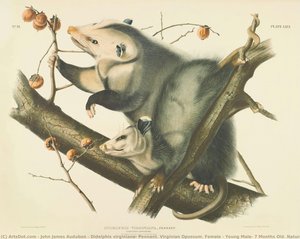
Didelphis virginiana, Pennant. Virginian Opossum. Female & Young Male, 7 Months Old. Natural Size. (1845) του Τζον Τζέιμς Οντιμπόν

Didelphis virginiana, Pennant. Virginian Opossum. Female & Young Male, 7 Months Old. Natural Size.

1845 · Acrylic On Canvas · Amon Carter Museum of American Art, Fort Worth

John James Audubon’s “Didelphis virginiana, Pennant. Virginian Opossum. Female & Young Male, 7 Months Old. Natural Size” is more than just a depiction of two animals; it's a carefully constructed tableau of the American wilderness captured with unparalleled detail and imbued with a profound sense of observation. Painted in 1845, this lithograph with watercolor highlights the artist’s dedication to portraying his subjects within their natural habitat – a sprawling apple…

8
Osprey and Weakfish (1829) του Τζον Τζέιμς Οντιμπόν

Osprey and Weakfish

1829 · Oil On Canvas · Εθνική Πινακοθήκη Τέχνης, Ουάσινγκτον

“Osprey and Weakfish” is a striking vertical painting by the renowned American naturalist and artist, John James Audubon. This piece exemplifies Audubon’s meticulous observation of wildlife and his dedication to capturing its essence with remarkable realism. The artwork depicts an osprey in mid-flight, powerfully gripping a shimmering weakfish within its talons against a backdrop of a hazy landscape. It is part of Audubon's larger project to document the birds of…

9
American Bison or Buffalo (1845) του Τζον Τζέιμς Οντιμπόν

American Bison or Buffalo

1845 · Lithograph · Amon Carter Museum of American Art, Fort Worth

John James Audubon's "American Bison or Buffalo," plate 56 from his monumental “Birds of America,” is more than just a meticulously rendered illustration; it’s a poignant window into the vanishing grandeur of the American West and a testament to the artist’s unwavering dedication to documenting the natural world. Created in 1845, this lithograph captures a male bison in mid-stride, poised against a subtly textured mountain backdrop – a scene brimming…

10
Canis (Vulpes) fulvus. Desmaret. Var. decussatus. American Cross Fox. 7/8 Natural Size, Male. (1843) του Τζον Τζέιμς Οντιμπόν

Canis (Vulpes) fulvus. Desmaret. Var. decussatus. American Cross Fox. 7/8 Natural Size, Male.

1843 · Acrylic On Canvas · Amon Carter Museum of American Art, Fort Worth

A Moment of Wildness: Audubon’s American Cross Fox John James Audubon's *Canis (Vulpes) fulvus. Desmaret. Var. decussatus. American Cross Fox*, painted in 1843, is more than just a depiction of an animal; it’s a dynamic snapshot of North American wildlife rendered with breathtaking precision and dramatic flair. Measuring 71 x 55 cm, this work captures a male fox – depicted at approximately ¾ natural size – engaged in the act…

Η επιλογή του Τζον Τζέιμς Οντιμπόν συνεχίζεται, από τον 11 έως τον 100

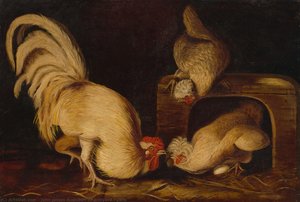
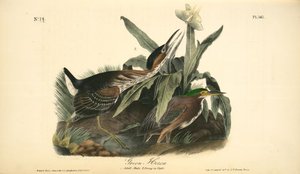
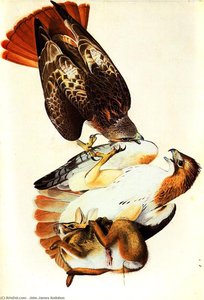
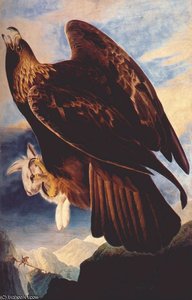
11American Crow. Corvus americanus. Male. Black Walnut. Inglans nigra. Nest of the Ruby-throated Humming Bird (1833) του Τζον Τζέιμς ΟντιμπόνAmerican Crow. Corvus americanus. Male. Black Walnut. Inglans nigra. Nest of the Ruby-throated Humming Bird1833 · Amon Carter Museum of American Art 12Vulgo (Wild Turkey) Meleagris gallapavo (1826) του Τζον Τζέιμς ΟντιμπόνVulgo (Wild Turkey) Meleagris gallapavo1826 · Amon Carter Museum of American Art 13Cervus richardsonii, Aud & Bach. Columbian Black-Tailed Deer. Males. (1847) του Τζον Τζέιμς ΟντιμπόνCervus richardsonii, Aud & Bach. Columbian Black-Tailed Deer. Males.1847 · Amon Carter Museum of American Art 14The Birds of America, Plate #231: του Τζον Τζέιμς ΟντιμπόνThe Birds of America, Plate #231: 151. Pteromys sabrinus, Severn River Flying Squirrel; 2. Pteromys alpinus, Rocky Mountain Squirrel του Τζον Τζέιμς Οντιμπόν1. Pteromys sabrinus, Severn River Flying Squirrel; 2. Pteromys alpinus, Rocky Mountain Squirrel 16Puffin (1838) του Τζον Τζέιμς ΟντιμπόνPuffin1838 17Farmyard Fowls (1827) του Τζον Τζέιμς ΟντιμπόνFarmyard Fowls1827 18Male Black-Throated Oriole του Τζον Τζέιμς ΟντιμπόνMale Black-Throated Oriole 19Lynx rufus, Common American Wild Cat του Τζον Τζέιμς ΟντιμπόνLynx rufus, Common American Wild Cat 20Least Pewee Flycatcher. Male. (White Oak. Quercus Prinus.) του Τζον Τζέιμς ΟντιμπόνLeast Pewee Flycatcher. Male. (White Oak. Quercus Prinus.) 21Bachman's Swamp-Warbler. 1. Male. 2. Female. (Gordonia pubescens.) του Τζον Τζέιμς ΟντιμπόνBachman's Swamp-Warbler. 1. Male. 2. Female. (Gordonia pubescens.) 22Red-shouldered Hawk, Buteo lineatus του Τζον Τζέιμς ΟντιμπόνRed-shouldered Hawk, Buteo lineatusMuseums Victoria 23Wilson's Phalarope. 1. Male. 2. Female του Τζον Τζέιμς ΟντιμπόνWilson's Phalarope. 1. Male. 2. Female 24Common Snow-Bird. 1. Male. 2. Female. του Τζον Τζέιμς ΟντιμπόνCommon Snow-Bird. 1. Male. 2. Female. 25American Woodcock. 1. Male. 2. Female.3. Young in Autumn του Τζον Τζέιμς ΟντιμπόνAmerican Woodcock. 1. Male. 2. Female.3. Young in Autumn 26Sciurus Sayi, Say's Squirrel του Τζον Τζέιμς ΟντιμπόνSciurus Sayi, Say's Squirrel 27Cervus macrotis, Black-tailed Deer. Female. Summer pelage του Τζον Τζέιμς ΟντιμπόνCervus macrotis, Black-tailed Deer. Female. Summer pelage 28Ring-necked Duck. 1. Male. 2. Female του Τζον Τζέιμς ΟντιμπόνRing-necked Duck. 1. Male. 2. Female 29Meles labradoria, Sabine, American Badger. Natural Size (1844) του Τζον Τζέιμς ΟντιμπόνMeles labradoria, Sabine, American Badger. Natural Size1844 · Amon Carter Museum of American Art 30Castor fiber americanus, Linn. American Beaver. 2/3 Natural Size. (1844) του Τζον Τζέιμς ΟντιμπόνCastor fiber americanus, Linn. American Beaver. 2/3 Natural Size.1844 · Amon Carter Museum of American Art 31Violet-Green Swallow του Τζον Τζέιμς ΟντιμπόνViolet-Green Swallow 32great blue heron του Τζον Τζέιμς Οντιμπόνgreat blue heron 33Wood Wren. Male. (Arbutus. Uva-ursi.) του Τζον Τζέιμς ΟντιμπόνWood Wren. Male. (Arbutus. Uva-ursi.) 34Green Heron. 1. Adult Male. 2. Young in Sept του Τζον Τζέιμς ΟντιμπόνGreen Heron. 1. Adult Male. 2. Young in Sept 35Least Bittern. 1. Male. 2. Female. 3. Young του Τζον Τζέιμς ΟντιμπόνLeast Bittern. 1. Male. 2. Female. 3. Young 36Yellow-billed Cuckoo. 1. Male. 2. Female. (Papaw Tree) του Τζον Τζέιμς ΟντιμπόνYellow-billed Cuckoo. 1. Male. 2. Female. (Papaw Tree) 37Henslow's Bunting. Male. (Indian Pink-root or Worm-grass. Spigelia Marilandica. Phlox aristata.) του Τζον Τζέιμς ΟντιμπόνHenslow's Bunting. Male. (Indian Pink-root or Worm-grass. Spigelia Marilandica. Phlox aristata.) 38Yellow-throated Vireo, or Greenlet. Male. (Swamp Snowball. Hydrangea quercifolia.) του Τζον Τζέιμς ΟντιμπόνYellow-throated Vireo, or Greenlet. Male. (Swamp Snowball. Hydrangea quercifolia.) 39Common Mocking Bird. 1, 2. Males, 3. Female. (Florida Jessamine. Gelseminum niditum. Rattlesnake.) του Τζον Τζέιμς ΟντιμπόνCommon Mocking Bird. 1, 2. Males, 3. Female. (Florida Jessamine. Gelseminum niditum. Rattlesnake.) 40Felis pardalis, Ocelot, or Leopard-Cat του Τζον Τζέιμς ΟντιμπόνFelis pardalis, Ocelot, or Leopard-Cat 41american white pelican του Τζον Τζέιμς Οντιμπόνamerican white pelican 42Wilson's Snipe. - Common Snipe. 1. Male. 2 ^ 3. Females του Τζον Τζέιμς ΟντιμπόνWilson's Snipe. - Common Snipe. 1. Male. 2 ^ 3. Females 43Cardinal Grosbeak του Τζον Τζέιμς ΟντιμπόνCardinal Grosbeak 44Vulpes Fulvus, American Red-Fox του Τζον Τζέιμς ΟντιμπόνVulpes Fulvus, American Red-Fox 45Goshawk and Coopers Hawk (1810) του Τζον Τζέιμς ΟντιμπόνGoshawk and Coopers Hawk1810 46Purple Grackle (1818) του Τζον Τζέιμς ΟντιμπόνPurple Grackle1818 · Smithsonian American Art Museum 47Great Egret (Ardea alba) (1821) του Τζον Τζέιμς ΟντιμπόνGreat Egret (Ardea alba)1821 48Whooping Crane late (1821) του Τζον Τζέιμς ΟντιμπόνWhooping Crane late1821 49Ruffed Grouse (1816) του Τζον Τζέιμς ΟντιμπόνRuffed Grouse1816 50Barred Owl about (1821) του Τζον Τζέιμς ΟντιμπόνBarred Owl about1821 51eastern bluebird (1822) του Τζον Τζέιμς Οντιμπόνeastern bluebird1822 52boat - tailed grackle bonnet carres church, january 4 - (1821) του Τζον Τζέιμς Οντιμπόνboat - tailed grackle bonnet carres church, january 4 -1821 53cerulean warbler (1822) του Τζον Τζέιμς Οντιμπόνcerulean warbler1822 54summer tanager bayou sara louisiana august 27 (1821) του Τζον Τζέιμς Οντιμπόνsummer tanager bayou sara louisiana august 271821 55Red Tailed Hawk (painted in Louisiana in and later reworked) (1821) του Τζον Τζέιμς ΟντιμπόνRed Tailed Hawk (painted in Louisiana in and later reworked)1821 56The mainate With The Blue Head (1822) του Τζον Τζέιμς ΟντιμπόνThe mainate With The Blue Head1822 57chuck wills widow natchez, mississippi, may 7 (1822) του Τζον Τζέιμς Οντιμπόνchuck wills widow natchez, mississippi, may 71822 58Great Horned Owl (Bubo virginianus), Study for Havell plate 61 (1821) του Τζον Τζέιμς ΟντιμπόνGreat Horned Owl (Bubo virginianus), Study for Havell plate 611821 59Wild Turkey Cock, Hen, and Chicks (1828) του Τζον Τζέιμς ΟντιμπόνWild Turkey Cock, Hen, and Chicks1828 · Μουσεία Τέχνης του Χάρβαρντ 60Black Cocks (1828) του Τζον Τζέιμς ΟντιμπόνBlack Cocks1828 · Μουσεία Τέχνης του Χάρβαρντ 61A Chaffinch, Bullfinch and Greenfinch on a Branch of Budding Chestnuts (1827) του Τζον Τζέιμς ΟντιμπόνA Chaffinch, Bullfinch and Greenfinch on a Branch of Budding Chestnuts1827 62bob white (virginia partridge) - (1825) του Τζον Τζέιμς Οντιμπόνbob white (virginia partridge) -1825 63House Wren (Troglodytes aedon), Study for Havell plate no. 83 (1829) του Τζον Τζέιμς ΟντιμπόνHouse Wren (Troglodytes aedon), Study for Havell plate no. 831829 64Warbling Flycatcher (1838) του Τζον Τζέιμς ΟντιμπόνWarbling Flycatcher1838 65Long-tailed, or Dusky Grous (1838) του Τζον Τζέιμς ΟντιμπόνLong-tailed, or Dusky Grous1838 66Arctic Tern (1838) του Τζον Τζέιμς ΟντιμπόνArctic Tern1838 67Bonapartian Gull (1838) του Τζον Τζέιμς ΟντιμπόνBonapartian Gull1838 68golden eagle (1834) του Τζον Τζέιμς Οντιμπόνgolden eagle1834 69Snowy Egret (Egretta thula), Study for Havell plate 242 (1832) του Τζον Τζέιμς ΟντιμπόνSnowy Egret (Egretta thula), Study for Havell plate 2421832 70Fork-tailed Flycatcher (Tyrannus savana), Study for Havell plate 168; sketch of a feather (1832) του Τζον Τζέιμς ΟντιμπόνFork-tailed Flycatcher (Tyrannus savana), Study for Havell plate 168; sketch of a feather1832 71Two Ground Squirrels (1841) του Τζον Τζέιμς ΟντιμπόνTwo Ground Squirrels1841 72Wild Turkey (1845) του Τζον Τζέιμς ΟντιμπόνWild Turkey1845 73Franklins Marmot Squirrel (1846) του Τζον Τζέιμς ΟντιμπόνFranklins Marmot Squirrel1846 · Amon Carter Museum of American Art 74Townsend's Rocky Mountain Hare του Τζον Τζέιμς ΟντιμπόνTownsend's Rocky Mountain Hare 75Lepus Townsendii, Townsend's Rocky Mountain Hare. Natural size. Male ^ Female του Τζον Τζέιμς ΟντιμπόνLepus Townsendii, Townsend's Rocky Mountain Hare. Natural size. Male ^ Female 76Pseudostoma Borealis, The Camas Rat. Male, female ^ young. Natural size του Τζον Τζέιμς ΟντιμπόνPseudostoma Borealis, The Camas Rat. Male, female ^ young. Natural size 77Sciurus leporinus, Hare Squirrel. Natural size του Τζον Τζέιμς ΟντιμπόνSciurus leporinus, Hare Squirrel. Natural size 78Puttorius ermninea, White Weasel, Stoat. Natural size. 1. Male, 2. Female του Τζον Τζέιμς ΟντιμπόνPuttorius ermninea, White Weasel, Stoat. Natural size. 1. Male, 2. Female 79Vulpes fulvus, American Black, or Silver Fox του Τζον Τζέιμς ΟντιμπόνVulpes fulvus, American Black, or Silver Fox 80Enhydra marina, Sea Otter. Young male του Τζον Τζέιμς ΟντιμπόνEnhydra marina, Sea Otter. Young male 81Marsh Hare του Τζον Τζέιμς ΟντιμπόνMarsh Hare 82Horned-billed Guillemot. Adult του Τζον Τζέιμς ΟντιμπόνHorned-billed Guillemot. Adult 83Canadian Woodpecker. Male του Τζον Τζέιμς ΟντιμπόνCanadian Woodpecker. Male 84Pipiry Flycatcher του Τζον Τζέιμς ΟντιμπόνPipiry Flycatcher 85Wild Turkey. Male του Τζον Τζέιμς ΟντιμπόνWild Turkey. Male 86Blue-Grey Flycatcher. (Black Walnut. Juglans nigra του Τζον Τζέιμς ΟντιμπόνBlue-Grey Flycatcher. (Black Walnut. Juglans nigra 87Black-throated Guillemot. 1. Adult. 2. Young του Τζον Τζέιμς ΟντιμπόνBlack-throated Guillemot. 1. Adult. 2. Young 88Yellow-bellied Woodpecker. 1. Male. 2. Female του Τζον Τζέιμς ΟντιμπόνYellow-bellied Woodpecker. 1. Male. 2. Female 89White-headed Sea Eagle, or Bald Eagle του Τζον Τζέιμς ΟντιμπόνWhite-headed Sea Eagle, or Bald Eagle 90american flamingo του Τζον Τζέιμς Οντιμπόνamerican flamingo 91Red-eyed Vireo, or Greenlet. Male. (Honey-locust) του Τζον Τζέιμς ΟντιμπόνRed-eyed Vireo, or Greenlet. Male. (Honey-locust) 92Clif Swallow. (Nests) του Τζον Τζέιμς ΟντιμπόνClif Swallow. (Nests) 93Dycoteles torquatus, Collared Peccary του Τζον Τζέιμς ΟντιμπόνDycoteles torquatus, Collared Peccary 94Hyperborean Phalarope. 1. Male. 2. Female. 3. Young in autumn του Τζον Τζέιμς ΟντιμπόνHyperborean Phalarope. 1. Male. 2. Female. 3. Young in autumn 95Blue yellow-backed Wood-Warbler. 1. Male. 2. Female. (Louisiana Flag.) του Τζον Τζέιμς ΟντιμπόνBlue yellow-backed Wood-Warbler. 1. Male. 2. Female. (Louisiana Flag.) 96Red-necked Grebe. 1. Adult Male Spring Plumage. 2. Young Winter Plumage του Τζον Τζέιμς ΟντιμπόνRed-necked Grebe. 1. Adult Male Spring Plumage. 2. Young Winter Plumage 97Carolina Parrot του Τζον Τζέιμς ΟντιμπόνCarolina Parrot 98Virginian Opossum from The Viviparous Quadrupeds του Τζον Τζέιμς ΟντιμπόνVirginian Opossum from The Viviparous Quadrupeds 99Spermophilus Parryi, Parry's Marmot Squirrel. Natural size του Τζον Τζέιμς ΟντιμπόνSpermophilus Parryi, Parry's Marmot Squirrel. Natural size 100American Redstart, 1. Male, 2. Female. (Virginian Hornbeam or Iron-wood Tree.) του Τζον Τζέιμς ΟντιμπόνAmerican Redstart, 1. Male, 2. Female. (Virginian Hornbeam or Iron-wood Tree.)

Τα διάσημα έργα του Τζον Τζέιμς Οντιμπόν, ανά περίοδο

Τα θέματα που κίνησαν το ενδιαφέρον του Τζον Τζέιμς Οντιμπόν

Τα τέσσερα θέματα που εμφανίζονται πιο συχνά σε αυτά τα πρωτότυπα έργα, το καθένα με το εξαιρετικό του παράδειγμα.

Τα μουσεία που διατηρούν τα πρωτότυπα έργα του Τζον Τζέιμς Οντιμπόν

Τα 7 μουσεία που φιλοξενούν το μεγαλύτερο μέρος των έργων σε αυτήν τη σελίδα.

Μουσείο Πόλη Έργα του Τζον Τζέιμς Οντιμπόν Πάτρια από αυτή τη λίστα
Amon Carter Museum of American Art, Fort WorthAmon Carter Museum of American Art Fort Worth 10 Canis lupus, Linn. (Var. Ater.) Black American Wolf. Male. 1/3 Natural Size., Didelphis virginiana, Pennant. Virginian Opossum. Female & Young Male, 7 Months Old. Natural Size., American Bison or Buffalo
Smithsonian American Art Museum, Ουάσινγκτον, D.C.Smithsonian American Art Museum Ουάσινγκτον, D.C. 2 Washington Sea Eagle, Purple Grackle
Μουσεία Τέχνης του Χάρβαρντ, ΚέιμπριτζΜουσεία Τέχνης του Χάρβαρντ Κέιμπριτζ 2 Wild Turkey Cock, Hen, and Chicks, Black Cocks
Crystal Bridges Museum of American Art, ΜπέντονβιλCrystal Bridges Museum of American Art Μπέντονβιλ 1 Wild Turkey Cock, Hen and Young
National Audubon Society, Νέα ΥόρκηNational Audubon Society Νέα Υόρκη 1 American Stork
Εθνική Πινακοθήκη Τέχνης, ΟυάσινγκτονΕθνική Πινακοθήκη Τέχνης Ουάσινγκτον 1 Osprey and Weakfish
Museums Victoria, ΜελβόρνηMuseums Victoria Μελβόρνη 1 Red-shouldered Hawk, Buteo lineatus

Ο Τζον Τζέιμς Οντιμπόν δεκαετία προς δεκαετία: το πρωτότυπο που ορίζει κάθε μία

Έργα ανά δεκαετία

Επιλέξτε μια δεκαετία για να δείτε το πρωτότυπο έργο που την χαρακτηρίζει.

Ερωτήσεις συλλεκτών για τα έργα του Τζον Τζέιμς Οντιμπόν

Για ποιο έργο είναι πιο γνωστός ο Τζον Τζέιμς Οντιμπόν;Αποκαλύψτε την απάντηση

Wild Turkey Cock, Hen and Young (1826), Crystal Bridges Museum of American Art, Μπέντονβιλ. Στη συνέχεια ακολουθούν το Ivory-billed Woodpecker (Campephilus principalis), Study for Havell plate 66 (1826) και το Washington Sea Eagle (1836).

Πόσο ηλικία είχε ο/η Τζον Τζέιμς Οντιμπόν όταν δημιουργήθηκε το Wild Turkey Cock, Hen and Young;Αποκαλύψτε την απάντηση

41 ετών: το έργο Wild Turkey Cock, Hen and Young είναι του 1826, και ο/η Τζον Τζέιμς Οντιμπόν γεννήθηκε το 1785.

Ποια είναι τα δέκα πιο διάσημα έργα του Τζον Τζέιμς Οντιμπόν;Αποκαλύψτε την απάντηση

Wild Turkey Cock, Hen and Young, Ivory-billed Woodpecker (Campephilus principalis), Study for Havell plate 66, Washington Sea Eagle, American Stork, American Flamingo (Phoenicopterus ruber), Study for Havell plate 431, Canis lupus, Linn. (Var. Ater.) Black American Wolf. Male. 1/3 Natural Size., Didelphis virginiana, Pennant. Virginian Opossum. Female & Young Male, 7 Months Old. Natural Size., Osprey and Weakfish, American Bison or Buffalo και Canis (Vulpes) fulvus. Desmaret. Var. decussatus. American Cross Fox. 7/8 Natural Size, Male.. Η κατάταξη παραπάνω αναγράφει το έτος και το μουσείο για το κάθε έργο.

Πόσα έργα δημιούργησε ο/η Τζον Τζέιμς Οντιμπόν;Αποκαλύψτε την απάντηση

Ο κατάλογός μας περιλαμβάνει 818 έργα του Τζον Τζέιμς Οντιμπόν, με ημερομηνίες από 1810 έως 1847.

Σε ποια μουσεία εκτίθενται τα αριστούργημα του Τζον Τζέιμς Οντιμπόν;Αποκαλύψτε την απάντηση

Κυρίως σε Amon Carter Museum of American Art (Fort Worth), Smithsonian American Art Museum (Ουάσινγκτον, D.C.) και Μουσεία Τέχνης του Χάρβαρντ (Κέιμπριτζ). Ο πίνακας μουσείου παραπάνω τους περιλαμβάνει όλους.

Σε ποιες χρονιές δημιούργησε ο/η Τζον Τζέιμς Οντιμπόν τα πιο διάσημα έργα του/της;Αποκαλύψτε την απάντηση

Κατά την περίοδο 1820s: 22 από τα 100 έργα σε αυτήν τη σελίδα δημιουργήθηκαν τότε, με Wild Turkey Cock, Hen and Young από αυτά να είναι μοναδικά.

Ποια είναι τα πρώτα και τα τελευταία διάσημα πρωτότυπα του Τζον Τζέιμς Οντιμπόν;Αποκαλύψτε την απάντηση

Σε αυτήν τη σελίδα, το παλαιότερο είναι Goshawk and Coopers Hawk (1810) και το νεότερο Cervus richardsonii, Aud & Bach. Columbian Black-Tailed Deer. Males. (1847).

Ποια θέματα επέλεξε πιο συχνά ο Τζον Τζέιμς Οντιμπόν;Αποκαλύψτε την απάντηση

Birds (32), Bird (23) και Audubon (17), σε συνολικά 100 έργα σε αυτήν τη σελίδα.

Ποια τεχνική χρησιμοποίησε περισσότερο ο Τζον Τζέιμς Οντιμπόν;Αποκαλύψτε την απάντηση

Watercolor, για 41 από τα 100 έργα σε αυτήν τη σελίδα.

Ποια έργα του Τζον Τζέιμς Οντιμπόν εκτίθενται στο Amon Carter Museum of American Art;Αποκαλύψτε την απάντηση

Canis lupus, Linn. (Var. Ater.) Black American Wolf. Male. 1/3 Natural Size., Didelphis virginiana, Pennant. Virginian Opossum. Female & Young Male, 7 Months Old. Natural Size. και American Bison or Buffalo: το Amon Carter Museum of American Art, Fort Worth διαθέτει 10 από τα έργα σε αυτήν τη σελίδα.

Τζον Τζέιμς Οντιμπόν: ζωή και έργο

Early Life, Family and Training

The origins of John James Audubon are rooted in the volatile landscape of Saint-Domingue, modern-day Haiti. Born Jean-Jacques Rabin on April 26, 1785, his arrival was marked by the complex social hierarchies of the Caribbean. He was the son of Lieutenant Jean Audubon, a French naval officer, and Jeanne Rabine, a twenty-seven-year-old chambermaid from Les Touches, Brittany. This lineage, caught between the stability of military service and the precariousness of colonial life, shaped a childhood defined by movement and shifting identities. As unrest gripped the island, the young boy was sent to France for safety and education, a transition that would eventually lead him to the American frontier.

His formal schooling provided little for his restless temperament. Instead, Audubon became a self-taught ornithologist and artist, developing his skills through direct, often difficult, observation of the natural world. He did not rely on the academic traditions of Europe but rather on a relentless, hands-on engagement with the creatures he sought to document. This autodidactic path required a resilience that would serve him well as he moved from the structured environments of his youth toward the untamed wilderness of the Americas.

The Pursuit of Avian Perfection

Before his name became synonymous with the birds of the Americas, Audubon’s life was a series of restless, often unsuccessful, diversions. He was a man of many trades, attempting to find his footing as a shopkeeper, a taxidermist, and even a man of commerce through mercantile pursuits and mining. In Kentucky, he opened a chain of stores, but the venture eventually failed, leaving him to seek a more singular purpose. This period of trial and error was not a detour so much as a preparation for the immense task that lay ahead.

His true vocation required a nomadic existence, a life spent moving back and forth across the vast North American landscape. Between 1827 and 1838, he undertook the monumental task of creating The Birds of America. This was no mere collection of sketches; it was a rigorous attempt to document nearly 500 bird species in life-size detail. He lived among the wilderness, traveling as far as Labrador in 1833, driven by a need to observe these creatures in their natural settings rather than through the lens of a preserved specimen.

This commitment to accuracy demanded a relentless presence in the field. He did not merely observe from a distance; he immersed himself in the habitats of his subjects to capture the essence of their movement and form. The sheer scale of his ambition required him to endure the hardships of the frontier, trading the stability of a settled life for the uncertainty of the wild, all to ensure that his visual record was as precise as the nature it sought to represent.

Technique and Style

Audubon’s method was born of a necessity to capture life before it faded. To achieve the animated poses that defined his work, he often used wires to prop up specimens, holding them in mid-flight or mid-action. His process began with a rapid outline sketch to ensure the proportions were correct. Once the essential form was established, he transferred the outline to permanent drawing paper. It was here that his meticulous nature took hold, as he added the minute structures of feathers with painstaking precision. While he was a master of watercolor on large sheets of paper, his studies were diverse, ranging from charcoal portraits to oil paintings.

The transition from his original vision to the printed page required a sophisticated marriage of different disciplines. His work relied on engraving combined with aquatint, a process that allowed for soft gradations of light and shadow. To add depth and richness to these prints, he often heightened the images with drypoint and etchings. This technical complexity ensured that the textures of plumage and the subtle musculature of the animals were preserved through the printing process. His ability to layer these mediums allowed him to move beyond simple illustration into a realm of detailed biological recording.

Patrons, Workshop and Commissions

The realization of Audubon’s grandest ambitions required a synergy of artistic vision and technical precision. While he provided the initial watercolors, the transition from delicate brushstrokes to enduring prints depended upon the expertise of engravers Robert Havell Sr. and Robert Havell Jr. The latter proved essential, acting as a conduit who translated Audubon’s specific visual intentions into finished works. The Havell family brought a diverse array of creative talents to their craft, including musicians, educators, and writers, providing a sophisticated environment for such a massive undertaking.

The scale of his projects necessitated a structured workshop environment. To manage the immense task of documenting North America's fauna, Audubon relied on several assistants who helped execute his original studies. This collaborative effort was particularly vital during the production of The Birds of America, where the sheer volume of detail required more than a single hand. His process involved a rapid outline sketch to ensure correct proportions, followed by the transfer of these outlines to permanent drawing paper. In some instances, elements from earlier drawings were cut and pasted onto newer compositions to achieve the desired accuracy before the final engraving took place.

Key Works

The most significant achievement of his career was the production of The Birds of America, a massive undertaking published between 1827 and 1838. This collection consisted of 435 engraved plates, many of which were presented in a large-format, double-elephant folio color-plate book. His ambition was to create a complete pictorial record of the bird species of North America, a goal he pursued through years of nomadic observation. The scale of the project was such that one set of these prints was sold to the Legislature of Louisiana through Governor Andre Bienvenu Roman.

His interests eventually expanded beyond the avian world to include the broader fauna of the continent. Between 1845 and 1849, he produced The Viviparous Quadrupeds of North America, a work that shifted his focus toward mammals. His studies included detailed depictions of the American bison and various species of foxes. To accompany his visual records, he also authored Ornithological Biography, which was published in volumes between 1831 and 1839.

  • The Birds of America (1827–1838)
  • Ornithological Biography (1831–1839)
  • The Viviparous Quadrupeds of North America (1845–1849)

Circle, Rivals and Pupils

The artist’s life was deeply intertwined with his family, a circle that provided both continuity and the labor necessary to sustain his ambitious projects. His sons, Victor Gifford Audubon and John Woodhouse Audubon, were born in 1809 and 1812, respectively. While Victor’s life was cut short in 1860, John Woodhouse became a vital collaborator. He did more than merely assist; he oversaw the production of the Second Edition of The Birds of America, ensuring the family’s ornithological vision remained intact. This partnership bridged the gap between the original studies and the later, refined editions that expanded the known record of North American avian life.

The domestic sphere was marked by both presence and profound loss. His daughters, Lucy and Rose, lived only briefly, passing away in 1817 and 1820. These small, quiet tragedies existed alongside the immense, public scale of his scientific pursuits. The work required a specialized network of skilled hands to translate delicate watercolors into the final printed volumes. This included the essential technical partnership with the engraver Robert Havell Jr., whose mastery of the aquatint technique allowed for the subtle tonal gradations required to render the texture of feathers and the depth of natural landscapes.

Legacy and Influence

Audubon’s impact reaches far beyond the pages of his folio. By pioneering a field observation-based approach to ornithology, he shifted the focus of natural history from the study of static, preserved specimens to the observation of living creatures within their natural habitats. This method provided a detailed visual record of North American birdlife at a critical time, capturing species before the rapid environmental shifts of the 19th century could erase them. His commitment to documenting behavior and environment alongside anatomy changed how scientists and naturalists perceived the avian world.

The influence of his work persists through the institutions and movements his life helped inspire. The National Audubon Society was founded in his honor, continuing a mission of conservation that his meticulous documentation helped to foster. His observations remain a resource for those studying the natural history of the continent. Today, his depictions continue to inform the work of artists, scientists, and conservationists who seek to understand the delicate balance of the wilderness.

Where to See the Works Today

The physical remnants of Audubon's obsession are scattered across several continents, held in collections that reflect the global reach of his scientific and artistic pursuits. In the United States, the Amon Carter Museum of American Art in Fort Worth maintains a significant presence, housing ten of his works. For those seeking the institutional weight of his namesake organization, the National Audubon Society in New York City also holds pieces within its collection.

His influence extends far beyond North American borders. Museums Victoria in Melbourne preserves his work in Australia, while the Natural History Museum in London maintains a portrait of the man himself, painted by Lance Calkin. These holdings offer a glimpse into the life of a man who spent his years moving through the wilderness to document the life of the continent.