Πορτρέτο του Francesco Maffei

Τα 15 πιο διάσημα έργα του Francesco Maffei, κάθε ένα μοναδικό

Ενημερωμένο Νοέμβριος 2026 · κατάταξη βάσει του σκορ δημοφιλίας μας (αναζητήσεις, επισκέψεις και παραγγελίες για κάθε έργο) · 15 έργα του Francesco Maffei στον κατάλογό μας

Με σύντομη περιγραφή

Το έργο Rinaldo's Conquest of the Enchanted Forest (1650) είναι το ποίτευμα του Francesco Maffei που τραβάει τα περισσότερα βλέμματα· το πρωτότυπο ανήκει στο Μουσείο J. Paul Getty, Λος Άντζελες. Μετά από αυτό, το βλέμμα στρέφεται στο The Archangel Michael overthrowing Lucifer (1600) και στο Rinaldo and the Mirror-Shield (1650). Ανάμεσα στα 15 έργα του Francesco Maffei στον κατάλογό μας, αυτά τα 15 είναι τα πιο διάσημα, το καθένα ένα μοναδικό πρωτότυπο που παρουσιάζεται με την χρονολογία του, το μουσείο του και τον λόγο για τον οποίο παραμένει αιώνιο.

1605 – 1660, Vicenza Baroque Περισσότερα έργα: Μουσείο J. Paul Getty

Τα 10 κορυφαία έργα του Francesco Maffei, μέσα από το βλέμμα της γκαλερί

1
Rinaldo's Conquest of the Enchanted Forest (1650) του Francesco Maffei

Rinaldo's Conquest of the Enchanted Forest

1650 · Oil On Copper · Μουσείο J. Paul Getty, Λος Άντζελες

Rinaldo's Conquest of the Enchanted Forest is an oil on copper painting by the Italian artist Francesco Maffei. Created about 1650–1655, this work draws its narrative from the 1581 epic poem Gerusalemme liberata. The scene captures a moment of high tension as the medieval Christian knight Rinaldo enters a dense, enchanted forest. He finds himself surrounded by hundreds of tree nymphs, a supernatural presence that has previously hindered his men…

3
Rinaldo and the Mirror-Shield (1650) του Francesco Maffei

Rinaldo and the Mirror-Shield

1650 · Oil On Copper · Μουσείο J. Paul Getty, Λος Άντζελες

The oil on copper painting depicts three figures in a tightly cropped, dynamic arrangement. In the center, a muscular man wearing a feathered helmet turns his head toward the right. His expression is one of sudden realization or shock. He holds a reflective, mirror-like shield that captures a distorted glimpse of a face. To his left, a bearded man clad in classical armor watches the scene with an intense gaze.…

4
The Parable of the Workers in the Vineyard (1645) του Francesco Maffei

The Parable of the Workers in the Vineyard

1645 · Oil On Canvas · Castelvecchio Museum, Βερόνα

In the profound depths of Francesco Maffei’s 1645 masterpiece, The Parable of the Workers in the Vineyard, viewers are transported into a world where the divine meets the earthly through an act of profound generosity. This Baroque-style oil painting serves as more than just a depiction of a biblical narrative; it is a theatrical stage of human emotion and spiritual grace. At its heart, the composition centers on a moment…

5
Perseus Beheading Medusa (1650) του Francesco Maffei

Perseus Beheading Medusa

1650 · Oil On Canvas · Γκαλερί της Ακαδημίας Βενετίας, Βενετία

To stand before Perseus Beheading Medusa by Francesco Maffei is to be plunged headfirst into the raw, visceral energy of classical mythology. This monumental canvas does not merely depict a story; it captures a precise, breathtaking moment of divine violence and necessary heroism. The air itself seems thick with drama—the clash of steel against serpentine horror, the weight of fate settling upon the figures surrounding the central act. Maffei masterfully…

6
Sight (1657) του Francesco Maffei

Sight

1657 · Oil

In this 1657 composition, we encounter a figure that embodies the very essence of sight. The subject is presented from the waist up, a presence that commands the space through a deliberate, almost theatrical gesture. A single, open eye is positioned upon the forehead, a classical symbol that immediately identifies the figure as an allegory of the sense of vision. Adorned with a laurel wreath that suggests a divine or…

7
Madonna and Child with Sts Dominic and Catherine (1650) του Francesco Maffei

Madonna and Child with Sts Dominic and Catherine

1650 · Oil On Canvas

In this 1650 oil on canvas, the Virgin Mary occupies the center of a complex religious arrangement, cradling the Christ child upon her lap. She is flanked by figures of spiritual significance, including Saint Dominic and Saint Catherine, creating a dense, hierarchical composition. Above the central figures, an angelic presence emerges, adding a celestial dimension to the earthly assembly. The arrangement of bodies and the interplay of gazes suggest a…

8
Perseus Liberating Andromeda (1657) του Francesco Maffei

Perseus Liberating Andromeda

1657 · Oil

In this 1657 work, we find ourselves in the midst of a violent, decisive moment from Greek mythology. Perseus has arrived to interrupt a sacrifice, and the composition is charged with a sudden, kinetic energy. He is depicted in a dynamic stance, a figure of action holding a sword in one hand and a severed head in the other. Above the central struggle, a bird takes flight, its presence adding…

9
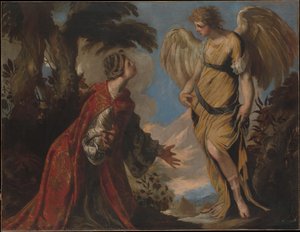
Hagar and the Angel (1657) του Francesco Maffei

Hagar and the Angel

1657 · Oil On Canvas · Μετροπολιτικό Μουσείο Τέχνης, Νέα Υόρκη

In the sweeping expanse of Francesco Maffei’s 1657 masterpiece, “Hagar and the Angel,” viewers are transported to the desolate, sun-scorched wilderness of Beersheba. This monumental canvas serves as a profound testament to the enduring spirit of Venetian Mannerism, capturing a moment of raw human vulnerability met by celestial intervention. The scene depicts Hagar, the Egyptian servant of Abraham, caught in a moment of desperate prayer as she seeks sustenance for…

Τα διάσημα έργα του Francesco Maffei, από το 11 έως το 15

Τα θέματα που κίνησαν το ενδιαφέρον του Francesco Maffei

Τα τέσσερα θέματα που εμφανίζονται πιο συχνά σε αυτά τα πρωτότυπα έργα, το καθένα με το εξαιρετικό του παράδειγμα.

Τα μουσεία που διατηρούν τα πρωτότυπα έργα του Francesco Maffei

Τα 6 μουσεία που φιλοξενούν το μεγαλύτερο μέρος των έργων σε αυτήν τη σελίδα.

Μουσείο Πόλη Έργα του Francesco Maffei Πάτρια από αυτή τη λίστα
Μουσείο J. Paul Getty, Λος ΆντζελεςΜουσείο J. Paul Getty Λος Άντζελες 2 Rinaldo's Conquest of the Enchanted Forest, Rinaldo and the Mirror-Shield
Γκαλερί της Ακαδημίας Βενετίας, ΒενετίαΓκαλερί της Ακαδημίας Βενετίας Βενετία 2 Perseus Beheading Medusa, Μυθολογική σκηνή
Ca' Rezzonico – Μουσείο του 18ου αιώνα στη Βενετία, ΒενετίαCa' Rezzonico – Μουσείο του 18ου αιώνα στη Βενετία Βενετία 2 Adoration of the shepherds, Jacob's dream
Μουσείο Θυσσεν-Βορνημισάζα, ΜαδρίτηΜουσείο Θυσσεν-Βορνημισάζα Μαδρίτη 1 The Archangel Michael overthrowing Lucifer
Castelvecchio Museum, ΒερόναCastelvecchio Museum Βερόνα 1 The Parable of the Workers in the Vineyard
Μετροπολιτικό Μουσείο Τέχνης, Νέα ΥόρκηΜετροπολιτικό Μουσείο Τέχνης Νέα Υόρκη 1 Hagar and the Angel

Ο Francesco Maffei μέσα από τα χρόνια: τα μοναδικά πρωτότυπα κάθε έργου

13 χρόνια χωρίζουν τα πρώτα και τελευταία πρωτότυπα έργα του Francesco Maffei που εμφανίζονται εδώ, το 1645 και το 1657: κάθε έτος έχει τη θέση του παρακάτω.

Έργα ανά έτος

Επιλέξτε μια χρονιά για να δείτε τα πρωτότυπα έργα της.

Οι πίνακες του Francesco Maffei: ερωτήσεις για την γκαλερί

Ποιο είναι το πιο διάσημο έργο του Francesco Maffei;Αποκαλύψτε την απάντηση

Rinaldo's Conquest of the Enchanted Forest (1650), Μουσείο J. Paul Getty, Λος Άντζελες. Στη συνέχεια ακολουθούν το The Archangel Michael overthrowing Lucifer (1600) και το Rinaldo and the Mirror-Shield (1650).

Σε τι ηλικία δημιούργησε ο/η Francesco Maffei το έργο Rinaldo's Conquest of the Enchanted Forest;Αποκαλύψτε την απάντηση

45 ετών: το έργο Rinaldo's Conquest of the Enchanted Forest είναι του 1650, και ο/η Francesco Maffei γεννήθηκε το 1605.

Ποια είναι τα δέκα πιο διάσημα έργα του Francesco Maffei;Αποκαλύψτε την απάντηση

Rinaldo's Conquest of the Enchanted Forest, The Archangel Michael overthrowing Lucifer, Rinaldo and the Mirror-Shield, The Parable of the Workers in the Vineyard, Perseus Beheading Medusa, Sight, Madonna and Child with Sts Dominic and Catherine, Perseus Liberating Andromeda, Hagar and the Angel και Adoration of the shepherds. Η κατάταξη παραπάνω αναγράφει το έτος και το μουσείο για το κάθε έργο.

Πόσα έργα του Francesco Maffei είναι γνωστά;Αποκαλύψτε την απάντηση

Ο κατάλογός μας περιλαμβάνει 15 έργα του Francesco Maffei, με ημερομηνίες από 1645 έως 1657.

Πού μπορούν να θαυμαστούν τα πιο διάσημα πρωτότυπα έργα του Francesco Maffei;Αποκαλύψτε την απάντηση

Κυρίως σε Μουσείο J. Paul Getty (Λος Άντζελες), Γκαλερί της Ακαδημίας Βενετίας (Βενετία) και Ca' Rezzonico – Μουσείο του 18ου αιώνα στη Βενετία (Βενετία). Ο πίνακας μουσείου παραπάνω τους περιλαμβάνει όλους.

Κατά ποια περίοδο δημιούργησε ο/η Francesco Maffei τα πιο γνωστά του/της έργα;Αποκαλύψτε την απάντηση

Κατά την περίοδο 1650: 5 από τα 15 έργα σε αυτήν τη σελίδα δημιουργήθηκαν τότε, με Rinaldo's Conquest of the Enchanted Forest από αυτά να είναι μοναδικά.

Ποιο διάσημο έργο του Francesco Maffei είναι το παλαιότερο και ποιο το νεότερο;Αποκαλύψτε την απάντηση

Σε αυτήν τη σελίδα, το παλαιότερο είναι The Parable of the Workers in the Vineyard (1645) και το νεότερο Sight (1657).

Ποια θέματα προτίμησε ο/η Francesco Maffei;Αποκαλύψτε την απάντηση

Angel (3), Man (3) και Woman (3), σε συνολικά 15 έργα σε αυτήν τη σελίδα.

Με ποια υλικά χρησιμοποίησε περισσότερο ο Francesco Maffei;Αποκαλύψτε την απάντηση

Oil On Canvas, για 4 από τα 15 έργα σε αυτήν τη σελίδα.

Ποιο καλλιτεχνικό κίνημα ανήκει το έργο του Francesco Maffei;Αποκαλύψτε την απάντηση

Baroque, όπως προκύπτει από τα πρωτότυπα σε αυτήν τη σελίδα.

Ποια πρωτότυπα έργα του Francesco Maffei μπορώ να δω στο Μουσείο J. Paul Getty;Αποκαλύψτε την απάντηση

Rinaldo's Conquest of the Enchanted Forest και Rinaldo and the Mirror-Shield: το Μουσείο J. Paul Getty, Λος Άντζελες διαθέτει 2 από τα έργα σε αυτήν τη σελίδα.

Francesco Maffei: ένα πορτρέτο του καλλιτέχνη

Johannes Stradanus: A Florentine Master of the Sixteenth Century

Born in Bruges around 1523 and passing away in Florence in 1605, Johannes Stradanus – also known as Jan van der Straet or Giovanni Stradano – stands as a pivotal figure bridging the artistic currents of the Northern Renaissance with the burgeoning dynamism of Italian Mannerism. His life was one of constant movement, a testament to his ambition and intellectual curiosity, ultimately establishing him as a remarkably versatile artist active across Flanders, Italy, and beyond. Stradanus wasn’t merely a painter; he was a designer, printmaker, tapestry weaver, and even a decorator for the Medici court – a true polymath whose influence resonated throughout Europe.

Stradanus's early training occurred within the workshop of his father, a Flemish painter, followed by studies with Pieter Aertsen in Antwerp. This exposure to the established artistic traditions of Flanders instilled in him a solid foundation in composition and technique. However, it was his relocation to Florence that truly ignited his creative spirit and propelled him towards a distinctly Mannerist style. The vibrant atmosphere of the Florentine art scene, coupled with his encounters with leading artists like Rosso Fiorentino and Pontormo, profoundly shaped his artistic vision. He embraced the Italian penchant for elongated figures, complex spatial arrangements, and an emphasis on emotional expression – characteristics that distinguished him from the more restrained Northern Renaissance aesthetic.

A Court Artist and Designer of Grandeur

Stradanus quickly established himself as a sought-after artist within the Florentine court. His talent was recognized by the Medici family, who commissioned him for numerous projects, including elaborate altarpieces for prominent churches like Santa Felicita and San Lorenzo. These monumental works showcased his mastery of fresco painting, employing intricate designs and dramatic narratives to convey religious themes. Beyond painting, Stradanus’s skills extended to tapestry design – a highly valued profession at the time – creating opulent fabrics adorned with mythological scenes and allegorical representations for the Medici palace. His ability to seamlessly blend these diverse artistic disciplines cemented his position as a leading figure in Florentine courtly culture.

His influence wasn't limited to Florence; Stradanus traveled extensively, working on commissions throughout Italy, including Rome and Naples. He became involved with the Accademia e Compagnia delle Arti del Disegno, one of the earliest artistic academies established in Florence, reflecting his commitment to professionalizing art practice. He also played a crucial role in the development of printmaking, collaborating with engravers and publishers to disseminate his designs across Europe. His innovative approach to combining engraving and etching on a single plate became increasingly popular, contributing significantly to the spread of Mannerist imagery.

Style and Technique: A Synthesis of Influences

Stradanus’s artistic style is characterized by a sophisticated synthesis of Northern and Italian influences. He retained elements of Flemish realism – particularly in his rendering of figures and details – while embracing the dynamism, elegance, and psychological depth associated with Mannerism. His compositions are often complex and layered, featuring elongated figures, dramatic gestures, and intricate decorative patterns. He skillfully employed color to create a sense of atmosphere and emotional intensity, utilizing subtle gradations and contrasting hues to heighten visual impact.

His printmaking was equally innovative. Stradanus’s engravings were renowned for their precision, detail, and expressive quality. He demonstrated a remarkable ability to capture the nuances of human emotion and movement in his prints, often drawing inspiration from classical mythology and religious subjects. He wasn't simply reproducing existing images; he was actively shaping artistic trends through his designs.

Legacy and Historical Significance

Johannes Stradanus’s legacy extends far beyond his individual works. He served as a crucial bridge between the Northern and Southern Renaissance, facilitating the exchange of ideas and techniques across Europe. His versatility as an artist – encompassing painting, tapestry design, printmaking, and decorative arts – exemplifies the interconnectedness of artistic practices during the 16th century. Stradanus’s contributions to the development of Mannerism and printmaking are particularly noteworthy, shaping the course of European art history. He remains a testament to the dynamism and intellectual curiosity that defined the era, leaving behind a rich body of work that continues to captivate viewers today.