
1


Ενημερωμένο Νοέμβριος 2026 · κατάταξη βάσει του σκορ δημοφιλίας μας (αναζητήσεις, επισκέψεις και παραγγελίες για κάθε έργο) · 16 έργα του Esther Tyson στον κατάλογό μας
Με σύντομη περιγραφή
Από όλα τα πρωτότυπα έργα που άφησε ο Esther Tyson, το πιο διάσημο είναι το Tracks, Signs, Glimpse, Wolf (polyptych, panel 8 of 8) (2003), το οποίο βρίσκεται στη συλλογή του Nature, Gloucester. Ακολουθούν στενά η Tracks, Signs, Glimpse, Wolf (polyptych, panel 7 of 8) (2003) και η Tracks, Signs, Glimpse, Wolf (polyptych, panel 2 of 8) (2003). Ο κατάλογός μας περιλαμβάνει 16 έργα του Esther Tyson· η γκαλερί έχει διατηρήσει τα 16 κομμάτια που θαυμάζει ο κόσμος, το καθένα με την ημερομηνία, το μουσείο και την ιστορία του.


 Bear Tracks (polyptych, panel 8 of 8)2006 · Nature
12
 Bear Tracks (polyptych, panel 2 of 8)2006 · Nature
13
 Bear Tracks (polyptych, panel 3 of 8)2006 · Nature
14
 Bear Tracks (polyptych, panel 1 of 8)2006 · Nature
15
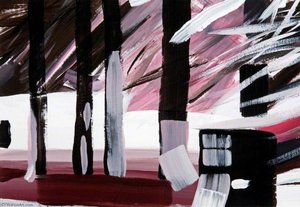 Bear Tracks (polyptych, panel 6 of 8)2006 · Nature
16Bear Tracks (polyptych, panel 7 of 8)2006 · Nature
Τα τέσσερα θέματα που εμφανίζονται πιο συχνά σε αυτά τα πρωτότυπα έργα, το καθένα με το εξαιρετικό του παράδειγμα.
Το μουσείο με τη μεγαλύτερη συγκέντρωση έργων σε αυτήν τη σελίδα.
| Μουσείο | Πόλη | Έργα του Esther Tyson | Πάτρια από αυτή τη λίστα |
|---|---|---|---|
 Nature |
Gloucester | 16 | Tracks, Signs, Glimpse, Wolf (polyptych, panel 8 of 8), Tracks, Signs, Glimpse, Wolf (polyptych, panel 7 of 8), Tracks, Signs, Glimpse, Wolf (polyptych, panel 2 of 8) |
Τα έργα του Esther Tyson σε αυτή την επιλογή καλύπτουν μόλις 4 χρόνια, από το 2003 έως το 2006: μια σύντομη καριέρα, παρουσιαζόμενη εδώ έτος προς έτος.
Επιλέξτε μια χρονιά για να δείτε τα πρωτότυπα έργα της.
Περισσότερα από 2003
 #2 Tracks, Signs, Glimpse, Wolf (polyptych, panel 7 of 8)
 #3 Tracks, Signs, Glimpse, Wolf (polyptych, panel 2 of 8)
 #4 Tracks, Signs, Glimpse, Wolf (polyptych, panel 1 of 8)
 #5 Tracks, Signs, Glimpse, Wolf (polyptych, panel 3 of 8)
 #6 Tracks, Signs, Glimpse, Wolf (polyptych, panel 6 of 8)
 #7 Tracks, Signs, Glimpse, Wolf (polyptych, panel 4 of 8)
 #8 Tracks, Signs, Glimpse, Wolf (polyptych, panel 5 of 8)
Tracks, Signs, Glimpse, Wolf (polyptych, panel 8 of 8) (2003), Nature, Gloucester. Στη συνέχεια ακολουθούν το Tracks, Signs, Glimpse, Wolf (polyptych, panel 7 of 8) (2003) και το Tracks, Signs, Glimpse, Wolf (polyptych, panel 2 of 8) (2003).
30 ετών: το έργο Tracks, Signs, Glimpse, Wolf (polyptych, panel 8 of 8) είναι του 2003, και ο/η Esther Tyson γεννήθηκε το 1973.
Tracks, Signs, Glimpse, Wolf (polyptych, panel 8 of 8), Tracks, Signs, Glimpse, Wolf (polyptych, panel 7 of 8), Tracks, Signs, Glimpse, Wolf (polyptych, panel 2 of 8), Tracks, Signs, Glimpse, Wolf (polyptych, panel 1 of 8), Tracks, Signs, Glimpse, Wolf (polyptych, panel 3 of 8), Tracks, Signs, Glimpse, Wolf (polyptych, panel 6 of 8), Tracks, Signs, Glimpse, Wolf (polyptych, panel 4 of 8), Tracks, Signs, Glimpse, Wolf (polyptych, panel 5 of 8), Bear Tracks (polyptych, panel 4 of 8) και Bear Tracks (polyptych, panel 5 of 8). Η κατάταξη παραπάνω αναγράφει το έτος και το μουσείο για το κάθε έργο.
Ο κατάλογός μας περιλαμβάνει 16 έργα του Esther Tyson, με ημερομηνίες από 2003 έως 2006.
Κυρίως σε Nature (Gloucester). Ο πίνακας μουσείου παραπάνω τους περιλαμβάνει όλους.
Κατά την περίοδο 2003: 8 από τα 16 έργα σε αυτήν τη σελίδα δημιουργήθηκαν τότε, με Tracks, Signs, Glimpse, Wolf (polyptych, panel 8 of 8) από αυτά να είναι μοναδικά.
Σε αυτήν τη σελίδα, το παλαιότερο είναι Tracks, Signs, Glimpse, Wolf (polyptych, panel 8 of 8) (2003) και το νεότερο Bear Tracks (polyptych, panel 4 of 8) (2006).
Tracks, Signs, Glimpse, Wolf (polyptych, panel 8 of 8), Tracks, Signs, Glimpse, Wolf (polyptych, panel 7 of 8) και Tracks, Signs, Glimpse, Wolf (polyptych, panel 2 of 8): το Nature, Gloucester διαθέτει 16 από τα έργα σε αυτήν τη σελίδα.
Esther Tyson’s work is a deeply personal exploration of memory, landscape, and the enduring connection between humanity and the natural world. Born in Barrow-in-Furness, Cumbria, in 1973, her artistic journey began not with formal training but with an innate sensitivity to place and a profound fascination with the rhythms of life – from the flight of birds to the slow, deliberate movements of trees. This early immersion in the wild informs every layer of her meticulously crafted paintings, creating works that resonate with both quiet contemplation and vibrant energy.
Tyson’s artistic lineage is complex and layered, tracing back through generations of artists and craftspeople. Her grandfather was a German immigrant who settled in America, bringing with him a tradition of craftsmanship and an appreciation for the beauty of the natural world. This heritage, combined with her upbringing in the rugged landscapes of Cumbria – a region steeped in folklore and artistic history – provided fertile ground for her creative development. Early influences included the Romantic painters of the 19th century, particularly their emphasis on capturing the sublime power of nature, as well as the work of British wildlife artists like Richard Fleetwood, whose detailed depictions of birds inspired Tyson’s own meticulous observation.
A pivotal moment in her artistic trajectory came with her acceptance into the Royal College of Art in London. Here, she honed her technical skills and began to develop a distinctive approach to painting – one characterized by layered textures, subtle color palettes, and an almost sculptural quality. Tyson’s technique is rooted in traditional oil painting methods but infused with a contemporary sensibility. She builds up her compositions gradually, applying thin glazes of paint over multiple layers, creating a sense of depth and luminosity that draws the viewer into the heart of each scene. Her use of color is particularly noteworthy – she favors muted earth tones, punctuated by flashes of vibrant hue, evoking the subtle shifts in light and shadow that define the natural world.
Perhaps the most significant aspect of Tyson’s oeuvre is her series of monumental polyptychs, notably “Bear Tracks.” These large-scale works represent a culmination of years of observation and reflection. The ‘Bear Tracks’ polyptych, comprising eight panels, isn't merely a depiction of bears; it’s an intricate record of a specific location – a remote area in Slovakia – experienced through the artist’s senses. Each panel captures a different facet of this environment: the texture of bark, the dappled light filtering through leaves, the subtle shifts in color and form.
The polyptych format itself is crucial to understanding Tyson's work. By presenting multiple perspectives within a single composition, she creates a sense of spatial depth and invites the viewer to actively engage with the artwork. The panels are not simply arranged linearly; they’re interwoven, suggesting a continuous flow of observation and experience. The sheer scale of these works – often several meters in length – further enhances their immersive quality, transporting the viewer into the heart of the landscape.
Beyond the technical mastery evident in the polyptychs, there's a profound sense of emotional resonance. Tyson’s paintings are not simply representations of nature; they’re meditations on memory, loss, and the enduring power of place. The recurring motifs – birds, tracks, signs – serve as symbolic anchors, connecting the individual panels to a larger narrative.
While Tyson's landscapes are undeniably captivating, her work is also rich in symbolism. Animals, particularly birds, play a central role in many of her paintings, often representing themes of freedom, resilience, and transformation. The recurring motif of tracks – animal footprints, human steps – speaks to the interconnectedness of all living things and the passage of time.
Furthermore, Tyson’s work is deeply rooted in personal narrative. Her childhood spent in Cumbria, her experiences as a rodeo rider, and her lifelong fascination with wildlife have all shaped her artistic vision. The polyptychs, in particular, can be interpreted as autobiographical records – visual diaries that document her journeys through the world and her evolving relationship to nature.
Esther Tyson’s work has garnered critical acclaim and recognition throughout her career. She is a member of the Society of Wildlife Artists (SWLA) and has exhibited extensively in both Britain and abroad. Her paintings have been featured in numerous publications, including *Art Monthly* and *The Guardian*. In 2014, she was awarded the CURWEN Studio Prize, further cementing her reputation as one of the leading contemporary landscape painters of her generation.
Tyson’s enduring legacy lies not only in the beauty of her paintings but also in their profound exploration of the human-nature relationship. Her work invites us to slow down, observe more closely, and reconnect with the wildness that still exists within ourselves and our world. She continues to create new works, demonstrating a commitment to her craft and a deep respect for the landscapes she depicts.
