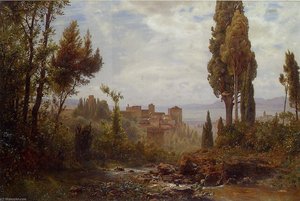
Πορτρέτο του Ernst Carl Eugen Koerner

Τα 32 πιο διάσημα έργα του Ernst Carl Eugen Koerner, μια επιλογή γκαλερί

Ενημερωμένο Νοέμβριος 2026 · κατάταξη βάσει του σκορ δημοφιλίας μας (αναζητήσεις, επισκέψεις και παραγγελίες για κάθε έργο) · 33 έργα του Ernst Carl Eugen Koerner στον κατάλογό μας

Με σύντομη περιγραφή

Από όλα τα πρωτότυπα που άφησε ο Ernst Carl Eugen Koerner, το πιο διάσημο είναι το On The Golden Horn Before The Sulemymaniye Mosque, Istanbul. Ακολουθούν στενά η Night View Over The Bosphorus και η Die Pyramiden Von Gizeh (the Pyramids At Gizeh, Morning). Ο κατάλογός μας περιλαμβάνει 33 έργα του Ernst Carl Eugen Koerner· η γκαλερί έχει διατηρήσει τα 32 κομμάτια που θαυμάζει ο κόσμος, το καθένα με την ημερομηνία, το μουσείο και την ιστορία του.

1846 – 1927 Romanticism

Τα 10 κορυφαία έργα του Ernst Carl Eugen Koerner: η επιλογή της γκαλερί

1
On The Golden Horn Before The Sulemymaniye Mosque, Istanbul του Ernst Carl Eugen Koerner

On The Golden Horn Before The Sulemymaniye Mosque, Istanbul

Oil

The Golden Horn stretches out in a pale, shimmering expanse, a liquid mirror for the city of Istanbul. Small boats drift upon the surface, their hulls cutting through the gentle movement of the tide. One larger vessel occupies the center of the river, a heavy presence amidst the lighter, smaller crafts scattered near the shore. People move along the water's edge and across the land, tiny figures within a vast,…

2
Night View Over The Bosphorus του Ernst Carl Eugen Koerner

Night View Over The Bosphorus

Night View Over The Bosphorus is a painting by Ernst Carl Eugen Koerner. The work captures a nocturnal scene upon the waters of the Bosphorus. It presents a quiet moment where the dark expanse of the sea meets the night sky. Small boats drift across the surface, their forms silhouetted against the reflected light of the evening.

3
Die Pyramiden Von Gizeh (the Pyramids At Gizeh, Morning) του Ernst Carl Eugen Koerner

Die Pyramiden Von Gizeh (the Pyramids At Gizeh, Morning)

Oil

The sun begins its ascent, casting a soft, pale glow across the desert sands. In this quiet moment, the Pyramids of Gizeh emerge from the morning haze, their massive stone forms catching the first light of day. Small figures move through the grass in the foreground, their presence emphasizing the sheer scale of the ancient structures rising behind them. A single bird cuts through the air, a tiny speck of…

Η επιλογή του Ernst Carl Eugen Koerner συνεχίζεται, από τον 11 έως τον 32

Τα θέματα που κίνησαν το ενδιαφέρον του Ernst Carl Eugen Koerner

Τα τέσσερα θέματα που εμφανίζονται πιο συχνά σε αυτά τα πρωτότυπα έργα, το καθένα με το εξαιρετικό του παράδειγμα.

Ερωτήσεις συλλεκτών για τα έργα του Ernst Carl Eugen Koerner

Για ποιο έργο είναι πιο γνωστός ο Ernst Carl Eugen Koerner;Αποκαλύψτε την απάντηση

Το On The Golden Horn Before The Sulemymaniye Mosque, Istanbul. Στη συνέχεια ακολουθούν το Night View Over The Bosphorus και το Die Pyramiden Von Gizeh (the Pyramids At Gizeh, Morning).

Ποια είναι τα δέκα πιο διάσημα έργα του Ernst Carl Eugen Koerner;Αποκαλύψτε την απάντηση

On The Golden Horn Before The Sulemymaniye Mosque, Istanbul, Night View Over The Bosphorus, Die Pyramiden Von Gizeh (the Pyramids At Gizeh, Morning), Egyptian Ruins Beside The Nile, Brussa, Turkey, Der Krokodilstempel Von Kom Ombo Am Nil, Views Of The Bosphorus, Waves Crashing Against A Rocky Cove, The Port Of Algiers και Blick Über Den Bosporus Auf Konstantinopel Bei Nacht. Η κατάταξη παραπάνω αναγράφει το έτος και το μουσείο για το κάθε έργο.

Πόσα έργα δημιούργησε ο/η Ernst Carl Eugen Koerner;Αποκαλύψτε την απάντηση

Ο κατάλογός μας περιλαμβάνει 33 έργα του Ernst Carl Eugen Koerner.

Ποια θέματα επέλεξε πιο συχνά ο Ernst Carl Eugen Koerner;Αποκαλύψτε την απάντηση

Scenes (7), Temples (4) και People (3), σε συνολικά 32 έργα σε αυτήν τη σελίδα.

Ποια τεχνική χρησιμοποίησε περισσότερο ο Ernst Carl Eugen Koerner;Αποκαλύψτε την απάντηση

Oil, για 2 από τα 32 έργα σε αυτήν τη σελίδα.

Σε ποιο καλλιτεχνικό κίνημα ανήκει ο/η Ernst Carl Eugen Koerner;Αποκαλύψτε την απάντηση

Romanticism, όπως προκύπτει από τα πρωτότυπα σε αυτήν τη σελίδα.

Ernst Carl Eugen Koerner: ζωή και έργο

The Visionary of the Nile: The Life and Art of Ernst Carl Eugen Koerner

Ernst Carl Eugen Koerner was far more than a mere chronicler of landscapes; he was a painter who possessed the rare ability to weave scientific precision with the profound, sweeping emotions of the Romantic era. Born in 1846 in the quiet estate of Mlewie and raised amidst a lineage of intellectual rigor, Koerner’s early life provided the foundation for a career defined by an insatiable curiosity about the world. While his roots were firmly planted in the Prussian tradition of scholarship and civic duty, his spirit was destined for the sun-drenched horizons of the Orient. His formative training under masters such as Hermann Eschke, Karl Steffeck, and Gottlieb Biermann equipped him with a technical mastery that allowed him to capture not just the light, but the very atmosphere of the distant lands he visited. As his artistry matured, Koerner embarked on extensive travels that would define his legacy. His journeys through the North Sea, the Baltics, and the rugged terrains of Scotland and Spain served as a prelude to his most significant period of exploration. Between 1873 and 1886, Koerner turned his gaze toward Egypt and the Middle East, a period that would yield his most iconic and enduring works. In these canvases, one does not simply see the Pyramids of Gizeh or the temples of the Nile; one feels the weight of antiquity and the shimmering heat of the desert. His work from this era is characterized by an extraordinary attention to detail—a meticulousness that suggests a scientific eye—yet it is always tempered by a poetic sensibility that captures the mystery and grandeur of ancient civilizations.

A Legacy Written in Light and Stone

The significance of Koerner’s contribution to 19th-century landscape painting lies in his unique ability to bridge the gap between documentation and art. His depictions of the Temple of Philae, the Sphinx, and the majestic Bosphorus serve as luminous windows into a bygone era, preserving the architectural splendor of the East with an almost archaeological fidelity. He was not merely painting scenery; he was capturing the soul of historical sites that were, at the time, still being rediscovered by the Western world. This dual role as both artist and observer earned him immense respect within the European art community, eventually leading to his appointment as a Professor and his leadership as Chairman of the Verein Berliner Künstler. Beyond his celebrated landscapes, Koerondere’s artistic range extended into the sacred and the nocturnal. His ability to manipulate light is perhaps most breathtaking in his nocturnes, such as The Golden Horn - A Nocturne, where the play of moonlight on water creates a sense of profound stillness and introspection. Even within the more structured demands of religious art, such as his altarpieces for the Erlöserkirche in Berlin-Rummelsburg, his characteristic mastery of light and form remained evident. Ultimately, the life of Ernst Carl Eugen Koerner represents a magnificent intersection of European academic tradition and an adventurous, global perspective. His work remains a vital testament to the era of great exploration, offering modern viewers a chance to wander through the ancient landscapes of Egypt and the vibrant streets of Constantinople through the eyes of a master who saw beauty in both the monumental and the minute.
  • Mastery of Light: Renowned for his ability to capture the specific atmospheric conditions of different climates.
  • Historical Preservation: His detailed paintings serve as important visual records of 19th-century archaeological sites.
  • Romantic Realism: A unique stylistic blend of precise observation and emotional, Romantic depth.