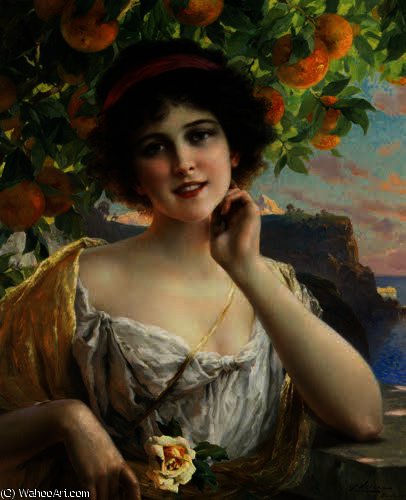
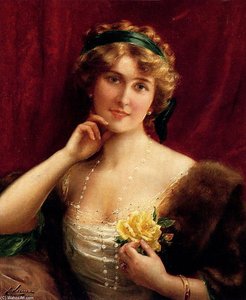
Emile Vernon: A Pioneer of Impressionistic Landscape Painting
Emile Vernon (1872 – 1920) stands as a significant figure in
French Impressionism, celebrated for his serene depictions of Giverny’s gardens and the landscapes surrounding
Claude Monet's home. Born in Blois, France, Vernon embarked on an artistic path marked by meticulous observation and a profound sensitivity to
light and color—characteristics that would define his distinctive style and solidify his place within the broader movement.
- Early Life & Education: Vernon’s formative years were spent honing his skills at the École des Beaux-Arts in Tours, where he secured the prestigious first drawing prize in 1888. This early success fueled his ambition to pursue formal artistic training under luminaries like William Bouguereau and Auguste Truphème at the School of Fine Arts in Paris.
- Salon Years & Artistic Development: Vernon’s involvement with the Salon des Artistes Français from 1898 until 1913 proved instrumental in shaping his artistic vision. Participating regularly allowed him to refine his technique and explore a varied repertoire of subjects, encompassing portraits, landscapes, and floral compositions—each imbued with an understated elegance and masterful execution.
- Influence of Monet & Synthetism: Vernon’s connection to Claude Monet extended beyond mere admiration; he actively absorbed Monet's revolutionary approach to capturing atmospheric effects. This influence is particularly evident in his canvases depicting Giverny, where Vernon skillfully renders the dappled sunlight filtering through foliage—a technique closely aligned with Monet’s pioneering use of Synthetism.
- Notable Works & Artistic Legacy: Among Vernon’s most enduring achievements are paintings like “A Woodland Maiden,” a captivating Pre-Raphaelite portrait that exemplifies his meticulous attention to detail and expressive tonal palette. Similarly, "Among the Blossoms" showcases his ability to convey tranquility and beauty through delicate floral arrangements—a testament to his artistic prowess and lasting impact on Impressionistic art.
Vernon's Distinctive Style & Technique
Vernon’s artistic hallmark resided in his unwavering commitment to
realism tempered by an ethereal quality. He achieved this effect through painstaking layering of thin glazes—a technique borrowed from Bouguereau—that allowed him to capture subtle nuances of
light and color with remarkable precision. This meticulous approach, combined with a masterful command of tonal harmony, resulted in landscapes that possess an unparalleled sense of atmosphere and evoke the profound beauty of the natural world.
- Glazing Technique: Vernon’s glazing technique—applying translucent layers of pigment over previous coats—was crucial to achieving his signature luminous aesthetic.
- Color Palette & Atmospheric Rendering: He favored muted hues—primarily greens, blues, and browns—to convey the mood and ambiance of his subjects, mirroring Monet's preoccupation with capturing fleeting moments of light.
Vernon’s Contribution to Impressionism & Beyond
Emile Vernon’s contribution to
Impressionism transcends mere stylistic imitation; he embodies its core principles—observation, spontaneity, and the pursuit of sensory experience—with unwavering conviction. His canvases serve as enduring reminders of
Monet's legacy and illuminate the transformative power of artistic vision. Furthermore, Vernon’s influence extended beyond
Impressionism, inspiring subsequent generations of painters to embrace Synthetism and explore innovative approaches to representing visual reality.
Vernon Today & Artistic Recognition
Today, Emile Vernon’s paintings are held in prestigious museums worldwide—including the Musée Municipal A.g. Poulain de Vernon—and continue to captivate audiences with their
serene beauty and artistic integrity. His enduring reputation as a master of
Impressionistic landscape painting secures his place among the most celebrated artists of the
late 19th century, ensuring that his vision persists as an inspiration for artists and art lovers alike.