

1


Ενημερωμένο Νοέμβριος 2026 · κατάταξη βάσει του σκορ δημοφιλίας μας (αναζητήσεις, επισκέψεις και παραγγελίες για κάθε έργο) · 15 έργα του Edwin Arthur Ward στον κατάλογό μας
Με σύντομη περιγραφή
Στο μάτι της γκαλερί, το πιο διάσημο έργο του Edwin Arthur Ward είναι το John, 7th Earl of Aberdeen, 1st Marquess (1870), το πρωτότυπο του οποίου εκτίθεται στο The National Trust For Scotland, Elgin. Ο Lord Randolph Henry Spencer Churchill (1849–1895), Seated at His Desk (1886) και ο Thomas Bescoby, Mayor (1890) (1891) ολοκληρώνουν το τρίο που κάθε μάτι αναγνωρίζει. Από τα 15 έργα του Edwin Arthur Ward στον κατάλογό μας, η γκαλερί παρουσιάζει παρακάτω τα 14 πιο διάσημα, όπου κάθε ένα είναι πρωτότυπο, με την χρονολογία του, το μουσείο του και το τι το κάνει μοναδικό.




 A Bowl of Roses1927 · Hillingdon Local Studies
12
 Major Walter Rowley, FGS, Member of the Board of Governors of the Yorkshire College of Science and Council (1874), Member of the Council (1904–1920)1926 · The Stanley - Audrey Burton Gallery
13
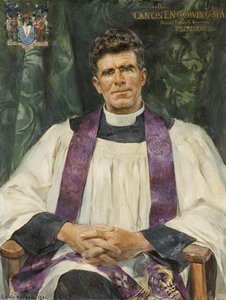 The Reverend Canon E. N. Gowing, MA, Rural Dean and Vicar of Prittlewell1931
14
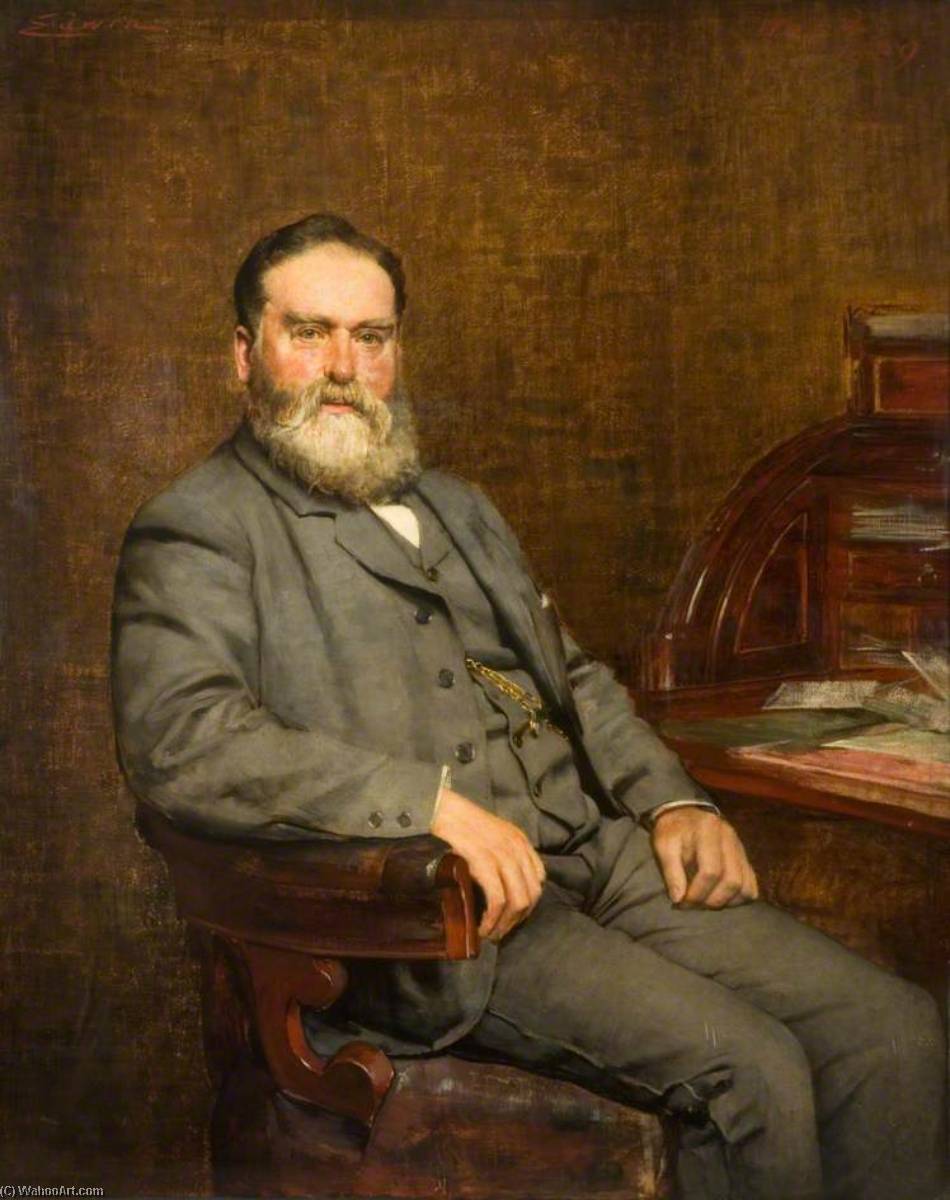
 James Meakin (b.c.1830)
Τα 5 μουσεία που φιλοξενούν το μεγαλύτερο μέρος των έργων σε αυτήν τη σελίδα.
| Μουσείο | Πόλη | Έργα του Edwin Arthur Ward | Πάτρια από αυτή τη λίστα |
|---|---|---|---|
 The National Trust For Scotland |
Elgin | 1 | John, 7th Earl of Aberdeen, 1st Marquess |
 Nottingham Castle Museum And Art Gallery |
Νότιγγαμ | 1 | Mrs Morton Jackson |
 Royal Society of Medicine |
Λονδίνο | 1 | Sir William Selby Church (1837–1928), Bt, KCB, DM, PRCP |
 Hillingdon Local Studies |
London | 1 | A Bowl of Roses |
 The Stanley - Audrey Burton Gallery |
Λιντς | 1 | Major Walter Rowley, FGS, Member of the Board of Governors of the Yorkshire College of Science and Council (1874), Member of the Council (1904–1920) |
Επιλέξτε μια δεκαετία για να δείτε το πρωτότυπο έργο που την χαρακτηρίζει.

John, 7th Earl of Aberdeen, 1st Marquess (1870), The National Trust For Scotland, Elgin. Στη συνέχεια ακολουθούν το Lord Randolph Henry Spencer Churchill (1849–1895), Seated at His Desk (1886) και το Thomas Bescoby, Mayor (1890) (1891).
11 ετών: το έργο John, 7th Earl of Aberdeen, 1st Marquess είναι του 1870, και ο/η Edwin Arthur Ward γεννήθηκε το 1859.
John, 7th Earl of Aberdeen, 1st Marquess, Lord Randolph Henry Spencer Churchill (1849–1895), Seated at His Desk, Thomas Bescoby, Mayor (1890), Mrs Morton Jackson, George Meakin (1832–1891), James Meakin (1807–1852), Alderman George Ridgway (1822–1899), An Officer of a Volunteer Battalion, The Middlesex Regiment, c.1904, Francis Howse και Sir William Selby Church (1837–1928), Bt, KCB, DM, PRCP. Η κατάταξη παραπάνω αναγράφει το έτος και το μουσείο για το κάθε έργο.
Ο κατάλογός μας περιλαμβάνει 15 έργα του Edwin Arthur Ward, με ημερομηνίες από 1870 έως 1931.
Κυρίως σε The National Trust For Scotland (Elgin), Nottingham Castle Museum And Art Gallery (Νότιγγαμ) και Royal Society of Medicine (Λονδίνο). Ο πίνακας μουσείου παραπάνω τους περιλαμβάνει όλους.
Κατά την περίοδο 1880s: 4 από τα 14 έργα σε αυτήν τη σελίδα δημιουργήθηκαν τότε, με Lord Randolph Henry Spencer Churchill (1849–1895), Seated at His Desk από αυτά να είναι μοναδικά.
Σε αυτήν τη σελίδα, το παλαιότερο είναι John, 7th Earl of Aberdeen, 1st Marquess (1870) και το νεότερο The Reverend Canon E. N. Gowing, MA, Rural Dean and Vicar of Prittlewell (1931).
In the golden twilight of the Victorian and Edwardian eras, a period defined by rigid social hierarchies and an unwavering respect for institutional dignity, few artists captured the essence of British prestige as masterfully as Edwin Arthur Ward. Born in 1859 in the quiet town of Basford, Nottinghamshire, Ward’s journey from the Midlands to the heart of London’s vibrant art scene is a testament to a life dedicated to the pursuit of technical perfection and the subtle nuances of human character. His early years were steeped in the influence of his father, a man involved in the decorative arts, which planted the seeds of a lifelong fascination with design, texture, and the meticulous rendering of form.
Upon arriving in London at the age of nineteen, Ward sought to refine his burgeoning talents within the prestigious halls of the Slade School of Fine Art. It was here that he encountered the legendary Frederic Leighton, a pivotal moment that would forever shape his artistic philosophy. Under Leighton’s tutelage, Ward embraced the classical ideals of anatomical precision and compositional balance, learning that a truly great portrait does more than merely replicate a face; it must evoke the very soul and social standing of the sitter. This rigorous training in drawing and etching provided him with the foundational tools to navigate the competitive London art world, eventually leading to his election as a member of the Royal Society of Portrait Painters in 1891.
Ward’s career was defined by a remarkable period of consistent excellence, particularly between 1884 and 1903, when his works became staples of the Royal Academy exhibitions. He possessed a rare ability to navigate the complexities of society portraiture, moving seamlessly between the depiction of high-ranking military officers, members of the aristocracy, and influential civic leaders. His style was never one of flashy bravado; instead, he favored a sophisticated, muted tonal palette that allowed the subject's inherent gravitas to take center stage. Through a profound understanding of drapery and light, Ward could render the heavy velvet of a formal robe or the crisp linen of a uniform with such tactile realism that the viewer could almost feel the weight of the fabric.
The brilliance of his technique lay in his ability to balance physical accuracy with psychological depth. While his hands were skilled in the meticulous rendering of anatomy, his eyes were attuned to the subtle shifts in expression that reveal a subject's inner life. Whether he was capturing the solemnity of The Reverend Canon E. N. Gowing or the youthful energy of a young Winston Churchill, Ward’s brushwork served to elevate his subjects, imbuing them with a sense of timelessness and historical importance. His work did not merely document a person; it constructed a legacy.
The true measure of an artist often lies in the permanence of their impact on the cultural landscape. Ward’s reputation was cemented through prestigious commissions that saw his portraits gracing the halls of town halls, museums, and private estates across Britain. His depictions of figures such as Thomas Bescoby for Retford Town Hall stand as enduring monuments to a bygone era of British civic pride. Even as the world moved toward the more fragmented styles of modernism, Ward remained a steadfast guardian of the classical tradition, ensuring that the dignity of his subjects was preserved through the medium of oil on canvas.
Though he passed away in 1933 in Dorset, leaving behind a legacy that includes notable works held within the Nottingham Castle Museum, Ward’s influence continues to resonate. He remains a vital figure for historians and art enthusiasts alike, representing a bridge between the meticulous craftsmanship of the nineteenth century and the evolving portraiture of the twentieth. His life's work serves as a window into the social fabric of his time, offering a gaze into the faces of those who shaped the British identity during one of its most transformative epochs.