Πορτρέτο του Ντένις Φαν Άλσλοοτ

Τα 28 πιο διάσημα έργα του Ντένις Φαν Άλσλοοτ, μια επιλογή γκαλερί

Ενημερωμένο Νοέμβριος 2026 · κατάταξη βάσει του σκορ δημοφιλίας μας (αναζητήσεις, επισκέψεις και παραγγελίες για κάθε έργο) · 29 έργα του Ντένις Φαν Άλσλοοτ στον κατάλογό μας

Με σύντομη περιγραφή

Από όλα τα πρωτότυπα έργα που άφησε ο Ντένις Φαν Άλσλοοτ, το πιο διάσημο είναι το Landscape with Castle and Hunting Scene (1608), το οποίο βρίσκεται στη συλλογή του Bonnefanten Museum, Μάστριχτ. Ακολουθούν στενά η Forest Landscape with the Rest on the Return from Egypt (1608) και η Diana discovers the pregnancy of Callisto (1610). Ο κατάλογός μας περιλαμβάνει 29 έργα του Ντένις Φαν Άλσλοοτ· η γκαλερί έχει διατηρήσει τα 28 κομμάτια που θαυμάζει ο κόσμος, το καθένα με την ημερομηνία, το μουσείο και την ιστορία του.

1570 – 1626, Μέχελεν Flemish baroque Περισσότερα έργα: Μουσείο του Πράδο

Τα 10 κορυφαία έργα του Ντένις Φαν Άλσλοοτ: η επιλογή της γκαλερί

1
Landscape with Castle and Hunting Scene (1608) του Ντένις Φαν Άλσλοοτ

Landscape with Castle and Hunting Scene

1608 · Oil On Panel · Bonnefanten Museum, Μάστριχτ

Sunlight breaks through a heavy canopy of leaves, spilling into a central valley where the air feels thick with the scent of damp earth and pine. In this lush, panoramic landscape, the eye is immediately drawn through a dark frame of towering trees, a technique that pulls the viewer deep into the heart of the Flemish wilderness. The scene is alive with a quiet, rhythmic movement; a fox hunt is…

2
Forest Landscape with the Rest on the Return from Egypt (1608) του Ντένις Φαν Άλσλοοτ

Forest Landscape with the Rest on the Return from Egypt

1608 · Oil · Μουσείο του Ισραήλ, Ιερουσαλήμ

Denis van Alsloot painted Forest Landscape with the Rest on the Return from Egypt in 1608. The canvas captures a quiet moment of repose. Within a dense, leafy sanctuary, the Holy Family finds a place to rest. They are nestled among the roots and shadows of a deep forest, seeking stillness during their long travel.

3
Diana discovers the pregnancy of Callisto (1610) του Ντένις Φαν Άλσλοοτ

Diana discovers the pregnancy of Callisto

1610 · Oil On Canvas · Staatliche Kunsthalle Karlsruhe, Καρλσρούε

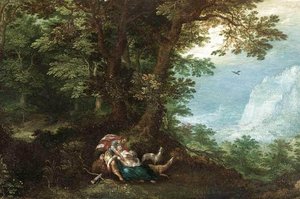
In the lush, shadowed depths of a dense forest, a moment of profound revelation unfolds within Diana discovers the pregnancy of Callisto. Painted by Denis van Alsloot between 1614 and 1620, the scene captures the sudden, silent tension of a divine secret being brought to light. The goddess Diana, the huntress, finds herself amidst a gathering of nymphs, her presence marking a shift from the tranquil rhythms of the woods…

4
Winter Landscape (1610) του Ντένις Φαν Άλσλοοτ

Winter Landscape

1610 · Acrylic On Canvas · Μουσείο του Λούβρου, Παρίσι

A Winter’s Embrace: Denijs van Alsloot's Tranquil Landscape Denijs van Alsloot stands as a pivotal figure in the burgeoning artistic landscape of the early 17th century, embodying the delicate transition from Mannerist formalism to the radiant optimism of the Dutch Baroque. Born around 1570 – though precise biographical details remain elusive – his formative years were inextricably linked to the craft of tapestry weaving, a profession that instilled within him…

5
Winter landscape with masked ice skaters (1599) του Ντένις Φαν Άλσλοοτ

Winter landscape with masked ice skaters

1599 · Oil On Panel · Bavarian State Painting Collections, Μόναχο

In "Winter landscape with masked ice skaters" by Denis van Alsloot, a wide and panoramic view unfolds across a frozen expanse. The eye travels through a deep perspective, moving from the immediate activity on the ice toward a distant, fortified structure. On the left, the intricate silhouettes of leafless trees reach upward, framing the scene and grounding the composition. Far in the distance, the architectural contours of the ramparts rise…

6
A wooded landscape with an amorous couple seated by a tree and elegant company strolling on a path near a river (1605) του Ντένις Φαν Άλσλοοτ

A wooded landscape with an amorous couple seated by a tree and elegant company strolling on a path near a river

1605 · Oil

The composition is structured around a verticality established by large, mature trees that frame a lush, wooded area. A winding path leads the eye through the landscape, passing near a river that flows through the scene. In the foreground, an amorous couple is seated by the base of a tree, while further along the path, a group of elegantly dressed figures strolls through the greenery. Small figures are scattered throughout…

7
A winter carnival with figures on the ice before the Kipdorppoort Bastion in Antwerp (1620) του Ντένις Φαν Άλσλοοτ

A winter carnival with figures on the ice before the Kipdorppoort Bastion in Antwerp

1620 · Oil On Panel

A winter carnival with figures on the ice before the Kipdorppoort Bastion in Antwerp by Denis van Alsloot captures a seasonal gathering in the Spanish Netherlands. Also known as Skating Masquerade, or Carnival on Ice at the Kipdorppoort Moats in Antwerp, the work is frequently referred to as Skating during Carnival. It dates to about 1620.

8
Chateau de Mariemont (1620) του Ντένις Φαν Άλσλοοτ

Chateau de Mariemont

The eye meets the expansive grounds of the Chateau de Mariemont, a grand estate captured by the hand of Denis van Alsloot. This view presents the sprawling landscape of a royal residence that once served the governors of the Habsburg Netherlands. The scene unfolds across the village of Morlanwelz in Belgium, where the architecture and the surrounding greenery meet under a clear, daylight sky. It is a moment frozen in…

9
The Ommegang in Brussels: Part 1: Procession of Guilds (1616) του Ντένις Φαν Άλσλοοτ

The Ommegang in Brussels: Part 1: Procession of Guilds

1616 · Oil · Μουσείο του Πράδο, Μαδρίτη

The streets of Brussels swell with a rhythmic, organized energy as the procession moves through the city. Under an even, diffused light that suggests a quiet, overcast day, a vast multitude of figures marches in disciplined rows, creating long horizontal bands that stretch across the wide composition. There is a profound sense of order here, a visual manifestation of civic pride and social hierarchy. The marchers, dressed in deep blacks…

10
Winter landscape (1610) του Ντένις Φαν Άλσλοοτ

Winter landscape

1610 · Oil · Bavarian State Painting Collections, Μόναχο

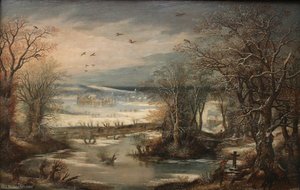
The scene unfolds within Winter landscape, a work that captures a quiet, frozen moment in time. This landscape painting, created by the Flemish artist Denis van Alsloot, presents a world hushed by frost and shadow. The air feels heavy with the stillness of a season held in suspension, inviting a sense of wonder at the quietude of the natural world.

Η επιλογή του Ντένις Φαν Άλσλοοτ συνεχίζεται, από τον 11 έως τον 28

Τα θέματα που κίνησαν το ενδιαφέρον του Ντένις Φαν Άλσλοοτ

Τα τέσσερα θέματα που εμφανίζονται πιο συχνά σε αυτά τα πρωτότυπα έργα, το καθένα με το εξαιρετικό του παράδειγμα.

Τα μουσεία που διατηρούν τα πρωτότυπα έργα του Ντένις Φαν Άλσλοοτ

Τα 8 μουσεία που φιλοξενούν το μεγαλύτερο μέρος των έργων σε αυτήν τη σελίδα.

Μουσείο Πόλη Έργα του Ντένις Φαν Άλσλοοτ Πάτρια από αυτή τη λίστα
Μουσείο του Πράδο, ΜαδρίτηΜουσείο του Πράδο Μαδρίτη 3 The Ommegang in Brussels: Part 1: Procession of Guilds, The Festival of the Ommegang in Brussels: the procession of Our Lady of Sablon, Skating during Carnival
Bonnefanten Museum, ΜάστριχτBonnefanten Museum Μάστριχτ 2 Landscape with Castle and Hunting Scene, Winter masquerade with skaters
Bavarian State Painting Collections, ΜόναχοBavarian State Painting Collections Μόναχο 2 Winter landscape with masked ice skaters, Winter landscape
Μουσείο του Ισραήλ, ΙερουσαλήμΜουσείο του Ισραήλ Ιερουσαλήμ 1 Forest Landscape with the Rest on the Return from Egypt
Staatliche Kunsthalle Karlsruhe, ΚαρλσρούεStaatliche Kunsthalle Karlsruhe Καρλσρούε 1 Diana discovers the pregnancy of Callisto
Μουσείο του Λούβρου, ΠαρίσιΜουσείο του Λούβρου Παρίσι 1 Winter Landscape
Βασιλικά Μουσεία Καλών Τεχνών της Βελγίου, ΒρυξέλλεςΒασιλικά Μουσεία Καλών Τεχνών της Βελγίου Βρυξέλλες 1 Chateau de Mariemont
Βασικό Μουσείο Καλών Τεχνών Αντβέρπη, ΆντβερπηΒασικό Μουσείο Καλών Τεχνών Αντβέρπη Άντβερπη 1 Garden Festival at Diesdelle

Ο Ντένις Φαν Άλσλοοτ δεκαετία προς δεκαετία: το πρωτότυπο που ορίζει κάθε μία

Έργα ανά δεκαετία

Επιλέξτε μια δεκαετία για να δείτε το πρωτότυπο έργο που την χαρακτηρίζει.

Ερωτήσεις συλλεκτών για τα έργα του Ντένις Φαν Άλσλοοτ

Για ποιο έργο είναι πιο γνωστός ο Ντένις Φαν Άλσλοοτ;Αποκαλύψτε την απάντηση

Landscape with Castle and Hunting Scene (1608), Bonnefanten Museum, Μάστριχτ. Στη συνέχεια ακολουθούν το Forest Landscape with the Rest on the Return from Egypt (1608) και το Diana discovers the pregnancy of Callisto (1610).

Πόσο ηλικία είχε ο/η Ντένις Φαν Άλσλοοτ όταν δημιουργήθηκε το Landscape with Castle and Hunting Scene;Αποκαλύψτε την απάντηση

38 ετών: το έργο Landscape with Castle and Hunting Scene είναι του 1608, και ο/η Ντένις Φαν Άλσλοοτ γεννήθηκε το 1570.

Ποια είναι τα δέκα πιο διάσημα έργα του Ντένις Φαν Άλσλοοτ;Αποκαλύψτε την απάντηση

Landscape with Castle and Hunting Scene, Forest Landscape with the Rest on the Return from Egypt, Diana discovers the pregnancy of Callisto, Winter Landscape, Winter landscape with masked ice skaters, A wooded landscape with an amorous couple seated by a tree and elegant company strolling on a path near a river, A winter carnival with figures on the ice before the Kipdorppoort Bastion in Antwerp, Chateau de Mariemont, The Ommegang in Brussels: Part 1: Procession of Guilds και Winter landscape. Η κατάταξη παραπάνω αναγράφει το έτος και το μουσείο για το κάθε έργο.

Πόσα έργα δημιούργησε ο/η Ντένις Φαν Άλσλοοτ;Αποκαλύψτε την απάντηση

Ο κατάλογός μας περιλαμβάνει 29 έργα του Ντένις Φαν Άλσλοοτ, με ημερομηνίες από 1599 έως 1624.

Σε ποια μουσεία εκτίθενται τα αριστούργημα του Ντένις Φαν Άλσλοοτ;Αποκαλύψτε την απάντηση

Κυρίως σε Μουσείο του Πράδο (Μαδρίτη), Bonnefanten Museum (Μάστριχτ) και Bavarian State Painting Collections (Μόναχο). Ο πίνακας μουσείου παραπάνω τους περιλαμβάνει όλους.

Σε ποιες χρονιές δημιούργησε ο/η Ντένις Φαν Άλσλοοτ τα πιο διάσημα έργα του/της;Αποκαλύψτε την απάντηση

Κατά την περίοδο 1610s: 7 από τα 28 έργα σε αυτήν τη σελίδα δημιουργήθηκαν τότε, με Diana discovers the pregnancy of Callisto από αυτά να είναι μοναδικά.

Ποια είναι τα πρώτα και τα τελευταία διάσημα πρωτότυπα του Ντένις Φαν Άλσλοοτ;Αποκαλύψτε την απάντηση

Σε αυτήν τη σελίδα, το παλαιότερο είναι Winter landscape with masked ice skaters (1599) και το νεότερο winter landscape (1624).

Ποια θέματα επέλεξε πιο συχνά ο Ντένις Φαν Άλσλοοτ;Αποκαλύψτε την απάντηση

Trees (10), Forest (7) και People (7), σε συνολικά 28 έργα σε αυτήν τη σελίδα.

Ποια τεχνική χρησιμοποίησε περισσότερο ο Ντένις Φαν Άλσλοοτ;Αποκαλύψτε την απάντηση

Oil On Panel, για 6 από τα 28 έργα σε αυτήν τη σελίδα.

Σε ποιο καλλιτεχνικό κίνημα ανήκει ο/η Ντένις Φαν Άλσλοοτ;Αποκαλύψτε την απάντηση

Flemish baroque, όπως προκύπτει από τα πρωτότυπα σε αυτήν τη σελίδα.

Ποια έργα του Ντένις Φαν Άλσλοοτ εκτίθενται στο Μουσείο του Πράδο;Αποκαλύψτε την απάντηση

The Ommegang in Brussels: Part 1: Procession of Guilds, The Festival of the Ommegang in Brussels: the procession of Our Lady of Sablon και Skating during Carnival: το Μουσείο του Πράδο, Μαδρίτη διαθέτει 3 από τα έργα σε αυτήν τη σελίδα.

Ντένις Φαν Άλσλοοτ: ζωή και έργο

Denijs van Alsloot (c. 1570 – c. 1626): A Life Woven in Landscape

Denijs van Alsloot, a name resonating softly through the annals of Flemish art, occupies a fascinating transitional space between the established traditions of the 16th century and the burgeoning Baroque dynamism of the 17th. Born around 1570 in either Mechelen or Brussels, Belgium, his origins were steeped in the craft of tapestry – his father’s profession providing an early immersion into design and visual composition. Though details surrounding his formal artistic training remain elusive, it's clear that this familial connection to textile arts laid a foundational aesthetic sensibility for the young Alsloot. He entered the Brussels Guild of St Luke in 1599 as a tapestry designer, initially focusing on this craft before gradually shifting towards painting, taking on his first pupil the same year and continuing to mentor apprentices until 1625. This period suggests a deliberate evolution, a honing of skills that would eventually blossom into a distinctive landscape style.

Early Influences & The Tapestry Tradition

The influence of tapestry design is palpable throughout Alsloot’s oeuvre. Like many artists of his time, he possessed considerable skill in weaving intricate patterns and creating vibrant color palettes—skills honed by assisting his father in the family workshop. This formative experience instilled a meticulous attention to detail and an understanding of compositional balance that would inform his later paintings. The Guild of St Luke served as a crucial incubator for artistic talent during this period, fostering competition and encouraging innovation amongst its members. Alsloot’s early works demonstrate a careful observation of nature—a hallmark of the Flemish landscape tradition—reflecting the humanist ideals prevalent in the Renaissance and subtly foreshadowing the stylistic developments to come.

Court Artist & The Glory of Albertine Brussels

A pivotal moment arrived around 1606 with Alsloot’s appointment as court painter to Albert and Isabella, the Archdukes who governed the Spanish Netherlands. This prestigious position not only provided financial stability but also thrust him into a world of influential patrons and significant commissions. The court became his canvas, demanding depictions of both grandeur and everyday life—a challenge he embraced with remarkable success. He excelled at capturing scenes of civil processions, local festivals, and ceremonial events – vibrant snapshots of 17th-century Brussels society. These weren’t merely decorative; they were historical documents, preserving the spectacle and social fabric of the time. Alsloot's meticulous style—characterized by precise brushstrokes and a masterful use of color—captured the splendor of Albertine Brussels with unparalleled accuracy. He meticulously documented architectural details, costumes, and expressions of emotion, conveying not only visual beauty but also intellectual engagement.

The Ommegang & Artistic Documentation

Perhaps the most notable commission came from Archduchess Isabella herself: a request to paint eight panels commemorating the Ommegang procession of 1615—a tradition celebrating Mary Magdalene’s pilgrimage to Jerusalem. This ambitious undertaking cemented Alsloot's reputation as a skilled recorder of historical events and showcased his ability to convey complex narratives through visual imagery. The resulting paintings are considered masterpieces of genre painting, capturing the energy and enthusiasm of the crowd alongside the solemn grandeur of the procession itself. As a testament to his dedication and artistic prowess, he was rewarded with 10,000 guilders—a substantial sum reflecting the importance placed upon documenting cultural traditions during this era.

The Sonian Forest School & A Distinctive Landscape Vision

Alsloot is often associated with the Sonian Forest school of landscape painters, a group who found inspiration in the sprawling woodlands surrounding Brussels. This association isn’t merely geographical; it reflects a shared aesthetic preference for depicting scenes from this particular environment—its dense forests, tranquil abbeys, and atmospheric perspectives. His series of views of abbeys within the Sonian Forest exemplifies this connection, showcasing his ability to capture both the natural beauty and spiritual significance of these locations. He skillfully blended influences from earlier masters with a distinctly personal vision—characterized by calm compositions, soft palettes, and meticulous attention to detail. Like Gillis van Coninxloo and Jan Brueghel the Elder, Alsloot employed techniques that prioritized atmospheric perspective—creating depth and illusion through subtle gradations of color—a hallmark of Baroque art but rooted in Renaissance principles.

Legacy & Enduring Influence

Though he passed away around 1626, likely before 1628, Denijs van Alsloot’s artistic legacy endures. His paintings are now held in esteemed museums worldwide, including the Museo Nacional del Prado in Madrid and the Victoria and Albert Museum in London, ensuring his work continues to inspire and captivate audiences centuries later. He is remembered not only for his technical skill—his topographical accuracy, atmospheric perspective, and meticulous detail—but also for his ability to document 170th-century life in Brussels. His depictions of festivals, processions, and landscapes offer invaluable insights into the social customs, architectural features, and natural beauty of the era. As a key representative of the Sonian Forest school and a transitional figure bridging earlier landscape traditions with the emerging Baroque style, Van Alsloot remains a significant subject for scholars studying Flemish art—a testament to his enduring contribution to the world of visual culture.