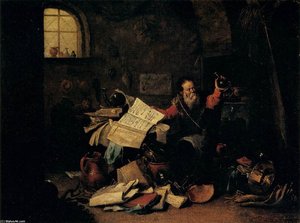
Πορτρέτο του Ντάβιντ Τένιερς Ο Πρεσβύτερος

Πάτσαδες του Ντάβιντ Τένιερς Ο Πρεσβύτερος: Τα 35 πιο διάσημα, μέσα από το βλέμμα μιας γκαλερί

Ενημερωμένο Νοέμβριος 2026 · κατάταξη βάσει του σκορ δημοφιλίας μας (αναζητήσεις, επισκέψεις και παραγγελίες για κάθε έργο) · 36 έργα του Ντάβιντ Τένιερς Ο Πρεσβύτερος στον κατάλογό μας

Με σύντομη περιγραφή

Στο μάτι της γκαλερί, το πιο διάσημο έργο του Ντάβιντ Τένιερς Ο Πρεσβύτερος είναι το Valentine kneels to receive a rosary from the Virgin Mary. Ο Pan plays the flute before nymphs and satyrs (1638) και ο Mercury playing the flute for Argus (1638) ολοκληρώνουν το τρίο που κάθε μάτι αναγνωρίζει. Από τα 36 έργα του Ντάβιντ Τένιερς Ο Πρεσβύτερος στον κατάλογό μας, η γκαλερί παρουσιάζει παρακάτω τα 35 πιο διάσημα, όπου κάθε ένα είναι πρωτότυπο, με την χρονολογία του, το μουσείο του και το τι το κάνει μοναδικό.

1582 – 1649, Αντβέρπη Flemish baroque Περισσότερα έργα: Rijksmuseum

Τα 10 κορυφαία έργα του Ντάβιντ Τένιερς Ο Πρεσβύτερος στη γκαλερέι

1
Valentine kneels to receive a rosary from the Virgin Mary του Ντάβιντ Τένιερς Ο Πρεσβύτερος

Valentine kneels to receive a rosary from the Virgin Mary

Oil

In the quiet, luminous realm of David Teniers the Elder’s "Valentine kneels to receive a rosary from the Virgin Mary," the boundary between the earthly and the divine dissolves into a single, breathless moment of devotion. This masterpiece serves as a profound window into the spiritual fervor of the 17th-century Flemish Baroque era, a period where light was not merely a physical phenomenon but a vessel for grace. The composition…

2
Pan plays the flute before nymphs and satyrs (1638) του Ντάβιντ Τένιερς Ο Πρεσβύτερος

Pan plays the flute before nymphs and satyrs

1638 · Oil On Canvas · Kunsthistorisches Museum, Βιέννη

In this 1638 oil on canvas, we find ourselves drawn into a lively mythological scene that captures a moment of pure, uninhibited joy. The composition is built upon a dynamic arrangement where Pan, the flute player, sits at the heart of a rhythmic dance. Around him, nymphs and satyrs move with a sense of fluid motion, their forms framed by the heavy, organic curves of towering trees and rugged, rocky…

3
Mercury playing the flute for Argus (1638) του Ντάβιντ Τένιερς Ο Πρεσβύτερος

Mercury playing the flute for Argus

1638 · Oil On Canvas · Kunsthistorisches Museum, Βιέννη

In this 1638 oil on canvas, a pastoral scene unfolds within a lush, asymmetrical composition. On the left, a dense cluster of trees and craggy, dark rocks anchors the frame, while the right side opens into a pale, airy vista under a sky filled with soft, white clouds. Mercury, depicted as a youthful figure, sits amidst this greenery, playing a flute. He is positioned near Argus, who reclines in a…

4
The Fortune Teller (1602) του Ντάβιντ Τένιερς Ο Πρεσβύτερος

The Fortune Teller

1602 · Oil

In this 1602 genre scene, a rustic narrative unfolds within an outdoor landscape. The composition centers on a social interaction between a fortune teller and a man, framed by the heavy, textured folds of their garments. To the right, two seated women observe the encounter, while a cottage and organic, rocky terrain anchor the left side of the frame. The lighting, descending from the upper left, creates a sharp chiaroscuro…

5
The Birth of Adonis (1602) του Ντάβιντ Τένιερς Ο Πρεσβύτερος

The Birth of Adonis

1602 · Oil · Städel Museum, Φρανκφούρτη

The forest breathes in deep shades of moss and ochre. Towering trees rise like pillars of dark bark, their branches twisting toward a pale, cloudy sky. In this secluded grove, the light filters through a heavy canopy, casting a soft glow upon a small group of figures. They gather in the lower left, their forms draped in delicate fabric that catches the diffused light. The air feels still, held within…

6
twelfth night (1607) του Ντάβιντ Τένιερς Ο Πρεσβύτερος

twelfth night

1607 · Oil On Canvas

The air in the room feels heavy with the scent of spilled ale and the warmth of flickering candlelight. A group of figures gathers in a crowded, boisterous scene, their bodies leaning into the immediate action of a celebration. The composition is dense, a labyrinth of overlapping limbs and tilted mugs that pulls the viewer into the center of the revelry. Strong highlights strike the faces and hands of the…

7
Interior of an Inn (1620) του Ντάβιντ Τένιερς Ο Πρεσβύτερος

Interior of an Inn

1620 · Oil · Statens Museum For Kunst, Κόπενημαγκς

The air inside the inn feels heavy with the scent of woodsmoke and spilled ale. A single, unseen light source from the left carves the room into sharp relief, casting long, amber shadows across the floor. In the foreground, a group of figures huddles around a sturdy wooden table, their bodies slumped in the relaxed postures of those who have forgotten the hour. A small dog rests near them, a…

9
Christ on the cross flanked by the two malefactors (1637) του Ντάβιντ Τένιερς Ο Πρεσβύτερος

Christ on the cross flanked by the two malefactors

1637 · Oil

The composition is defined by a stark verticality, with three wooden crosses dividing the upper register of the canvas. At the center, the figure of Christ is positioned slightly forward, caught in a beam of ethereal light that pierces through heavy, turbulent clouds. This lighting creates a profound chiaroscuro effect, casting the surrounding scene into deep shadow. To either side, the two malefactors are rendered in contorted, strained poses, their…

Πάينτα του Ντάβιντ Τένιερς Ο Πρεσβύτερος, κατάταξη από 11 έως 35

Τα διάσημα έργα του Ντάβιντ Τένιερς Ο Πρεσβύτερος, ανά περίοδο

Early Period

1602 – 1607 · 3 έργα σε αυτή τη λίστα

Τα θέματα που κίνησαν το ενδιαφέρον του Ντάβιντ Τένιερς Ο Πρεσβύτερος

Τα τέσσερα θέματα που εμφανίζονται πιο συχνά σε αυτά τα πρωτότυπα έργα, το καθένα με το εξαιρετικό του παράδειγμα.

Τα μουσεία που διατηρούν τα πρωτότυπα έργα του Ντάβιντ Τένιερς Ο Πρεσβύτερος

Τα 8 μουσεία που φιλοξενούν το μεγαλύτερο μέρος των έργων σε αυτήν τη σελίδα.

Μουσείο Πόλη Έργα του Ντάβιντ Τένιερς Ο Πρεσβύτερος Πάτρια από αυτή τη λίστα
Rijksmuseum, ΆμστερνταμRijksmuseum Άμστερνταμ 5 Husbandman at a Cottage Door with a Seated Woman and Child, David Teniers (II), c. 1650 - c. 1655, Mason Smoking with Companions in a Tavern, David Teniers (II), c. 1675, Peasants Dancing Outside the Crescent Tavern, David Teniers (II) (manner of), in or after c. 1660
Kunsthistorisches Museum, ΒιέννηKunsthistorisches Museum Βιέννη 3 Pan plays the flute before nymphs and satyrs, Mercury playing the flute for Argus, Io, transformed into a cow, is handed to Juno by Jupiter
Statens Museum For Kunst, ΚόπενημαγκςStatens Museum For Kunst Κόπενημαγκς 2 Interior of an Inn, Interior of a Kitchen
Nationalmuseum, ΣτοκχόλμηNationalmuseum Στοκχόλμη 2 Tavern Scene with Smokers, Landscape with the flight into Egypt
Εθνικό Μουσείο Βαρσοβίας, ΒαρσοβίαΕθνικό Μουσείο Βαρσοβίας Βαρσοβία 2 Adoration of the Magi (Matthew 2:10-11), Expulsion of Hagar
Städel Museum, ΦρανκφούρτηStädel Museum Φρανκφούρτη 1 The Birth of Adonis
Bavarian State Painting Collections, ΜόναχοBavarian State Painting Collections Μόναχο 1 Rock Gorge
Mauritshuis, Θέις ΧάγκMauritshuis Θέις Χάγκ 1 Elderly Man Seated in a Tavern, David Teniers (II) (after), c. 1645

Ντάβιντ Τένιερς Ο Πρεσβύτερος, ένα χαρακτηριστικό έργο ανά δεκαετία

Έργα ανά δεκαετία

Επιλέξτε μια δεκαετία για να δείτε το πρωτότυπο έργο που την χαρακτηρίζει.

Οι πίνακες του Ντάβιντ Τένιερς Ο Πρεσβύτερος: οι απαντήσεις της γκαλερί

Ποιο έργο του Ντάβιντ Τένιερς Ο Πρεσβύτερος είναι το πιο διάσημο από όλα;Αποκαλύψτε την απάντηση

Το Valentine kneels to receive a rosary from the Virgin Mary. Στη συνέχεια ακολουθούν το Pan plays the flute before nymphs and satyrs (1638) και το Mercury playing the flute for Argus (1638).

Ποιες είναι τα 10 κορυφαία έργα του Ντάβιντ Τένιερς Ο Πρεσβύτερος;Αποκαλύψτε την απάντηση

Valentine kneels to receive a rosary from the Virgin Mary, Pan plays the flute before nymphs and satyrs, Mercury playing the flute for Argus, The Fortune Teller, The Birth of Adonis, twelfth night, Interior of an Inn, Night Effect in a Church Side Path, Christ on the cross flanked by the two malefactors και Tavern Scene with Smokers. Η κατάταξη παραπάνω αναγράφει το έτος και το μουσείο για το κάθε έργο.

Πόσα έργα δημιούργησε ο/η Ντάβιντ Τένιερς Ο Πρεσβύτερος;Αποκαλύψτε την απάντηση

Ο κατάλογός μας περιλαμβάνει 36 έργα του Ντάβιντ Τένιερς Ο Πρεσβύτερος, με ημερομηνίες από 1602 έως 1645.

Πού εκτίθενται τα πιο διάσημα πρωτότυπα του Ντάβιντ Τένιερς Ο Πρεσβύτερος;Αποκαλύψτε την απάντηση

Κυρίως σε Rijksmuseum (Άμστερνταμ), Kunsthistorisches Museum (Βιέννη) και Statens Museum For Kunst (Κόπενημαγκς). Ο πίνακας μουσείου παραπάνω τους περιλαμβάνει όλους.

Πότε δημιούργησε ο/η Ντάβιντ Τένιερς Ο Πρεσβύτερος τα πιο διάσημα έργα του/της;Αποκαλύψτε την απάντηση

Κατά την περίοδο 1640s: 5 από τα 35 έργα σε αυτήν τη σελίδα δημιουργήθηκαν τότε, με Tavern Scene with Smokers από αυτά να είναι μοναδικά.

Ποια είναι τα πρώτα και τα τελευταία διάσημα έργα του Ντάβιντ Τένιερς Ο Πρεσβύτερος;Αποκαλύψτε την απάντηση

Σε αυτήν τη σελίδα, το παλαιότερο είναι The Fortune Teller (1602) και το νεότερο Elderly Man Seated in a Tavern, David Teniers (II) (after), c. 1645 (1645).

Ποια θέματα επέλεξε πιο συχνά ο Ντάβιντ Τένιερς Ο Πρεσβύτερος;Αποκαλύψτε την απάντηση

Landscape (7), People (7) και Trees (6), σε συνολικά 35 έργα σε αυτήν τη σελίδα.

Με ποια τεχνική εργάστηκε περισσότερο ο Ντάβιντ Τένιερς Ο Πρεσβύτερος;Αποκαλύψτε την απάντηση

Oil, για 7 από τα 35 έργα σε αυτήν τη σελίδα.

Με ποιο καλλιτεχνικό κίνημα σχετίζεται ο/η Ντάβιντ Τένιερς Ο Πρεσβύτερος;Αποκαλύψτε την απάντηση

Flemish baroque και Baroque, όπως προκύπτει από τα πρωτότυπα σε αυτήν τη σελίδα.

Ποια πρωτότυπα έργα του Ντάβιντ Τένιερς Ο Πρεσβύτερος διαθέτει το Rijksmuseum;Αποκαλύψτε την απάντηση

Husbandman at a Cottage Door with a Seated Woman and Child, David Teniers (II), c. 1650 - c. 1655, Mason Smoking with Companions in a Tavern, David Teniers (II), c. 1675 και Peasants Dancing Outside the Crescent Tavern, David Teniers (II) (manner of), in or after c. 1660: το Rijksmuseum, Άμστερνταμ διαθέτει 5 από τα έργα σε αυτήν τη σελίδα.

Ντάβιντ Τένιερς Ο Πρεσβύτερος: ο καλλιτέχνης

A Legacy of Light and Life: The World of David Teniers the Elder

In the heart of the 17th-century Flemish Baroque era, a period defined by dramatic movement and profound emotional depth, David Teniers the Elder emerged as a master capable of finding extraordinary beauty in the most ordinary moments. Born in Antwerp around 1582, Teniers was not merely an observer of his time but a vital participant in its artistic evolution. His life was woven into the very fabric of the Antwerp art scene, stemming from a lineage of creators that included his father, Jan Teniers I, and his brother, Juliaen. This immersion in a domestic atmosphere of pigments, brushes, and canvas provided him with a foundational mastery that would later allow him to navigate both the grandiosity of religious commissions and the intimate charm of rural landscapes.

The trajectory of Teniers’ talent was significantly shaped by the giants of his age. While his early training began under the watchful eye of his brother, his artistic soul was truly ignited in the studio of Peter Paul Rubens. To study under Rubens was to enter a crucible of innovation, where the interplay of light, shadow, and dynamic composition reigned supreme. This influence is etched into Teniers’ work through a sophisticated use of color and an expressive brushwork that breathes life into every subject. Furthermore, his travels to Rome allowed him to absorb the classical nuances of Adam Elsheimer, adding a layer of atmospheric depth and historical weight to his compositions. These diverse influences coalescent into a style that was uniquely his own—a bridge between the monumental Baroque tradition and a more grounded, humanist observation of the world.

The Art of the Everyday: Genre and Landscape

While many of his contemporaries sought glory in grand mythological or historical narratives, Teniers found his true calling in the celebration of the Flemish landscape and the spirited scenes of peasant life. He possessed a rare, empathetic eye for the genre painting, capturing the conviviality of tavern gatherings, the rustic joy of rural festivities, and the quiet dignity of the working class. His canvases often hum with a playful spirit, inviting the viewer to witness the unvarnished reality of 17th-century life through a lens of gentle humor and meticulous detail.

His landscapes are equally captivating, serving as more than mere backdrops for his figures. Instead, they are living, breathing environments characterized by:

  • Atmospheric Perspective: A masterful ability to create depth, leading the eye from the textured foreground into misty, distant horizons.
  • Luminous Detail: The careful rendering of light filtering through foliage or reflecting off a simple village path.
  • Narrative Integration: A seamless blending of human activity with the natural world, suggesting a profound connection between man and his environment.

Even when venturing into more solemn territory, such as his religious works like "Valentine kneels to receive a rosary from the Virgin Mary," Teniers maintained his signature ability to blend realism with spiritual reverence. In these pieces, he utilized light and shadow not just for dramatic effect, but to guide the viewer’s devotion, making the divine feel tangibly present within the earthly realm.

Historical Significance and Artistic Endurance

The historical importance of David Teniers the Elder lies in his role as a pioneer of a more intimate Baroque aesthetic. He helped shift the artistic gaze from the heavens down to the earth, proving that the lives of peasants and the quietude of the countryside were worthy subjects of high art. His work provided a vital counterpoint to the grandiosity of Rubens, offering a sense of relatability and humanism that resonated deeply with the burgeoning middle class of Flanders.

His legacy is not only found in his surviving canvases but also in the continuation of the Teniers artistic dynasty. Through his descendants, including the celebrated David Teniers the Younger, his influence on Flemish genre painting persisted for decades. Today, we look back at the Elder as a painter who mastered the art of the subtle—an artist who could find the epic within the everyday and leave behind a visual record of an era defined by both its struggles and its profound, simple joys.