Πορτρέτο του Cornelis Lelienbergh

Τα 29 πιο διάσημα έργα του Cornelis Lelienbergh, κάθε ένα μοναδικό

Ενημερωμένο Νοέμβριος 2026 · κατάταξη βάσει του σκορ δημοφιλίας μας (αναζητήσεις, επισκέψεις και παραγγελίες για κάθε έργο) · 31 έργα του Cornelis Lelienbergh στον κατάλογό μας

Με σύντομη περιγραφή

Το έργο Still Life with Game Birds (1670) είναι το ποίτευμα του Cornelis Lelienbergh που τραβάει τα περισσότερα βλέμματα· το πρωτότυπο ανήκει στο The Holburne Museum, Μπαθ. Μετά από αυτό, το βλέμμα στρέφεται στο Still life with hare and black rooster (1659) και στο Dead Game Birds (1653). Ανάμεσα στα 31 έργα του Cornelis Lelienbergh στον κατάλογό μας, αυτά τα 29 είναι τα πιο διάσημα, το καθένα ένα μοναδικό πρωτότυπο που παρουσιάζεται με την χρονολογία του, το μουσείο του και τον λόγο για τον οποίο παραμένει αιώνιο.

1626 – 1676, The Hague Περισσότερα έργα: Rijksmuseum

Τα 10 κορυφαία έργα του Cornelis Lelienbergh, μέσα από το βλέμμα της γκαλερί

1
Still Life with Game Birds (1670) του Cornelis Lelienbergh

Still Life with Game Birds

1670 · Oil On Canvas · The Holburne Museum, Μπαθ

Still Life with Game Birds is an oil on canvas work by Cornelis Lelienbergh. Executed in 1670, the painting belongs to the Dutch Golden Age tradition of specialized still life. The artist, Cornelis Lelienbergh, was a prominent figure in the 17th-century Netherlands, known for his meticulous attention to the textures of feathers and organic matter.

2
Still life with hare and black rooster (1659) του Cornelis Lelienbergh

Still life with hare and black rooster

1659 · Oil On Canvas · Rijksmuseum, Άμστερνταμ

A vertical arrangement defines this 1659 oil on canvas, where the remnants of a hunt are positioned against a dark, indistinct background. A wooden stick leans diagonally against a rustic table, supporting a dead hare that hangs by its limbs. On the table surface, a dark, deceased rooster lies alongside various vegetables. The lighting originates from a single side source, casting deep shadows and creating a sense of three-dimensional depth…

Τα διάσημα έργα του Cornelis Lelienbergh, από το 11 έως το 29

Τα θέματα που κίνησαν το ενδιαφέρον του Cornelis Lelienbergh

Τα τέσσερα θέματα που εμφανίζονται πιο συχνά σε αυτά τα πρωτότυπα έργα, το καθένα με το εξαιρετικό του παράδειγμα.

Τα μουσεία που διατηρούν τα πρωτότυπα έργα του Cornelis Lelienbergh

Τα 8 μουσεία που φιλοξενούν το μεγαλύτερο μέρος των έργων σε αυτήν τη σελίδα.

Μουσείο Πόλη Έργα του Cornelis Lelienbergh Πάτρια από αυτή τη λίστα
Rijksmuseum, ΆμστερνταμRijksmuseum Άμστερνταμ 3 Still life with hare and black rooster, Still Life with Black Rooster and two Rabbits, Cornelis Lelienbergh, 1659, Still Life with Woodpecker and Snipes, Cornelis Lelienbergh, 1655
Bavarian State Painting Collections, ΜόναχοBavarian State Painting Collections Μόναχο 2 Dead Game Birds, Dead Rooster
Nationalmuseum, ΣτοκχόλμηNationalmuseum Στοκχόλμη 2 Still Life with Doves Hanging from an Iron Hook, Still Life with Parrot and Snipes, Cornelis Lelienbergh, 1655
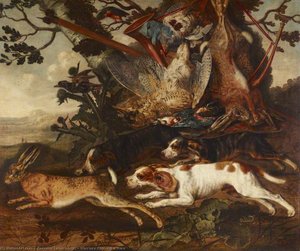
Εθνική Πινακοθήκη Λονδίνου, ΚάμπριοτζηΕθνική Πινακοθήκη Λονδίνου Κάμπριοτζη 2 Harriers Chasing a Hare, Spaniels Chasing a Hare
The Holburne Museum, ΜπαθThe Holburne Museum Μπαθ 1 Still Life with Game Birds
Museum Boijmans Van Beuningen, ΡότερνταμMuseum Boijmans Van Beuningen Ρότερνταμ 1 Dead Hare and Birds
Gemäldegalerie, ΒερολίνοGemäldegalerie Βερολίνο 1 Still life with a brass pail
Εθνικό Μουσείο Τέχνης, Αρχιτεκτονικής και Σχεδιασμού, ΌσλοΕθνικό Μουσείο Τέχνης, Αρχιτεκτονικής και Σχεδιασμού Όσλο 1 Game

Ο Cornelis Lelienbergh μέσα από τις δεκαετίες: ένα μοναδικό πρωτότυπο για κάθε εποχή

Έργα ανά δεκαετία

Επιλέξτε μια δεκαετία για να δείτε το πρωτότυπο έργο που την χαρακτηρίζει.

Οι πίνακες του Cornelis Lelienbergh: ερωτήσεις για την γκαλερί

Ποιο είναι το πιο διάσημο έργο του Cornelis Lelienbergh;Αποκαλύψτε την απάντηση

Still Life with Game Birds (1670), The Holburne Museum, Μπαθ. Στη συνέχεια ακολουθούν το Still life with hare and black rooster (1659) και το Dead Game Birds (1653).

Σε τι ηλικία δημιούργησε ο/η Cornelis Lelienbergh το έργο Still Life with Game Birds;Αποκαλύψτε την απάντηση

44 ετών: το έργο Still Life with Game Birds είναι του 1670, και ο/η Cornelis Lelienbergh γεννήθηκε το 1626.

Ποια είναι τα δέκα πιο διάσημα έργα του Cornelis Lelienbergh;Αποκαλύψτε την απάντηση

Still Life with Game Birds, Still life with hare and black rooster, Dead Game Birds, Dead Rooster, Dead Hare and Birds, Still life with a brass pail, Still Life with Doves Hanging from an Iron Hook, Still Life with Black Rooster and two Rabbits, Cornelis Lelienbergh, 1659, Still Life with Woodpecker and Snipes, Cornelis Lelienbergh, 1655 και Still Life with Parrot and Snipes, Cornelis Lelienbergh, 1655. Η κατάταξη παραπάνω αναγράφει το έτος και το μουσείο για το κάθε έργο.

Πόσα έργα του Cornelis Lelienbergh είναι γνωστά;Αποκαλύψτε την απάντηση

Ο κατάλογός μας περιλαμβάνει 31 έργα του Cornelis Lelienbergh, με ημερομηνίες από 1652 έως 1670.

Πού μπορούν να θαυμαστούν τα πιο διάσημα πρωτότυπα έργα του Cornelis Lelienbergh;Αποκαλύψτε την απάντηση

Κυρίως σε Rijksmuseum (Άμστερνταμ), Bavarian State Painting Collections (Μόναχο) και Nationalmuseum (Στοκχόλμη). Ο πίνακας μουσείου παραπάνω τους περιλαμβάνει όλους.

Κατά ποια περίοδο δημιούργησε ο/η Cornelis Lelienbergh τα πιο γνωστά του/της έργα;Αποκαλύψτε την απάντηση

Κατά την περίοδο 1650s: 8 από τα 29 έργα σε αυτήν τη σελίδα δημιουργήθηκαν τότε, με Still life with hare and black rooster από αυτά να είναι μοναδικά.

Ποιο διάσημο έργο του Cornelis Lelienbergh είναι το παλαιότερο και ποιο το νεότερο;Αποκαλύψτε την απάντηση

Σε αυτήν τη σελίδα, το παλαιότερο είναι Still life with a brass pail (1652) και το νεότερο Still Life with Game Birds (1670).

Ποια θέματα προτίμησε ο/η Cornelis Lelienbergh;Αποκαλύψτε την απάντηση

Animals (4), Feathers (3) και Life (3), σε συνολικά 29 έργα σε αυτήν τη σελίδα.

Με ποια υλικά χρησιμοποίησε περισσότερο ο Cornelis Lelienbergh;Αποκαλύψτε την απάντηση

Oil On Canvas, για 3 από τα 29 έργα σε αυτήν τη σελίδα.

Ποια πρωτότυπα έργα του Cornelis Lelienbergh μπορώ να δω στο Rijksmuseum;Αποκαλύψτε την απάντηση

Still life with hare and black rooster, Still Life with Black Rooster and two Rabbits, Cornelis Lelienbergh, 1659 και Still Life with Woodpecker and Snipes, Cornelis Lelienbergh, 1655: το Rijksmuseum, Άμστερνταμ διαθέτει 3 από τα έργα σε αυτήν τη σελίδα.

Cornelis Lelienbergh: ένα πορτρέτο του καλλιτέχνη

A Glimpse into the World of Cornelis van Lelienbergh

Cornelis van Lelienbergh, a name perhaps less immediately recognizable than some of his Dutch Golden Age contemporaries, nevertheless occupies a significant and fascinating niche within the pantheon of 17th-century artists. Born in the Netherlands in 1626, Lelienbergh’s life coincided with a period of unprecedented artistic flourishing, a time when the newly independent Dutch Republic embraced realism, portraiture, and landscape painting with remarkable fervor. While biographical details remain somewhat sparse – a common challenge for artists outside the very highest echelons of fame – his surviving works offer compelling insights into his skill, stylistic development, and the world he inhabited. He died in 1676, leaving behind a legacy that continues to captivate art enthusiasts today.

Early Life and Artistic Training

The specifics of Lelienbergh’s early training are not fully documented, but it is reasonable to assume he began his artistic journey within the established guild system prevalent in Dutch cities. The Netherlands at this time was a hotbed of specialized painting schools and workshops, each with its own distinct approach. It's likely that he apprenticed under a local master, honing fundamental skills in drawing, composition, and color mixing before specializing in portraiture and landscape—the genres for which he would become known. The influence of Flemish painters is strongly apparent in his work, suggesting potential exposure to their techniques either through direct study or the circulation of paintings within the robust art market of the Low Countries. This connection to Flanders is particularly notable in his handling of light and texture, as well as a certain psychological depth present in his portraits.

A Master of Portraiture and Landscape

Lelienbergh’s artistic output primarily centered around two key areas: portraiture and landscape painting. His portraits are not grand statements of power or status, but rather intimate depictions of individuals from the middle classes – merchants, scholars, and members of prosperous families. He possessed a remarkable ability to capture not just physical likeness, but also something of his sitters’ inner character. His landscapes, often featuring serene scenes of Dutch countryside, demonstrate a keen observation of nature combined with a sophisticated understanding of atmospheric perspective. These are not idealized visions; they reflect the actual topography and light conditions of the Netherlands, imbued with a quiet sense of realism. He frequently incorporated figures into his landscapes, adding narrative elements and a human scale to the vastness of the natural world.

Influences and Stylistic Development

The artistic climate of the Dutch Golden Age was one of constant exchange and innovation. Lelienbergh’s work reveals influences from several prominent painters. The aforementioned Flemish tradition, particularly artists like David Teniers the Younger, is evident in his detailed rendering of figures and genre scenes. He also shows an affinity for the works of Pieter de Molyn, a contemporary known for his elegant portraits and refined technique. However, Lelienbergh was not merely an imitator; he synthesized these influences into a distinctive style characterized by its subtle color palette, meticulous brushwork, and psychological sensitivity. Over time, his landscapes became increasingly sophisticated, moving beyond simple topographical representations to explore the emotional impact of light and atmosphere. His ability to balance realism with a poetic sensibility sets him apart.

Legacy and Historical Significance

While Lelienbergh may not be as widely celebrated as Rembrandt or Vermeer, his work offers valuable insights into the lives and values of 17th-century Dutch society. His portraits provide a glimpse into the burgeoning middle class, while his landscapes celebrate the beauty and tranquility of the Netherlands countryside. Today, his paintings are held in prominent museum collections, including the Museum Smidt Van Gelder in Knokke-Heist, Belgium, where they continue to be studied and admired. His contribution lies not in groundbreaking innovation, but in a masterful execution of established genres, imbued with a quiet dignity and psychological depth that resonates with viewers centuries later. The enduring appeal of his work speaks to the timeless power of realistic representation and the human desire to capture moments of beauty and meaning in art.
  • Known for portraits & landscapes
  • Flemish influence is apparent in his handling of light.
  • His paintings are held in prominent museum collections, including Museum Smidt Van Gelder.