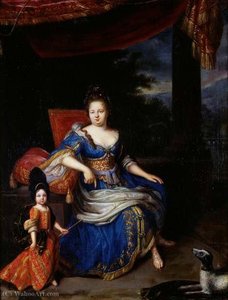
Πορτρέτο του Constantijn Netscher

Τα 27 πιο διάσημα έργα του Constantijn Netscher, κάθε ένα μοναδικό

Ενημερωμένο Νοέμβριος 2026 · κατάταξη βάσει του σκορ δημοφιλίας μας (αναζητήσεις, επισκέψεις και παραγγελίες για κάθε έργο) · 28 έργα του Constantijn Netscher στον κατάλογό μας

Με σύντομη περιγραφή

Το έργο Portrait of a Scholar (1689) είναι το ποίτευμα του Constantijn Netscher που τραβάει τα περισσότερα βλέμματα· το πρωτότυπο ανήκει στο Ερμιτάζ, Σουζ ή Αγία Πετρούπολη. Μετά από αυτό, το βλέμμα στρέφεται στο Portrait of Anna Maria Roman (1680-1758) (1710) και στο Portrait of a Young Man at the Age of Twenty-Eight (1657). Ανάμεσα στα 28 έργα του Constantijn Netscher στον κατάλογό μας, αυτά τα 27 είναι τα πιο διάσημα, το καθένα ένα μοναδικό πρωτότυπο που παρουσιάζεται με την χρονολογία του, το μουσείο του και τον λόγο για τον οποίο παραμένει αιώνιο.

1668 – 1723, The Hague Baroque Περισσότερα έργα: Amsterdam Museum

Τα 10 κορυφαία έργα του Constantijn Netscher, μέσα από το βλέμμα της γκαλερί

1
Portrait of a Scholar (1689) του Constantijn Netscher

Portrait of a Scholar

1689 · Oil · Ερμιτάζ, Σουζ ή Αγία Πετρούπολη

A young man is positioned in a three-quarter view against a dark, atmospheric background. He is the central focus of the composition, emerging from deep shadows that provide a sense of spatial depth. The subject wears a garment of light blue, accented by a crisp white lace cravat and matching cuffs. His dark hair is rendered in voluminous curls. To the left, a table holds several objects, including a candle…

2
Portrait of Anna Maria Roman (1680-1758) (1710) του Constantijn Netscher

Portrait of Anna Maria Roman (1680-1758)

1710 · Oil On Canvas · Mauritshuis, Θέις Χάγκ

The portrait depicts Anna Maria Roman in a three-quarter length pose, positioned against a dark, atmospheric landscape of trees and distant hills. She is seated with a refined posture, her gaze directed toward the viewer. The subject wears a voluminous red drapery that falls in heavy, fluid folds, contrasting with the crisp white of her chemise. Her hair is styled in delicate, powdered curls. Light is concentrated on her face…

3
Portrait of a Young Man at the Age of Twenty-Eight (1657) του Constantijn Netscher

Portrait of a Young Man at the Age of Twenty-Eight

1657 · Oil On Panel

A formal, three-quarter length portrait captures a young man in a moment of composed dignity. He is positioned within a dark, oval-shaped vignette that creates a sense of depth against a rectangular background. The composition centers the subject, drawing the eye immediately to the pale skin of his face and the crisp white lace of his collar and cuffs. This dramatic chiaroscuro effect allows the figure to emerge from a…

4
Portrait of a Prince (1695) του Constantijn Netscher

Portrait of a Prince

1695 · Oil · Bavarian State Painting Collections, Μόναχο

In Constantijn Netscher's "Portrait of a Prince," a young man occupies the center of the frame in a three-quarter length pose. He turns his body slightly toward the viewer's left, his gaze meeting the space just beyond the observer. His long, voluminous, curly hair frames a face caught in a moment of quiet stillness. In his right hand, he grips a commander's baton, a heavy staff that signals his rank…

5
Portrait of a Young Man (1695) του Constantijn Netscher

Portrait of a Young Man

1695 · Oil · Bavarian State Painting Collections, Μόναχο

In "Portrait of a Young Man" by Constantijn Netscher, a single figure occupies the frame. This close-up bust-length portrait is presented within an oval format, a shape that focuses the gaze inward. The man is positioned slightly off-center, his body angled while his eyes look toward the right of the frame. This subtle shift in direction creates a sense of quiet movement within a still moment. The composition adheres to…

6
Jacob Jan de Backer (1667-1718) (1694) του Constantijn Netscher

Jacob Jan de Backer (1667-1718)

1694 · Oil On Canvas · Amsterdam Museum, Άμστερνταμ

A young man sits suspended in an oval frame, caught in a moment of quiet stillness. He wears a voluminous, light-brown powdered wig that catches the light, framing a face set against a dark, indistinct background. A reddish-orange mantle drapes heavily over his shoulder, its lining a cool, pale blue that cuts through the warmth of the composition. His right hand rests near his waist, the fingers rendered with a…

7
Agatha Bicker (1671-1706) (1694) του Constantijn Netscher

Agatha Bicker (1671-1706)

1694 · Oil On Canvas · Amsterdam Museum, Άμστερνταμ

Agatha Bicker emerges from a dark, atmospheric void, her presence defined by the sharp interplay of light and shadow. She is captured from the waist up in a three-quarter view, her gaze steady and poised. A voluminous cascade of red and white fabric drapes around her arms, catching the light to reveal the heavy sheen of the material. Beneath this, a deep blue satin skirt provides a foundation of saturated…

8
Venus Weeping for Adonis Transformed into an Anemone (1700) του Constantijn Netscher

Venus Weeping for Adonis Transformed into an Anemone

1700 · Oil

In Venus Weeping for Adonis Transformed into an Anemone, Constantijn Netscher captures a moment of profound mythological grief. Painted about 1700, the work centers on the goddess Venus as she mourns the loss of her lover, Adonis. The narrative follows the tragic end of the youth, who was gored by a wild boar while out hunting. This violent encounter serves as the catalyst for the transformation that gives the work…

9
Two Children of Francesco Lopez Suasso (1709) του Constantijn Netscher

Two Children of Francesco Lopez Suasso

1709 · Oil On Canvas · Ιστορικό Μουσείο Άμστερνταμ, Άμστερνταμ

The air feels heavy with the scent of damp earth and blooming flora as two young girls pause within a lush, classical garden. Sunlight filters through a thick canopy of leaves, casting a soft, natural glow upon their faces and the delicate petals of the flowers they hold. One girl stands slightly forward, her presence commanding a quiet grace, while her companion sits beside her, creating a balanced, intimate composition.…

10
Two Children of Francesco Lopes Suasso (1709) του Constantijn Netscher

Two Children of Francesco Lopes Suasso

1709 · Oil · Ιστορικό Μουσείο Άμστερνταμ, Άμστερνταμ

In this 1709 portrait, we find ourselves in the quiet, shadowed intimacy of an 18th-century interior. Two young children, the offspring of Francesco Lopes Suasso, are positioned centrally, their presence commanding a sense of stillness and permanence. The composition is balanced, drawing the eye toward the luminous textures of their garments against a dark, architectural backdrop. One child holds a small, colorful bird, while the other clutches a doll, these…

Τα διάσημα έργα του Constantijn Netscher, από το 11 έως το 27

Τα θέματα που κίνησαν το ενδιαφέρον του Constantijn Netscher

Τα τέσσερα θέματα που εμφανίζονται πιο συχνά σε αυτά τα πρωτότυπα έργα, το καθένα με το εξαιρετικό του παράδειγμα.

Τα μουσεία που διατηρούν τα πρωτότυπα έργα του Constantijn Netscher

Τα 8 μουσεία που φιλοξενούν το μεγαλύτερο μέρος των έργων σε αυτήν τη σελίδα.

Μουσείο Πόλη Έργα του Constantijn Netscher Πάτρια από αυτή τη λίστα
Amsterdam Museum, ΆμστερνταμAmsterdam Museum Άμστερνταμ 4 Jacob Jan de Backer (1667-1718), Agatha Bicker (1671-1706), Double portrait of two daughters of Francisco Lopes Suasso
Ιστορικό Μουσείο Άμστερνταμ, ΆμστερνταμΙστορικό Μουσείο Άμστερνταμ Άμστερνταμ 3 Two Children of Francesco Lopez Suasso, Two Children of Francesco Lopes Suasso, Portrait Of The Children Of Francisco Lopez-suasso
Mauritshuis, Θέις ΧάγκMauritshuis Θέις Χάγκ 2 Portrait of Anna Maria Roman (1680-1758), Portrait of a Man
Bavarian State Painting Collections, ΜόναχοBavarian State Painting Collections Μόναχο 2 Portrait of a Prince, Portrait of a Young Man
Ερμιτάζ, Σουζ ή Αγία ΠετρούποληΕρμιτάζ Σουζ ή Αγία Πετρούπολη 1 Portrait of a Scholar
Statens Museum For Kunst, ΚόπενημαγκςStatens Museum For Kunst Κόπενημαγκς 1 A Young Turk
Μουσείο Τέχνης Βοστώνης, ΜπόσττονΜουσείο Τέχνης Βοστώνης Μπόσττον 1 Portrait of a Young Girl Holding a Cat
Westfälisches Landesmuseum, ΜünsterWestfälisches Landesmuseum Μünster 1 Portrait of a General

Ο Constantijn Netscher μέσα από τις δεκαετίες: ένα μοναδικό πρωτότυπο για κάθε εποχή

Έργα ανά δεκαετία

Επιλέξτε μια δεκαετία για να δείτε το πρωτότυπο έργο που την χαρακτηρίζει.

Οι πίνακες του Constantijn Netscher: ερωτήσεις για την γκαλερί

Ποιο είναι το πιο διάσημο έργο του Constantijn Netscher;Αποκαλύψτε την απάντηση

Portrait of a Scholar (1689), Ερμιτάζ, Σουζ ή Αγία Πετρούπολη. Στη συνέχεια ακολουθούν το Portrait of Anna Maria Roman (1680-1758) (1710) και το Portrait of a Young Man at the Age of Twenty-Eight (1657).

Σε τι ηλικία δημιούργησε ο/η Constantijn Netscher το έργο Portrait of a Scholar;Αποκαλύψτε την απάντηση

21 ετών: το έργο Portrait of a Scholar είναι του 1689, και ο/η Constantijn Netscher γεννήθηκε το 1668.

Ποια είναι τα δέκα πιο διάσημα έργα του Constantijn Netscher;Αποκαλύψτε την απάντηση

Portrait of a Scholar, Portrait of Anna Maria Roman (1680-1758), Portrait of a Young Man at the Age of Twenty-Eight, Portrait of a Prince, Portrait of a Young Man, Jacob Jan de Backer (1667-1718), Agatha Bicker (1671-1706), Venus Weeping for Adonis Transformed into an Anemone, Two Children of Francesco Lopez Suasso και Two Children of Francesco Lopes Suasso. Η κατάταξη παραπάνω αναγράφει το έτος και το μουσείο για το κάθε έργο.

Πόσα έργα του Constantijn Netscher είναι γνωστά;Αποκαλύψτε την απάντηση

Ο κατάλογός μας περιλαμβάνει 28 έργα του Constantijn Netscher, με ημερομηνίες από 1689 έως 1715.

Πού μπορούν να θαυμαστούν τα πιο διάσημα πρωτότυπα έργα του Constantijn Netscher;Αποκαλύψτε την απάντηση

Κυρίως σε Amsterdam Museum (Άμστερνταμ), Ιστορικό Μουσείο Άμστερνταμ (Άμστερνταμ) και Mauritshuis (Θέις Χάγκ). Ο πίνακας μουσείου παραπάνω τους περιλαμβάνει όλους.

Κατά ποια περίοδο δημιούργησε ο/η Constantijn Netscher τα πιο γνωστά του/της έργα;Αποκαλύψτε την απάντηση

Κατά την περίοδο 1700s: 6 από τα 27 έργα σε αυτήν τη σελίδα δημιουργήθηκαν τότε, με Venus Weeping for Adonis Transformed into an Anemone από αυτά να είναι μοναδικά.

Ποιο διάσημο έργο του Constantijn Netscher είναι το παλαιότερο και ποιο το νεότερο;Αποκαλύψτε την απάντηση

Σε αυτήν τη σελίδα, το παλαιότερο είναι Portrait of a Scholar (1689) και το νεότερο Portrait of a Man (1715).

Ποια θέματα προτίμησε ο/η Constantijn Netscher;Αποκαλύψτε την απάντηση

Man (8), Lace (5) και Dark background (5), σε συνολικά 27 έργα σε αυτήν τη σελίδα.

Με ποια υλικά χρησιμοποίησε περισσότερο ο Constantijn Netscher;Αποκαλύψτε την απάντηση

Oil On Canvas, για 8 από τα 27 έργα σε αυτήν τη σελίδα.

Ποιο καλλιτεχνικό κίνημα ανήκει το έργο του Constantijn Netscher;Αποκαλύψτε την απάντηση

Baroque, όπως προκύπτει από τα πρωτότυπα σε αυτήν τη σελίδα.

Ποια πρωτότυπα έργα του Constantijn Netscher μπορώ να δω στο Amsterdam Museum;Αποκαλύψτε την απάντηση

Jacob Jan de Backer (1667-1718), Agatha Bicker (1671-1706) και Double portrait of two daughters of Francisco Lopes Suasso: το Amsterdam Museum, Άμστερνταμ διαθέτει 4 από τα έργα σε αυτήν τη σελίδα.

Constantijn Netscher: ένα πορτρέτο του καλλιτέχνη

A Legacy of Light and Line: The Life of Constantin Netscher

In the grand tapestry of the Dutch Golden Age, few threads shine with as much meticulous brilliance as those woven by Constantin Netscher. Born in 1668 in The Hague, Netscher was a child of artistic royalty, emerging from a lineage defined by the mastery of light and texture. As the son of the renowned Caspar Netscher, his very existence was steeped in the traditions of the Dutch Baroque. His early years were not merely spent observing the world, but learning to translate its most delicate nuances onto canvas under the watchful eyes of his father and his elder brother, Anthonie Netscher. This foundational training instilled in him a profound respect for anatomical precision and an almost scientific devotion to the rendering of surfaces—from the shimmering sheen of silk to the soft warmth of human skin.

Netscher’s journey was one of continuous refinement, moving beyond the mere imitation of his predecessors to forge a signature style that balanced psychological depth with material splendor. While many of his contemporaries sought to capture the broad strokes of emotion, Netscher found power in the subtle. He possessed an uncanny ability to manipulate chiaroscuro, using dramatic contrasts between light and shadow to sculpt figures out of the darkness. This technique did more than just provide dimension; it breathed life into his subjects, allowing a viewer to sense the quiet breath of a sitter or the heavy stillness of a room. His work often transcended simple portraiture, venturing into historical allegories and Italianate landscapes that showcased a versatile command over diverse genres.

Mastery of the Human Form and Texture

To gaze upon a Netscher masterpiece is to enter a world where every detail is an invitation to linger. He was a painter who understood that true realism lies in the details that often go unnoticed by the casual observer. His commitment to anatomical accuracy allowed him to capture the subtle tension of a muscle or the graceful curve of a neck with astonishing fidelity. Yet, it was his treatment of texture that truly set him apart. In works such as "A Woman Playing a Lute," one can almost feel the tactile richness of the fabrics draped around the subject, rendered with a precision that borders on the miraculous.

This technical virtuosity served a higher purpose: the conveyance of character. Netscher did not merely paint faces; he painted souls. Through his masterful use of light, he could highlight a flicker of melancholy in an eye or the serene confidence of a noblewoman. His portraits, such as the "Portrait of Marie Mancini" or his evocative depictions of aristocratic children, serve as windows into the social hierarchies and emotional landscapes of the 17th and 18th centuries. He sought to capture not just the physical likeness of his patrons, but their very essence, creating an immersive visual experience that remains captivating centuries later.

Influence and Enduring Significance

The impact of Constantin Netscher extended far beyond the borders of The Hague, leaving an indelible mark on the trajectory of European portraiture. As a teacher, he passed his rigorous standards and technical secrets to a new generation of artists, including Hendrick Doorschodt and Mattheus Verheyden, ensuring that his dedication to realism would endure. His ability to blend the meticulousness of the Dutch tradition with the burgeoning elegance of the Rococo period made him a bridge between two eras of artistic splendor.

Even as art movements shifted toward different ideals, Netscher’s reputation remained steadfast. He stands today not merely as a follower of his father’s footsteps, but as a titan in his own right—a master who could command the shadows to reveal the light. His legacy is found in every brushstroke that seeks to find beauty in precision and every portrait that dares to look deeply into the human condition. Through his work, we continue to witness the golden glow of a vanished age, preserved forever in the exquisite textures of his canvas.