Πορτρέτο του Μπερνάρντο Μπελλοττο

Τα 100 πιο διάσημα έργα του Μπερνάρντο Μπελλοττο, μια επιλογή γκαλερί

Ενημερωμένο Νοέμβριος 2026 · κατάταξη βάσει του σκορ δημοφιλίας μας (αναζητήσεις, επισκέψεις και παραγγελίες για κάθε έργο) · 230 έργα του Μπερνάρντο Μπελλοττο στον κατάλογό μας

Με σύντομη περιγραφή

Από όλα τα πρωτότυπα έργα που άφησε ο Μπερνάρντο Μπελλοττο, το πιο διάσημο είναι το Οι Σκλάβοι της Παλιάς Κρουυσκερχή στο Δρέσδη (1765), το οποίο βρίσκεται στη συλλογή του Γκαλέριον Παλαιῶν ώμφορπων Δρέσδης, Δρέσδη. Ακολουθούν στενά η Dresden, the Frauenkirche and the Rampische Gasse (1749) και η The Moat of the Zwinger in Dresden (1749). Ο κατάλογός μας περιλαμβάνει 230 έργα του Μπερνάρντο Μπελλοττο· η γκαλερί έχει διατηρήσει τα 100 κομμάτια που θαυμάζει ο κόσμος, το καθένα με την ημερομηνία, το μουσείο και την ιστορία του.

1722 – 1780, Βενετία Rococo Περισσότερα έργα: Staatliche Kunstsammlungen Dresden

Τα 10 κορυφαία έργα του Μπερνάρντο Μπελλοττο: η επιλογή της γκαλερί

1
Οι Σκλάβοι της Παλιάς Κρουυσκερχή στο Δρέσδη (1765) του Μπερνάρντο Μπελλοττο

Οι Σκλάβοι της Παλιάς Κρουυσκερχή στο Δρέσδη

1765 · Άνθρακα και λάδι σε καμβά · Γκαλέριον Παλαιῶν ώμφορπων Δρέσδης, Δρέσδη

Το έργο του Βέρντο Μπελότε, “Οι Ερειπωμένες Όψεις της Παλιάς Kreuzkirche στη Δρέσδη”, δεν είναι απλά μια απεικόνιση μιας πόλης που έχει υποστεί καταστροφή. Είναι μια βαθιά μελαγχολική μελέτη για την απώλεια, την ανάκαμψη και την ανθεκτικότητα του ανθρώπου, ένα ψυχολογικό πορτρέτο μιας πόλης που προσπαθεί να αναγεννηθεί από τα συντρίμμια. Ο Μπελότε, μαθητής και συνεχιστής του Κανάλλο, δεν αντιγράφει απλά την πραγματικότητα, αλλά την μεταμορφώνει με έναν ιδιαίτερο τρόπο,…

2
Dresden, the Frauenkirche and the Rampische Gasse (1749) του Μπερνάρντο Μπελλοττο

Dresden, the Frauenkirche and the Rampische Gasse

In the quiet, luminous depths of Bernardo Bellotto’s 1749 masterpiece, Dresden, the Frauenkirche and the Rampische Gasse, we are invited to step through a portal into the eighteenth century. This breathtaking oil on canvas is far more than a mere topographical record; it is a soulful meditation on a city at its zenith. As the eye wanders across the panoramic vista, one is immediately struck by the imposing presence of…

3
The Moat of the Zwinger in Dresden (1749) του Μπερνάρντο Μπελλοττο

The Moat of the Zwinger in Dresden

To look upon The Moat of the Zwinger in Dresden is to witness a moment of profound stillness from 1749. This canvas captures the Zwinger complex not as a mere fortification, but as a serene reflection of royal life during the reign of Augustus III. The water in the moat acts as a liquid mirror, its surface broken only by the gentle movement of small boats and the soft ripples…

4
The Moat of the Zwinger in Dresden (detail) (1749) του Μπερνάρντο Μπελλοττο

The Moat of the Zwinger in Dresden (detail)

In the heart of 18th-century Saxony, amidst the burgeoning prosperity of the Enlightenment, Bernardo Bellotto captured a moment of profound serenity and architectural splendor. His masterpiece, The Moat of the Zwinger in Dresden, is far more than a mere topographical record; it is a luminous window into a vanished world. Painted in 1749, this work invites the viewer to step onto the banks of the Zwinger Palace’s moat, where the…

5
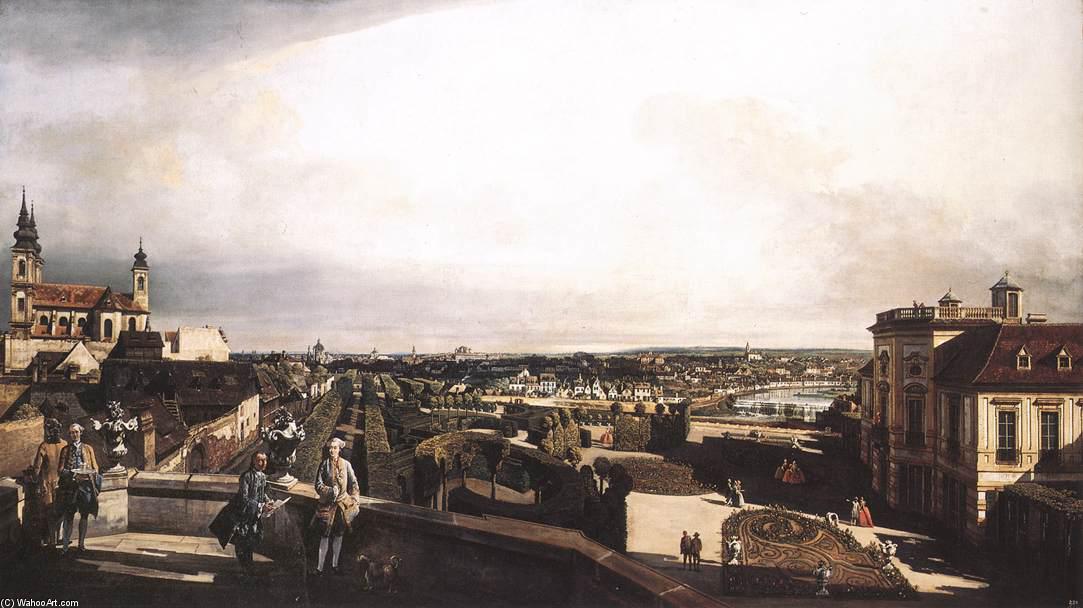
Βιέννη, Πανοραμική προβολή από Παλάσ Κάουνιτς (1759) του Μπερνάρντο Μπελλοττο

Βιέννη, Πανοραμική προβολή από Παλάσ Κάουνιτς

1759 · Άνθρακα και λάδι σε καμβά · Μουσείο Τέχνης Βουδαπέστης, Βουδαπέστη

Βιεννήα – Πανοραμική Εικόνα από το Παλάσιο Κάουνιτς Η Βιεννήα παρουσιάζεται στην πανοραμική αυτή εικόνα του Μπερνάρντο Μπελότετο ως ένα σύμβολο πολιτισμού και κομψότητας της ευρωπαϊκής τέχνης του τέταρτου ορίου του XVIII αιώνα. Ζωγραφισμένη το 1759, η σκηνή απεικονίζει την πόλη από το Παλάσιο Κάουνιτς και αποτελεί μια εντυπωσιακή ματιά στην αρχιτεκτονική και τον πολιτισμό της Βιεννήας εκείνης της εποχής. Ο Μπελότετο ήταν ένας εξαιρετικά ταλαντούχος ζωγράφος που ειδικευόταν στην…

6
Grand canal, view from north (1738) του Μπερνάρντο Μπελλοττο

Grand canal, view from north

1738 · Oil On Canvas · Εθνική Πινακοθήκη της Βικτώριας, Μελβούρνη

In this work, titled Grand canal, view from north, the artist Bernardo Bellotto captures a specific moment within the Venetian cityscape. Painted about 1738, the scene focuses on the activity along the water, where several boats float upon the river. Some vessels occupy the foreground, while others drift toward the distance, creating a sense of depth across the waterway.

7
The Fortress of Konigstein (1758) του Μπερνάρντο Μπελλοττο

The Fortress of Konigstein

1758 · Oil On Canvas · Εθνική Πινακοθήκη Τέχνης, Ουάσινγκτον

The painting titled The Fortress of Konigstein was executed by the Italian artist Bernardo Bellotto in 1758. Bellotto was an urban landscape painter and printmaker who specialized in the veduta style. He was the nephew and pupil of Giovanni Antonio Canal. This specific work was part of a series of views commissioned by the Elector of Saxony, Augustus III.

8
Allegory Inclinata Resurgit (1762) του Μπερνάρντο Μπελλοττο

Allegory Inclinata Resurgit

1762 · Oil On Canvas · Staatliche Kunstsammlungen Dresden, Δρέσδη

The scene unfolds within the allegorical realm of Allegory Inclinata Resurgit, a painting that captures a moment of profound symbolic weight. Created by the hand of Bernardo Bellotto, this work invites the viewer into a staged, theatrical space where figures and architecture converge. The piece emerges from about 1762, a time when the artist was deeply engaged with the visual language of his era. Every element within the frame works…

10
Venetian Capriccio, View of Santa Maria dei Miracoli (1740) του Μπερνάρντο Μπελλοττο

Venetian Capriccio, View of Santa Maria dei Miracoli

1740 · Oil On Canvas · Niedersächsisches Landesmuseum, Ανόβερο

In this work, titled Venetian Capriccio, View of Santa Maria dei Miracoli, the artist Bernardo Bellotto presents a detailed cityscape of Venice. Painted about 1740, the scene focuses on the architecture of the Santa Maria dei Miracoli church. It is a capriccio, a composition that uses a fanciful or imagined arrangement of real-world elements to create a specific atmosphere.

Η επιλογή του Μπερνάρντο Μπελλοττο συνεχίζεται, από τον 11 έως τον 100

11Pirna Seen from the Right Bank of the Elbe (1750) του Μπερνάρντο ΜπελλοττοPirna Seen from the Right Bank of the Elbe1750 12A Capriccio River Landscape with a Church to the Left (1765) του Μπερνάρντο ΜπελλοττοA Capriccio River Landscape with a Church to the Left1765 13Allegory Ex Arduis Immortalitas (1762) του Μπερνάρντο ΜπελλοττοAllegory Ex Arduis Immortalitas1762 · Staatliche Kunstsammlungen Dresden 14Fantastic architecture with portrait of Franciszek Salezy Potocki and his son Stanisław Szczęsny (1763) του Μπερνάρντο ΜπελλοττοFantastic architecture with portrait of Franciszek Salezy Potocki and his son Stanisław Szczęsny1763 · El Paso Museum of Art 15The Fortress of Königstein: Courtyard with the Magdalenenburg (1758) του Μπερνάρντο ΜπελλοττοThe Fortress of Königstein: Courtyard with the Magdalenenburg1758 · Εθνική Πινακοθήκη Τέχνης 16The Fortress of Königstein (1756) του Μπερνάρντο ΜπελλοττοThe Fortress of Königstein1756 17The Election of the King Stanislaus Augustus (1764) του Μπερνάρντο ΜπελλοττοThe Election of the King Stanislaus Augustus1764 18View of Wilanów meadows (1775) του Μπερνάρντο ΜπελλοττοView of Wilanów meadows1775 · Βασιλικό Κάστρο της Βαρσοβίας 19Groom leading a horse (1773) του Μπερνάρντο ΜπελλοττοGroom leading a horse1773 · Εθνικό Μουσείο Βαρσοβίας 20The Elbe between Pirna and Pillnitz (1766) του Μπερνάρντο ΜπελλοττοThe Elbe between Pirna and Pillnitz1766 · Staatliche Kunstsammlungen Dresden 21Dresden, the Ruins of the Pirnaische Vorstadt (1766) του Μπερνάρντο ΜπελλοττοDresden, the Ruins of the Pirnaische Vorstadt1766 22View of Ujazdów from the Royal Baths (1776) του Μπερνάρντο ΜπελλοττοView of Ujazdów from the Royal Baths1776 · Εθνικό Μουσείο Βαρσοβίας 23Stable boy leading a horse (1773) του Μπερνάρντο ΜπελλοττοStable boy leading a horse1773 · Εθνικό Μουσείο Βαρσοβίας 24Rio dei Mendicanti with the Scuola di San Marco (detail) (1738) του Μπερνάρντο ΜπελλοττοRio dei Mendicanti with the Scuola di San Marco (detail)1738 · Γκαλερί της Ακαδημίας Βενετίας 25The Imperial Palace Schönbrunn, Garden Side (1758) του Μπερνάρντο ΜπελλοττοThe Imperial Palace Schönbrunn, Garden Side1758 · Kunsthistorisches Museum 26View of Pirna from the Sonnenstein Castle (1750) του Μπερνάρντο ΜπελλοττοView of Pirna from the Sonnenstein Castle1750 · Ερμιτάζ 27View of Pirna from the Right Bank of the Elba above the Town (1753) του Μπερνάρντο ΜπελλοττοView of Pirna from the Right Bank of the Elba above the Town1753 · Ερμιτάζ 28The Kreuzkirche in Dresden (1747) του Μπερνάρντο ΜπελλοττοThe Kreuzkirche in Dresden1747 · Γκαλέριον Παλαιῶν ώμφορπων Δρέσδης 29Stairs Leading to the Colonnade of a Palace (1762) του Μπερνάρντο ΜπελλοττοStairs Leading to the Colonnade of a Palace1762 · Staatliche Kunstsammlungen Dresden 30Lagoon landscape (1741) του Μπερνάρντο ΜπελλοττοLagoon landscape1741 31Venice (Marriage of the Doge with the Sea) (1727) του Μπερνάρντο ΜπελλοττοVenice (Marriage of the Doge with the Sea)1727 32The Grand Canal from the Campo San Vio, Venice (1727) του Μπερνάρντο ΜπελλοττοThe Grand Canal from the Campo San Vio, Venice1727 · Εθνική Πινάκοθήκη της Σκωτίας 33The Pantheon (1742) του Μπερνάρντο ΜπελλοττοThe Pantheon1742 · Μουσείο Τέχνης του Σικάγο 34View of the Tiber in Rome with the Castel Sant'Angelo (1743) του Μπερνάρντο ΜπελλοττοView of the Tiber in Rome with the Castel Sant'Angelo1743 · Detroit Institute of Arts 35Piazza San Marco, Venice (1740) του Μπερνάρντο ΜπελλοττοPiazza San Marco, Venice1740 · Μουσείο Τέχνης Κλίβελαντ 36The Piazzetta, Venice (1743) του Μπερνάρντο ΜπελλοττοThe Piazzetta, Venice1743 · Εθνική Πινακοθήκη του Καναδά 37Piazza del Campidoglio with Santa Maria d'Aracoeli, Rome (1742) του Μπερνάρντο ΜπελλοττοPiazza del Campidoglio with Santa Maria d'Aracoeli, Rome1742 · Petworth House 38A View at the Entrance of the Grand Canal, Venice (1741) του Μπερνάρντο ΜπελλοττοA View at the Entrance of the Grand Canal, Venice1741 · Fitzwilliam Museum 39The Piazza San Martino, Lucca (1742) του Μπερνάρντο ΜπελλοττοThe Piazza San Martino, Lucca1742 · York Art Gallery 40Painting of the Church of Santa Maria Formosa, Venice (1742) του Μπερνάρντο ΜπελλοττοPainting of the Church of Santa Maria Formosa, Venice1742 41The Campo di SS. Giovanni e Paolo, Venice (1743) του Μπερνάρντο ΜπελλοττοThe Campo di SS. Giovanni e Paolo, Venice1743 · Εθνική Πινακοθήκη Τέχνης 42View of Via di Ripetta in Rome (1742) του Μπερνάρντο ΜπελλοττοView of Via di Ripetta in Rome1742 · Museum Kunstpalast 43View of the Grand Canal: Santa Maria della Salute and the Dogana from Campo Santa Maria Zobenigo (1743) του Μπερνάρντο ΜπελλοττοView of the Grand Canal: Santa Maria della Salute and the Dogana from Campo Santa Maria Zobenigo1743 · Μουσείο J. Paul Getty 44View of Grand Canal with the Palazzi Foscari and Moro Lin (1734) του Μπερνάρντο ΜπελλοττοView of Grand Canal with the Palazzi Foscari and Moro Lin1734 · Nationalmuseum 45The harbor basin of San Marco on Ascension Day, Venice (1739) του Μπερνάρντο ΜπελλοττοThe harbor basin of San Marco on Ascension Day, Venice1739 46Colosseum and Arch of Constantine (Rome) (1742) του Μπερνάρντο ΜπελλοττοColosseum and Arch of Constantine (Rome)1742 47The Arch of Constantine (1742) του Μπερνάρντο ΜπελλοττοThe Arch of Constantine1742 · Royal Collection 48Signoria Square in Florence (1741) του Μπερνάρντο ΜπελλοττοSignoria Square in Florence1741 49View of the Grand Canal at San Stae (1738) του Μπερνάρντο ΜπελλοττοView of the Grand Canal at San Stae1738 50Arno in Florence (1742) του Μπερνάρντο ΜπελλοττοArno in Florence1742 51Capriccio Padovano (1740) του Μπερνάρντο ΜπελλοττοCapriccio Padovano1740 · Μουσείο Θυσσεν-Βορνημισάζα 52Pirna with the Dohna Gate (1754) του Μπερνάρντο ΜπελλοττοPirna with the Dohna Gate1754 · Staatliche Kunstsammlungen Dresden 53The Arno in Florence with the Ponte Vecchio (1745) του Μπερνάρντο ΜπελλοττοThe Arno in Florence with the Ponte Vecchio1745 · Fitzwilliam Museum 54The Arno in Florence with the Ponte Alla Carraia (1745) του Μπερνάρντο ΜπελλοττοThe Arno in Florence with the Ponte Alla Carraia1745 · Fitzwilliam Museum 55Capriccio with the Dolo lock (1748) του Μπερνάρντο ΜπελλοττοCapriccio with the Dolo lock1748 · Staatliche Kunstsammlungen Dresden 56The Lock at Dolo (1745) του Μπερνάρντο ΜπελλοττοThe Lock at Dolo1745 · Yale University Art Gallery 57The Grand Canal: Santa Lucia and the Church of the Scalzi, Venice (1750) του Μπερνάρντο ΜπελλοττοThe Grand Canal: Santa Lucia and the Church of the Scalzi, Venice1750 · Εθνική Πινάκοθήκη της Σκωτίας 58View of Pirna from the West, from the Corner of Wide Street (1755) του Μπερνάρντο ΜπελλοττοView of Pirna from the West, from the Corner of Wide Street1755 · Ερμιτάζ 59View of Pirna, from Sonnestein Castle (1753) του Μπερνάρντο ΜπελλοττοView of Pirna, from Sonnestein Castle1753 · Μουσείο Πούσκιν 60View of Verona with the Castelvecchio and Ponte Scaligero (1745) του Μπερνάρντο ΜπελλοττοView of Verona with the Castelvecchio and Ponte Scaligero1745 · Philadelphia Museum of Art 61Dresden from the Right Bank of the Elbe, below the Augustus Bridge (1750) του Μπερνάρντο ΜπελλοττοDresden from the Right Bank of the Elbe, below the Augustus Bridge1750 · Εθνική Γκαλερί της Ιρλανδίας 62Dresden from the Right Bank of the Elbe above the Augustus Bridge (1750) του Μπερνάρντο ΜπελλοττοDresden from the Right Bank of the Elbe above the Augustus Bridge1750 · Εθνική Γκαλερί της Ιρλανδίας 63The Doge's Palace in Venice from the Sea (1750) του Μπερνάρντο ΜπελλοττοThe Doge's Palace in Venice from the Sea1750 · Musée municipal de Bourg-en-Bresse 64View of Pirna from the Right Bank of the Elba (1753) του Μπερνάρντο ΜπελλοττοView of Pirna from the Right Bank of the Elba1753 · Ερμιτάζ 65The Moat of Zwinger in Dresden (1750) του Μπερνάρντο ΜπελλοττοThe Moat of Zwinger in Dresden1750 · Ερμιτάζ 66Old Fortifications of Dresden (1749) του Μπερνάρντο ΜπελλοττοOld Fortifications of Dresden1749 · Ερμιτάζ 67Market-Place of the Neustadt in Dresden (1751) του Μπερνάρντο ΜπελλοττοMarket-Place of the Neustadt in Dresden1751 · Ερμιτάζ 68View of Pirna, from Sonnenstein Castle (1755) του Μπερνάρντο ΜπελλοττοView of Pirna, from Sonnenstein Castle1755 · Staatliche Kunstsammlungen Dresden 69Pirna from Kopitz (1753) του Μπερνάρντο ΜπελλοττοPirna from Kopitz1753 · Staatliche Kunstsammlungen Dresden 70The Zwinger in Dresden (1751) του Μπερνάρντο ΜπελλοττοThe Zwinger in Dresden1751 · Staatliche Kunstsammlungen Dresden 71The Old Ponte delle Navi in Verona (1746) του Μπερνάρντο ΜπελλοττοThe Old Ponte delle Navi in Verona1746 · Staatliche Kunstsammlungen Dresden 72The Old Market in Dresden from Schlossgasse (1750) του Μπερνάρντο ΜπελλοττοThe Old Market in Dresden from Schlossgasse1750 · Staatliche Kunstsammlungen Dresden 73The Old Fortifications in Dresden (1750) του Μπερνάρντο ΜπελλοττοThe Old Fortifications in Dresden1750 · Staatliche Kunstsammlungen Dresden 74Pirna from Posta (1753) του Μπερνάρντο ΜπελλοττοPirna from Posta1753 · Staatliche Kunstsammlungen Dresden 75Dresden from the left Bank of the Elbe above the Bridgehead of the Old Town (1748) του Μπερνάρντο ΜπελλοττοDresden from the left Bank of the Elbe above the Bridgehead of the Old Town1748 · Staatliche Kunstsammlungen Dresden 76View from the Bridge of Dresden on the Elbe (1749) του Μπερνάρντο ΜπελλοττοView from the Bridge of Dresden on the Elbe1749 · Μουσεία Τέχνης της Σαν Φρανσίσκο 77Abbruch der Kreuzkirche, Dresden (1746) του Μπερνάρντο ΜπελλοττοAbbruch der Kreuzkirche, Dresden1746 78Piazza S. Marco, Venice (1746) του Μπερνάρντο ΜπελλοττοPiazza S. Marco, Venice1746 79The Old Market Square in Dresden (1750) του Μπερνάρντο ΜπελλοττοThe Old Market Square in Dresden1750 · Staatliche Kunstsammlungen Dresden 80The New Market Square in Dresden (1750) του Μπερνάρντο ΜπελλοττοThe New Market Square in Dresden1750 81Verona Veduta (1746) του Μπερνάρντο ΜπελλοττοVerona Veduta1746 · Powys Castle Museum 82View of Turin near the Royal Palace (1745) του Μπερνάρντο ΜπελλοττοView of Turin near the Royal Palace1745 · Galleria Sabauda 83New Market Square in Dresden (1750) του Μπερνάρντο ΜπελλοττοNew Market Square in Dresden1750 · Γκαλέριον Παλαιῶν ώμφορπων Δρέσδης 84Dresden from the Left Bank of the Elbe, below the Fortifications (1748) του Μπερνάρντο ΜπελλοττοDresden from the Left Bank of the Elbe, below the Fortifications1748 · Γκαλέριον Παλαιῶν ώμφορπων Δρέσδης 85Pirna Seen from the Harbour Town (1753) του Μπερνάρντο ΜπελλοττοPirna Seen from the Harbour Town1753 · Γκαλέριον Παλαιῶν ώμφορπων Δρέσδης 86View of an Old Bridge Over the River Po, Turin (1745) του Μπερνάρντο ΜπελλοττοView of an Old Bridge Over the River Po, Turin1745 · Galleria Sabauda 87The Neuer Marktplatz in Dresden (1747) του Μπερνάρντο ΜπελλοττοThe Neuer Marktplatz in Dresden1747 · Ερμιτάζ 88Venice (Rio di S. Fosca and S. Maria dei Servil) (1758) του Μπερνάρντο ΜπελλοττοVenice (Rio di S. Fosca and S. Maria dei Servil)1758 89View of München (1758) του Μπερνάρντο ΜπελλοττοView of München1758 90Venice: Riva degli Schiavoni towards the East (1760) του Μπερνάρντο ΜπελλοττοVenice: Riva degli Schiavoni towards the East1760 · John and Mable Ringling Museum of Art 91Venice: Piazza San Marco, Seen from the Campo San Basso (1760) του Μπερνάρντο ΜπελλοττοVenice: Piazza San Marco, Seen from the Campo San Basso1760 · John and Mable Ringling Museum of Art 92Saint Mark's Square, Venice (1756) του Μπερνάρντο ΜπελλοττοSaint Mark's Square, Venice1756 · Εθνική Γκαλερί της Ιρλανδίας 93Campo San Stin, Venice (1760) του Μπερνάρντο ΜπελλοττοCampo San Stin, Venice1760 94Old town of Dresden (1765) του Μπερνάρντο ΜπελλοττοOld town of Dresden1765 · Staatliche Kunsthalle Karlsruhe 95Pirna seen from the right bank of the Elbe (1756) του Μπερνάρντο ΜπελλοττοPirna seen from the right bank of the Elbe1756 · San Diego Museum of Art 96Architectural Capriccio (1765) του Μπερνάρντο ΜπελλοττοArchitectural Capriccio1765 · San Diego Museum of Art 97Nymphenburg Castle (1761) του Μπερνάρντο ΜπελλοττοNymphenburg Castle1761 98Architectural Caprice with a Palace (1765) του Μπερνάρντο ΜπελλοττοArchitectural Caprice with a Palace1765 · Μουσείο Κ fine Arts de Bilbao 99Venice: Canale Grande (1758) του Μπερνάρντο ΜπελλοττοVenice: Canale Grande1758 100View of Vienna with St. Charles's Church (1758) του Μπερνάρντο ΜπελλοττοView of Vienna with St. Charles's Church1758 · Museum Kunstpalast

Τα διάσημα έργα του Μπερνάρντο Μπελλοττο, ανά περίοδο

Τα θέματα που κίνησαν το ενδιαφέρον του Μπερνάρντο Μπελλοττο

Τα τέσσερα θέματα που εμφανίζονται πιο συχνά σε αυτά τα πρωτότυπα έργα, το καθένα με το εξαιρετικό του παράδειγμα.

Τα μουσεία που διατηρούν τα πρωτότυπα έργα του Μπερνάρντο Μπελλοττο

Τα 8 μουσεία που φιλοξενούν το μεγαλύτερο μέρος των έργων σε αυτήν τη σελίδα.

Μουσείο Πόλη Έργα του Μπερνάρντο Μπελλοττο Πάτρια από αυτή τη λίστα
Staatliche Kunstsammlungen Dresden, ΔρέσδηStaatliche Kunstsammlungen Dresden Δρέσδη 19 Allegory Inclinata Resurgit, Allegory Ex Arduis Immortalitas, The Elbe between Pirna and Pillnitz
Γκαλέριον Παλαιῶν ώμφορπων Δρέσδης, ΔρέσδηΓκαλέριον Παλαιῶν ώμφορπων Δρέσδης Δρέσδη 12 Οι Σκλάβοι της Παλιάς Κρουυσκερχή στο Δρέσδη, Dresden, the Frauenkirche and the Rampische Gasse, The Moat of the Zwinger in Dresden
Ερμιτάζ, Σουζ ή Αγία ΠετρούποληΕρμιτάζ Σουζ ή Αγία Πετρούπολη 11 View of Pirna from the Sonnenstein Castle, View of Pirna from the Right Bank of the Elba above the Town, View of Pirna from the West, from the Corner of Wide Street
Εθνικό Μουσείο Βαρσοβίας, ΒαρσοβίαΕθνικό Μουσείο Βαρσοβίας Βαρσοβία 8 Groom leading a horse, View of Ujazdów from the Royal Baths, Stable boy leading a horse
Εθνική Πινακοθήκη Τέχνης, ΟυάσινγκτονΕθνική Πινακοθήκη Τέχνης Ουάσινγκτον 5 The Fortress of Konigstein, The Fortress of Königstein: Courtyard with the Magdalenenburg, The Campo di SS. Giovanni e Paolo, Venice
Fitzwilliam MuseumFitzwilliam Museum 3 A View at the Entrance of the Grand Canal, Venice, The Arno in Florence with the Ponte Vecchio, The Arno in Florence with the Ponte Alla Carraia
Εθνική Γκαλερί της Ιρλανδίας, ΔουβλίνοΕθνική Γκαλερί της Ιρλανδίας Δουβλίνο 3 Dresden from the Right Bank of the Elbe, below the Augustus Bridge, Dresden from the Right Bank of the Elbe above the Augustus Bridge, Saint Mark's Square, Venice
Museum Kunstpalast, ΝτίσελντορφMuseum Kunstpalast Ντίσελντορφ 3 View of Via di Ripetta in Rome, View of Vienna with St. Charles's Church

Ο Μπερνάρντο Μπελλοττο δεκαετία προς δεκαετία: το πρωτότυπο που ορίζει κάθε μία

Έργα ανά δεκαετία

Επιλέξτε μια δεκαετία για να δείτε το πρωτότυπο έργο που την χαρακτηρίζει.

Ερωτήσεις συλλεκτών για τα έργα του Μπερνάρντο Μπελλοττο

Για ποιο έργο είναι πιο γνωστός ο Μπερνάρντο Μπελλοττο;Αποκαλύψτε την απάντηση

Οι Σκλάβοι της Παλιάς Κρουυσκερχή στο Δρέσδη (1765), Γκαλέριον Παλαιῶν ώμφορπων Δρέσδης, Δρέσδη. Στη συνέχεια ακολουθούν το Dresden, the Frauenkirche and the Rampische Gasse (1749) και το The Moat of the Zwinger in Dresden (1749).

Πόσο ηλικία είχε ο/η Μπερνάρντο Μπελλοττο όταν δημιουργήθηκε το Οι Σκλάβοι της Παλιάς Κρουυσκερχή στο Δρέσδη;Αποκαλύψτε την απάντηση

43 ετών: το έργο Οι Σκλάβοι της Παλιάς Κρουυσκερχή στο Δρέσδη είναι του 1765, και ο/η Μπερνάρντο Μπελλοττο γεννήθηκε το 1722.

Ποια είναι τα δέκα πιο διάσημα έργα του Μπερνάρντο Μπελλοττο;Αποκαλύψτε την απάντηση

Οι Σκλάβοι της Παλιάς Κρουυσκερχή στο Δρέσδη, Dresden, the Frauenkirche and the Rampische Gasse, The Moat of the Zwinger in Dresden, The Moat of the Zwinger in Dresden (detail), Βιέννη, Πανοραμική προβολή από Παλάσ Κάουνιτς, Grand canal, view from north, The Fortress of Konigstein, Allegory Inclinata Resurgit, The Arsenal, Venice και Venetian Capriccio, View of Santa Maria dei Miracoli. Η κατάταξη παραπάνω αναγράφει το έτος και το μουσείο για το κάθε έργο.

Πόσα έργα δημιούργησε ο/η Μπερνάρντο Μπελλοττο;Αποκαλύψτε την απάντηση

Ο κατάλογός μας περιλαμβάνει 230 έργα του Μπερνάρντο Μπελλοττο, με ημερομηνίες από 1734 έως 1776.

Σε ποια μουσεία εκτίθενται τα αριστούργημα του Μπερνάρντο Μπελλοττο;Αποκαλύψτε την απάντηση

Κυρίως σε Staatliche Kunstsammlungen Dresden (Δρέσδη), Γκαλέριον Παλαιῶν ώμφορπων Δρέσδης (Δρέσδη) και Ερμιτάζ (Σουζ ή Αγία Πετρούπολη). Ο πίνακας μουσείου παραπάνω τους περιλαμβάνει όλους.

Σε ποιες χρονιές δημιούργησε ο/η Μπερνάρντο Μπελλοττο τα πιο διάσημα έργα του/της;Αποκαλύψτε την απάντηση

Κατά την περίοδο 1740s: 39 από τα 100 έργα σε αυτήν τη σελίδα δημιουργήθηκαν τότε, με Dresden, the Frauenkirche and the Rampische Gasse από αυτά να είναι μοναδικά.

Ποια είναι τα πρώτα και τα τελευταία διάσημα πρωτότυπα του Μπερνάρντο Μπελλοττο;Αποκαλύψτε την απάντηση

Σε αυτήν τη σελίδα, το παλαιότερο είναι View of Grand Canal with the Palazzi Foscari and Moro Lin (1734) και το νεότερο View of Ujazdów from the Royal Baths (1776).

Ποια θέματα επέλεξε πιο συχνά ο Μπερνάρντο Μπελλοττο;Αποκαλύψτε την απάντηση

Sky (15), Architecture (13) και People (10), σε συνολικά 100 έργα σε αυτήν τη σελίδα.

Ποια τεχνική χρησιμοποίησε περισσότερο ο Μπερνάρντο Μπελλοττο;Αποκαλύψτε την απάντηση

Oil On Canvas, για 23 από τα 100 έργα σε αυτήν τη σελίδα.

Σε ποιο καλλιτεχνικό κίνημα ανήκει ο/η Μπερνάρντο Μπελλοττο;Αποκαλύψτε την απάντηση

Rococo, όπως προκύπτει από τα πρωτότυπα σε αυτήν τη σελίδα.

Ποια έργα του Μπερνάρντο Μπελλοττο εκτίθενται στο Staatliche Kunstsammlungen Dresden;Αποκαλύψτε την απάντηση

Allegory Inclinata Resurgit, Allegory Ex Arduis Immortalitas και The Elbe between Pirna and Pillnitz: το Staatliche Kunstsammlungen Dresden, Δρέσδη διαθέτει 15 από τα έργα σε αυτήν τη σελίδα.

Μπερνάρντο Μπελλοττο: ζωή και έργο

Early Life, Family and Training

Bernardo Bellotto entered the world in Venice, Italy, around 1721 or 1722. Some records suggest a more specific date of January 30, 1721. He was born into a family where art was a central presence, the son of Lorenzo Antonio Bellotto and Fiorenza Canal. Through his mother, he was connected to a significant artistic lineage, as she was the sister of the famous Canaletto. This connection meant that from his earliest years, the atmosphere of his home was shaped by the traditions of Venetian painting.

His formal training took place within the workshop of his uncle, Giovanni Antonio Canal. As a pupil to the man known as Canaletto, Bernardo Bellotto learned the intricacies of perspective and the meticulous details required to capture the essence of a city. This apprenticeship was more than a simple education; it was an immersion into a specific way of seeing the world. He did not merely study under his uncle but became part of a family legacy that would eventually carry his name across Europe. In certain regions, such as Germany and Poland, he was often referred to as Bernardo Canaletto, a name that reflected his deep ties to his mentor and kin.

His early years in Venice provided the foundation for a career spent documenting the architecture and light of many different cities. While his early works showed him following the path set by his uncle, he began to develop a sense of his own identity through his specific handling of light and shadow. His upbringing in the Venetian school ensured that his technical skills were rooted in a deep understanding of urban landscapes and the way light interacts with stone and water.

Artistic Style and Technique

Bellotto had a way of looking at a city that felt both precise and deeply atmospheric. While he learned the foundations of perspective and composition in his uncle's workshop, his own hand moved toward a more subdued way of seeing. He moved away from the bright, high-contrast palettes often found in Venetian scenes, choosing instead to work with a more restrained color scheme. His canvases frequently relied on earthy browns, grays, ochres, and faded reds to build his views. This choice allowed him to focus on the specific quality of light that defines a particular place, capturing how sun and shadow settle upon stone and brick.

There is a certain weight to his skies. His treatment of clouds and shadows shows a clear influence from Dutch painting, moving away from simple decoration toward something more grounded and natural. He had a talent for the elaborate representation of architectural and natural vistas, ensuring that every building and waterway felt solid and real. To achieve this level of detail, he likely used tools like the camera obscura or camera lucida, which helped him maintain a high degree of accuracy in his urban landscapes.

Travels and European Commissions

Bellotto’s career took him far beyond the familiar canals of his birthplace. In 1742, he moved to Rome, where he began producing vedute of the city. His travels continued through northern Italy during 1744 and 1745, a period that saw him working for Charles Emmanuel III of Savoy. These years of movement allowed him to observe the specific light and architecture of various regions, expanding his reputation as a painter of urban spaces.

His professional life became closely tied to the courts of Europe. At the behest of King Augustus III of Poland, Bellotto lived in Dresden between 1747 and 1758. This period was marked by steady work within the Saxon court. Following this, he received an invitation from Empress Maria Theresa to work in Vienna in 1758. His ability to capture the likeness of a city made him a sought-after figure for monarchs looking to document their capitals.

In 1764, a new chapter began when King Stanisław August Poniatowski invited him to become his court painter in Warsaw. He remained in the Polish capital for many years, documenting the city and its surroundings. This final major commission allowed him to settle into a role that would last for much of his remaining life.

Notable Works and Cityscapes

Bellotto’s brush captured the specific light of the cities he inhabited, turning stone and water into lasting records. In 1738, he painted the Rio dei Mendicanti with the Scuola di San Marco (detail), a work that shows his early ability to handle the intricate details of Venetian architecture. As he moved through Italy, his focus shifted toward the grander scale of urban life. In 1747, he produced the View of Verona and the River Adige from the Ponte Nuovo, capturing the way the river flows through the city. His ability to document a place with precision became a hallmark of his career, whether he was painting the bustling streets of a capital or the quiet corners of a provincial town.

His time in Dresden and Vienna allowed him to document the architectural heart of Europe. He created the View of Dresden from the Right Bank of the Elbe with the Augustus Bridge in 1748, a scene that recorded the city's layout with remarkable clarity. Later, his work in Vienna included the Dominican Church in 1758 and the Vienna, Panorama from Palais Kaunitz in 1759. These paintings were more than simple views; they were precise observations of the monuments and palaces that defined the imperial atmosphere of the era.

In his later years, Bellotto found a home in Poland, where his work took on a new level of historical importance. He completed the View of Warsaw from the Royal Palace (detail) in 1773, providing a detailed look at the Polish capital. These views of Warsaw would eventually become essential references for those tasked with rebuilding the city's historic center long after the buildings themselves had been lost.

Legacy and Urban Reconstruction

Bellotto’s paintings have often acted as a quiet, visual memory for cities that faced total devastation. In Dresden, his detailed views preserved the appearance of the city's pre-war beauty, capturing architectural details that would later be lost to conflict. His ability to document the precise layout of streets and monuments meant that his canvases became more than just art; they became essential blueprints for those tasked with rebuilding.

This practical utility became most apparent in Warsaw. After the city was heavily damaged during World War II, Bellotto’s thirty views of the Polish capital provided the necessary guidance for reconstruction. Architects used his work to restore the city's appearance, helping to bring back the soul of the urban landscape. This meticulous restoration effort was so successful that the historic centre of Warsaw was recognized as a UNESCO World Heritage Site in 1980.

Where to See His Works Today

To find the traces of Bellotto's hand, one must travel across the cities he once documented with such precision. In Dresden, the Gemäldegalerie holds a significant portion of his output, including views of the city that captured its architectural life before the ravages of war. His presence in the German capital is felt through these detailed records of urban life and the quiet, somber light he favored.

His connection to his roots remains visible in Venice, where the Gallerie dell'Accademia di Venezia preserves his early perspectives. These works often reflect the shimmering waterways and the specific atmosphere of the Venetian lagoons. Beyond Italy, his reach extends into the great collections of Eastern and Central Europe. The Hermitage Museum in Saint Petersburg and the Szépművészeti Múzeum in Budapest both house his paintings, offering glimpses into the landscapes and cityscapes he painted during his travels through the continent.

In Vienna, the Liechtenstein Museum maintains works that show his ability to capture the grandeur of imperial architecture. His ability to render the solidity of stone and the movement of clouds makes his presence in these museums a vital link to the 18th century. Collectors and historians can find specific examples of his skill in these locations: