


1


Ενημερωμένο Οκτώβριος 2026 · κατάταξη βάσει του σκορ δημοφιλίας μας (αναζητήσεις, επισκέψεις και παραγγελίες για κάθε έργο) · 19 έργα του Αντουάν Μπουρντέλ στον κατάλογό μας
Με σύντομη περιγραφή
Στο μάτι της γκαλερί, το πιο διάσημο έργο του Αντουάν Μπουρντέλ είναι το Ludwig van Beethoven (1902). Ο Penelope (1912) και ο Hercules the Archer ολοκληρώνουν το τρίο που κάθε μάτι αναγνωρίζει. Από τα 19 έργα του Αντουάν Μπουρντέλ στον κατάλογό μας, η γκαλερί παρουσιάζει παρακάτω τα 19 πιο διάσημα, όπου κάθε ένα είναι πρωτότυπο, με την χρονολογία του, το μουσείο του και το τι το κάνει μοναδικό.


From 1893 to 1908, Antoine Bourdelle (1861–1929) was an assistant to Rodin, for whom he executed some of his definitive works. In 1909, gradually freeing himself from the influence of the master, Bourdelle created Hercules the Archer, a work inspired by archaic Greek sculpture. Taking the sixth of Hercules

In the delicate interplay of light and shadow captured within this bronze study, we encounter a profound moment of connection that transcends the cold medium of metal. Carpeaux at Work (detail), a masterful creation by the influential French sculptor Émile Antoine Bourdelle, invites the viewer into a private, quiet sanctuary of emotion. The sculpture presents a close-up view of a figure cradling a bird, an image that serves as a…

In the delicate detail of The Sculptor Carpeaux at Work, we are invited into a profound moment of connection that transcends the boundaries between man and nature. This evocative work by Émile Antoine Bourdelle captures more than just a physical likeness; it captures the very essence of tenderness and focused observation. The sculpture presents a man—a tribute to the great sculptor Carpeaux—cradling a small bird within his hands. There is…

Surprisingly well balanced, and supporting himself on a rock that echoes the shape of his enormous bow, in this picture, Heracles performs one of his Twelve Labors. He must clear the region around Lake Stymphalia of the flesh-eating birds infesting its woods and attacking its people. The sculptor Antoine Bourdelle has accentuated his tensed muscles, emphasizing the hero


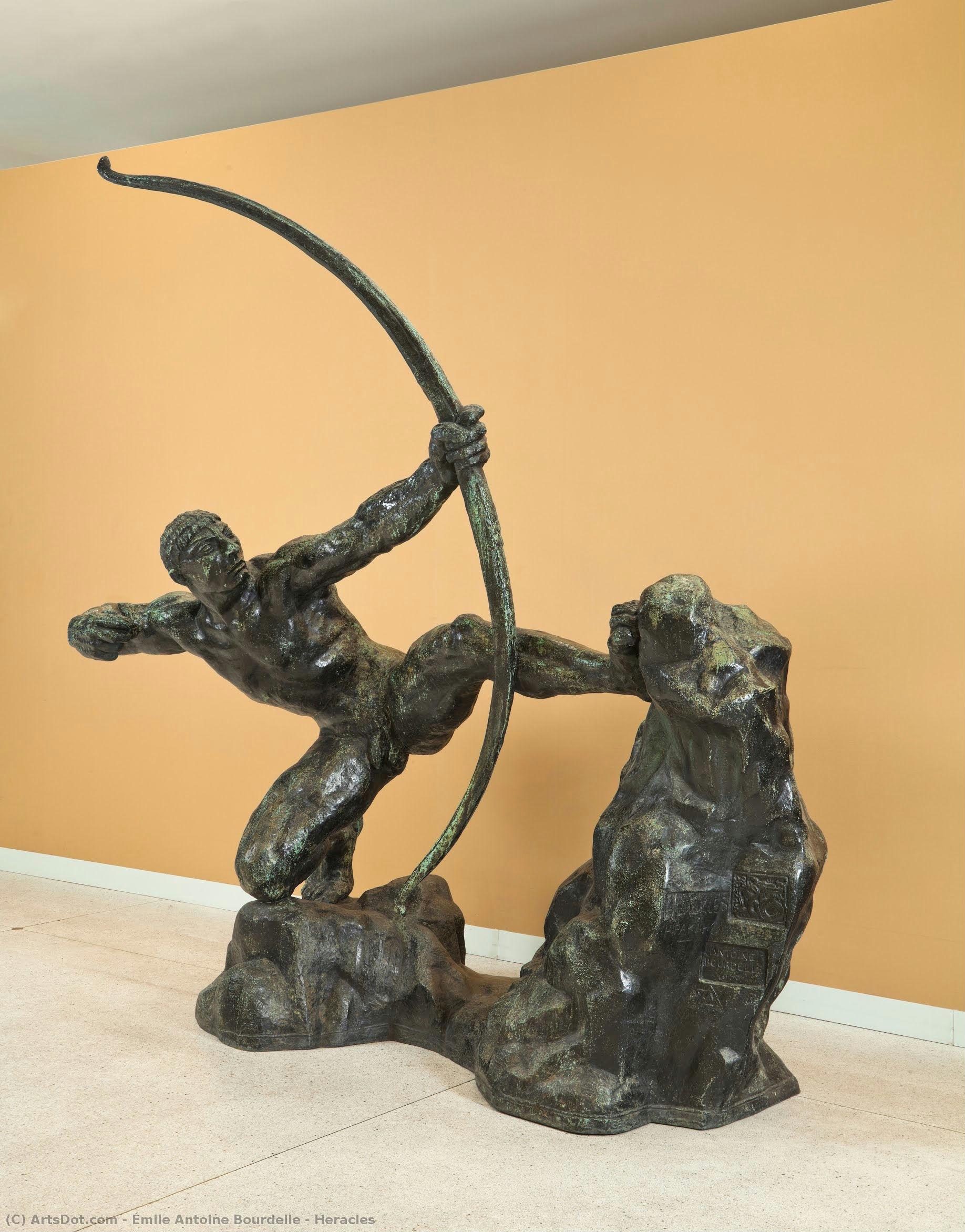
In the heart of the bronze medium lies a raw, unyielding energy that few artists can capture with such visceral precision as Émile Antoine Bourdelle. His sculpture, Heracles, is not merely a depiction of a mythological feat; it is a breathtaking embodiment of tension, movement, and the eternal struggle between civilization and the wild. As one gazes upon this powerful work, the eye is immediately drawn into the kinetic dance…

 Naked womanMusée Toulouse-Lautrec
12
 Noble Burdens1910
13
 Bust of RodinShizuoka Prefectural Museum of Art
14
 Hercules the Archer1909
15
 Virgin of the Offering1921 · Art Gallery of South Australia
16
 Monumental Horse without Rider (Horse for Alvear Monument)
17
 Chilian Woman
18
 Head of the Figure of Eloquence1918
19
 Intimate Drama
Τα τέσσερα θέματα που εμφανίζονται πιο συχνά σε αυτά τα πρωτότυπα έργα, το καθένα με το εξαιρετικό του παράδειγμα.
Τα 8 μουσεία που φιλοξενούν το μεγαλύτερο μέρος των έργων σε αυτήν τη σελίδα.
| Μουσείο | Πόλη | Έργα του Αντουάν Μπουρντέλ | Πάτρια από αυτή τη λίστα |
|---|---|---|---|
 Museum of Fine Arts |
Λιόν | 3 | Carpeaux at Work (detail), The Sculptor Carpeaux at Work (detail), Heracles Killing the Birds of Lake Stymphalia |
 Kitakyushu Municipal Museum of Art |
Κιτακιύσου | 1 | Penelope |
 Μουσείο Μπουρντ ν |
Παρίσι | 1 | Night |
 National Gallery Prague |
Πράγα | 1 | Heracles |
 Nationalmuseum |
Στοκχόλμη | 1 | Apollo tager lyran |
 Musée Toulouse-Lautrec |
Άλμπι | 1 | Naked woman |
 Shizuoka Prefectural Museum of Art |
Shizuoka | 1 | Bust of Rodin |
 Art Gallery of South Australia |
Αδελαΐδη | 1 | Virgin of the Offering |
Επιλέξτε μια δεκαετία για να δείτε το πρωτότυπο έργο που την χαρακτηρίζει.
In the delicate interplay of light and shadow captured within this bronze study, we encounter a profound moment of connection that transcends the cold medium of metal. Carpeaux at Work (detail), a masterful creation by the influential French sculptor Émile Antoine Bourdelle, invites the viewer into a private, quiet sanctuary of emotion. The sculpture presents a close-up view of a figure cradling a bird, an image that serves as a…
Surprisingly well balanced, and supporting himself on a rock that echoes the shape of his enormous bow, in this picture, Heracles performs one of his Twelve Labors. He must clear the region around Lake Stymphalia of the flesh-eating birds infesting its woods and attacking its people. The sculptor Antoine Bourdelle has accentuated his tensed muscles, emphasizing the hero
Το Ludwig van Beethoven (1902). Στη συνέχεια ακολουθούν το Penelope (1912) και το Hercules the Archer.
41 ετών: το έργο Ludwig van Beethoven είναι του 1902, και ο/η Αντουάν Μπουρντέλ γεννήθηκε το 1861.
Ludwig van Beethoven, Penelope, Hercules the Archer, Carpeaux at Work (detail), The Sculptor Carpeaux at Work (detail), Heracles Killing the Birds of Lake Stymphalia, Large Tragic Mask of Beethoven, Night, Heracles και Apollo tager lyran. Η κατάταξη παραπάνω αναγράφει το έτος και το μουσείο για το κάθε έργο.
Ο κατάλογός μας περιλαμβάνει 19 έργα του Αντουάν Μπουρντέλ, με ημερομηνίες από 1875 έως 1924.
Κυρίως σε Museum of Fine Arts (Λιόν), Kitakyushu Municipal Museum of Art (Κιτακιύσου) και Μουσείο Μπουρντ ν (Παρίσι). Ο πίνακας μουσείου παραπάνω τους περιλαμβάνει όλους.
Κατά την περίοδο 1900s: 5 από τα 19 έργα σε αυτήν τη σελίδα δημιουργήθηκαν τότε, με Ludwig van Beethoven από αυτά να είναι μοναδικά.
Σε αυτήν τη σελίδα, το παλαιότερο είναι Carpeaux at Work (detail) (1875) και το νεότερο Heracles Killing the Birds of Lake Stymphalia (1924).
Bronze, για 3 από τα 19 έργα σε αυτήν τη σελίδα.
Carpeaux at Work (detail), The Sculptor Carpeaux at Work (detail) και Heracles Killing the Birds of Lake Stymphalia: το Museum of Fine Arts, Λιόν διαθέτει 3 από τα έργα σε αυτήν τη σελίδα.
Born in the historic landscape of Montauban in 1861, Émile Antoine Bourdelle emerged as a titan of French sculpture, a master who bridged the gap between the romantic fluidity of the nineteenth century and the structured rigor of modernism. His journey began not in the grand academies of Paris, but amidst the tactile reality of wood and grain, working as a woodcarver in his father’s cabinet-making shop from the tender age of thirteen. This early immersion in the physical properties of material would later define his sculptural language, imbuing his works with an inherent sense of structural integrity and a profound understanding of volume and mass.
After honing his drawing skills under the guidance of the founder of the Ingres Museum, Bourdelle sought formal training in Toulouse before securing a prestigious scholarship to the École des Beaux-Arts in Paris. It was in the vibrant, competitive atmosphere of the capital that his artistic identity truly began to crystallize. Working within the atelier of Alexandre Falguière and finding inspiration in the studio of Jules Dalou, Bourdelle developed a style that moved away from mere imitation toward a more profound, architectural expression. His 1888 sculptures of Beethoven served as a definitive turning point, showcasing an authoritative command over form that emphasized order, geometric spirit, and a revolutionary approach to construction.
The trajectory of Bourdelle’s career was irrevocably altered when he joined the studio of Auguste Rodin in 1893. While many viewed him simply as an assistant, the relationship was one of profound mutual respect; Rodin himself became a great admirer of Bourdelle's unique ability to infuse monumental figures with both heroic strength and rhythmic grace. This period allowed Bourdelle to absorb the expressive vitality of Rodin while simultaneously carving out his own path toward a more structured, classical aesthetic. He did not merely follow the impressionistic textures of his mentor; instead, he sought a return to the permanence of ancient Greek and Roman archetypes, filtered through a twentieth-century lens.
As a teacher, Bourdelle’s influence was nothing short of monumental. His studio became a crucible for future generations of sculptors, where he imparted a philosophy that prioritized the internal logic of the sculpture over superficial detail. His pedagogical reach ensured that his emphasis on geometry, invention, and monumentality would ripple through the decades, influencing the development of Art Deco and the broader movement toward modern abstraction.
Throughout his later years, Bourdelle’s work became synonymous with the public spirit of France. He received numerous prestigious commissions for war memorials and civic monuments, works that demanded a sense of timelessness and collective memory. His recognition by the French state was profound, marked by his elevation to Knight, Officer, and eventually Commander of the Legion of Honor. Beyond the borders of France, his participation in the landmark 1913 Armory Show in New York introduced his powerful, rhythmic compositions to an international audience, cementing his status as a pioneer of twentieth-century monumental sculpture.
The legacy of Bourdelle is preserved not only in bronze and stone scattered across the globe but also within the very walls of the Musée Bourdelle in Paris. This museum, housed in his former studio, serves as a sanctuary for his creative spirit, allowing visitors to walk through the space where he shaped the modern sculptural landscape. Though he passed away in 1929, his contribution to the evolution of form remains an indelible part of art history, characterized by:
