
 Προεπισκόπηση
 Αποστολή
 Κοινοποίηση
 Λεπτομέρειες
 Οδηγός

 Λήψη
Λήψη
 Παρόμοια αντικείμενα συλλογής
 Ακτινογραφία
 Παρουσίαση
 Στατιστικά
Conflict


 Περισσότερα λεπτομέρεια
Το έργο τέχνης που εμφανίζεται σε αυτή τη σελίδα προστατεύεται από τους νόμους περί πνευματικών δικαιωμάτων, γεγονός που σημαίνει ότι δεν μπορούμε νομικά να δημιουργήσουμε ή να πουλήσουμε μια ταυτόσημη αναπαραγωγή του. Αυτή η προστασία επιβάλλεται βάσει διεθνών συμφωνιών, όπως η Σύμβαση της Βέρνης καθώς και από τους εθνικούς νόμους, συμπεριλαμβανομένων αυτών που ορίζονται από το Νομοθεσία περί πνευματικών δικαιωμάτων των ΗΠΑ - Τίτλος 17. Όλα τα δικαιώματα κατοχυρωμένα. Απαγορεύεται η αναπαραγωγή χωρίς άδεια.
Ως μια σεβαστή και νόμιμη εναλλακτική, προσφέρουμε προσαρμοσμένα, χειροποίητα έργα τέχνης εμπνευσμένα από το πρωτότυπο. Οι έμπειροι και επαγγελματίες καλλιτέχνες μας μελετούν προσεκτικά το στυλ, τη διάθεση και την καλλιτεχνική ουσία του πρωτοτύπου, ώστε να δημιουργήσουν ένα νέο, μοναδικό έργο που προκαλεί την ίδια αίσθηση — παραμένοντας όμως μια πρωτότυπη δημιουργία από μόνη της.
Αυτή η μέθοδος συμμορφώνεται πλήρως με τους κανονισμούς περί πνευματικών δικαιωμάτων, καθώς δεν περιλαμβάνει την αντιγραφή ή την αναπαραγωγή του προστατευόμενου έργου. Αντίθετα, πρόκειται για μια δημιουργική ερμηνεία — ένα νέο έργο που επηρεάζεται από το πρωτότυπο, χωρίς όμως να είναι πανομοιότυπο με αυτό.
Χειροποίητη Αναπαραγωγή σε Έλαιο
Χειροποίητη ελαιογραφία σε καμβά στο δικό σας μέγεθος και πλαίσιο, κατά παραγγελία από τους καλλιτέχνες μας. ( Μετάβαση σε Εκτυπώσεις Μετάβαση σε Ψηφιακή Εικόνα)




































Επιλέξτε από τις προκαθορισμένες διαστάσεις μας που διατηρούν τις αρχικές αναλογίες του έργου τέχνης.

Πληκτρολογήστε το πλάτος και το ύψος που επιθυμείτε, ώστε να ταιριάζουν στο κάδሮ ή στον τοίχο σας. Ε เนื่องจาก πρόκειται για χειροποίητη ζωγραφική, σε περίπτωση διαστάσεων με διαφορετικό σχήμα, ο καλλιτέχνης μπορεί να ζωγραφίσει λίγο παραπάνω γύρω από το έργο ή να αφαιρέσει ένα μέρος — η επιλογή είναι δική σας. Σας στέλνουμε ένα ψηφιακό mockup για έγκριση πριν ξεκινήσει η δημιουργία του έργου. Η εικόνα που εμφανίζεται σε αυτή τη σελίδα δεν δείχνει το τελικό αποτέλεσμα — μόνο το mockup το αναδεικνύει.
Μετά την παραγγελία, η ομάδα του OriginalUniqueArt.com θα στείλει email στον πελάτη με οδηγίες και θα παρέχει μια προεπισκόπηση προσχεδίου
Παγκόσμια Αποστολή () σε 3-4 εβδομάδες αντί για τις συνήθεις 5 εβδομάδες. (22 Οκτώβριος). Χωρίς συμβιβασμούς στην ποιότητα.

Δωρεάν γρήγορη διεθνής αποστολή

Κάμβας από Λινό Υψηλής Ποιότητας

Πλήρης ασφάλιση μεταφοράς

Εγγύηση επιστροφής δασμών και φόρων εισαγωγής

Εγγύηση Απόλυτης Ομοιότητας Χρωμάτων

Πολιτική Επιστροφής 100 Ημερών (Μόνο σε περίπτωση ελαττωμάτων)

Εγγύηση επιστροφής 100% των χρημάτων

Έκπτωση για πολλαπλές παραγγελίες
 Η επιλογή με γυαλί είναι διαθέσιμη μόνο για μεγέθη κάτω από 110 εκ.

Conflict
Τεχνική Αναπαραγωγής
Διαστάσεις Αναπαραγωγής
-


Συνολικό Κόστος
€ 263
Artistic Style and Technique
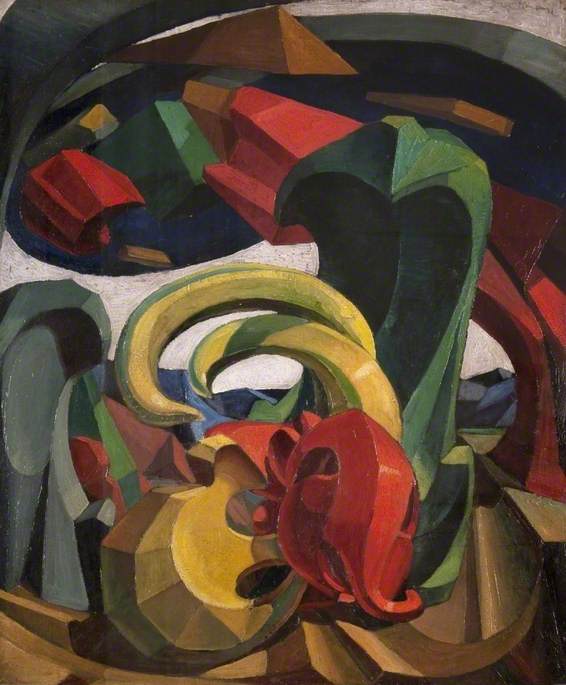
The painting features a colorful and intricate composition, with various shapes and colors that create an interesting visual experience for viewers. The main focus of the painting appears to be on a red bird or animal figure, which is surrounded by other geometric shapes and patterns. This style is reminiscent of other artists, such as Kazimir Severinovich Malevich, who was known for his contributions to the Cubism movement. For example, Malevich's painting The Triumph of Heaven can be found on OriginalUniqueArt.com.Historical Context and Significance
The Conflict painting can be seen as a representation of the turmoil and upheaval of the early 20th century. The use of bold colors and geometric shapes creates a sense of tension and conflict, which is reflective of the artistic and cultural movements of the time. Other artists, such as Sir George Clausen, also explored themes of loss and grief in their work, as seen in his painting Youth Mourning, which can be found on OriginalUniqueArt.com.- The painting is a significant example of modern art and its ability to evoke emotions and spark conversation.
- The use of oil on canvas creates a rich and vibrant texture that adds depth to the overall composition.
- The Glasgow Museums Resource Centre is home to a diverse collection of artworks, including pieces by other notable artists such as Eugène Delacroix.
The Conflict painting by William Mccance is a captivating and thought-provoking artwork that showcases the artist's unique style and technique. As a handmade oil painting reproduction, it can be found on OriginalUniqueArt.com, along with other notable artworks from history's most famous artists.
Ερωτήσεις & Απαντήσεις
Ποιος πουλάει χειροποίητα αντίγραφα του "Conflict" του William Mccance;
Το έργο "Conflict" είναι διαθέσιμο ως μια με ζωγραφισμένη με λάδι αναπαραγωγή σε καμβά λινου. Η παραγγελία μπορεί να πραγματοποιηθεί στη σελίδα Αντιγραφή με Χειρόχειρο Ζωγράφισμα, με δυνατότητα επιλογής μεγέθους.
Πόσοι άνθρωποι επισκέπτονται το "Conflict";
Τα στατιστικά στοιχεία για το "Conflict" του William Mccance βρίσκονται στη σελίδα Στατιστικά του έργου: μηνιαίες επισκέψεις του έργου, επισκέψεις των έργων του καλλιτέχνη, καθώς και κατανομή των πρόσφατων επισκεπτών ανά χώρα και γλώσσα.
Ποιος καλλιτέχνης και ποιο στυλ βρίσκονται πίσω από το "Conflict";
Πίσω από το "Conflict" βρίσκονται ο/η William Mccance και η καλλιτεχνική κίνηση Cubism.
Βιογραφικό Καλλιτέχνη
The Architect of Cubist Vision: The Life and Legacy of William McCance
In the vibrant, turbulent landscape of early twentieth-century British modernism, few figures possessed the singular, transformative vision of William McCance. Born in 1894 in Cambuslang, Scotland, McCance emerged not merely as a painter, but as a pioneer who dared to bridge the gap between traditional Scottish sensibilities and the radical, fractured aesthetics of European Cubism. His journey was one defined by profound moral conviction and an unyielding pursuit of new visual languages, moving through the halls of the Glasgow School of Art and into the very heart of the avant-garde movement in Wales and London.
McCance’s early years were marked by a rigorous academic foundation, yet his spirit was shaped as much by social upheaval as by formal training. As a conscientious objector during the First World War, he endured imprisonment—an experience that undoubtedly deepened the emotional gravity found within his later compositions. Following his release, his life became an intricate tapestry of artistic collaboration and intellectual exploration. His marriage to the talented illustrator and engraver Agnes Miller Parker created a formidable creative partnership, one that saw them navigate the bustling art scenes of London and eventually settle into influential roles within the Welsh artistic community.
A Revolution in Form and Color
The true metamorphosis of McCance’s style occurred during the 1920s, a decade when he became one of Scotland's most daring proponents of Cubism. Rejecting the comfortable boundaries of representational art, McCance embraced the revolutionary techniques of masters like Picasso and Braque. He began to dismantle the physical world into a series of overlapping planes, geometric shapes, and rhythmic patterns. This was not merely an exercise in abstraction; it was an attempt to capture the complex visual sensations and the underlying energy of a modernizing world.
His works from this period, such as the striking Conflict (1922), demonstrate a masterful command of color and tension. In these pieces, dark blues and greens often collide with sudden, vibrant accents, creating a sense of movement and psychological depth. His technique frequently utilized layered impasto and expressive lines to give weight to his geometric explorations. Whether depicting a figure in Woman Reading or the quiet stillness of a domestic scene, McCance infused his subjects with a machine-inspired precision and a modern, fractured perspective that challenged the viewer to look beyond the surface.
The Gregynog Legacy and Typographic Mastery
Beyond the canvas, McCance’s influence extended into the very fabric of book design and typography. His tenure as the second Controller of the renowned Gregynog Press in Powys, Wales, allowed him to merge his painterly eye with the precision of printmaking. This period of his life represents a vital intersection of fine art and functional design, where his understanding of form and space found new expression in the medium of the printed word. His work at Gregynog solidified his reputation as a polymath—a man capable of translating the radical energy of Cubism into the delicate, structured world of book production.
As his career progressed, McCance continued to educate and inspire, serving as a lecturer in typography and book design at the University of Reading. His contributions were not limited to his own brushstrokes; he was a vital voice in the intellectual currents of his time, working as an art critic for The Spectator and engaging with the luminaries of the Scottish Renaissance movement.
Today, the significance of William McCance lies in his role as a bridge-builder. He connected the traditionalist roots of Scottish art to the burgeoning internationalism of the modern era. His legacy is preserved in the collections of the National Galleries of Scotland and the Dundee Art Gallery, serving as a testament to an artist who saw the world not as a static image, but as a dynamic, beautiful, and ever-shifting mosaic of form.

William Mccance
1894 - 1970
Στοιχεία καλλιτέχνη
- Artistic Movement Or Style: Cubist Art
- Artists Or Movements Influenced By This Artist: ['Modern Scottish Art']
- Artists Who Influenced This Artist:
- Pablo Picasso
- Georges Braque
- Date Of Birth: 1894
- Date Of Death: 1970
- Full Name: William McCance
- Nationality: Scottish
- Notable Artworks:
- Conflict
- Woman Reading
- Place Of Birth: Cambuslang, Scotland
Σχετικά άρθρα

Neo-Abstract Art: The High-Impact Evolution of Modern Visual Energy and Geometric Sophistication
Discover the power of Neo-Abstract art. Explore how bold geometric forms and high-impact visual energy are redefining modern design. Learn to curate sophisticated, high-energy spaces with the latest trends in contemporary abstraction and structural color.
Φερνάν Λεζέ: Τα 25 Κορυφαία Έργα Τέχνης για Διακόσμηση με Στυλ
Ανακαλύψτε τα 25 κορυφαία έργα τέχνης του Φερνάν Λεζέ! Εξερευνήστε την ιστορία, τις τεχνικές και το χρώμα πίσω από τους εμβληματικούς πίνακες του κυβισμού & Tubism. Βρείτε αναπαραγωγές υψηλής ποιότητας για διακόσμηση στο OriginalUniqueArt.com.

Γεωμετρική Αφαίρεση: 10 Έργα που Άλλαξαν την Τέχνη | OriginalUniqueArt.gr
Ανακαλύψτε τα 10 κορυφαία έργα της Γεωμετρικής Αφαίρεσης! Μοντριάν, Καντίνσκι & άλλοι. Ιστορίες, τεχνικές και έμπνευση για τη διακόσμηση του σπιτιού σας. Βρείτε αναπαραγωγές υψηλής ποιότητας στο OriginalUniqueArt.com.
Beyond the Lines: The High-Impact Trend Forecast of Geometric Abstraction
Discover the high-impact world of Geometric Abstraction. From Cubist roots to modern urban trends, explore how bold shapes and colors redefine contemporary design. Elevate your space with expert art insights and custom-made abstract masterpieces.

Βασίλι Καντίνσκι: Τα 25 Κορυφαία Έργα Τέχνης για Διακόσμηση & Έμπνευση
Ανακαλύψτε τα 25 κορυφαία έργα τέχνης του Βασίλι Καντίνσκι! Εξερευνήστε την αφηρημένη τέχνη, τον εξπρεσιονισμό & τα εμβληματικά χρώματα του ιδιοφυούς ζωγράφου. Αναπαραγωγές υψηλής ποιότητας για διακόσμηση και έμπνευση στο OriginalUniqueArt.com.