

 Δείτε σε πραγματικό χώρο
 Αποστολή
 Κοινοποίηση
 Λεπτομέρειες

 Λήψη
Λήψη
 Παρόμοια αντικείμενα συλλογής
 Ακτινογραφία
 Παρουσίαση
Screen


 Διαβάστε περισσότερα
Χειροποίητη Αναπαραγωγή σε Έλαιο
Χειροποίητη oil painting σε καμβά στο δικό σας μέγεθος και πλαίσιο, κατά παραγγελία από τους καλλιτέχνες μας. ( Αγορά εκτύπωσης Αγορά ψηφιακής εικόνας)




































Επιλέξτε από τις προκαθορισμένες διαστάσεις μας που διατηρούν τις αρχικές αναλογίες του έργου τέχνης.

Μπορείτε να ορίσετε δικές σας διαστάσεις ώστε το έργο να ταιριάζει σε ένα συγκεκριμένο πλαίσιο ή χώρο. Εάν το επιλεγμένο μέγεθος δεν συμπίπτει με τις αναλογίες της αρχικής εικόνας, θα περικοψούμε το έργο ή θα επεκτείνουμε τη ζωγραφιά με πρόσθετα χειρόγραφα στοιχεία. Ένα ψηφιακό προσχέδιο θα σας αποσταλεί για έγκριση πριν την έναρξη της παραγωγής.
Παρακαλούμε σημειώστε ότι η προεπισκόπηση στην οθόνη δεν αντικατοπτρίζει την πραγματική περικοπή ή επέκταση. Μόνο το προσχέδιο θα δείξει με ακρίβεια την τελική σύνθεση.
Παρόλο που είναι διαθέσιμα προσαρμοσμένα μεγέθη, συνιστούμε να επιλέξετε μια διάσταση από τη λίστα των προκαθορισμένων μεγεθών για τη διατήρηση των αρχικών αναλογιών.
Μετά την παραγγελία, η ομάδα του OriginalUniqueArt.com θα στείλει email στον πελάτη με οδηγίες και θα παρέχει μια προεπισκόπηση προσχεδίου
Παγκόσμια Αποστολή () σε 3-4 εβδομάδες αντί για τις συνήθεις 5 εβδομάδες. (29 Αύγουστος). Χωρίς συμβιβασμούς στην ποιότητα.

Δωρεάν γρήγορη διεθνής αποστολή

Κάμβας από Λινό Υψηλής Ποιότητας

Πλήρης ασφάλιση μεταφοράς

Εγγύηση Επιστροφής Δασμών και Φόρων

Εγγύηση Απόλυτης Ομοιότητας Χρωμάτων

Πολιτική Επιστροφής 60 Ημερών (Μόνο σε περίπτωση ελαττωμάτων)

Εγγύηση επιστροφής 100% των χρημάτων

Προσφορά για μαζικές παραγγελίες
 Η επιλογή με γυαλί είναι διαθέσιμη μόνο για μεγέθη κάτω από 110 εκ.

Screen
Μέσο Αναπαραγωγής
Διαστάσεις Αναπαραγωγής
-


Συνολική Τιμή
$ 300
Βιογραφία Καλλιτέχνη
The Visionary Synthesis of Tsuda Sen
In the twilight of the Edo period, a time of profound transition for Japan, the works of Tsuda Sen emerged as a breathtaking bridge between ancient tradition and the encroaching modern world. Born into the disciplined atmosphere of a samurai family in Tokyo, Sen possessed a unique intellectual lineage that allowed him to look beyond the borders of his nation. While many of his contemporaries remained anchored in the established aesthetics of Japanese calligraphy, Sen was driven by an insatiable curiosity for the scientific and the structural. His early education, heavily influenced by his father’s foresight regarding Western knowledge, instilled in him a rare ability to observe the natural world through a lens of both botanical precision and artistic grace. This duality—the scientist's eye for detail and the artist's soul for expression—would become the hallmark of his enduring legacy.
The true brilliance of Sen’s career lies in his pioneering development of what is now recognized as Namban grammar, a revolutionary decorative art form. This was not merely an aesthetic choice but a profound linguistic experiment translated into visual media. By studying the rhythmic structures and geometric complexities of European grammatical forms, Sen sought to create a new visual language for Japan. He moved away from the fluid, often organic strokes of traditional ink wash toward a more structured, deliberate use of shapes and stylized lettering. This innovation allowed for a level of precision and complexity that could convey intricate ideas with a newfound elegance, effectively mimicking the structural logic of Western thought while maintaining a distinctly Japanese spirit.
A Legacy of Botanical Precision and Decorative Innovation
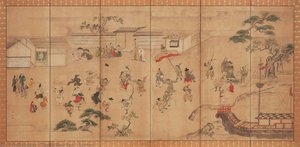
Beyond his linguistic experiments, Sen’s work was deeply rooted in the tangible beauty of the natural world. His training in botany at Tokyo Imperial University provided him with an unparalleled understanding of organic forms, which he seamlessly integrated into his decorative compositions. This scientific rigor breathed life into his screens and paintings, where every leaf, petal, and insect was rendered with a meticulousness that bordered on the hyper-realistic, yet always remained harmoniously balanced within his stylized frameworks. His ability to marry the rigid geometry of his Namban style with the delicate textures of nature created a tension that was both captivating and avant-garde for his era.
The historical significance of Tsuda Sen cannot be overstated, as he stood at the precipice of Japan's modernization. His collaborative efforts, most notably alongside his son, Tsuda Umeko, helped to forge a path where Eastern decorative traditions could dialogue with Western structural principles. Through his trade-themed screens and innovative use of geometric motifs, he prepared the Japanese visual consciousness for the globalized era that was to follow. Today, his work remains a testament to the power of cross-cultural synthesis, reminding us that true innovation often occurs at the intersection of disparate worlds, where the precision of science meets the boundless imagination of art.
tsuda dou-sen
1804 - 1856 , Japan
Γρήγορα στοιχεία
- Artistic Movement Or Style: Namban-jin Xu-ekizu
- Date Of Birth: August 6, 1837
- Date Of Death: April 24, 1908
- Full Name: Tsuda Sen
- Nationality: Japanese
- Notable Artworks: ['Trade Screens']
- Place Of Birth: Tokyo, Japan

