Rococo
William Boyce (Θομας Χούδσον)
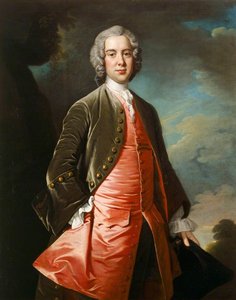
Ο/Η Θομας Χούδσον (1701–1779) δημιούργησε το William Boyce. Ανήκει στο κίνημα Rococo. Είναι φτιαγμένο σε Oil.
- Oil

 Προεπισκόπηση σε πραγματική κλίμακα

 Ελαιογραφικό Χειροποίητο Έργο
 Αποστολή
 Κοινοποίηση
 Πληροφοριακό φύλλο


 Λήψη
 Παρόμοια αντικείμενα συλλογής
 Ακτινογραφία
 Παρουσίαση
 Ερωτήσεις & Απαντήσεις

 Στατιστικά
William Boyce, εν συντομία
- Τίτλος
- William Boyce
- Καλλιτέχνης
- Θομας Χούδσον (1701–1779)
- Γεννημένος/η το
- Ντέβον, Ηνωμένο Βασίλειο
- Μέσο
- Oil
- Κίνηση
- Rococo
- Εποχή
- Early Modern
- Θέμα
- man, suit, wig, stairs, book, people
Τι απεικονίζει το William Boyce;
Identification of the Portrait of William Boyce
This portrait of William Boyce, executed by the English painter Thomas Hudson, offers a quiet encounter with a significant figure of the mid-eighteenth century. Created about 1745–1750, the work captures the likeness of a man who occupied a central position in the musical life of his era. Hudson, a specialist in the art of portraiture, focuses his attention on the composer, presenting him with a sense of composed dignity.
The subject, William Boyce, was a distinguished English composer and organist. In this depiction, Hudson moves beyond a mere likeness to present the man as he was understood in his professional and social context. The painting provides a visual record of a man whose musical contributions would eventually influence the liturgical and orchestral traditions of the period.
Visual Composition and Subject Matter
In this black and white painting, the subject is captured in a moment of quiet formality. He is depicted wearing a suit and a wig, positioned upon a set of stairs. In his hand, he holds a book, a detail that suggests a life of intellectual or musical pursuit. The composition places him within a structured environment, where the lines of the staircase provide a sense of depth and architectural stability.
The arrangement of the scene includes subtle secondary elements that add to the sense of a lived-in, historical setting. Two other figures are visible in the background, one situated on the left and another on the right, providing a sense of scale and social context to the primary subject. Near the center of the image, an umbrella is placed, a singular object that grounds the formal attire in a specific, perhaps transitory, moment of daily life.
The Life and Career of Thomas Hudson
Born in 1701 in Devon, United Kingdom, Thomas Hudson developed a meticulous approach to portraiture through his early training. He studied under the tutelage of Jonathan Richardson in London, a foundation that helped shape his refined style. His career reached its peak between 1740 and 1760, a period during which he became a central figure in the London art scene. Between 1745 and 1755, he was arguably the most successful portraitist in London, supported by a bustling workshop that included specialists like the drapery painter Joseph van Aken.
His artistic perspective was broadened by significant travel. In 1748, he visited the Low Countries, and in 1752, he traveled to Italy. These excursions allowed him to absorb diverse continental techniques, which he brought back to his English practice. He eventually settled at Cross Deep in Twickenham, living near the intellectual circles of the time. He remained active in his craft until his retirement toward the end of the 1750s, eventually passing away in Twickenham in 1779.
The Musical Legacy of William Boyce
Born in 1711, William Boyce occupied a significant position in the musical landscape of the late Baroque period. As an English composer and organist, his influence extended through the sacred and secular spheres, reaching a professional peak when he was appointed Master of the King's Musick in 1757. His career was marked by a profound connection to the liturgical traditions of the era, a devotion that remained steadfast even as his physical faculties changed. Despite the onset of deafness, which eventually necessitated his retirement from active organist duties, he continued to compose with a focused, internal clarity.
His contributions to the English musical canon are particularly noted in his editorial work and his symphonic output. He spent much of his later life meticulously compiling and editing collections of church music, ensuring the preservation of works by earlier composers. This dedication to the structural integrity of English cathedral music helped establish a standard for future generations of musicians. His life concluded in 1779, and he was laid to rest beneath the dome of St Paul's Cathedral.
- Solomon serenata
- Heart of Oak
- The King Shall Rejoice
Artistic Influence and Mentorship
Hudson’s influence extended far beyond his own brush, reaching into the next generation of British portraiture through a highly organized workshop. He was an influential teacher who cultivated a specific standard of elegance and technical precision. His studio functioned as a vital training ground, where he passed on the meticulous approach to detail he had first learned under Jonathan Richardson. This lineage of instruction helped shape the direction of English art for decades.
Among his most celebrated pupils were Joshua Reynolds and Joseph Wright, both of whom would go on to become leading figures in the British art scene. By mentoring such significant talents, Hudson ensured his stylistic preferences and technical rigor would persist through their own successful careers. He also provided specialized training to Peter Toms, a painter who focused specifically on the complexities of drapery, further demonstrating the breadth of expertise shared within his circle.
Historical Context and Artistic Style
Hudson’s approach to portraiture was defined by a commitment to elegance and refinement. His work reflects a classical sensibility, rooted in the foundational training he received under Jonathan Richardson. This influence is visible in the meticulous accuracy he applied to his subjects, ensuring that each sitter was presented with a sense of poise and dignity. Rather than relying on dramatic flourishes, he utilized a polished brushwork to convey the social standing and character of those who sat for him.
There is a particular focus on the tactile quality of the sitter's attire. Hudson possessed a keen eye for detail, specifically when rendering the weight and texture of various fabrics. This technical precision allows the viewer to perceive the subtle nuances of the materials, from the softness of a garment to the crispness of a formal collar. Such attention to drapery was a hallmark of his studio, often supported by specialists who helped maintain this high standard of craftsmanship.
The composition of this work, created about 1745–1750, aligns with the sophisticated aesthetic prevalent in mid-18th-century English portraiture. It avoids unnecessary ornamentation, choosing instead to emphasize the presence of the individual through controlled, deliberate execution. The result is a portrait that prioritizes clarity and the quiet dignity of the subject over theatricality.
The Artistic Legacy of William Boyce
While his name may have faded from the immediate public consciousness following his death, the music of William Boyce underwent a significant rediscovery during the 1930s. This revival was largely prompted by the publication of the first modern edition of his Eight Symphonies in 1928. Such efforts allowed a new generation of listeners to engage with his compositions, moving beyond the shadow of his contemporaries to appreciate his specific contributions to the English musical tradition.
His influence remains tangible within the liturgical fabric of the Anglican Church. His coronation anthem, The King Shall Rejoice, continues to hold a place in significant state ceremonies. Most recently, this work was performed during the coronation of Charles III in 2023. It is a rare occurrence for a composer from this era to maintain such a direct connection to contemporary royal ritual, ensuring his melodic lines continue to resonate in the most formal of settings.
Εικόνες υψηλής ανάλυσης του William Boyce

Δημόσιος τομέας: ο καλλιτέχνης απεβίωσε το 1779.
Άλλες διαστάσεις, καρέττες και αναφορά →Θομας Χούδσον, William Boyce. Δημόσιο περιουσιακό δικαίωμα
Ερωτήσεις για το William Boyce, απαντημένες
Με ποιο υλικό έχει εκτελεστεί το έργο "William Boyce" του Θομας Χούδσον;
Ο/Η Θομας Χούδσον χρησιμοποίησε την τεχνική του/της Oil για το έργο "William Boyce". Η τεχνική αυτή ορίζει τη υλική φύση του πρωτότυπου έργου.
Τι απεικονίζει το "William Boyce" του Θομας Χούδσον;
Τα θέματα που περιλαμβάνονται στο "William Boyce" του Θομας Χούδσον περιλαμβάνουν το/τα man, suit, wig, stairs, book, people, umbrella. Μαζί, συνοψίζουν το περιεχόμενο του έργου τέχνης.
Το έργο "William Boyce" ανήκει στο δημόσιο περιουσιακό αγαθό;
Όσον αφορά τα πνευματικά δικαιώματα, το "William Boyce" ανήκει στο δημόσιο κτήμα - τα δικαιώματα αυτορության έχουν λήξει.
Ποιον καλλιτέχνη αποδίδεται το "William Boyce";
Ο καλλιτέχνης πίσω από το "William Boyce" είναι ο/η Θομας Χούδσον. Το έργο καταχωρείται υπό το όνομα του/της Θομας Χούδσον.
Σε ποιο καλλιτεχνικό ρεύμα ανήκει το "William Boyce";
Το καλλιτεχνικό ρεύμα που συνδέεται με το "William Boyce" του Θομας Χούδσον είναι το Rococo. Αυτή η ταξινόμηση τοποθετεί το έργο ανάμεσα σε σχετικούς καλλιτέχνες και έργα τέχνης.
Ποια εποχή της καριέρας του/της Θομας Χούδσον αντιπροσωπεύει το έργο "William Boyce";
Το "William Boyce" αντιπροσωπεύει την περίοδο Peak Years του Θομας Χούδσον.
Ποια είναι η αιτία της κατάστασης των πνευματικών δικαιωμάτων για το έργο "William Boyce" του Θομας Χούδσον;
Η κατάσταση των πνευματικών δικαιωμάτων για το "William Boyce" - δημόσιο κτήμα - τα δικαιώματα αυτορության έχουν λήξει - ορίζεται από τον θάνατο του καλλιτέχνη το έτος 1779.
Πώς εντάσσεται το "William Boyce" στα θέματα και το στυλ του/της Θομας Χούδσον;
Στο συνολικό έργο του/της Θομας Χούδσον, το "William Boyce" εντάσσεται στο στυλ του/της Rococo, συνδέοντας τα θέματα του/της jonathan richardson's influence, classical approach, english portraiture, status and personality, refined elegance.
Είναι το "William Boyce" τυπικό για όσα δημιουργούσε συνήθως ο/η Θομας Χούδσον;
Ανάμεσα στα αναγνωρισμένα θέματα του/της Θομας Χούδσον - jonathan richardson's influence, classical approach, english portraiture, status and personality, refined elegance - το "William Boyce" εστιάζει ιδιαίτερα στα man, suit, wig, stairs, book, people, umbrella.
Σχετικά με τον καλλιτέχνη, Θομας Χούδσον
1701–1779, Ηνωμένο Βασίλειο
Θομας Χούδσον
Early Life and Training Ο Τόμας Χάρντον, γεννημένος το 1701 στη Βιντέφορντ της Αγγλίας – η ακριβής ημερομηνία γέννησής του παραμένει ασαφής – ξεχώρισε ως μια σημαντική φιγούρα στην αγγλική πορτρέτιστική του 18ου αιώνα. Η πρώιμη ζωή του είναι σχετικά σκοτεινή, αλλά η αφοσίωσή του στη τέχνη γινόταν εμφανής από νωρίς. Η καλλιτεχνική του πορεία ξεκίνησε υπό την καθοδήγηση του Τζονάθαν Ρίτσαρντον στο Λονδίνο. Αυτή η θεμελιώδης εκπαίδευση εμφάνισε μια ακριβή και προσεκτική προσέγγιση στην πορτρέτιστική, καθώς και ένα ιδιαίτερα ευαίσθητο μάτι στη λεπτομέρεια, ειδικά στην αναπαράσταση των υφασμάτων και των υφών.
Σχετικά με τον Θομας Χούδσον Σημαντικά έργα του Θομας Χούδσον
Εργασίες του Θομας Χούδσον
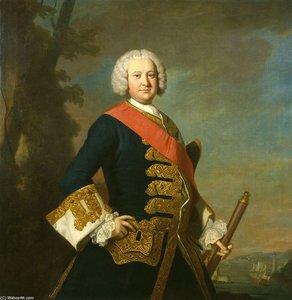 Σερ Πιερ Βαρέν
 John Newton1757
 The Thistlethwayte Family1758
 Princess Amelia Sophia Eleonore of Great Britain1745

Μελέτες γύρω από το William Boyce
 Masterpieces of Hyacinthe Rigaud: The Top 25 Portraits of a Baroque IconExplore 25 iconic Hyacinthe Rigaud masterpieces. From Baroque portraits to royal splendor, discover the full collection on OriginalUniqueAr…
 17th century British paintersMasterpieces by William Dobson and Mary Beale define 17th century British art. Explore the full collection online at OriginalUniqueArt.com.
 Chaim Soutine: 25 Visceral Paintings That Capture His Intense StyleExplore 25 vital Chaim Soutine paintings and his raw expressionist style. Discover the full collection online at OriginalUniqueArt.com.