

 Προεπισκόπηση σε πραγματική κλίμακα
 Αποστολή
 Κοινοποίηση
 Λεπτομέρειες
 Οδηγός

 Λήψη
Λήψη
 Παρόμοια αντικείμενα συλλογής
 Ακτινογραφία
 Παρουσίαση
 Q&A
Q&A Στατιστικά
Mr John Vere


 Περισσότερα
Giclée / Εκτυπώσεις Τέχνης
Εκτύπωση giclée ή σε καμβά ποιότητας μουσείου με γρήγορη παραγωγή και ευέλικτες επιλογές φινιρίσματος. ( Αγορά χειροποίητου πίνακα Μετάβαση σε Ψηφιακή Αποτέλεσμα)




P118B €10

P118H €10

P118W €10

P438Z €10

P508JH €12

P508YH €12

P805H €10

P805Z €10

P919BZ €10

P919G €10

P919XJ €10

P959ZH €10

P968JZ €12

W106C €8

W218G €10

W218JH €8

W218Y €10

W307PJ €10

W316G €10

W316PJ €8

W316Y €10

W398PJ €8

W4111J €10

W500HY €15

W500JH €15

W692G €12

W849H €8

W940BG €15

W953PJ €8




Επιλέξτε από τις προκαθορισμένες διαστάσεις μας που διατηρούν τις αρχικές αναλογίες του έργου τέχνης.

Εισάγετε το πλάτος και το ύψος που επιθυμείτε, ώστε να ταιριάζουν στο κάδሮ ή στον τοίχο σας. Μια εκτύπωση μπορεί μόνο να υποστεί κοψίμό και ποτέ να μην γίνει μεγαλύτερη από την αρχική εικόνα, επομένως η επιλογή μεγέθους με διαφορετικό σχήμα συνεπάγεται απώλεια ενός μέρους της εικόνας. Σας στέλνουμε ένα ψηφιακό mockup για έγκριση πριν προχωρήσουμε σε οποιαδήποτε εκτύπωση. Η εικόνα που εμφανίζεται σε αυτή τη σελίδα δεν δείχνει την πραγματική κοπή — μόνο το mockup την παρουσιάζει.
Παγκόσμια Αποστολή () σε 2 εβδομάδες αντί για τις συνήθεις 4/5 εβδομάδες. (30 Οκτώβριος)

Δωρεάν γρήγορη διεθνής αποστολή

Κάμβας από Λινό Υψηλής Ποιότητας

Πλήρης ασφάλιση μεταφοράς

Εγγύηση επιστροφής δασμών και φόρων εισαγωγής

Εγγύηση Απόλυτης Ομοιότητας Χρωμάτων

Πολιτική Επιστροφής 100 Ημερών (Μόνο σε περίπτωση ελαττωμάτων)

Εγγύηση επιστροφής 100% των χρημάτων

Προσφορά για πολλαπλές παραγγελίες
 Η επιλογή με γυαλί είναι διαθέσιμη μόνο για μεγέθη κάτω από 110 εκ.

Mr John Vere
Giclée / Εκτυπώσεις Τέχνης
Διαστάσεις Αναπαραγωγής
-


Τελική Τιμή
€ 71
A Portrait Steeped in Tradition: Exploring Thomas Gainsborough’s “Mr John Vere”
The canvas holds an image of quiet dignity – Mr John Vere, rendered with meticulous detail by Thomas Gainsborough in 1759. More than just a likeness, this portrait embodies the spirit of Georgian England, capturing not merely appearance but also social status and intellectual refinement. It resides within Gainsborough’s House in Suffolk, United States, offering visitors a glimpse into the artistic legacy of one of Britain's most revered painters.The Painter’s Vision: Gainsborough’s Style and Technique
Thomas Gainsborough (1727-1788) emerged from humble beginnings – Sudbury, Suffolk – to become synonymous with aristocratic portraiture. Unlike his contemporaries who favored theatrical poses and opulent costumes, Gainsborough championed a naturalistic approach, prioritizing observation and capturing the subtle nuances of human expression. His technique was characterized by loose brushstrokes layered upon each other, creating an illusion of depth and texture that distinguishes him from more formal painters. He skillfully employed mezzotint etching alongside oil painting, allowing for tonal variations and enhancing the overall impact of his compositions. This dual medium approach wasn’t merely a stylistic preference; it reflected Gainsborough's belief in conveying emotion through nuanced shading and subtle gradations of color—a cornerstone of his artistic philosophy.A Window into Georgian Society
“Mr John Vere” speaks volumes about the social landscape of 1759. Vere, a gentleman landowner, represents the burgeoning upper class eager to solidify their position within British society. The pose – seated comfortably in a chair draped with luxurious fabrics—is deliberately understated, conveying confidence and cultivated taste rather than ostentation. Gainsborough’s careful depiction of Vere's attire—a dark suit adorned with a subtle waistcoat—reflects the prevailing fashion trends of the era, emphasizing respectability and adherence to social conventions. The inclusion of a white wig is a deliberate stylistic choice, signifying erudition and aligning Vere with the intellectual pursuits valued by the aristocracy.Symbolism Beyond Appearance
Beyond its visual elements, “Mr John Vere” resonates with symbolic significance. The muted palette—dominated by browns, creams, and blues—creates an atmosphere of tranquility and contemplation. These colors evoke associations with stability, trustworthiness, and moral virtue – qualities deemed essential for upholding social standing during the Georgian period. Furthermore, the gaze of Mr. Vere directs outwards, suggesting ambition and engagement with the wider world. It’s a gaze that speaks not only to his own self-assurance but also to the broader aspirations of his class—a desire for influence and recognition within the corridors of power.Emotional Resonance: Capturing Inner Character
Ultimately, Gainsborough succeeds in conveying something far deeper than mere physical likeness. The portrait captures Mr John Vere’s inner character – a quiet dignity tempered by intelligence and compassion. The artist's masterful use of light and shadow sculpts the face, revealing subtle expressions that hint at thoughtfulness and introspection. This psychological depth distinguishes Gainsborough’s work from many portraits of his time, demonstrating his profound understanding of human emotion. “Mr John Vere” remains an enduring testament to Gainsborough’s artistic genius—a captivating image that continues to inspire admiration for its beauty and insight.Ερωτήσεις και Απαντήσεις
Τι απεικονίζει το "Mr John Vere" του Θωμάς Γέινσμπουργκ;
Το έργο "Mr John Vere" του Θωμάς Γέινσμπουργκ απεικονίζει: portraiture, landscape, britishart, 18thcentury, suffolk, nobleman, oilpainting.
Από ποια χώρα προέρχεται το έργο του British Romantic Landscape "Mr John Vere";
Το έργο του ή της British Romantic Landscape "Mr John Vere" δημιουργήθηκε από καλλιτέχνη που γεννήθηκε στην/στο Ηνωμένο Βασίλειο.
Μπορώ να δω προεπισκόπηση του "Mr John Vere" του Θωμάς Γέινσμπουργκ πριν την παραγγελία;
Η σελίδα Προεπισκόπηση του έργου "Mr John Vere" σας επιτρέπει να δείτε μια προεπισκόπηση του έργου πριν την παραγγελία.
Βιογραφικό Καλλιτέχνη
A Suffolk Beginning: The Early Life and Artistic Awakening
The story of Thomas Gainsborough, one of Britain’s most celebrated artists, unfolds not within the confines of a grand academy or bustling metropolis, but in the tranquil market town of Sudbury, Suffolk. Born in 1727, the youngest son of John Gainsborough, a weaver and wool merchant, young Thomas displayed an innate artistic sensibility from a remarkably early age. While his siblings pursued more conventional paths, Thomas’s world rapidly became consumed by drawing and painting – miniature self-portraits and delicate landscapes blossoming from his hand even before he reached ten years old. This precocious talent wasn't merely a childhood pastime; it was the burgeoning of a vision that would reshape British art. His father, recognizing this unique gift, encouraged its development, setting young Thomas on a path diverging sharply from the family trade. The Suffolk countryside itself became his first studio, imbuing his later works with a deep and abiding love for the natural world – a characteristic that would distinguish him throughout his career. This early immersion in landscape wasn’t simply about replicating what he saw; it was about *feeling* the essence of the English countryside, an emotional resonance that would permeate his canvases for decades to come.London and the Shaping of a Style: Influences and Early Commissions
In 1740, at the age of thirteen, Gainsborough journeyed to London, embarking on formal artistic training under Hubert Gravelot, a French engraver renowned for his elegant rococo style. This exposure proved pivotal, introducing him to refined techniques and fashionable aesthetics. However, it was his association with William Hogarth and the St Martin’s Lane Academy that truly began to mold his artistic identity. Initially influenced by Hogarth's narrative approach – his detailed depictions of London life and social commentary – Gainsborough soon charted his own course, developing a distinctive style characterized by its lightness of touch, fluid brushwork, and subtle color palettes. He absorbed lessons from various masters, including the Dutch landscape painters whose atmospheric effects he admired, yet resisted strict adherence to any single school, forging a path that blended observation with imagination. He sought to capture not just appearances but also the *feeling* of a scene – the light, the air, the mood. Returning to Sudbury after marrying Margaret Burr in 1746, Gainsborough established himself as a portraitist for the local gentry and mercantile classes. This period honed his skills in capturing likenesses and character, but it was during his subsequent move to Ipswich, and later Bath, that he began attracting a more sophisticated clientele – individuals who appreciated not just accurate representation, but also artistic flair and emotional depth.Bath and Beyond: Portraiture, Landscape, and Royal Patronage
The years spent in Bath (1759-1774) marked a significant turning point in Gainsborough’s career. The city was a hub of fashionable society, providing him with ample opportunities to paint portraits of the wealthy and influential. He quickly gained renown for his ability to capture not only physical resemblance but also the personality and social standing of his sitters. His portraits weren't merely depictions; they were statements about identity and status – often imbued with a sense of relaxed elegance and natural charm. He experimented with lighting, composition, and pose, creating images that felt remarkably alive. However, even amidst the demands of portraiture, Gainsborough never abandoned his passion for landscape painting. In fact, he often seamlessly integrated landscapes into his portraits, creating compositions that celebrated both human subjects and the beauty of the natural world – a technique that became increasingly prominent in his work. This innovative approach – a hallmark of his style – set him apart from many of his contemporaries. The culmination of his success came with his move to London in 1774, where he established a studio on Pall Mall and became a founding member of the Royal Academy. He also secured royal patronage, becoming a favorite painter of King George III and Queen Charlotte, further solidifying his position as one of Britain’s leading artists. Works like *Mrs. Thomas Gainsborough* (1785) exemplify this period – an elegant portrait showcasing rococo style and muted tones, reflecting the refined tastes of Bath society.A Legacy of Innovation: Enduring Appeal and Influence
Thomas Gainsborough died in 1788, leaving behind a body of work that continues to captivate audiences today. His influence on subsequent generations of British artists is undeniable. He liberated portraiture from rigid formality, infusing it with spontaneity and emotional resonance. His loose brushwork and atmospheric effects paved the way for the Impressionists, while his lyrical landscapes inspired artists like John Constable, who deeply admired Gainsborough’s ability to capture the spirit of the English countryside. Gainsborough's legacy extends beyond technique; it lies in his profound understanding of human character and his unwavering commitment to artistic expression. He wasn’t simply a painter of portraits or landscapes; he was a storyteller, a poet of light and color, and a visionary who transformed British art. The Blue Boy (1770), with its evocative depiction of youth and innocence, remains one of the most beloved paintings in the National Gallery, testament to his enduring appeal.Exploring Gainsborough's World Today
Fortunately, the opportunity to experience Gainsborough’s genius firsthand remains readily available. Gainsborough’s House, in his birthplace of Sudbury, stands as a testament to his life and work, offering visitors an intimate glimpse into his early influences and artistic development. Christchurch Mansion in Ipswich houses a significant collection of Gainsborough paintings alongside works by Constable and other masters. Numerous museums across the United Kingdom and internationally display his masterpieces, including the National Gallery in London and the Metropolitan Museum of Art in New York. His work continues to be studied, analyzed, and celebrated, ensuring that his artistic vision will endure for generations to come. The enduring appeal of Gainsborough’s art lies not only in its technical brilliance but also in its timeless beauty and emotional depth – qualities that resonate with viewers across centuries. His paintings are a testament to the power of observation, imagination, and the enduring allure of the English landscape.
Θωμάς Γέινσμπουργκ
1727 - 1788 , Ηνωμένο Βασίλειο
Γρήγορα στοιχεία
- Artistic Movement Or Style: Ροκοκό, Πορτρέτο
- Artists Or Movements Influenced By This Artist: ['John Constable']
- Artists Who Influenced This Artist:
- Hubert Gravelot
- William Hogarth
- Date Of Birth: 1727
- Date Of Death: 1788
- Full Name: Thomas Gainsborough
- Nationality: Βρετανός
- Notable Artworks:
- Mrs. Thomas Gainsborough
- Mr & Mrs Andrews
- Place Of Birth (City And Country): Sudbury, Ηνωμένο Βασίλειο
Σχετικά άρθρα
Οι 10 Κορυφαίοι Πίνακες του 18ου Αιώνα: Ιστορία, Τέχνη & Διακόσμηση με OriginalUniqueArt.com
Ανακαλύψτε τους 10 κορυφαίους πίνακες του 18ου αιώνα! Fragonard, Boucher, David & άλλοι μεγάλοι ζωγράφοι. Ιστορία τέχνης, τεχνικές και διακόσμηση σπιτιού με OriginalUniqueArt.com. Εξερευνήστε την πλήρη συλλογή online!
Thomas Hudson: A Study in 18th-Century Portraiture & British Artistic Identity
Explore the life & work of Thomas Hudson, a leading 18th-century British portraitist. Discover his mastery of the 'Grand Manner,' influential style, and lasting impact on British art. Learn about his notable portraits like Judge William Noel & Alexander Van Aken.
John Hoppner: Portraiture, Patronage & British Identity in the Late Georgian Era
Explore the life & work of John Hoppner, a leading Georgian portraitist. Discover his vibrant style, influential patrons, and lasting impact on British art history. Expert insights for collectors.
Thomas Sandby: Pioneering Watercolourist & Topographer of Georgian England
Explore the life & art of Thomas Sandby (1721-1798), a pioneering English watercolourist and architect. Discover his innovations, role in founding the Royal Academy, and lasting legacy at OriginalUniqueArt.
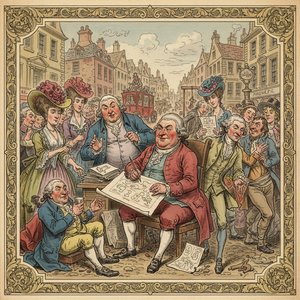
Thomas Rowlandson: Satire, Society & the Art of Caricature in Georgian England
Explore the witty world of Thomas Rowlandson, master Georgian caricaturist! Discover his satirical prints & insightful social commentary on 18th-century England. Learn about his life, techniques, and enduring influence.


