Contemporary Realism · 1898
Taking the Count (Τόμας Ίκινς, 1898)
Ο/Η Τόμας Ίκινς (1844–1916) δημιούργησε το Taking the Count. Χρονολογείται στο 1898. Ανήκει στο κίνημα Contemporary Realism. Είναι φτιαγμένο σε Oil On Canvas. Αποθηκεύεται στο Yale University Art Gallery στο Hartford, Ηνωμένες Πολιτείες Αμερικής.
- 1898
- Oil On Canvas
- Yale University Art Gallery, Hartford

 Προεπισκόπηση σε πραγματική κλίμακα

 Ελαιογραφικό Χειροποίητο Έργο
 Αποστολή
 Κοινοποίηση
 Πληροφοριακό φύλλο


 Λήψη
 Παρόμοια αντικείμενα συλλογής
 Ακτινογραφία
 Παρουσίαση
 Ερωτήσεις & Απαντήσεις

 Στατιστικά
Taking the Count, εν συντομία
- Τίτλος
- Taking the Count
- Καλλιτέχνης
- Τόμας Ίκινς (1844–1916)
- Γεννημένος/η το
- Φιλαδέλφεια, Ηνωμένες Πολιτείες Αμερικής
- Ημερομηνία
- 1898
- Μέσο
- Oil On Canvas
- Πού εκτίθεται
- Yale University Art Gallery, Hartford, Ηνωμένες Πολιτείες Αμερικής
- Κίνηση
- Contemporary Realism
- Εποχή
- 19th Century
- Θέμα
- boxing match, anatomy, crowd spectators, referee, philadelphia, realism
Τι απεικονίζει το Taking the Count;
The Raw Pulse of Philadelphia: A Masterclass in Realism
In the dim, electric atmosphere of Philadelphia’s Arena in 1898, a moment of profound human vulnerability is frozen in time. Thomas Eakins, a titan of American Realism, does not merely paint a boxing match; he dissects the very essence of endurance and physical struggle. In Taking the Count, we are thrust into the center of the ring, where the sweat, the tension, and the heavy breathing of the combatants feel almost palpable. This is not the romanticized, heroic athleticism often found in sporting art; instead, Eakins presents a gritty, unvarnished truth. The scene captures a fallen fighter at his most precarious moment, caught in the agonizing interval between a devastating blow and the referee's decisive count. It is a study of the human body under duress, rendered with a scientific precision that reflects Eakins’ lifelong obsession with anatomy.
The composition draws the eye through a complex web of gazes and physical postures. At the heart of the drama, the kneeling figure embodies a desperate struggle for recovery, his muscles taut and his spirit tested. Surrounding him, the referee and the standing opponent create a triangular tension that anchors the viewer within the ring. Beyond the immediate combatants, the presence of the crowd—a shadowy, watchful collective—adds a layer of psychological depth, reminding us that this private agony is being consumed as public spectacle. For the collector or the lover of fine art, this painting offers more than just a depiction of sport; it provides a window into the late 19th-century urban experience, where the boundaries between physical prowess and human frailty are perpetually blurred.
Anatomy of a Masterpiece: Technique and Light
Eakins’s technical mastery is most evident in his ability to marry scientific rigor with emotional resonance. Having spent years studying the intricacies of musculature and bone structure through dissection, he approaches the canvas with the eye of an anatomist. Every sinew and strained limb in Taking the Count is rendered with an uncompromising accuracy that makes the figures appear to possess weight and volume. His use of light does not serve to beautify the scene but to illuminate its harsh realities. The lighting within the arena creates deep, dramatic shadows that sculpt the bodies of the boxers, emphasizing the physical toll of the fight and adding a sense of cinematic gravity to the composition.
The palette, while grounded in the earthy, somber tones characteristic of Eakins’s realism, is used to direct the viewer's emotional journey. The muted colors of the background allow the pale, strained skin of the athletes to emerge from the gloom, focusing our attention on the visceral reality of the struggle. For interior designers seeking a centerpiece for a sophisticated space, this work offers a profound sense of gravitas. A high-quality reproduction of this masterpiece brings with it an air of intellectual depth and historical weight, making it an ideal choice for galleries, studies, or living spaces that value art which challenges the eye and stirs the soul.
A Legacy of Unflinching Honesty
To understand Taking the Count is to understand the rebellious spirit of Thomas Eakins himself. At a time when many of his contemporaries were retreating into the soft, fleeting impressions of light or the idealized myths of history, Eakins stood firm in his commitment to the real. He found beauty not in perfection, but in the truth of the human condition—in the grit of the city, the precision of science, and the raw intensity of life lived on the edge. This painting remains a testament to that courage.
Owning or displaying a reproduction of this work is an invitation to contemplate the themes of resilience and the cyclical nature of struggle. It serves as a powerful reminder that even in moments of defeat, there is a profound dignity in the attempt to rise again. Whether viewed as a historical document of Philadelphia’s sporting culture or as a timeless exploration of human anatomy, Taking the Count continues to captivate, offering an enduring source of inspiration for those who find beauty in the authentic and the unadorned.
Σε ποιο μουσείο βρίσκεται το Taking the Count;
Yale University Art Gallery
Hartford, Ηνωμένες Πολιτείες Αμερικής
Ένα Ταξίδι Μέσα από την Τέχνη και τον Χρόνο: Η Πινακοθήκη του Πανεπιστημίου του Γέιλ Βρίσκεται κρυμμένη μέσα στην ιστορική αυλή του Πανεπιστημίου του Γέιλ, στο χαμογελαστό Hartford του Κογκνέκτικατ, η Πινακοθήκη του Πανεπιστημίου του Γέιλ δεν είναι απλώς ένα χώρος έκθεσης έργων τέχνης. Είναι μια μαγευτική εμπειρία, ένας διάλογος αιώνων με την καλλιτεχνική δημιουργία, μια διαρκής υπενθύμιση της ανθρώπινης δίψας για να εκφραστεί και να κατανοήσει τον κόσμο γύρω της. Ιδρύθηκε το 1832 ως δώρο του John Trumbull, αρχικά αφιερωμένη στα έργα τέχνης που απεικονίζουν την Αμερικανική Επανάσταση – συμπεριλαμβανομένου και του εμβληματικού *Δήλωση της Ανεξαρτησίας, 4η Ιουλίου 1776* – η πλούσια συλλογή της έχει εξελιχθεί με την πάροδο των χρόνων σε ένα ενιαίο, αχανές μωσαϊκό που καλύπτει χιλιάδες χρόνια και κάθε γωνιά του κόσμου.


Εικόνες υψηλής ανάλυσης του Taking the Count
Δημόσιος τομέας: ο καλλιτέχνης απεβίωσε το 1916.
Τόμας Ίκινς, Taking the Count (1898), Yale University Art Gallery. Δημόσιο περιουσιακό δικαίωμα
Ερωτήσεις για το Taking the Count, απαντημένες
Πού μπορώ να δω το πρωτότυπο "Taking the Count" του Τόμας Ίκινς;
Το έργο "Taking the Count" του Τόμας Ίκινς εκτίθεται στο Yale University Art Gallery, Hartford, Ηνωμένες Πολιτείες Αμερικής. Η αναφορά στο μουσείο αφορά το πρωτότυπο έργο και όχι αναπαραγωγές.
Σε ποια χρονική περίοδο δημιουργήθηκε το "Taking the Count" του Τόμας Ίκινς;
Το έργο "Taking the Count" χρονολογείται από το 1898. Η ημερομηνία αυτό το έργο το τοποθετεί μέσα στην καριέρα του/της Τόμας Ίκινς και την εποχή του/της.
Με ποιο υλικό έχει εκτελεστεί το έργο "Taking the Count" του Τόμας Ίκινς;
Ο/Η Τόμας Ίκινς χρησιμοποίησε την τεχνική του/της Oil On Canvas για το έργο "Taking the Count". Η τεχνική αυτή ορίζει τη υλική φύση του πρωτότυπου έργου.
Περί τι αφορά το "Taking the Count";
Το έργο "Taking the Count" του Τόμας Ίκινς απεικονίζει: boxing match, anatomy, crowd spectators, referee, philadelphia, realism, athlete.
Το έργο "Taking the Count" ανήκει στο δημόσιο περιουσιακό αγαθό;
Η κατάσταση των πνευματικών δικαιωμάτων για το έργο "Taking the Count" του Τόμας Ίκινς είναι η εξής: το έργο ανήκει στο δημόσιο κτήμα - τα δικαιώματα αυτορության έχουν λήξει. Αυτό καθορίζει εάν επιτρέπεται η ελεύθερη αναπαραγωγή της εικόνας.
Ποιος δημιούργησε το "Taking the Count";
Το έργο "Taking the Count" δημιουργήθηκε από τον/την Τόμας Ίκινς. Οι πληροφορίες σε αυτή τη σελίδα περιγράφουν το πρωτότυπο έργο του/της Τόμας Ίκινς.
Προς ποιο καλλιτεχνικό ρεύμα ανήκει το έργο "Taking the Count" του Τόμας Ίκινς;
Το έργο "Taking the Count" του Τόμας Ίκινς ανήκει στο καλλιτεχνικό κίνημα Contemporary Realism. Αυτό το κίνημα παρέχει το στυλιστικό πλαίσιο του έργου.
Σε ποια περίοδο της καριέρας του/της Τόμας Ίκινς ανήκει το "Taking the Count";
Στο πλαίσιο της καριέρας του/της Τόμας Ίκινς, το έργο "Taking the Count" ανήκει στην περίοδο Mature Period. Αυτή η φάση διευκολύνει τη σύγκρισή του με άλλα έργα του/της καλλιτέχνη/της.
Σε τι ηλικία δημιούργησε ο/η Τόμας Ίκινς το "Taking the Count";
Ο/Η Τόμας Ίκινς ήταν 54 ετών όταν δημιούργησε το "Taking the Count" το 1898. Η ηλικία υπολογίζεται με βάση το έτος γέννησης του καλλιτέχνη, 1844.
Σχετικά με τον καλλιτέχνη, Τόμας Ίκινς

1844–1916, Ηνωμένες Πολιτείες Αμερικής
Τόμας Ίκινς
The Life of Thomas Eakins Born in Philadelphia, Pennsylvania, on July 25, 1844, Thomas Eakins lived a life deeply rooted in the city of his birth. He was a man of many disciplines, working as a painter, photographer, sculptor, and fine arts educator. While his interests often led him abroad for study, the geography of his existence remained largely centered in Philadelphia. He moved through the city's intellectual and social circles, observing the people and the physical realities that defined the local landscape.
Εργασίες του Τόμας Ίκινς
 Η Κλινική του Γκρόζ1875
 Κολύμβηση1885
 Μάξιμος Σμιτς στην Μονοκαροτάρα1871
 Portrait of Samuel Murray1889
Μελέτες γύρω από το Taking the Count
 Precision in Portraiture: The Technical Rigor of Anatomical Mastery and Hyper-RealismMaster the technical rigor of hyper-realism and anatomical precision. Explore the evolution of portraiture mastery now.
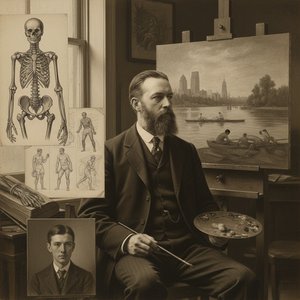 Thomas Eakins: Realism, Anatomy & the American Spirit – A Comprehensive Exploration of Life and LegacyExplore the life & legacy of Thomas Eakins, a pivotal American Realist painter. Discover his groundbreaking techniques, anatomical precisio…
 Romantic Realism's Finest: 10 Masterpieces for Your Home | OriginalUniqueArtExplore 10 defining masterpieces of Romantic Realism! Discover Courbet, Millet & Daumier's powerful paintings—capturing emotion and social …