Μετάβαση σε Εκτυπώσεις
 Περισσότερα







































 Για έργα τέχνης ή αναπαραγωγές με πλευρά υπερβαίνουσα των 105 εκ. (περίπου 41 ίντσες), το πλαίσιο θα αποσταλεί αποσυναρμολογημένο, σε μορφή κιτ. Η μέθοδος αυτή διασφαλίζει την ασφαλή παράδοση και προλαμβάνει τυχόν ζημιές κατά τη μεταφορά.


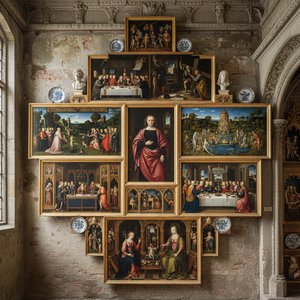
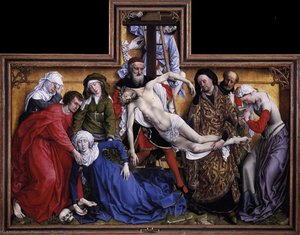
A Masterpiece of Emotion: Exploring Rogier van der Weyden’s ‘The Last Judgment Polyptych’
Rogier van der Weyden (c. 1399 – 1464), a Flemish painter whose legacy continues to inspire awe and admiration, stands as one of the foremost figures in Early Netherlandish art. Born in Tournai, Belgium—a city steeped in medieval tradition—van der Weyden’s artistic journey began not with brushes but with the meticulous craft of goldsmithing, an apprenticeship that instilled within him a profound understanding of detail and precision – qualities which would become inseparable from his distinctive visual language.
- Subject Matter: The monumental ‘Last Judgment Polyptych,’ completed around 1443-1451, depicts the apocalyptic scene described in the Book of Revelation. It portrays Christ presiding over Heaven, flanked by Mary Magdalene and Saint John the Evangelist, overseeing the judgment of humanity – a dramatic representation of divine justice and salvation.
- Style: Van der Weyden’s style is characterized by its unparalleled realism and psychological depth. Departing from the stylized conventions of his predecessors, he embraced a humanist approach, prioritizing expressive emotion and capturing nuanced facial expressions to convey profound spiritual contemplation.
The Polyptych itself—a complex arrangement of panels depicting scenes from the Gospels and culminating in the Judgment Day—represents a pinnacle of artistic innovation. Van der Weyden’s technique involved layering thin glazes of oil paint over meticulously prepared gesso, achieving astonishing luminosity and textural richness. This painstaking process allowed him to render fabrics with breathtaking accuracy, capturing folds and creases that seemed to breathe with life.
Symbolism: Beyond its narrative depiction, the artwork is laden with symbolic significance. The rainbow—a symbol of God’s covenant—represents divine mercy amidst judgment. The figures themselves embody archetypal roles representing faith, repentance, and redemption. Notably, the central figure of Christ embodies compassion and solemn authority simultaneously – a masterful portrayal reflecting the theological concerns of the period.
Historical Context: Created during the Burgundian Renaissance, ‘The Last Judgment’ reflects the burgeoning humanist spirit that questioned medieval dogma while retaining its reverence for Christian faith. It stands as testament to Van der Weyden's ability to synthesize artistic innovation with spiritual contemplation—a feat that cemented his place among the greatest painters of his time.
- Smarthistory Link: Explore Smarthistory’s Analysis
- Beaune Altarpiece Reference: Consider the influence of similar monumental altarpieces on Van der Weyden's approach to composition and storytelling.
Ερωτήσεις και Απαντήσεις
Υπάρχει κάποιο ενημερωτικό φυλλάδιο για το "The Last Judgment Polyptych (detail)" του Ρογήερ βαν ντερ Βέιν που να απευθύνεται σε φοιτητές;
Η σελίδα Οδηγός για το έργο "The Last Judgment Polyptych (detail)" του Ρογήερ βαν ντερ Βέιν προσφέρει ένα εκτυπώσιμο ενημερωτικό φυλλάδιο δύο σελίδων: το έργο τέχνης με τον πίνακα ταυτότητάς του, μια χρονική ζώνη που το τοποθετεί μέσα στη διάρκεια της ζωής του καλλιτέχνη, άλλα έργα του ίδιου δημιουργού, την αναλυτική παλέτα χρωμάτων και έτοιμες για αντιγραφή αναφορές σε τέσσερα στυλ.
Ποιο χρώμα κυριαρχεί στη σύνθεση του έργου "The Last Judgment Polyptych (detail)" του Ρογήερ βαν ντερ Βέιν;
Το Putty (#dbb69d) είναι το κυρίαρχο χρώμα του έργου "The Last Judgment Polyptych (detail)" του Ρογήερ βαν ντερ Βέιν.
Τι συναίσθημα αποπνέει το "The Last Judgment Polyptych (detail)" του Ρογήερ βαν ντερ Βέιν;
Το συναισθηματικό ύφος που καταγράφεται για το "The Last Judgment Polyptych (detail)" του Ρογήερ βαν ντερ Βέιν είναι Dramatic. Περιγράφει με συνοπτικό τρόπο το συναίσθημα που εκφράζει το έργο.
 Προεπισκόπηση σε πραγματική κλίμακα
 Αποστολή
 Κοινοποίηση
 Λεπτομέρειες
 Οδηγός

 Λήψη
Λήψη
 Παρόμοια αντικείμενα συλλογής
 Ακτινογραφία
 Παρουσίαση
 Q&A
Q&A Στατιστικά