

 Δείτε σε πραγματικό χώρο
 Αποστολή
 Κοινοποίηση
 Λεπτομέρειες

 Λήψη
Λήψη
 Παρόμοια αντικείμενα συλλογής
 Ακτινογραφία
 Παρουσίαση
General Winfield Scott
 Oil On Canvas
- WallArt
- Hudson River School
 1855
1855- 19th Century
 86.0 x 68.0 cm
 Μητροπολιτικό Μουσείο Τέχνης
 Διαβάστε περισσότερα
Χειροποίητη Αναπαραγωγή σε Έλαιο
Χειροποίητη oil painting σε καμβά στο δικό σας μέγεθος και πλαίσιο, κατά παραγγελία από τους καλλιτέχνες μας. ( Αγορά εκτύπωσης Αγορά ψηφιακής εικόνας)




P118B $10

P118H $10

P118W $10

P438Z $10

P508JH $12

P508YH $12

P805H $10

P805Z $10

P919BZ $10

P919G $10

P919XJ $10

P959ZH $10

P968JZ $12

W106C $8

W218G $10

W218JH $8

W218Y $10

W307PJ $10

W316G $10

W316PJ $8

W316Y $10

W398PJ $8

W4111J $10

W500HY $15

W500JH $15

W692G $12

W849H $8

W940BG $15

W953PJ $8




Επιλέξτε από τις προκαθορισμένες διαστάσεις μας που διατηρούν τις αρχικές αναλογίες του έργου τέχνης.

Μπορείτε να ορίσετε δικές σας διαστάσεις ώστε το έργο να ταιριάζει σε ένα συγκεκριμένο πλαίσιο ή χώρο. Εάν το επιλεγμένο μέγεθος δεν συμπίπτει με τις αναλογίες της αρχικής εικόνας, θα περικοψούμε το έργο ή θα επεκτείνουμε τη ζωγραφιά με πρόσθετα χειρόγραφα στοιχεία. Ένα ψηφιακό προσχέδιο θα σας αποσταλεί για έγκριση πριν την έναρξη της παραγωγής.
Παρακαλούμε σημειώστε ότι η προεπισκόπηση στην οθόνη δεν αντικατοπτρίζει την πραγματική περικοπή ή επέκταση. Μόνο το προσχέδιο θα δείξει με ακρίβεια την τελική σύνθεση.
Παρόλο που είναι διαθέσιμα προσαρμοσμένα μεγέθη, συνιστούμε να επιλέξετε μια διάσταση από τη λίστα των προκαθορισμένων μεγεθών για τη διατήρηση των αρχικών αναλογιών.
Μετά την παραγγελία, η ομάδα του OriginalUniqueArt.com θα στείλει email στον πελάτη με οδηγίες και θα παρέχει μια προεπισκόπηση προσχεδίου
Παγκόσμια Αποστολή () σε 3-4 εβδομάδες αντί για τις συνήθεις 5 εβδομάδες. (26 Αύγουστος). Χωρίς συμβιβασμούς στην ποιότητα.

Δωρεάν γρήγορη διεθνής αποστολή

Κάμβας από Λινό Υψηλής Ποιότητας

Πλήρης ασφάλιση μεταφοράς

Εγγύηση Επιστροφής Δασμών και Φόρων

Εγγύηση Απόλυτης Ομοιότητας Χρωμάτων

Πολιτική Επιστροφής 60 Ημερών (Μόνο σε περίπτωση ελαττωμάτων)

Εγγύηση επιστροφής 100% των χρημάτων

Προσφορά για μαζικές παραγγελίες
 Η επιλογή με γυαλί είναι διαθέσιμη μόνο για μεγέθη κάτω από 110 εκ.

General Winfield Scott
Μέσο Αναπαραγωγής
Διαστάσεις Αναπαραγωγής
-


Συνολική Τιμή
$ 300
Περιγραφή Έργου
The Resolute Gaze of an American Icon
In the quiet intensity of Robert Walter Weir’s 1855 masterpiece, General Winfield Scott, one does not merely encounter a portrait; one meets a legend. The painting captures the essence of a man whose life was etched into the very foundations of a burgeoning nation. Through a meticulously rendered posture and an unwavering, stern gaze, Weir presents Scott not just as a celebrated commander of the Mexican-American War, but as a symbol of unwavering determination and American fortitude. The subject’s presence is commanding, his black coat adorned with gold buttons catching the light in a way that suggests both the weight of his rank and the brilliance of his character. There is an undeniable gravity in his expression, a visual representation of the resolute spirit required to lead during one of America's most transformative eras.
A Symphony of Light and Hudson River Realism
As a titan of the Hudson River School, Weir brings a profound sense of atmospheric perspective to this intimate portrait. Eschewing the mere recording of likeness, the artist employs a sophisticated technique of layering oil paints on canvas to achieve a remarkable luminosity. This method allows for a depth of texture that makes the fabric of the uniform and the subtle shadows of the background feel almost tactile. The style is one of idealized realism—a delicate balance where every detail is rendered with precision, yet the overall effect elevates the subject to a state of classical dignity. For the discerning collector or interior designer, this mastery of light offers a captivating focal point that breathes life and a sense of historical depth into any sophisticated space.
The Silent Weight of History and Duty
Beyond the central figure, Weir weaves a complex narrative through subtle symbolic elements that invite deep contemplation. Positioned against a muted wall, the inclusion of a clock serves as a poignant memento mori, representing the relentless passage of time and the heavy mantle of responsibility borne by those in leadership. The composition is further enriched by the presence of two flanking figures, whose soft rendering suggests the collaborative nature of great historical achievements and the collective effort required for monumental goals. This careful arrangement transforms the painting from a simple portrait into a profound meditation on leadership, legacy, and the enduring spirit of duty. To possess a reproduction of such a work is to invite a conversation about history, strength, and the timeless virtues of perseverance into one's home.
Βιογραφία Καλλιτέχνη
Robert Walter Weir: A Pioneer of Romantic Landscape Painting and Educator
Robert Walter Weir (1803 – 1889) stands as a pivotal figure in American art history, recognized primarily for his contributions to the Hudson River School movement and his transformative role as an instructor at the United States Military Academy. Born June 18, 1803, in New York City, Weir’s life was marked by unwavering dedication to artistic pursuits alongside a profound commitment to fostering intellectual growth—a duality that cemented his legacy as both a celebrated artist and a formative influence on generations of future leaders. ### Early Life and Artistic Training Weir's upbringing instilled within him a deep appreciation for classical learning, shaping his early artistic inclinations. Though he lacked formal academic credentials, his self-directed training under Robert Cox (or Cook) and John Wesley Jarvis in New York City from 1822 to 1824 provided invaluable foundational knowledge. This period of intensive study fueled his burgeoning talent and propelled him toward Italy—specifically Florence (1824–1825) and Rome (1825–1827)—where he immersed himself in the artistic grandeur of Michelangelo and Raphael, absorbing the principles of Renaissance composition and detail. These formative experiences profoundly impacted Weir’s stylistic sensibilities, establishing a bedrock of classical technique that would permeate his subsequent works. ### The Hudson River School and Historical Narrative Weir's membership within the Hudson River School solidified his place as one of America’s foremost landscape painters. Unlike many contemporaries who merely replicated scenic vistas, Weir imbued his canvases with symbolic depth and emotional resonance—a hallmark of the movement’s aesthetic vision. His artistic style was characterized by meticulous attention to detail, balanced compositions, and dramatic use of light and shadow, mirroring the stylistic ideals championed by luminaries like Frederic Church and Thomas Cole. Notably, Weir's magnum opus, *The Embarkation of the Pilgrims*, commissioned by Congress in 1837 and installed in the Rotunda of the U.S. Capitol in 1843, exemplifies this artistic prowess—a monumental painting that transcends mere depiction to convey a powerful allegory of courage, faith, and the foundational values of American identity. ### Legacy at West Point and Pedagogical Influence Weir’s tenure as Teacher of Drawing (1834–1846) and Professor of Drawing (1846–1876) at the United States Military Academy represents an extraordinary contribution to American education. He didn't simply impart technical skills; he cultivated a discerning eye and fostered creative problem-solving abilities within a generation of aspiring officers—a legacy that continues to inspire scholars today. Among his notable students were Ulysses S. Grant, Robert E. Lee, Jefferson Davis, and James Abbott McNeill Whistler—a remarkable roster demonstrating the breadth of Weir’s influence. His pedagogical approach prioritized observation, analysis, and imaginative interpretation—values that resonated deeply with his pupils and shaped their artistic sensibilities. ### Notable Works and Artistic Recognition Weir produced over 450 paintings throughout his lifetime, showcasing his versatility across genres and mediums. His oeuvre encompasses landscapes celebrating the majesty of the American wilderness alongside portraits capturing the dignity and character of prominent figures—a testament to his artistic range and unwavering dedication to portraying both natural beauty and human experience. Works such as *Bourbons Last March*, *Landing of Hendrik Hudson*, *Evening of the Crucifixion*, *Columbus before the Council of Salamanca*, *Our Lord on the Mount of Olives*, *Virgil and Dante Crossing the Styx*, and *The Portico of the Palace of Octavia* stand as enduring symbols of Weir’s artistic vision—capturing pivotal moments in history with dramatic flair and profound symbolic significance. His contribution to American art is commemorated through exhibitions at museums across the nation, ensuring that his legacy continues to inspire admiration and scholarly inquiry for decades to come.
Ρόμπερτ Βάλτερ Βειρ
1803 - 1889 , Ηνωμένες Πολιτείες Αμερικής
Γρήγορα στοιχεία
- Artistic Movement Or Style: Ρομαντικός Κλασικισμός
- Artists Or Movements Influenced By This Artist: ['Η Ρομαντική σχολή']
- Artists Who Influenced This Artist:
- Μιχαήλ Άγγελος
- Ραφαήλ
- Date Of Birth: 1803-06-18
- Full Name: Robert Walter Weir
- Nationality: Αμερικανός
- Notable Artworks:
- Η Αναχώρηση των Πειρατών
- Επίσκεψη του Χέντρικ Χούδσον
- Το Βράδυ της Σταυροπροσώπου
- Place Of Birth: Νέα Υόρκη, ΗΠΑ
Σχετικά άρθρα
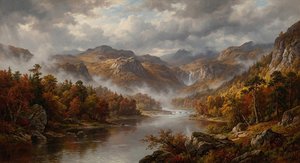
Οι 10 Κορυφαίοι πίνακες που καθόρισαν την Σχολή του ποταμού Hudson | OriginalUniqueArt.gr
Ανακαλύψτε τους 10 κορυφαίους πίνακες της Σχολής του ποταμού Hudson! Thomas Cole, Frederic Church & Albert Bierstadt ζωντανεύουν. Έμπνευση για διακόσμηση σπιτιού με αριστουργήματα ρομαντισμού. Εξερευνήστε την πλήρη συλλογή στο OriginalUniqueArt.com.
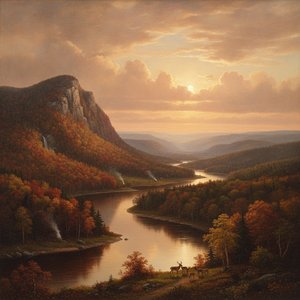
The Hudson River School: A Definitive Guide to America's Romantic Landscape Tradition
Explore the profound legacy of the Hudson River School. Discover how masters like Thomas Cole captured the American sublime through Romanticism and Luminism. A definitive guide for art historians and collectors seeking to understand America's wild beauty.
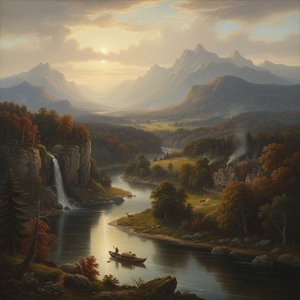
Capturing the American Spirit: A Journey Through Iconic Landscapes and the Legacy of the Hudson River School
Explore the profound beauty of American art history. From the Hudson River School to iconic landscapes, discover a curated journey through the masterpieces that defined a nation's spirit and the enduring legacy of American Romanticism.

The Sublime Landscape: Exploring the Hudson River School Movement
Explore the captivating world of the Hudson River School! Discover the history, artists, and defining characteristics of this iconic American art movement. Learn about Romanticism's influence & find inspiration for your collection.
Wild & Untamed: The High-Impact Energy of American Romanticism and the Hudson River School
Experience the raw power of American Romanticism. Explore the high-impact energy of the Hudson River School through premium, hand-painted oil reproductions that capture the sublime beauty and untamed spirit of the American wilderness for discerning collectors.

