
 Προεπισκόπηση σε πραγματική κλίμακα
 Αποστολή
 Κοινοποίηση
 Λεπτομέρειες
 Οδηγός

 Λήψη
Λήψη
 Παρόμοια αντικείμενα συλλογής
 Ακτινογραφία
 Παρουσίαση
 Q&A
Q&A Στατιστικά
Roses

- 73.0 x 97.0 cm


 Περισσότερα
Το έργο τέχνης που εμφανίζεται σε αυτή τη σελίδα προστατεύεται από τους νόμους περί πνευματικών δικαιωμάτων, γεγονός που σημαίνει ότι δεν μπορούμε νομικά να δημιουργήσουμε ή να πουλήσουμε μια ταυτόσημη αναπαραγωγή του. Αυτή η προστασία επιβάλλεται βάσει διεθνών συμφωνιών, όπως η Σύμβαση της Βέρνης καθώς και από τους εθνικούς νόμους, συμπεριλαμβανομένων αυτών που ορίζονται από το Νομοθεσία περί πνευματικών δικαιωμάτων των ΗΠΑ - Τίτλος 17. Όλα τα δικαιώματα κατοχυρωμένα. Απαγορεύεται η αναπαραγωγή χωρίς άδεια.
Αυτή η μέθοδος συμμορφώνεται πλήρως με τους κανονισμούς περί πνευματικών δικαιωμάτων, καθώς δεν περιλαμβάνει την αντιγραφή ή την αναπαραγωγή του προστατευόμενου έργου. Αντίθετα, πρόκειται για μια δημιουργική ερμηνεία — ένα νέο έργο που επηρεάζεται από το πρωτότυπο, χωρίς όμως να είναι πανομοιότυπο με αυτό.
Giclée / Εκτυπώσεις Τέχνης
Εκτύπωση giclée ή σε καμβά ποιότητας μουσείου με γρήγορη παραγωγή και ευέλικτες επιλογές φινιρίσματος. ( Αγορά χειροποίητου πίνακα Μετάβαση σε Ψηφιακή Αποτέλεσμα)




P118B €10

P118H €10

P118W €10

P438Z €10

P508JH €12

P508YH €12

P805H €10

P805Z €10

P919BZ €10

P919G €10

P919XJ €10

P959ZH €10

P968JZ €12

W106C €8

W218G €10

W218JH €8

W218Y €10

W307PJ €10

W316G €10

W316PJ €8

W316Y €10

W398PJ €8

W4111J €10

W500HY €15

W500JH €15

W692G €12

W849H €8

W940BG €15

W953PJ €8




Επιλέξτε από τις προκαθορισμένες διαστάσεις μας που διατηρούν τις αρχικές αναλογίες του έργου τέχνης.

Εισάγετε το πλάτος και το ύψος που επιθυμείτε, ώστε να ταιριάζουν στο κάδሮ ή στον τοίχο σας. Μια εκτύπωση μπορεί μόνο να υποστεί κοψίμό και ποτέ να μην γίνει μεγαλύτερη από την αρχική εικόνα, επομένως η επιλογή μεγέθους με διαφορετικό σχήμα συνεπάγεται απώλεια ενός μέρους της εικόνας. Σας στέλνουμε ένα ψηφιακό mockup για έγκριση πριν προχωρήσουμε σε οποιαδήποτε εκτύπωση. Η εικόνα που εμφανίζεται σε αυτή τη σελίδα δεν δείχνει την πραγματική κοπή — μόνο το mockup την παρουσιάζει.
Παγκόσμια Αποστολή () σε 2 εβδομάδες αντί για τις συνήθεις 4/5 εβδομάδες. (1 Νοέμβριος)

Δωρεάν γρήγορη διεθνής αποστολή

Κάμβας από Λινό Υψηλής Ποιότητας

Πλήρης ασφάλιση μεταφοράς

Εγγύηση επιστροφής δασμών και φόρων εισαγωγής

Εγγύηση Απόλυτης Ομοιότητας Χρωμάτων

Πολιτική Επιστροφής 100 Ημερών (Μόνο σε περίπτωση ελαττωμάτων)

Εγγύηση επιστροφής 100% των χρημάτων

Προσφορά για πολλαπλές παραγγελίες
 Η επιλογή με γυαλί είναι διαθέσιμη μόνο για μεγέθη κάτω από 110 εκ.

Roses
Giclée / Εκτυπώσεις Τέχνης
Διαστάσεις Αναπαραγωγής
-


Τελική Τιμή
€ 71
A Silver Symphony of Petals and Light
In the vast, textured tapestry of twentieth-century Balkan art, few works capture the delicate transition between tradition and modernity as poignantly as Petar Lubarda’s Roses. Painted in 1937, this masterpiece serves as a luminous gateway into what historians fondly refer to as Lubarda’s "silver period." At first glance, the viewer is greeted by a breathtaking arrangement of blossoms, where the soft, velvety textures of roses mingle with complementary flora, all cradled within a graceful vase. The composition is not merely a study of botanical beauty but a sophisticated dance of light and form. As the eye wanders across the canvas, one notices how the artist employs a masterful balance of depth; certain blooms press forward with vibrant vitality, while others recede into a soft, atmospheric haze, creating a sense of three-dimensional space that breathes within the frame.
The technique displayed in Roses is nothing short of transformative. During this pivotal era of his career, Lubarda was navigating the delicate shift from linear precision to a more fluid, pictorial approach. While his earlier works often relied on defined outlines, here we see the emergence of a "sillevry shine"—a luminous quality where color acts as a deliberate accent against a more ethereal, shimmering background. The brushstrokes are skillful and intentional, capturing the organic weight of the petals and the reflective surface of the vase with an impressionistic touch that recalls the expressive power of Van Gogh, yet remains uniquely anchored in Lubarda’s own visionary language. This interplay of light and shadow lends the painting a rhythmic quality, making the stillness of the still life feel vibrantly alive.
Historical Resonance and Artistic Legacy
Beyond its aesthetic splendor, Roses carries a profound historical and emotional resonance that makes it a cornerstone for any serious collection. The painting was part of the prestigious Pavle Beljanski collection, acquired as early as 1937, marking it as a work of immediate significance. There are even legendary stories surrounding its impact; during an exhibition in Moscow in 1948, one visitor was reportedly captivated by the painting, stating that it was exactly the work he had hoped to paint all his life. This level of reverence speaks to the universal appeal of Lubarda's ability to blend the local spirit of Montenegro with a broader European modernism.
For the discerning collector or interior designer, this piece offers more than just visual beauty; it provides a sense of timelessness. The way the light interacts with the "silver" tones makes it an ideal centerpiece for spaces that value elegance and quiet contemplation. Whether placed in a sun-drenched gallery or a sophisticated contemporary living room, the painting acts as a window into a moment of perfect botanical harmony. It is a work that does not merely decorate a wall but enriches the very atmosphere of a home, inviting viewers to pause and lose themselves in its shimmering, floral depths.
Ερωτήσεις και Απαντήσεις
Είναι το έργο "Roses" του Petar Lubarda φωτεινό ή σκοτεινό;
Η αισθητή φωτεινότητα του έργου "Roses" του Petar Lubarda είναι balanced. Μπορεί να συνδυαστεί με το φως του προορισμένου χώρου.
Ποιος είναι ο καλλιτέχνης πίσω από το "Roses";
Ο καλλιτέχνης πίσω από το "Roses" είναι ο/η Petar Lubarda. Το έργο καταχωρείται υπό το όνομα του/της Petar Lubarda.
Πώς μπορώ να κατεβάσω την εικόνα του έργου "Roses" του Petar Lubarda;
Μπορείτε να κατεβάσετε την εικόνα του έργου "Roses" του Petar Lubarda από τη σελίδα Λήψη ψηφιακού αρχείου: λήψη ψηφιακής εικόνας υψηλής ανάλυσης.
Βιογραφικό Καλλιτέχνη
The Visionary Soul of Montenegro: The Life and Legacy of Petar Lubarda
In the vast, rugged tapestry of twentieth-century Balkan art, few names resonate with as much heroic grandeur and profound emotional depth as Petar Lubarda. Born in 1907 in the village of Ljubotinj, near Cetinje, Lubarda’s very existence was steeped in the spiritual and historical echoes of Montenegro. His formative years were shaped by the solemnity of Byzantine traditions and the narrative power of medieval frescoes, elements that would later become the bedrock of his distinctive artistic language. As a painter, he did not merely seek to replicate the world around him; rather, he sought to capture the very essence of identity, sacrifice, and the enduring spirit of a people.
Lubarda’s journey was one of constant movement and intellectual expansion. His early studies at the Belgrade School of Art in 1925 led him to the vibrant artistic currents of Paris, where he encountered the transformative power of European modernism. It was here that the influence of Flemish realism and the expressive, emotive use of color found in Vincent van Gogh’s work began to permeate his technique. This period of exposure allowed him to bridge the gap between the ancient, iconographic traditions of his homeland and the fluid, avant-garde movements of the West. His ability to synthesize these disparate worlds—the rigid spiritual symbolism of the East and the impressionistic light of the West—created a style that was both timeless and strikingly modern.
A Symphony of Light, Shadow, and History
The evolution of Lubarda’s technique is perhaps most beautifully illustrated in his transition from linear precision to a more atmospheric, painterly approach. During what historians often call his "silver period," exemplified by his 1937 masterpiece Roses, one can witness a breathtaking dance of light and form. In these works, the artist moved away from defined outlines toward a luminous quality where color acts as a deliberate accent against an ethereal, shimmering background. He masterfully employed chiaroscoscuro—a technique reminiscent of Rembrandt—to heighten dramatic tension, allowing certain elements to press forward with vitality while others recede into a soft, mysterious haze.
Beyond the delicate beauty of his still lifes, Lubarda’s oeuvre is defined by its monumental themes. He was a painter of epic proportions, most famously revisited in over thirty different versions of the Battle of Kosovo (1389). These canvases are far more than historical chronicles; they are visceral, psychological explorations of courage and tragedy. Through thick, intentional brushstrokes and a powerful command of composition, he transformed historical struggle into a universal symbol of human resilience. His work often grappled with the weight of history, using the landscape of Montenegro not just as a setting, but as a character imbued with memory and myth.
Enduring Influence and Artistic Triumph
The significance of Petar Lubarda extends far beyond the borders of the Balkans. Throughout his career, he achieved international acclaim, earning prestigious honors such as the Herder Prize in 1968 and recognition from major institutions in Brazil, New York, and across Europe. His role as an educator was equally profound; after surviving the hardships of concentration camps during the war years, he returned to Belgrade and Cetinje to shape the next generation of artists, serving as a professor at the Academy of Fine Arts and establishing vital art institutions in Montenegro.
Lubarda’s legacy is characterized by several key pillars of achievement:
- Synthesis of Traditions: The seamless integration of Byzantine iconography and medieval narrative power with modern European Impressionism.
- Mastery of Emotion: A unique ability to use color and light to convey the psychological complexity of both historical events and natural landscapes.
- Cultural Foundation: His instrumental role in establishing professional art schools and institutions that solidified Montenegro's place in the global art dialogue.
- Iconic Imagery: The creation of a visual vocabulary for Balkan identity, most notably through his monumental depictions of historical struggle.
Today, Petar Lubarda remains a cornerstone of 20th-century art. His paintings continue to serve as luminous gateways into a world where the boundaries between reality and myth are beautifully blurred, leaving behind a legacy that is as enduring and rugged as the Montenegrin mountains from which he emerged.
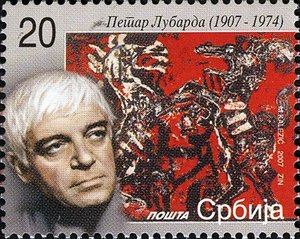
Petar Lubarda
1907 - 1974 , Montenegro
Γρήγορα στοιχεία
- Full Name: Petar Lubarda
- Nationality: Serbian
- Date Of Birth: 1907
- Date Of Death: 1974
- Place Of Birth: Cetinje, Montenegro
- Notable Artworks: ['Battle of Kosovo']
- Artistic Movement Or Style: Byzantine & Medieval influence
- Artists Who Influenced This Artist:
- Jan van Eyck
- Vincent van Gogh
- Artists Or Movements Influenced By This Artist: ['Belgrade City Museum']
Σχετικά άρθρα
Guy Orlando Rose: Capturing California's Luminosity in American Impressionism
Explore the luminous landscapes of Guy Orlando Rose, a leading American Impressionist painter deeply influenced by Monet. Discover his mastery of light, atmospheric perspective & California scenes. Learn about his legacy and find high-quality reproductions.

Blossoms of Time: A Historical & Aesthetic Exploration of Floral Painting Across Cultures
Explore the rich history of floral painting! Discover symbolism, techniques & masterpieces from Van Huysum to O'Keeffe. Expert insights for art lovers & collectors at OriginalUniqueArt.
Οι 10 Πιο Διάσημες Πίνακες με Κυρίαρχο το Ροζ της Σκόνης | Έμπνευση για Διακόσμηση
Ανακαλύψτε τους 10 πιο διάσημους πίνακες με κυρίαρχο το ροζ της σκόνης! Ιμπρεσιονισμός, Ρομαντισμός & άλλες τέχνες. Έμπνευση διακόσμησης και ιστορίες καλλιτεχνών. Βρείτε την τέλεια αναπαραγωγή πίνακα στο OriginalUniqueArt.com.
Guy Rose: Luminism, Impressionism & the Californian Aesthetic – A Comprehensive Exploration of Life and Legacy
Explore the life & art of Guy Rose, a leading American Impressionist painter. Discover his luminous California landscapes, Giverny scenes, and enduring legacy. A comprehensive guide for collectors & enthusiasts.

Rose Maynard Barton: Pioneering Irish Modernism & the Intimate World of Domesticity
Discover Rose Maynard Barton (1856-1930), a pioneering Irish watercolourist celebrated for her evocative landscapes and charming depictions of domestic life. Explore her legacy & artwork at OriginalUniqueArt.