

 Προεπισκόπηση σε πραγματική κλίμακα
 Αποστολή
 Κοινοποίηση
 Λεπτομέρειες
 Οδηγός

 Λήψη
Λήψη
 Παρόμοια αντικείμενα συλλογής
 Ακτινογραφία
 Παρουσίαση
 Στατιστικά
El bateig de Crist

 Περισσότερα
Χειροποίητη Αναπαραγωγή σε Έλαιο
Χειροποίητη ελαιογραφία σε καμβά στο δικό σας μέγεθος και πλαίσιο, κατά παραγγελία από τους καλλιτέχνες μας. ( Μετάβαση σε Εκτυπώσεις Μετάβαση σε Ψηφιακή Αποτέλεσμα)




































Επιλέξτε από τις προκαθορισμένες διαστάσεις μας που διατηρούν τις αρχικές αναλογίες του έργου τέχνης.

Πληκτρολογήστε το πλάτος και το ύψος που επιθυμείτε, ώστε να ταιριάζουν στο κάδሮ ή στον τοίχο σας. Ε เนื่องจาก πρόκειται για χειροποίητη ζωγραφική, σε περίπτωση διαστάσεων με διαφορετικό σχήμα, ο καλλιτέχνης μπορεί να ζωγραφίσει λίγο παραπάνω γύρω από το έργο ή να αφαιρέσει ένα μέρος — η επιλογή είναι δική σας. Σας στέλνουμε ένα ψηφιακό mockup για έγκριση πριν ξεκινήσει η δημιουργία του έργου. Η εικόνα που εμφανίζεται σε αυτή τη σελίδα δεν δείχνει το τελικό αποτέλεσμα — μόνο το mockup το αναδεικνύει.
Μετά την παραγγελία, η ομάδα του OriginalUniqueArt.com θα στείλει email στον πελάτη με οδηγίες και θα παρέχει μια προεπισκόπηση προσχεδίου
Παγκόσμια Αποστολή () σε 3-4 εβδομάδες αντί για τις συνήθεις 5 εβδομάδες. (27 Οκτώβριος). Χωρίς συμβιβασμούς στην ποιότητα.

Δωρεάν γρήγορη διεθνής αποστολή

Κάμβας από Λινό Υψηλής Ποιότητας

Πλήρης ασφάλιση μεταφοράς

Εγγύηση επιστροφής δασμών και φόρων εισαγωγής

Εγγύηση Απόλυτης Ομοιότητας Χρωμάτων

Πολιτική Επιστροφής 100 Ημερών (Μόνο σε περίπτωση ελαττωμάτων)

Εγγύηση επιστροφής 100% των χρημάτων

Προσφορά για πολλαπλές παραγγελίες
 Η επιλογή με γυαλί είναι διαθέσιμη μόνο για μεγέθη κάτω από 110 εκ.

El bateig de Crist
Μέσο Αναπαραγωγής
Διαστάσεις Αναπαραγωγής
-


Τελική Τιμή
€ 264
A Glimpse into Ancient Ritual: Pedro Orrente's "El Bateig de Crist"
Pedro Orrente’s “El Bateig de Crist” (The Baptism of Christ) offers a captivating window into the religious and cultural landscape of 17th-century Spain. This painting, likely created during his period of activity in Valencia, depicts a pivotal moment from the New Testament – the baptism of Jesus by John the Baptist. However, Orrente’s interpretation moves beyond a straightforward biblical narrative, presenting a scene imbued with intriguing details that invite deeper contemplation. The composition features a group of men, seemingly Roman soldiers based on their attire and weaponry (spears are prominently displayed), gathered around a nude figure presumed to be Christ. They stand on a beach bordering calm waters, framed by the natural backdrop of trees, creating an atmosphere both serene and subtly charged with tension.Baroque Realism & Artistic Technique
Orrente’s style firmly places him within the Spanish Baroque tradition. While influenced by El Greco's dramatic flair, Orrente developed a distinct artistic voice characterized by meticulous observation of detail and a focus on realistic portrayals of figures and landscapes. The painting showcases his skill in rendering textures – from the rough fabric of the soldiers’ garments to the smooth skin of Christ. The use of *chiaroscuro*—the dramatic contrast between light and dark—is evident, enhancing the three-dimensionality of the figures and creating a sense of depth within the scene. Orrente's palette leans towards earthy tones with highlights of brighter colors, contributing to the overall realism and visual appeal. The brushwork is detailed but not overly fussy, reflecting a balance between Baroque exuberance and a more restrained approach to naturalism.Historical Context & Possible Interpretations
Painted around the mid-17th century, “El Bateig de Crist” reflects a period of intense religious fervor in Spain, marked by the Counter-Reformation. The presence of Roman soldiers is particularly intriguing and has led to various interpretations. Some scholars suggest it symbolizes the Roman Empire's role in facilitating the spread of Christianity. Others propose that they represent earthly power witnessing a divine event, highlighting the contrast between secular authority and spiritual significance. The setting itself – a naturalistic beach scene—is less common than traditional depictions of Christ’s baptism within a more formal or architectural context, suggesting Orrente's desire to ground the sacred event in a relatable, human environment. The painting was likely commissioned for a private chapel or religious institution, reflecting the widespread patronage of art during this era.Symbolism and Emotional Resonance
Beyond its historical significance, “El Bateig de Crist” evokes a range of emotions. The vulnerability of Christ, depicted nude amidst the watchful gaze of the soldiers, creates a sense of quiet drama. The natural setting—the beach, the water, the trees—suggests themes of purification and renewal associated with baptism. The inclusion of the soldiers adds an element of tension and anticipation, hinting at the future events that will unfold in Christ’s life. Orrente masterfully uses light to draw attention to key elements – illuminating Christ's figure while casting shadows on the surrounding figures, further emphasizing his central role in the scene. The painting invites viewers to contemplate themes of faith, sacrifice, and the intersection of the divine and the human experience.Ερωτήσεις και Απαντήσεις
Πώς μπορώ να ανακαλύψω έργα τέχνης παρόμοια με το "El bateig de Crist" του Pedro Orrente;
Η σελίδα Παρόμοια έργα του έργου "El bateig de Crist" του Pedro Orrente παρουσιάζει σχετικά έργα τέχνης.
Πόσο φωτεινό είναι συνολικά το "El bateig de Crist";
Συνολικά, το "El bateig de Crist" καταγράφεται ως balanced. Η αισθητή φωτεινότητα περιγράφει το πόσο ανοιχτό ή σκούρο φαίνεται το έργο.
Ποια χρωματική παλέτα χρησιμοποιείται στο "El bateig de Crist" του Pedro Orrente;
Το έργο "El bateig de Crist" του Pedro Orrente χρησιμοποιεί μια χρωματική παλέτα Earthy, η οποία αποπνέει τον συνολικό χρωματικό χαρακτήρα του έργου.
Βιογραφικό Καλλιτέχνη
The Spanish Bassano: The Life and Legacy of Pedro Orrente
In the vibrant tapestry of the Spanish Golden Age, few threads are as intricately woven yet subtly colored as those left by Pedro Orrente. Born in Murcia in 1580, Orrente emerged during a transformative era when the dramatic tensions of the Baroque were beginning to coalesce with a burgeoning interest in naturalism. While history often shines its brightest spotlight on more flamboyant figures like El Greco, Orrente carved out a profound niche by bridging these two worlds. His life was one of movement and adaptation, traveling from his native Murcia to the artistic hubs of Toledo and eventually settling in Valencia, where he would pass away in 1645. This nomadic existence allowed him to absorb the diverse artistic currents of Spain, creating a body of work that feels both deeply rooted in Spanish tradition and breathlessly connected to the broader European landscape.
The foundations of Orrente’s mastery were laid in his early years, likely under the tutelage of the Murcia painter Juan de Arizmendi. However, it was his time in Toledo around 1600 that truly ignited his professional ascent. It was here that he encountered Jorge Manuel Theotocóp_uli, the son of El Greco, a friendship that undoubtedly exposed him to the lingering echoes of Mannerism. Yet, Orrente’s true artistic soul found its resonance elsewhere. His travels took him to Venice, where the influence of the Bassano family became an indelible part of his visual vocabulary. Often referred to as "the Spanish Bassano," Orrente adopted their unique ability to transform biblical narratives into dynamic genre scenes. He learned to populate his canvases with lively figures set against lush, detailed landscapes, moving away from stiff, idealized compositions toward a more visceral, human experience of the divine.
A Mastery of Naturalism and Dramatic Light
Orrente’s technical prowess is most evident in his ability to manipulate light and shadow to evoke profound emotional responses. He was a pioneer of naturalism within the Spanish Baroque framework, prioritizing an accurate, almost tactile representation of the world around him. In masterpieces such as "The Sacrifice of Isaac" (1616), one can witness this tension between the sacred and the earthly. The composition is charged with an urgent, palpable anxiety, where the intervention of the angel provides a moment of divine grace amidst the raw, human terror of the scene. His use of chiaroscuro—the dramatic interplay of light and dark—serves not merely as a stylistic flourish but as a narrative tool to anchor the viewer’s eye to the most poignant emotional beats of his stories.
This skill is further illuminated in works like "Entry into Jerusalem" (c. 1620), where the biblical event is stripped of distant abstraction and rendered as a vibrant, crowded tableau. Through his brush, Jesus does not arrive merely as a theological icon but as a figure moving through a real, breathing world, surrounded by a diverse crowd of worshippers, skeptics, and onlookers. Orrente had a remarkable gift for detail; whether it was the texture of a donkey's coat, the fluttering of birds in a vast sky, or the subtle expressions of devotion on a disciple's face, his work invites a slow, meditative gaze that rewards the observer with endless layers of meaning.
Historical Significance and Artistic Triumph
The enduring significance of Pedro Orrente lies in his role as a transitional architect of Spanish art. He stood at the crossroads of eras, helping to steer the Spanish aesthetic away from the elongated, spiritualized forms of the late Renaissance toward the grounded, dramatic realism that would define much of the 17th century. His ability to synthesize the Venetian approach to landscape and genre with the intense religious fervor of Spain created a unique visual language that resonated across the regions where he worked.
Reflecting on his contributions, several key elements define his artistic triumph:
- Pioneering Naturalism: He was among the first in his region to prioritize realistic, human-centric representations within religious subjects.
- The Venetian Connection: His successful integration of the Bassano family's style allowed him to introduce a new sense of landscape and movement to Spanish altarpieces.
- Emotional Depth: Through masterful use of light and composition, he transformed static biblical stories into living, breathing dramas.
- Cultural Bridge: His work served as a vital link between the fading influence of El Greco's Mannerism and the rising tide of the Baroque.
Though his name may not always command the immediate recognition of the most famous masters, the impact of Pedro Orrente is felt in every shadow and every sun-drenched landscape of his canvases. He remains a vital figure for any student of art history, representing a moment of profound change where the divine was brought down to earth through the lens of breathtaking realism.

Pedro Orrente
1580 - 1645 , Spain
Γρήγορα στοιχεία
- Full Name: Pedro de Orrente
- Nationality: Spanish
- Date Of Birth: 1580
- Date Of Death: 1645
- Place Of Birth: Murcia, Spain
- Notable Artworks:
- The Sacrifice of Isaac
- El bateig de Crist
- Saint Leocadia
- Artistic Movement Or Style: Baroque
- Artists Who Influenced This Artist: ['El Greco']
- Artists Or Movements Influenced By This Artist:
- Esteban March
- Valencian art
Σχετικά άρθρα

Οι 10 Κορυφαίοι Δάσκαλοι του Μπαρόκ: Έργα Τέχνης που Άλλαξαν την Ιστορία
Ανακαλύψτε τα 10 αριστουργήματα του Μπαρόκ! Πίνακες Καραβάτζιο, Ρέμπραντ & άλλων μεγάλων ζωγράφων. Ιστορία τέχνης, τεχνικές και έντονα χρώματα που καθόρισαν μια εποχή. Βρείτε την τέλεια αναπαραγωγή στο OriginalUniqueArt.com.

The Dramatic Flourish: Exploring the Baroque Movement's Enduring Legacy in Art History
Explore the dramatic world of Baroque art! Discover iconic artists like Caravaggio & Rubens, defining techniques, and its lasting impact on art history. Expert insights for collectors & enthusiasts at OriginalUniqueArt.
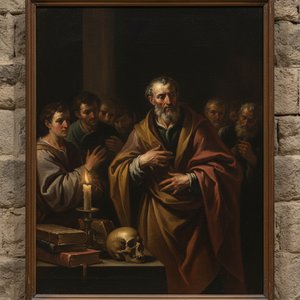
Spanish Baroque Art: The Dramatic Mastery of Light and Shadow in the Age of Velázquez
Explore the profound drama of Spanish Baroque art. Delve into the mastery of light, shadow, and realism through the legendary works of Diego Velázquez and the Spanish Golden Age.

The Visceral Stage: Exploring Dramatic Narratives & Emotional Intensity in Baroque Art
Explore the dramatic world of Baroque art! Discover iconic masters like Caravaggio & Rembrandt, their techniques, and the movement's lasting impact. Expert insights for collectors & enthusiasts at OriginalUniqueArt.

The Golden Age Reforged: Dramatic Realism & Religious Zeal in Spanish Baroque Art
Explore the dramatic world of Spanish Baroque art! Discover masters like Zurbarán & the powerful influence of religious zeal on painting techniques – a guide for collectors and enthusiasts.