Μετάβαση σε Εκτυπώσεις
 Περισσότερα







































 Για έργα τέχνης ή αναπαραγωγές με πλευρά υπερβαίνουσα των 105 εκ. (περίπου 41 ίντσες), το πλαίσιο θα αποσταλεί αποσυναρμολογημένο, σε μορφή κιτ. Η μέθοδος αυτή διασφαλίζει την ασφαλή παράδοση και προλαμβάνει τυχόν ζημιές κατά τη μεταφορά.


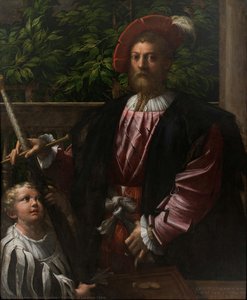
The Circumcision (Parmigianino): A Study in Mannerist Elegance
Girolamo Francesco Maria Mazzola, known universally as Parmigianino – “the little one from Parma” – stands as a pivotal figure bridging the Renaissance and Mannerism. Born in 1503 amidst familial tragedy—his father succumbed to illness shortly after his birth—Parmigianino’s formative years instilled within him an unparalleled sensitivity to artistic nuance, shaping his distinctive oeuvre.
Florence and Rome: Crucible of Innovation
Parmigianino's artistic journey unfolded across Florence and Rome during the High Renaissance, yet he swiftly embraced the burgeoning Mannerist style. This stylistic shift marked a decisive departure from the idealized proportions and harmonious compositions championed by Raphael and Michelangelo, favoring instead an unsettling beauty characterized by elongated figures, subtle distortions of perspective, and a preoccupation with psychological complexity.
Parmigianino’s Art: A Delicate Balance
His paintings exemplify this Mannerist aesthetic—a masterful blend of realism tempered by expressive exaggeration. Consider ‘Madonna with the Long Neck,’ arguably his most celebrated work, where Parmigianino deliberately elongates Mary's neck to create a visual paradox that challenges conventional notions of beauty and proportion. This audacious gesture underscores the artist’s fascination with exploring the boundaries between representation and illusion.
Technical Mastery: Oil Paint and Chiaroscuro
Parmigianino’s technique is rooted in oil painting, a medium he exploited with exceptional skill. He employed layering glazes—thin translucent coats of pigment—to achieve remarkable depth and luminosity, meticulously blending colors to create seamless transitions and capturing subtle tonal variations. Crucially, Parmigianino utilized chiaroscuro – dramatic contrasts between light and dark – to sculpt form and heighten emotional impact. This technique is particularly evident in ‘The Circumcision,’ where the luminous halo surrounding Christ’s head draws attention to his divine presence while simultaneously casting shadows that delineate the contours of the figures and imbue the scene with a palpable sense of solemnity.
Symbolism and Emotional Resonance
'The Circumcision,' depicting Jesus's ritual purification at the Temple, transcends mere historical narrative. It embodies profound religious symbolism—the doves representing divine grace and purity, mirroring the artist’s own exploration of spiritual contemplation. Parmigianino’s deliberate distortions of perspective and anatomical accuracy serve not merely as stylistic devices but also as conduits for conveying psychological states: reverence, awe, and a deep sense of sacredness. The painting's unsettling beauty—its refusal to conform to Renaissance ideals—resonates with viewers today, prompting reflection on themes of faith, mortality, and the elusive nature of truth.
Provenance and Legacy
The artwork’s history traces back to Pope Clement VII and Emperor Charles V, traversing centuries of aristocratic patronage before finding its home in the Detroit Institute of Arts. Its journey underscores the enduring fascination with Parmigianino's vision—a testament to his artistic genius and his indelible contribution to the development of Mannerist art.
Ερωτήσεις και Απαντήσεις
Πώς περιγράφεται η παλέτα χρωμάτων του "The Circumcision" του Παργιανινοί;
Η παλέτα του έργου "The Circumcision" του Παργιανινοί περιγράφεται ως Earthy. Πρόκειται για μια συνοπτική περιγραφή των χρωμάτων του έργου.
Ποια είναι η κυρίαρχη απόχρωση του "The Circumcision" του Παργιανινοί;
Μια Ochre to Sepia απόχρωση κυριαρχεί στο έργο "The Circumcision" του Παργιανινοί.
Ποια ατμόσφαιρα αποπνέει το "The Circumcision";
Το έργο "The Circumcision" του Παργιανινοί περιγράφεται ως Dramatic ως προς τη διάθεσή του. Αυτή η ταξινόμηση μπορεί να βοηθήσει στον συνδυασμό του έργου με ένα κατάλληλο περιβάλλον.
 Προεπισκόπηση σε πραγματική κλίμακα
 Αποστολή
 Κοινοποίηση
 Λεπτομέρειες
 Οδηγός

 Λήψη
Λήψη
 Παρόμοια αντικείμενα συλλογής
 Ακτινογραφία
 Παρουσίαση
 Q&A
Q&A Στατιστικά