
 Προεπισκόπηση
 Αποστολή
 Κοινοποίηση
 Λεπτομέρειες
 Οδηγός

 Λήψη
Λήψη
 Παρόμοια αντικείμενα συλλογής
 Ακτινογραφία
 Παρουσίαση
 Στατιστικά
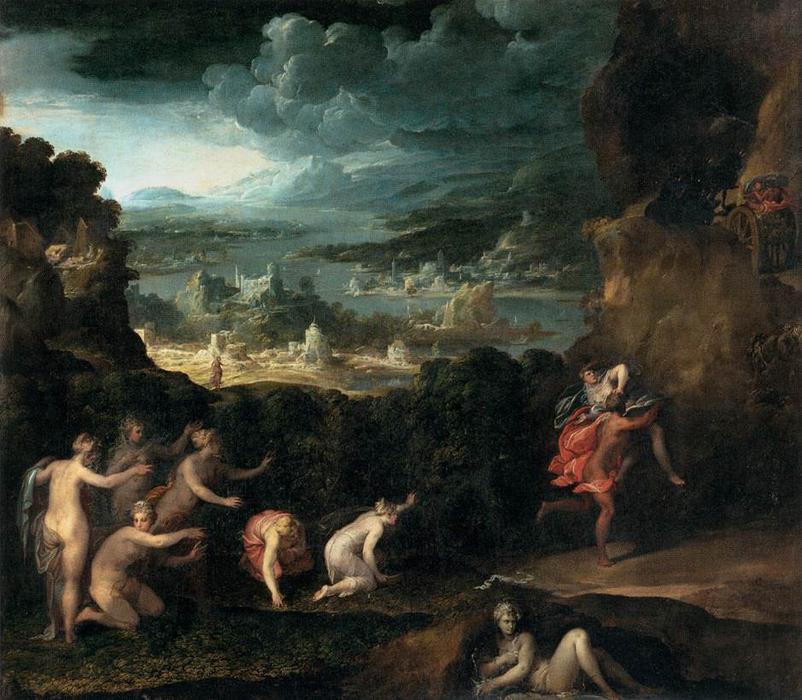
The Rape of Proserpine
 Oil On Canvas
- WallArt
- Mannerist Landscape
 1570
1570 196.0 x 220.0 cm
 Μουσείο του Λούβρου
 Περισσότερα λεπτομέρεια
Αγοράστε μια ψηφιακή εικόνα υψηλής ανάλυσης και βελτιωμένης ποιότητας, πολύ ανώτερης από την προεπισκόπηση στο διαδίκτυο.
Κάθε αρχείο προετοιμάζεται σχολαστικά από τους εξειδικευμένους συνεργάτες μας, με τη χρήση προηγμένων εργαλείων και χειροκίνητου ρετουσαρίσματος υψηλής ακρίβειας. Εξασφαλίζουμε ότι κάθε εικόνα προσφέρει εξαιρετική ευκρίνεια, απόλυτη πιστότητα στο χρώμα και λεπτομερή ανάδραση των λεπτομερειών.
Το τελικό αρχείο παραδίδεται μέσω email εντός 72 ωρών, βελτιστοποιημένο για άμεση χρήση σε επαγγελματικά, εκδοτικά και έντυπα περιβάλλοντα. Πρόκειται για την ίδια ποιότητα που εμπιστεύονται κορυφαία studios σχεδιασμού, εκδότες και γκαλερί.
Ψηφιακή εικόνα
Κατεβάστε ένα αρχείο υψηλής ανάλυσης για προσωπική χρήση, εκτύπωση και δημιουργικά έργα. ( Μετάβαση σε Εκτυπώσεις Αγορά χειροποίητου πίνακα)
Περιλαμβάνεται σε κάθε αγορά ψηφιακής εικόνας
Επαγγελματική Ψηφιακή Παράδοση με Εγγύηση
Όταν επιλέγετε το OriginalUniqueArt.com, δεν αποκτάτε απλώς μια εικόνα – λαμβάνετε ένα επαγγελματικά αναβαθμισμένο ψηφιακό έργο τέχνης, δημιουργημένο με ακρίβεια και με εγγύηση ικανοποίησης. Δείτε όλα όσα περιλαμβάνονται στην παραγγελία σας, αυτόματα:

Άμεση αποστολή μέσω email
Το ψηφιακό σας αρχείο εικόνας υψηλής ανάλυσης θα σας σταλεί μέσω email εντός 72 ωρών από την παραγγελία σας — έτοιμο για άμεση χρήση.

Ψηφιακό Αρχείο με Τεχνητή Νοημοσύνη
Το έργο σας βελτιστοποιείται επαγγελματικά με τη χρήση προηγμένων εργαλείων Τεχνητής Νοημοσύνης και χειροκίνητης επεξεργασίας, εξασφαλίζοντας μέγιστη λεπτομέρεια, ευκρίνεια και ακρίβεια χρωμάτων.

Δωρεάν επανεκδόσεις مدى ζωής
Απώλησες ή διαγράψατε κατά λάθος το αρχείο σας; Μην ανησυχείτε — θα σας το ξαναστείλομε οποιαδήποτε στιγμή, δωρεάν.

Χωρίς Τελωνειακούς Φόρους - Ποτέ
Απολαύστε αμέσως τα έργα τέχνης σας χωρίς δασμούς, φόρους ή έξοδα αποστολής - οι ψηφιακές λήψεις είναι πάντα αφορεশিপτεία.

Εγγύηση Ακριβούς Χρωματισμού
Εξασφαλίζουμε ότι η ψηφιακή σας εικόνα αποτυπώνει τα αυθεντικά χρώματα όσο το δυνατόν πιστότερα, χρησιμοποιώντας επαγγελματικά εργαλεία και διαχείριση χρωμάτων.

Εγγύηση Ικανοποίησης 100 Ημερών
Εάν δεν είστε ικανοποιημένοι με την ψηφιακή σας εικόνα, θα την τροποποιήσουμε ή θα σας επιστρέψουμε το 100% εντός 100 ημερών - χωρίς κανένα ερώτημα.

100% Εγγύηση Επιστροφής Χρήματος
Δεν είστε ικανοποιημένοι; Λάβετε πλήρη επιστροφή των χρημάτων σας εντός 100 ημερών από τη λήψη του ψηφιακού σας αρχείου — χωρίς κανένα ερώτημα.

Εκπτώσεις σε μαζικές παραγγελίες
Αγοράστε 3 εικόνες, κάντε εξοικονόμηση 10% - Αγοράστε 5, κάντε εξοικονόμηση 15% - Αγοράστε 10+, κάντε εξοικονόμηση 20%. Ιδανικό για δημιουργικά έργα, γκαλερί και agencies.
The Rape of Proserpine: A Dance Between Light and Shadow
Niccolò dell’Abbate's “The Rape of Proserpine,” painted around 1570, is not merely a depiction of a classical myth; it’s a profound exploration of fate, desire, and the interplay between light and darkness. Housed within the hallowed halls of the Musée du Louvre in Paris, this oil on canvas masterpiece transcends its mythological subject matter to become a timeless meditation on human emotion and artistic mastery. The painting immediately commands attention with its dramatic composition – a dynamic struggle unfolding against a backdrop of a meticulously rendered landscape that feels both real and otherworldly.
At the heart of the scene stands Proserpine, the daughter of Ceres (goddess of agriculture), her long hair flowing dramatically as she’s forcefully pulled towards Pluto, god of the underworld. The artist masterfully employs chiaroscuro – a technique of stark contrasts between light and shadow – to sculpt the figures and heighten the sense of drama. Pluto, depicted with powerful musculature and an expression of determined intent, dominates the right side of the canvas, his chariot drawn by two imposing black horses that seem to surge forward with unstoppable force. The red of Proserpine’s dress acts as a vibrant counterpoint to the cool blues and greens of the sky and landscape, drawing the eye directly to her plight.
A Mannerist Masterpiece: Style and Technique
Dell’Abbate was a pivotal figure within the Italian Mannerist movement, a period characterized by its emphasis on elegance, artificiality, and emotional intensity. This painting exemplifies these qualities perfectly. The figures are elongated and stylized, reflecting the Mannerist penchant for exaggeration and dramatic poses. Notice the intricate folds of Proserpine's dress – each crease and ripple meticulously rendered to convey both her vulnerability and a certain defiant beauty. The landscape itself is not simply a backdrop; it’s an integral part of the narrative, contributing to the overall sense of drama and foreboding. The distant buildings and rolling hills create a sense of depth and perspective, while the stormy sky hints at the darkness that awaits Proserpine in the underworld.
Dell’Abbate's skill as a colorist is equally remarkable. He utilizes a rich palette of earthy tones – browns, ochres, and siennas – to create a sense of realism and solidity. However, he also incorporates brighter hues—particularly in Proserpine’s dress and the chariot’s details—to draw attention to key elements and inject moments of visual excitement. The use of gold leaf, likely added later, further enhances the painting's opulence and adds a touch of ethereal beauty.
Mythological Roots and Symbolic Resonance
The story of Proserpine’s abduction is a cornerstone of Roman mythology, representing themes of loss, sacrifice, and the duality of life and death. Proserpine’s descent into the underworld marked the beginning of winter on Earth – a poignant reminder of the price of love and the inevitable cycle of seasons. Pluto, as god of the dead, embodies both power and melancholy, while Ceres represents fertility and abundance. The painting captures this complex interplay between these figures, suggesting that even in moments of tragedy, there is an underlying beauty and dignity.
Beyond its mythological narrative, “The Rape of Proserpine” can be interpreted as a metaphor for the human condition – a struggle against fate, a yearning for love, and an acceptance of mortality. The darkness surrounding Proserpine symbolizes the unknown, while her defiant gaze suggests a refusal to surrender completely.
Reproductions: Bringing Dell’Abbate's Vision to Life
High-quality reproductions of “The Rape of Proserpine” are now available through OriginalUniqueArt.com, meticulously crafted by skilled artists who have painstakingly recreated the painting’s intricate details and vibrant colors using archival materials. These reproductions offer a stunning way to experience the beauty and power of this timeless masterpiece in your own home or office. Whether you're an art enthusiast, a collector, or simply seeking a striking piece of decor, a reproduction of “The Rape of Proserpine” is sure to captivate and inspire.
To view more paintings by Niccolò dell’Abbate, including "The Continence of Scipio," visit Painting by 'Niccolò Dell' Abbate'.
Βιογραφικό Καλλιτέχνη
Niccolò dell’Abbate: A Master of Myth and Courtly Grace
Born in Modena, Italy, around 1512, Niccolò dell’Abbate emerged as a pivotal figure within the Italian Mannerist movement. His artistic journey, spanning from his early training in the studio of Antonio Begarelli to his later years spent at the prestigious Château de Fontainebleau, reveals a fascinating evolution shaped by regional influences and a deep engagement with classical ideals. While often overshadowed by contemporaries like Parmigianino and Rosso Fiorentino, dell’Abbate carved out a distinctive niche through his masterful command of landscape, mythological narratives, and an exquisite sense of courtly elegance.
Dell’Abbate's formative years were spent in Modena, absorbing the stylistic elements of Ferrarese painters like Garofalo and Dosso Dossi. These early influences instilled within him a foundational understanding of composition, color theory, and the depiction of human form – skills he would later refine through exposure to the innovations of Correggio and Parmigianino. A significant turning point in his career arrived with his relocation to Bologna in 1547. This period witnessed a dramatic shift in his artistic focus, as he increasingly embraced elaborate landscapes that served as backdrops for dynamic mythological scenes. These compositions weren’t merely decorative; they were carefully constructed environments designed to heighten the drama and symbolism of each narrative.
The Fontainebleau School and Royal Patronage
In 1552, dell’Abbate embarked on a new chapter in his career by accepting a position at the Château de Fontainebleau under the direction of Francesco Primaticcio. This marked his entry into the influential School of Fontainebleau, a collective of artists tasked with adorning the royal palace and shaping the artistic tastes of the French court. Here, he collaborated with other masters like Rosso Fiorentino and Il Rosso, absorbing their techniques while simultaneously injecting his own distinctive style. His work at Fontainebleau showcased a remarkable versatility, encompassing frescoes, panel paintings, and even decorative tapestries. Notably, he contributed to the decoration of the Hôtel de Guise chapel in Paris, creating a stunning ceiling fresco that demonstrated his ability to integrate complex spatial relationships and dramatic lighting effects.
The royal patronage afforded him by Charles IX provided opportunities to create works for special occasions – triumphal entries, celebrations, and courtly entertainments. These ephemeral decorations, often painted on portable canvases, reveal dell’Abbate's skill in capturing fleeting moments of grandeur and spectacle. His final commissions, undertaken in 1571, included a series of murals depicting scenes from the life of St. Paul, reflecting his continued engagement with religious subjects alongside his beloved mythological landscapes.
Key Works and Artistic Style
Niccolò dell’Abbate's artistic legacy is primarily defined by two distinct yet interconnected elements: his evocative landscapes and his captivating depictions of mythological narratives. His landscapes are not simply scenic backgrounds; they are meticulously crafted environments imbued with a sense of depth, atmosphere, and psychological resonance. He skillfully employed atmospheric perspective, creating a subtle gradation of color and detail to suggest distance and create an illusion of three-dimensionality. These landscapes frequently served as the setting for dramatic scenes featuring figures from classical mythology – tales of Orpheus and Eurydice, Proserpine’s abduction, and the Judgment of Paris.
His paintings are characterized by a refined elegance, a delicate balance between restraint and exuberance. He demonstrated an exceptional ability to render textures with remarkable detail, capturing the sheen of silk robes, the weight of armor, and the smoothness of marble statues. His figures possess a graceful poise and a subtle expressiveness that conveys both physical beauty and emotional depth. The “Rape of Proserpine” exemplifies this style perfectly, showcasing his mastery of composition, color, and narrative detail.
Legacy and Influence
Despite the loss of many of his works to fire in 1643, Niccolò dell’Abbate's influence on subsequent generations of artists is undeniable. His innovative use of landscape as a compositional element paved the way for Claude Lorrain and Nicolas Poussin, who both drew inspiration from his ability to integrate natural settings into mythological narratives. Dell’Abbate’s work at Fontainebleau also contributed significantly to the development of French Mannerism, introducing Italian Renaissance principles to the French court and shaping the artistic tastes of a nation.
Today, his paintings are treasured for their beauty, elegance, and technical virtuosity. The National Gallery in London houses “Orpheus and Eurydice,” while the Louvre Museum proudly displays “The Rape of Proserpine.” These iconic works stand as enduring testaments to the genius of Niccolò dell’Abbate, a master painter who seamlessly blended classical ideals with innovative techniques to create some of the most captivating images of the Italian Renaissance.

niccolò dell' abbate
1512 - 1571 , Italy
Συνοπτικά στοιχεία
- Artistic Movement Or Style: Mannerism
- Artists Or Movements Influenced By This Artist:
- Claude Lorrain
- Nicolas Poussin
- Artists Who Influenced This Artist:
- Correggio
- Parmigianino
- Date Of Birth: 1512, Modena, Italy
- Date Of Death: 1571
- Full Name: Niccolò dell'Abbate
- Nationality: Italian
- Notable Artworks:
- The Rape of Proserpine
- Stag Hunt
- The Conversion of St Paul
- Place Of Birth: Modena, Italy