Color Field Painting · 1961
Number 28 (Μόρις Λούις, 1961)
Ο/Η Μόρις Λούις (1912–1962) δημιούργησε το Number 28. Χρονολογείται στο 1961. Ανήκει στο κίνημα Color Field Painting. Είναι φτιαγμένο σε Acrylic On Canvas. Αποθηκεύεται στο Walker Art Center στο Μινεάπολις, Ηνωμένες Πολιτείες της Αμερικής.
- 1961
- Acrylic On Canvas
- Walker Art Center, Μινεάπολις

 Προεπισκόπηση σε πραγματική κλίμακα

 Ελαιογραφικό Χειροποίητο Έργο
 Αποστολή
 Κοινοποίηση
 Πληροφοριακό φύλλο


 Λήψη
 Παρόμοια αντικείμενα συλλογής
 Ακτινογραφία
 Παρουσίαση
 Ερωτήσεις & Απαντήσεις

 Στατιστικά
Number 28, εν συντομία
- Τίτλος
- Number 28
- Καλλιτέχνης
- Μόρις Λούις (1912–1962)
- Γεννημένος/η το
- Βαλτιμόρη, Ηνωμένες Πολιτείες Αμερικής
- Ημερομηνία
- 1961
- Μέσο
- Acrylic On Canvas
- Πού εκτίθεται
- Walker Art Center, Μινεάπολις, Ηνωμένες Πολιτείες της Αμερικής
- Κίνηση
- Color Field Painting
- Εποχή
- Modern
- Θέμα
- color, stripes, verticality, abstraction, layers, hue
Τι απεικονίζει το Number 28;
A Symphony of Color and Fluidity
In the realm of mid-century abstraction, few works capture the ethereal essence of movement as profoundly as Morris Louis’s Number 28. Created in 1961, this masterpiece stands as a definitive pillar of the Color Field painting movement, inviting the viewer into a meditative space where boundaries between form and pigment dissolve. At first glance, the composition presents a striking minimalist architecture: two vertical bands of vibrant, saturated color that descend like celestial ribbons against a stark, luminous white void. There is no traditional subject matter here—no figures to anchor the eye or landscapes to ground the soul—only the pure, unadulterated interplay of light and hue.
The brilliance of Number 28 lies in its breathtaking use of color. Within the vertical columns, a kaleidoscopic spectrum unfolds, ranging from deep, oceanic blues and verdant greens to fiery oranges and warm yellows. These colors do not sit static upon the canvas; rather, they appear to breathe and pulse. Through a masterful layering of tones, Louis achieves a sense of translucent depth, as if one is peering through layers of stained glass or watching sunlight filter through tropical waters. This fluidity creates an organic, living quality that transforms the flat surface into a window of infinite, swirling energy.
The Alchemy of Staining and Technique
To understand the emotional resonance of this work, one must appreciate the revolutionary technique employed by Louis. Moving away from the heavy, impasto textures of the Abstract Expressionists who preceded him, Louis embraced the method of "staining." Utilizing thinned acrylic paints—specifically the pioneering Magna paint—he allowed the pigment to soak directly into the unprimed canvas fibers. This process ensures that the color becomes one with the fabric itself, eliminating the distinction between the medium and the support. The result is a surface that possesses a remarkable luminosity, where the edges of the color fields are not defined by harsh lines, but by soft, bleeding transitions that suggest an eternal state of flux.
This technique imbues the painting with a sense of effortless grace. There is no evidence of the artist's brushstroke or physical struggle; instead, there is only the record of gravity and flow. This lack of tactile resistance contributes to the artwork’s profound sense of serenity. For the collector or interior designer, this piece offers a unique aesthetic advantage: it provides a focal point that is both commanding in its presence and soothing in its execution. It does not demand attention through aggression, but rather captivates through a quiet, hypnotic magnetism.
A Legacy of Serenity for Modern Spaces
Beyond its technical mastery, Number 28 serves as an emotional sanctuary. The verticality of the composition evokes a sense of aspiration and monumentality, much like the soaring columns of classical architecture, yet it remains intimately personal and soft. It is a work that celebrates the beauty of simplicity and the power of pure perception. In a modern interior, a high-quality reproduction of this piece acts as a sophisticated anchor, bringing a sense of calm, intellectual depth, and timeless elegance to any room.
Whether placed in a minimalist gallery setting or a richly textured living space, the painting’s ability to harmonize diverse color palettes makes it an invaluable asset for those seeking to curate an atmosphere of refined tranquility. It remains a testament to Morris Louis's vision: a world where color is not merely applied to a surface, but becomes the very soul of the art itself.
Σε ποιο μουσείο βρίσκεται το Number 28;
Walker Art Center
Μινεάπολις, Ηνωμένες Πολιτείες της Αμερικής
Η Καρδιά της Σύγχρονης Δημιουργικότητας: Το Walker Art Center στην Μινεάπολη Στην καρδιά της ζωντανής Μινεάπολης, στη Μινεσότα, δεσπόζει το Walker Art Center, ένας φάρος αφιερωμένος στην αέναη δύναμη της σύγχρονης τέχνης. Η ιστορία του ξεκίνησε το 1940 με το όραμα του Thomas Barlow Walker, ο οποίος αρχικά φιλοξένησε μια μικρή γκαλερί στο σπίτι του, τροφοδοτούμενος από ένα πάθος για καλλιτεχνική έκφραση. Γρήγορα όμως εξελίχθηκε σε έναν από τους πιο σημαντικούς πολιτιστικούς θεσμούς της Αμερικής – έναν δυναμικό χώρο όπου πρωτοποριακές εκθέσεις συναντούν μια μόνιμη συλλογή που καλύπτει δεκαετίες και διάφορους κλάδους.


Εικόνες υψηλής ανάλυσης του Number 28

Protected by copyright: these files are for personal reference, not a licence to republish.
Μόρις Λούις, Number 28 (1961), Walker Art Center.
Ερωτήσεις για το Number 28, απαντημένες
Πού εκτίθεται σήμερα το "Number 28" του Μόρις Λούις;
Το πρωτότυπο έργο "Number 28" εκτίθεται στο Walker Art Center, Μινεάπολις, Ηνωμένες Πολιτείες της Αμερικής.
Πότε δημιουργήθηκε το "Number 28";
Το έργο "Number 28" του Μόρις Λούις δημιουργήθηκε το 1961.
Με ποιο υλικό έχει εκτελεστεί το έργο "Number 28" του Μόρις Λούις;
Η τεχνική του έργου "Number 28" του Μόρις Λούις είναι το Acrylic On Canvas. Οι αναπαραγωγές στοχεύουν στην πιστή απόδοση της εμφάνισης αυτής της τεχνικής.
Τι απεικονίζει το "Number 28" του Μόρις Λούις;
Τα θέματα που περιλαμβάνονται στο "Number 28" του Μόρις Λούις περιλαμβάνουν το/τα color, stripes, verticality, abstraction, layers, hue, calm. Μαζί, συνοψίζουν το περιεχόμενο του έργου τέχνης.
Το έργο "Number 28" του Μόρις Λούις ανήκει στο δημόσιο περιουσιακό αγαθό;
Το έργο "Number 28" του Μόρις Λούις ανήκει στο ακόμα προστατευόμενο από δικαιώματα αυτορικού. Η κατάσταση αυτή διέπει τον τρόπο με τον οποίο μπορεί να αναπαραχθεί η εικόνα του έργου.
Ποιος δημιούργησε το "Number 28";
Το έργο "Number 28" αποδίδεται στον/στην Μόρις Λούις.
Προς ποιο καλλιτεχνικό ρεύμα ανήκει το έργο "Number 28" του Μόρις Λούις;
Το έργο "Number 28" ανήκει στο καλλιτεχνικό ρεύμα Color Field Painting, το οποίο ορίζει την καλλιτεχνική παράδοση στην οποία εντάσσεται.
Ποια φάση της καριέρας του Μόρις Λούις αντιπροσωπεύει το "Number 28";
Το έργο "Number 28" ανήκει στην περίοδο Mature Period της καριέρας του Μόρις Λούις. Αυτή η ταξινόμηση συνδέει το έργο με την εξέλιξη του καλλιτέχνη.
Σε τι ηλικία δημιούργησε ο/η Μόρις Λούις το "Number 28";
Όταν δημιουργήθηκε το "Number 28" το 1961, ο/η Μόρις Λούις - γεννημένος/η το 1912 - ήταν μόλις 49 ετών.
Σχετικά με τον καλλιτέχνη, Μόρις Λούις

1912–1962, Ηνωμένες Πολιτείες Αμερικής
Μόρις Λούις
Η Πρώιμη Ζωή και η Εκπαίδευση του Μόρις Λουίς Ο Μόρις Λουίς, γεννημένος ως Μόρις Λούις Μπέρνσταϊν στις 28 Νοεμβρίου 1912 στο Μπάλτιμορ της Μαρίλαντ, ήταν ένας καλλιτέχνης που άφησε ανεξίτηλο το αποτύπωμά του στην ιστορία της τέχνης. Γεννημένος σε μια οικογένεια με εβραϊκές ρίζες – ο πατέρας του ασχολούνταν με την πώληση επίπλων και η μητέρα του ήταν νοικοκυρά – ο Μόρις έδειξε από νωρίς μια ιδιαίτερη κλίση προς τις καλές τέχνες. Παρόλο που παρακολούθησε το Maryland Institute of Fine and Applied Arts (τώρα MICA) μεταξύ 1929 και 1932, δεν ολοκλήρωσε ποτέ ένα επίσημο πτυχίο, προτιμώντας να ακολουθήσει μια πιο αυτοδίδακτη πορεία. Οι πρώτες του επιρροές ήταν εμφανείς: ο Eugene Speicher και ο Paul Cézanne άσκησαν σημαντική επίδραση στο καλλιτεχνικό του βλέμμα, διαμορφώνοντας τις πρώιμες προσπάθειές του.
Εργασίες του Μόρις Λούις
 Seal1959
 Ambi I1960
 Para III1959
 Broad Turning1958
Μελέτες γύρω από το Number 28
 Hard-Edge vs. Color Field: Distinguishing Two Paths of AbstractionMaster the technical differences between Hard-Edge and Color Field abstraction. Learn to identify these movements like a pro.
 Morris Louis: Pioneering Color Field Painting & Abstract Expressionism's LegacyExplore the groundbreaking abstract expressionism of Morris Louis, a pioneer of Color Field painting. Discover his innovative techniques, i…
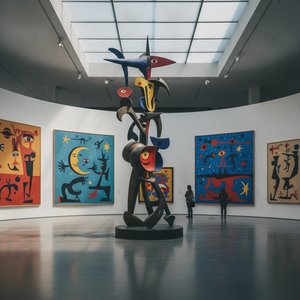 25 Masterpieces by Joan Miró: A Journey Through Surrealist MagicStep into the surreal world of Joan Miró. Explore 25 iconic masterpieces, from biomorphic shapes to vibrant colors. Discover the stories be…