
 Προεπισκόπηση σε πραγματική κλίμακα
 Αποστολή
 Κοινοποίηση
 Λεπτομέρειες
 Οδηγός

 Λήψη
Λήψη
 Παρόμοια αντικείμενα συλλογής
 Ακτινογραφία
 Παρουσίαση
 Ερωτήσεις & Απαντήσεις
 Στατιστικά
Untitled

- 38.0 x 46.0 cm

 Περισσότερα
Giclée / Εκτυπώσεις Τέχνης
Εκτύπωση giclée ή σε καμβά ποιότητας μουσείου με γρήγορη παραγωγή και ευέλικτες επιλογές φινιρίσματος. ( Αγορά χειροποίητου πίνακα Μετάβαση σε Ψηφιακή Αποτέλεσμα)




































Επιλέξτε από τις προκαθορισμένες διαστάσεις μας που διατηρούν τις αρχικές αναλογίες του έργου τέχνης.

Εισάγετε το πλάτος και το ύψος που επιθυμείτε, ώστε να ταιριάζουν στο κάδሮ ή στον τοίχο σας. Μια εκτύπωση μπορεί μόνο να υποστεί κοψίμό και ποτέ να μην γίνει μεγαλύτερη από την αρχική εικόνα, επομένως η επιλογή μεγέθους με διαφορετικό σχήμα συνεπάγεται απώλεια ενός μέρους της εικόνας. Σας στέλνουμε ένα ψηφιακό mockup για έγκριση πριν προχωρήσουμε σε οποιαδήποτε εκτύπωση. Η εικόνα που εμφανίζεται σε αυτή τη σελίδα δεν δείχνει την πραγματική κοπή — μόνο το mockup την παρουσιάζει.
Παγκόσμια Αποστολή () σε 2 εβδομάδες αντί για τις συνήθεις 4/5 εβδομάδες. (15 Νοέμβριος)

Δωρεάν γρήγορη διεθνής αποστολή

Κάμβας από Λινό Υψηλής Ποιότητας

Πλήρης ασφάλιση μεταφοράς

Εγγύηση επιστροφής δασμών και φόρων εισαγωγής

Εγγύηση Απόλυτης Ομοιότητας Χρωμάτων

Πολιτική Επιστροφής 100 Ημερών (Μόνο σε περίπτωση ελαττωμάτων)

Εγγύηση επιστροφής 100% των χρημάτων

Προσφορά για πολλαπλές παραγγελίες
 Η επιλογή με γυαλί είναι διαθέσιμη μόνο για μεγέθη κάτω από 110 εκ.

Untitled
Giclée / Εκτυπώσεις Τέχνης
Διαστάσεις Αναπαραγωγής
-


Τελική Τιμή
€ 72
Βιογραφικό Καλλιτέχνη
The Architect of Color: The Life and Legacy of Morgan Russell
Born into the vibrant, burgeoning energy of New York City on January 25, 1886, Morgan Russell emerged as a transformative force in the landscape of American Modernism. His journey was never merely about the application of pigment to canvas, but rather an architectural pursuit of light and form. Before he became a master of abstract color, Russell’s early inclinations leaned toward the structural precision of architecture and the tactile depth of sculpture. Studying at the Art Students League under the guidance of figures like Arthur Lee and James Earle Fraser, he developed a profound sensitivity to materiality and volume. This sculptural foundation would later become the secret engine behind his most famous innovation, allowing him to treat color not as a surface decoration, but as a structural element capable of creating depth and movement within a two-dimensional plane.
The trajectory of Russell’s career was irrevocably altered by his encounters with the European avant-garde. Supported by the visionary patronage of Gertrude Vanderbilt Whitney, Russell traveled to Paris and Rome, immersing himself in the very heart of the modern revolution. In the legendary salons of Gertrude Stein, he moved among the giants of the era—Picasso, Rodini, and Matisse. These encounters were more than mere social engagements; they were intellectual crucibles. While absorbing the rhythmic fragmentation of Cubism and the emotive power of Fauvism, Russell began to seek a way to synthesize these disparate influences into a uniquely American voice. His time in Paris allowed him to witness the birth of new visual languages, yet he remained driven by a desire to find a method where color could function with the same harmonic complexity as a musical symphony.
The Birth of Synchromism and the Symphony of Sight
In 1912, alongside his collaborator Stanton Macdonald-Wright, Russell co-founded Synchromism, one of the first truly abstract movements in American art. The name itself—derived from the Greek for "with color"—encapsulated their radical mission: to orchestrate colors in a way that mimicked the temporal and emotional progression of music. This was not merely an aesthetic choice but a philosophical rebellion against the stagnant traditions of academic realism. Russell’s "synchromies" sought to move beyond representation, using rhythmic arrangements of hues to evoke sensation and structure. He believed that just as a composer arranges notes to create tension and resolution, a painter could use color temperature and saturation to direct the eye and build a sense of sculptural weight.
The technical brilliance of Russell’s work lies in this very intersection of color and construction. His paintings often possess an unexpected muscularity; even in his most abstract compositions, one can sense the influence of his early sculptural training. He utilized contrasting color relationships to create "optical" forms that seem to push forward or recede into space, effectively painting with light. This approach challenged the viewer to experience art as a dynamic, living entity rather than a static image. Through Synchromism, Russell and Macdonald-Wright provided an essential bridge between European experimentation and the development of a distinct American modernism, proving that abstraction could be both intellectually rigorous and viscerally powerful.
A Lasting Impression on Modernist History
Though the height of the Synchromist movement flourished in the 1910s and 1920s, Morgan Russell’s impact resonated far beyond this period. His ability to marry the structural logic of architecture with the fluid emotion of color helped pave the way for subsequent generations of abstract painters. He remained a pivotal figure in the evolution of modern art, constantly refining his understanding of how visual elements interact to create meaning. His legacy is defined by several key contributions:
- The Innovation of Color Theory: He pioneered the idea that color could serve as a primary structural tool, independent of representational subject matter.
- Cross-Disciplinary Synthesis: By blending sculptural form, architectural logic, and musical rhythm, he expanded the boundaries of what a painting could achieve.
- Founding American Abstraction: As a co-founder of Synchromism, he helped establish an early foothold for abstract expression in the United States, moving the center of gravity away from purely European traditions.
- Intellectual Rigor: His work bridged the gap between the visceral experience of art and the complex philosophical inquiries regarding perception and space.
Today, when we look at the works of Morgan Russell, we see more than just beautiful arrangements of pigment; we see the blueprints of a revolution. He remains a testament to the power of the avant-garde spirit—a man who looked at the world not as a collection of objects to be copied, but as a symphony of light and form waiting to be conducted.

Morgan Russell
1886 - 1953 , United States
Γρήγορα στοιχεία
- Full Name: Morgan Russell
- Nationality: American
- Date Of Birth: 1886
- Date Of Death: 1953
- Place Of Birth: New York City
- Notable Artworks:
- Untitled
- Nu Assis
- Artistic Movement Or Style: Synchromism
- Artists Who Influenced This Artist:
- Percyval Tudor-Hart
- Stanton Macdonald-Wright
- Artists Or Movements Influenced By This Artist: ['Cubism']
Σχετικά άρθρα

10 Iconic Graphite Masterpieces That Redefined the Art World
Explore 10 iconic graphite masterpieces that redefined art history. Find museum-quality prints at OriginalUniqueArt.com.

Color & Emotion: The 25 Most Iconic Masterpieces by Mark Rothko
Immerse yourself in the profound emotion of Abstract Expressionism. Explore 25 iconic Mark Rothko masterpieces, from his signature color fields to timeless museum classics. Find inspiration for fine art reproductions and curated decor. Discover all masterpieces on OriginalUniqueArt.com.

Color & Emotion: The 25 Most Iconic Masterpieces by Mark Rothko
Immerse yourself in the profound emotion of Abstract Expressionism. Explore 25 iconic Mark Rothko masterpieces, from his signature color fields to timeless museum classics. Find inspiration for your collection or decor with OriginalUniqueArt.com’s premium art reproductions. Discover all masterpieces on OriginalUniqueArt.com

10 Masterpieces That Defined Contemporary Art: A Curated Selection
Explore iconic contemporary art from Cindy Sherman to Niki de Saint Phalle. Discover museum-quality masterpieces on OriginalUniqueArt.com.
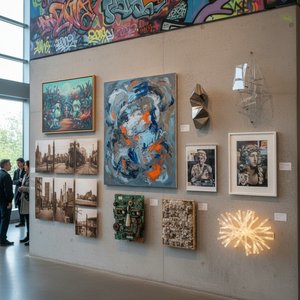
Defining Art Now: Top 10 Masterpieces of '08-Contemporary & Beyond | OriginalUniqueArt
Explore 10 defining masterpieces of contemporary art – from Jeff Koons to Yayoi Kusama. Discover the stories behind iconic paintings & sculptures, and find museum-quality reproductions for your home at OriginalUniqueArt.com. Explore the full collection online!